As an affiliate, we may earn a commission from qualifying purchases. We get commissions for purchases made through links on this website from Amazon and other third parties.
A whole-house water filter can improve water quality throughout a home, but it also adds plumbing, maintenance, and operating limits that smaller point-of-use filters do not have.
The biggest disadvantages are possible pressure loss, ongoing filter or media changes, added plumbing complexity, space requirements, and the risk of choosing a system that does not actually treat the contaminants in your water. A whole-house filter also should not be treated as proof that water is safe to drink.
What Is a Whole-House Water Filter?
A whole-house water filter is installed on the main water line so most or all water entering the home passes through it. It is also called a point-of-entry treatment system.
Depending on the setup, it may contain one or more treatment stages, such as:
- Sediment filtration for dirt, rust, and other particles
- Activated carbon for some tastes, odors, chlorine, and certain organic compounds
- Specialized media for specific dissolved contaminants
- Water-softening or scale-control equipment
- Other treatment stages designed for a known water-quality problem
These systems can be useful when the same water problem affects showers, faucets, appliances, and other fixtures. Their disadvantages become more important when the system is poorly sized or selected without testing the water first.
Whole-House Filters Can Reduce Water Pressure
Every filter creates some resistance to water flow.
Water must pass through cartridges, filter media, valves, and fittings before reaching your fixtures. As filters collect sediment, that resistance can increase.
A small pressure drop may not be noticeable. A larger one can affect:
- Showers
- Washing machines
- Irrigation lines
- Multiple faucets being used at once
- Tankless water heaters
- Appliances that need a minimum water flow
The problem is often worse when a filter housing or connection is too small for the household's peak demand.
Flow rate matters as much as pipe size
Flow rate is the amount of water moving through the system over a period of time, usually stated in gallons per minute.
A system should be able to handle the home's expected peak flow, not just its average use. A filter that works well with one faucet open may become restrictive when a shower, washing machine, and sink are running together.
Clogged sediment filters can also cause pressure to fall gradually, making maintenance especially important.
They Require Regular Maintenance
A whole-house filter is not a set-it-and-forget-it device.
Depending on the treatment method, maintenance may include:
- Replacing cartridges
- Cleaning filter housings
- Replacing or replenishing treatment media
- Checking seals and O-rings
- Inspecting valves and fittings for leaks
- Flushing or backwashing equipment
- Cleaning prefilters
- Sanitizing parts when appropriate
- Monitoring changes in pressure and flow
Ignoring maintenance can reduce treatment performance and restrict water flow.
A dirty cartridge is especially easy to overlook because it is installed out of sight. Keeping a maintenance log can help prevent filters from being left in service longer than intended.
One Filter Does Not Remove Everything
"Whole-house filter" describes where the system is installed, not what it can remove.
Different treatment methods address different problems.
For example, a sediment filter may trap visible particles but do little for dissolved chemicals. Activated carbon can help with certain tastes, odors, disinfectants, and organic compounds, but it does not automatically remove every metal, mineral, microorganism, or dissolved contaminant.
A filter's micron rating describes the approximate size of particles it is designed to capture. A smaller micron rating can capture finer particles, but that does not mean the filter treats dissolved substances or makes contaminated water microbiologically safe.
This is one reason water testing should come before choosing treatment.
A Whole-House Filter Can Create a False Sense of Security
One of the more serious disadvantages is assuming that filtered water must be safe water.
A clear appearance and pleasant taste do not establish that water is potable.
Potable means suitable for drinking. Non-potable water is water that is not intended or established as safe for drinking.
Drinking-water safety can involve contaminants that cannot be seen, smelled, or tasted. The correct treatment depends on the source water and what testing finds.
This is particularly important for:
- Private well water
- Collected rainwater
- Surface-water sources
- Water with a known contamination event
- Systems that have been unused for a long period
For drinking-water use, treatment should be approached as a complete system. Suitable source protection, pretreatment, correctly selected treatment stages, maintenance, and appropriate laboratory testing may all be necessary.
A whole-house cartridge by itself should not be considered confirmation that untreated rainwater or another questionable source is safe to drink.
Installation Can Be More Complicated Than It Looks
A whole-house system normally has to be installed into the main supply line.
That can involve:
- Cutting existing plumbing
- Adding shutoff valves
- Installing a bypass
- Supporting heavy filter housings
- Matching pipe and fitting sizes
- Providing enough service space
- Managing drainage for backwashing equipment
- Protecting equipment from freezing
- Preventing leaks around threaded or sealed connections
A bypass allows water to travel around the treatment equipment when the system is being serviced. It can make maintenance much easier and may keep water available while cartridges are being replaced.
However, bypass valves and additional fittings also add more connections that must be installed correctly.
Complex plumbing changes, pressure equipment, electrical equipment, or connections involving potable-water systems may be better handled by a qualified professional.
Large Filters Need Space
Whole-house systems can take up much more room than an under-sink filter.
The equipment may include:
- Several cartridge housings
- Large media tanks
- Pressure gauges
- Control valves
- Shutoff and bypass valves
- Drain connections
- UV equipment
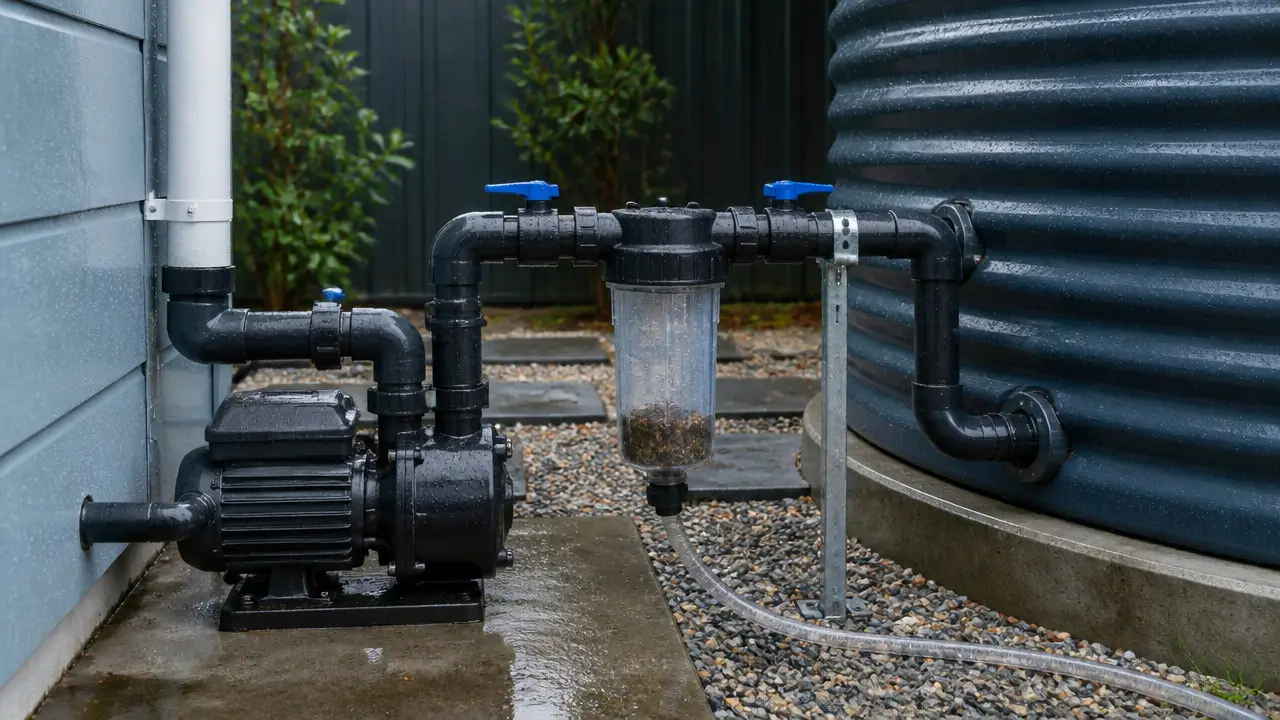
- Pumps or pressure tanks
There also needs to be enough room to service the equipment.
For example, a cartridge housing usually needs clearance below it so the housing can be removed. A system squeezed tightly between pipes or against a wall can be difficult to maintain.
Before choosing equipment, check both its operating dimensions and the extra space needed for servicing.
Some Systems Need Drainage, Electricity, or Both
A simple cartridge housing may require neither. More complex whole-house treatment systems can.
Automatic backwashing filters may discharge water to a drain while cleaning their treatment media. Other systems may require electricity for controllers, pumps, valves, monitoring, or UV treatment.
These requirements can make installation harder in:
- Cabins
- Garages
- Pump houses
- Off-grid homes
- Crawl spaces
- Outdoor utility areas
Any electrical equipment near plumbing should be installed according to its requirements and applicable electrical rules.
Backwashing Systems Can Use Additional Water
Some whole-house media filters clean themselves by reversing water through the treatment bed. This process is known as backwashing.
Backwashing helps remove accumulated material and restore the media bed, but the discharged water does not go to household fixtures. The system therefore adds water use during each cleaning cycle.
It also requires a suitable drain arrangement.
This disadvantage matters more where water supply is limited, such as a home running from a well, cistern, or stored rainwater.
A poorly planned backwash cycle can also place a significant short-term demand on a small pump or stored-water system.
Filters Must Be Matched to the Available Flow
Some treatment media require a minimum flow during normal operation or backwashing. Others have a maximum recommended service flow.
This can cause problems when combining a filter with:
- A low-output well pump
- A small rainwater pump
- A cistern system
- A pressure tank
- A booster pump
- A high-demand household
A large filter is not automatically better.
For example, an oversized backwashing tank may require more cleaning flow than the pump can supply. An undersized cartridge filter may create excessive pressure loss.
Understanding recommended whole-house filters for rainwater plumbing systems helps interpret which maintenance action the latest readings justify.
The complete water system has to work together.
Whole-House Treatment Can Be More Than You Need
Sometimes the water problem only matters at one faucet.
If testing identifies a drinking-water contaminant but the water is otherwise suitable for bathing, cleaning, and laundry, treating every gallon entering the house may not always be necessary.
A point-of-use system treats water at a specific location, such as the kitchen sink.
Point-of-use treatment can sometimes make more sense when the goal is limited to drinking and cooking water. Whole-house treatment is generally more useful when the problem affects water throughout the building.
The right choice depends on the contaminant and intended water use.
Fine Filters Can Clog Quickly
Lower micron ratings may remove smaller suspended particles, but finer filtration usually creates more resistance and can clog faster when water contains a lot of sediment.
That can be a problem with:
- Wells carrying sand or silt
- Rainwater tanks with poor prefiltration
- Older plumbing containing rust
- Water disturbed by maintenance
- Storage tanks containing settled debris
A staged system can sometimes help.
For example, a coarse sediment stage may remove larger material before water reaches a finer cartridge. This can reduce the load on the finer filter.
With a rainwater system, keeping leaves, roof debris, and tank sediment out of the household treatment system is generally better than relying on a fine cartridge to catch everything later.
Some Treatment Media Change Water Chemistry
Not every whole-house treatment process simply traps particles.
Some systems exchange ions, add substances, remove minerals, or otherwise change water chemistry.
That can affect:
- Taste
- Scaling
- Corrosion potential
- Appliance performance
- Downstream treatment equipment
This is why treatment stages should not be combined at random.
For example, the water entering a UV system may need certain clarity conditions for the equipment to work as intended. Other treatment equipment may have limits involving hardness, iron, sediment, or water chemistry.
Check the requirements for every stage in the treatment train.
Filters Can Become a Source of Problems When Neglected
A filter collects material from the water. That material does not disappear.
Sediment, organic matter, and other debris remain in the housing or treatment media until the system is cleaned, flushed, or replaced.
Long service intervals can lead to:
- Reduced flow
- Increased pressure loss
- Unpleasant odors
- Dirty housings
- Reduced treatment effectiveness
Some treatment methods can also remove disinfectant residual from municipal water. That may be desirable for taste or other reasons, but downstream plumbing then has less of that residual protection.
This makes correct maintenance and sanitation especially important.
Leaks Can Affect the Whole House
Because the filter is installed on the main supply line, a plumbing failure can affect the entire building.
Potential leak points include:
- Housing seals
- Threaded adapters
- Unions
- Valves
- Drain fittings
- Pressure gauges
- Cracked housings
A properly installed shutoff and bypass arrangement makes it easier to isolate the system if a problem occurs.
Filter housings also need to be protected from freezing and from pressures outside their rated operating limits.
Water expands as it freezes, so a water-filled housing in an unheated location can be damaged during cold weather. Insulation alone should not be assumed to guarantee freeze protection.
Replacement Parts Must Stay Compatible
Cartridge dimensions, housing designs, thread types, connection sizes, media requirements, and seals are not universal.
Before installing a system, consider whether you will be able to identify and obtain the correct replacement parts later.
Important compatibility details can include:
- Cartridge length and diameter
- Connection size
- Thread type
- Maximum working pressure
- Flow requirements
- O-ring dimensions
- Media type
- Drain requirements
Improvising with poorly fitting plumbing parts can create leaks or restrictions.
Whole-House Filters Do Not Replace Water Testing
Filtering first and testing later can lead to the wrong treatment system.
Testing helps answer a more useful question: What actually needs to be removed or controlled?
For a private water source, laboratory testing can help identify problems that a visual inspection cannot.
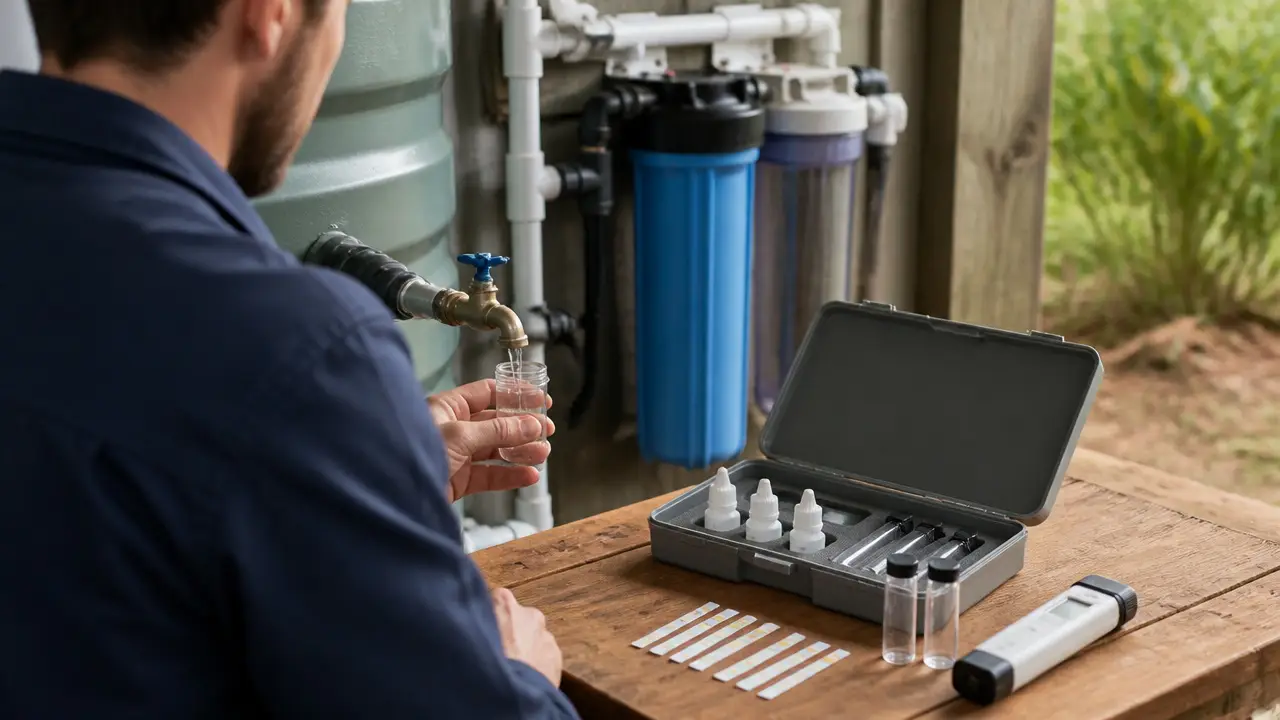
Home meters and test strips can be useful for certain checks, but each measures only specific characteristics.
For example, total dissolved solids, or TDS, is a broad measurement of dissolved substances in water. A TDS reading does not identify exactly which substances are present and does not establish that water is safe to drink.
When drinking-water safety is uncertain, use appropriate laboratory testing and qualified guidance rather than relying on appearance, taste, TDS, or a single filter.
When Does a Whole-House Filter Make Sense?
Despite the disadvantages, whole-house treatment can be useful when a confirmed water problem affects the entire home.
It may be worth considering when:
- Sediment is reaching many fixtures.
- Chlorine taste or odor is unwanted throughout the home.
- A specific tested contaminant requires point-of-entry treatment.
- Water conditions are affecting plumbing or appliances.
- A private water system needs several coordinated treatment stages.
The best system is not necessarily the one with the most filters. It is the one matched to the water source, test results, household demand, plumbing, and intended use.
Frequently Asked Questions
Does a whole-house water filter lower water pressure?
It can. Every filter creates some resistance to flow, and pressure loss usually becomes greater as a cartridge collects sediment. Correct sizing, adequate connection sizes, and timely maintenance can reduce the problem.
Is a whole-house filter enough to make water safe to drink?
Not necessarily. Different filters remove different contaminants. A whole-house filter should not be treated as proof that well water, rainwater, or another untreated source is potable. Drinking-water treatment should be based on the water source, appropriate testing, correctly selected treatment stages, and proper maintenance.
How often does a whole-house filter need maintenance?
There is no universal schedule. Maintenance depends on the treatment method, water quality, water use, filter capacity, and equipment requirements. Falling pressure, visible sediment, and changes in water quality can indicate that service is needed, but maintenance should not depend on these signs alone.
Can a whole-house filter remove bacteria and viruses?
Do not assume that it can. Many common sediment and carbon filters are not designed to provide complete control of disease-causing microorganisms. Microbiological treatment requires equipment specifically designed for that purpose and suitable operating conditions.
Is a smaller micron filter always better?
No. A smaller micron rating can capture finer particles, but it may clog faster and cause more pressure loss. Micron rating also does not tell you whether the filter removes dissolved chemicals or microorganisms.
Does a whole-house water filter waste water?
Basic cartridge filters normally do not discharge water during filtration. Some automatic media systems use additional water during backwashing or regeneration. Check how the particular treatment process operates, especially if the home depends on a well, cistern, or rainwater tank.
Should I test my water before installing a whole-house filter?
Yes, especially when you are trying to treat a health-related or unknown water-quality problem. Testing helps identify what needs treatment so the system can be selected for the actual contaminant rather than appearance, taste, or guesswork.