As an affiliate, we may earn a commission from qualifying purchases. We get commissions for purchases made through links on this website from Amazon and other third parties.
The best whole-house carbon water filter is the one that is sized for your home's peak water use and certified for the contaminant you want to reduce. For many homes on treated city water, that means a properly sized granular activated carbon (GAC) media tank when the main goal is reducing chlorine, taste, odor, or certain organic chemicals.
A large carbon tank is often a better whole-house choice than a small cartridge because it can hold more carbon and give water more contact time with the media. But carbon is not a complete water treatment system. It does not reliably solve hardness, dissolved minerals, most germs, or every chemical contaminant.
The right choice starts with your water, not with the filter.
What Does a Whole-House Carbon Filter Do?
A whole-house filter is also called a point-of-entry filter. It is installed where the main water line enters the house. Water going to showers, sinks, toilets, appliances, and outdoor faucets may all pass through it.
Activated carbon has a very large porous surface. Some chemicals stick to that surface as water passes through. This process is called adsorption.
Carbon is commonly useful for reducing:
- Chlorine
- Unpleasant tastes
- Unpleasant odors
- Some volatile organic compounds, or VOCs
- Some other organic chemicals
- Certain contaminants when the specific filter has been tested and certified for them
The EPA lists granular activated carbon as a treatment technology for taste- and odor-causing compounds, VOCs, natural organic matter, and various synthetic organic chemicals. How well it works depends on the carbon, the contaminant, water quality, and how long the water contacts the media.
Carbon should not be treated as a general-purpose purifier.
What Type of Whole-House Carbon Filter Is Best?
For a typical house that needs substantial chlorine reduction without creating excessive pressure loss, a full-size GAC media tank is often the most practical starting point.
There are three main carbon-filter formats worth understanding.
Granular activated carbon tank
A GAC tank contains loose carbon granules inside a large treatment vessel.
This design can work well for a whole house because it provides:
- A large amount of carbon
- More contact area than a small cartridge
- Better suitability for higher household flow
- Longer service intervals in many installations
- Less frequent cartridge handling
Some tanks include automatic backwashing controls. Backwashing reverses water flow through the media to loosen the bed and flush trapped material to a drain.
Other systems use different flow arrangements and may not backwash. The correct design depends on the water quality and system.
A tank still needs maintenance. Carbon eventually becomes exhausted and must be replaced or regenerated.
Carbon block cartridge
A carbon block packs carbon into a solid cartridge.
Carbon blocks can provide good contaminant reduction, but whole-house cartridges must be large enough to handle the required flow. A cartridge that is too restrictive can cause poor shower pressure when several fixtures run at once.
Cartridges can make sense when:
- Household water use is modest
- Plumbing space is limited
- Filter changes are easy to perform
- The incoming water contains little sediment
- The cartridge has an appropriate certified contaminant claim
Check both the rated flow and pressure drop rather than choosing a cartridge by housing size alone.
Catalytic carbon
Catalytic carbon is modified carbon commonly used in systems intended to treat harder-to-remove disinfectants or chemicals.
It is often considered when the water utility uses chloramine rather than free chlorine.
Do not assume that a filter will remove chloramine merely because its label says "carbon." Look for performance information or independent certification covering the specific reduction you need.
Start by Finding Out What Is in Your Water
The best filter for chlorine may be a poor choice for iron. A filter for VOCs may do nothing useful for hardness.
If you receive municipal water, start with your utility's current water-quality information.
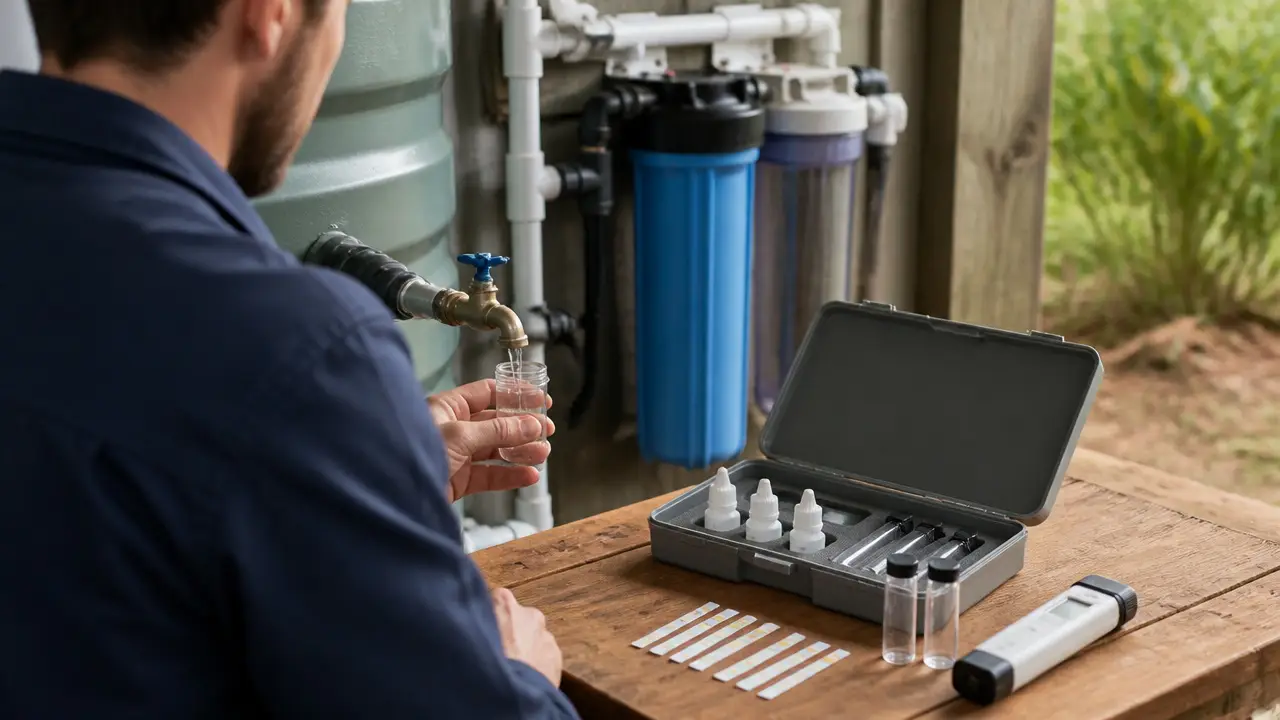
If you have a private well, laboratory testing is especially important. Well water can contain problems that carbon alone cannot address.
CDC guidance recommends identifying the harmful germs or chemicals of concern before choosing a water filter. It also notes that filters vary greatly in what they remove.
Testing becomes even more important if you are dealing with:
- A known chemical spill
- PFAS
- Lead
- Arsenic
- Nitrate
- Bacteria
- Radon
- Strong sulfur odors
- Iron or manganese
- Unexplained staining
- A private well with changing water quality
These problems can require very different treatment systems.
Look for Certification for the Specific Claim
Certification is more useful than vague claims such as "premium carbon" or "removes contaminants."
Two standards commonly associated with carbon filtration are NSF/ANSI 42 and NSF/ANSI 53.
NSF/ANSI 42 covers aesthetic effects such as chlorine, taste, and odor. NSF/ANSI 53 covers specified contaminants that have health effects. A system does not automatically reduce every contaminant covered by a standard simply because it mentions that standard. You must check the individual certified reduction claims.
For example, if PFAS is your concern, look for a filter independently certified for an applicable PFAS reduction claim rather than assuming any activated carbon filter will provide the needed performance. EPA recommends checking for third-party certification when selecting filters for PFAS reduction.
Size the Filter for Household Flow
Whole-house filtration is different from filtering one drinking-water faucet.
Several fixtures may run at once. A shower could be operating while a washing machine fills and someone opens a sink faucet.
The filter needs enough flow capacity for these periods.
Flow rate is the amount of water that moves through the system over time, usually stated in gallons per minute in the United States.
A filter that is too small may cause:
- Weak showers
- Slow bathtub filling
- Reduced irrigation flow
- Problems when several fixtures operate together
High flow also affects carbon performance. Water needs enough contact time with the carbon for adsorption to occur. Sending water through a small amount of carbon too quickly can reduce treatment performance.
Do not choose based only on the pipe connection size. A filter with a large inlet does not automatically have enough carbon capacity or treatment performance for the house.
Watch the Pressure Drop
Every filter creates some resistance to water flow.
That pressure loss is called pressure drop.
It may be small when a system is clean and correctly sized. It can become much larger if a cartridge plugs with sediment.
Before choosing a system, consider:
- Incoming water pressure
- Peak household flow
- Filter pressure drop
- Pipe diameter
- Existing water softeners or filters
- Elevation changes
- Irrigation demands
This matters especially in houses that already have marginal water pressure.
Sediment May Need to Be Removed First
Carbon works best when it is not being used as a dirt catcher.
Sand, rust, silt, and other particles can clog cartridges or load a carbon bed unnecessarily.
Water containing noticeable sediment may need a sediment-treatment stage ahead of the carbon.
The correct micron rating depends on the water and equipment. A micron is a very small unit of size. Lower micron numbers generally capture smaller particles, but finer filtration can also create more pressure loss and require more frequent maintenance.
Planning around comparing activated-carbon systems for household water helps interpret the laboratory check best suited to the suspected pollutant.
Do not automatically install the finest sediment filter available. Match the filter to the actual sediment problem.
Carbon Does Not Soften Hard Water
A carbon filter and a water softener do different jobs.
Hard water mainly results from dissolved calcium and magnesium. Standard activated carbon does not remove these minerals well enough to function as a water softener.
If you have:
- White scale
- Hard deposits on faucets
- Scale inside a water heater
- High measured hardness
you may need separate hardness treatment.
Carbon also should not be expected to make a meaningful general reduction in total dissolved solids, or TDS. TDS represents dissolved substances in the water. Removing dissolved salts normally requires another treatment method, such as reverse osmosis where appropriate.
Carbon Is Not a Disinfection System
Most carbon filters are not designed to remove or kill dangerous microorganisms.
This is especially important with private wells, stored water, rainwater, and other sources that may have microbiological risks.
CDC also warns that removing chlorine from all water entering a home can allow more microbial growth in household plumbing because the disinfectant residual is no longer present.
That does not mean whole-house carbon should never be used on city water. It means the system needs good maintenance and should not be treated as risk-free simply because the incoming water started as disinfected municipal water.
If microbiological safety is a concern, identify the source of the problem and use a treatment system designed for it.
What About Well Water?
Carbon can be part of a well-water system, but testing should come first.
A private well might contain iron, manganese, hardness, nitrate, arsenic, bacteria, sulfur compounds, VOCs, or other contaminants. Different problems need different treatment.
Installing carbon first can hide odors without correcting the underlying water-quality problem.
For example, a strong rotten-egg smell can have several possible causes. Carbon may be useful in some treatment setups, but it is not automatically the correct first stage.
Have the water tested and build the treatment train around the results.
What About Rainwater?
A whole-house carbon filter should not be used as the only treatment stage for rainwater intended for drinking.
Roof runoff can pick up:
- Bird and animal waste
- Dust
- Roofing debris
- Plant material
- Smoke particles
- Chemicals
- Microorganisms
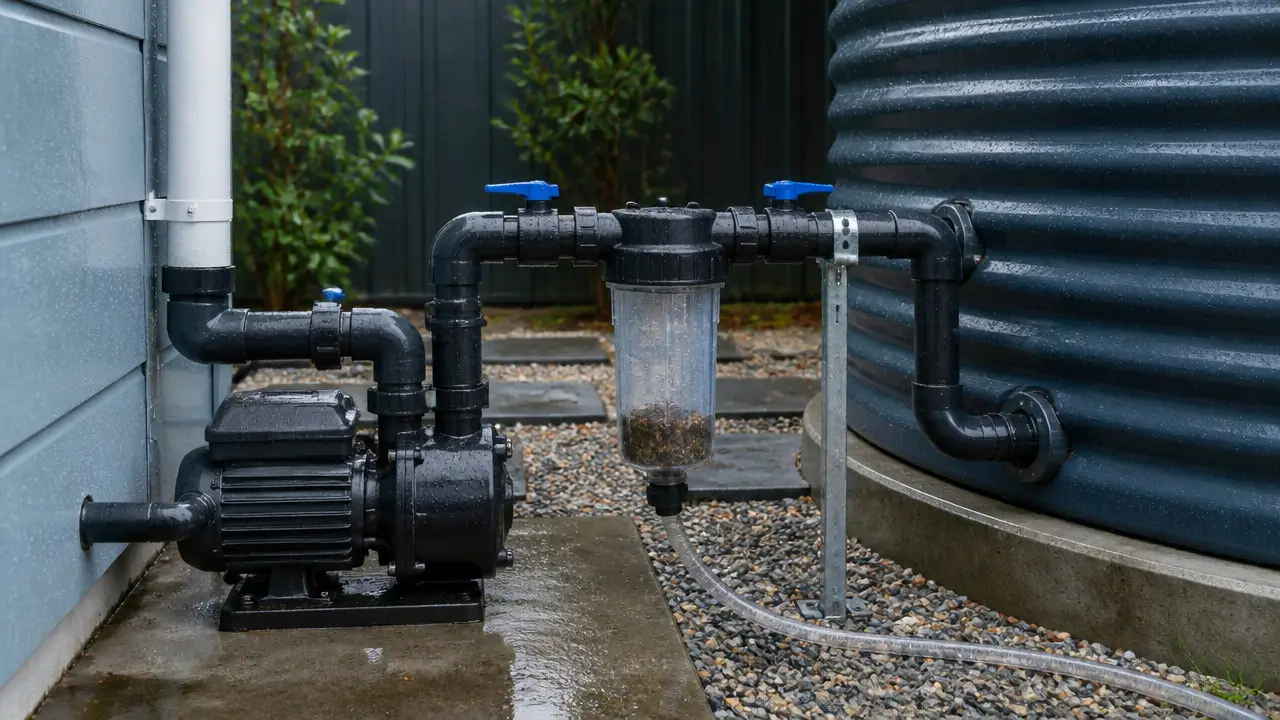
A drinking-water rainwater system is a whole-system project. It can involve suitable roof collection, debris exclusion, first-flush management where appropriate, protected storage, prefiltration, treatment designed around the actual water quality, disinfection, maintenance, current laboratory testing, and applicable local requirements.
A first flush device diverts an initial portion of roof runoff so some accumulated roof debris does not immediately enter storage.
Carbon may be useful later in a treatment train for certain chemicals, tastes, or odors. It does not by itself establish that rainwater is potable.
Potable means suitable for drinking. Non-potable water is water that is not intended to be consumed.
Maintenance Matters as Much as Filter Size
Activated carbon has a limited adsorption capacity.
Eventually, available sites in the carbon fill with contaminants. Once that capacity has been used, the carbon needs replacement or regeneration. EPA notes that exhausted GAC must be removed, replaced, or regenerated.
The correct service interval depends on factors such as:
- Water use
- Carbon quantity
- Contaminant concentration
- Water chemistry
- Sediment loading
- Filter design
Do not assume a filter is still working simply because the water continues to flow.
A practical installation should also make maintenance easy. Useful features can include shutoff valves, a bypass arrangement, pressure gauges, and enough physical clearance to service tanks or housings.
Follow the equipment manufacturer's maintenance schedule and any contaminant-specific monitoring requirements.
When a Whole-House Carbon Filter Makes Sense
Carbon is a strong option when you have already identified a problem that carbon is suited to treating.
Common examples include:
- Reducing chlorine taste and smell throughout the house
- Treating certain certified organic chemical concerns
- Reducing a specific contaminant with a verified performance claim
- Protecting downstream treatment equipment from chlorine when required by that equipment
It is a weaker choice when the real problem is:
- Hardness
- High dissolved salts
- Sediment alone
- Iron
- Nitrate
- Arsenic
- Microbiological contamination
- An unidentified well-water problem
Some of those conditions can be treated by specialized systems, but ordinary carbon should not be assumed to handle them.
The Best Setup for Most Homes
For a household mainly trying to reduce chlorine, taste, and odor from otherwise suitable municipal water, a practical setup often looks like this:
Main water supply → sediment treatment if needed → properly sized carbon system → household plumbing
A media tank often makes more sense than a small cartridge when the household needs high flow and substantial carbon capacity.
The final choice should be based on five things:
- What contaminant you need to reduce.
- Whether the system has an appropriate certified reduction claim.
- How much water the house may use at one time.
- How much pressure drop the system creates.
- How the carbon will be maintained and replaced.
If your concern is a health-related contaminant rather than chlorine taste or odor, start with water testing and choose treatment based on that result. Do not rely on the word "carbon" alone.
Frequently Asked Questions
Is a carbon whole-house filter worth it?
It can be if your water contains something activated carbon is well suited to reduce. Whole-house carbon is commonly useful for chlorine, taste, odor, and certain organic chemicals. It is less useful when the main problem is hardness, dissolved salts, or microorganisms.
Is a carbon tank better than a cartridge?
A tank is often better suited to higher whole-house flow because it can contain much more carbon. Cartridges can work well in smaller systems, but they may clog faster and create greater pressure loss if they are undersized or exposed to heavy sediment.
Does a whole-house carbon filter remove chlorine?
Activated carbon can reduce chlorine. For a drinking-water treatment product, look for a relevant certified chlorine-reduction claim rather than relying only on the type of carbon.
Does activated carbon remove chloramine?
Some carbon systems are designed for chloramine reduction, but performance varies. Do not assume every carbon filter can handle chloramine. Check the filter's specific performance claim or certification.
Does a whole-house carbon filter remove PFAS?
Certain activated carbon systems can reduce some PFAS, but performance depends on the filter, PFAS compounds, water conditions, and service life. Choose a system with an applicable independently certified PFAS-reduction claim and follow its replacement requirements.
Will a carbon filter make well water safe to drink?
Not by itself. Carbon is not a complete treatment for bacteria, nitrate, arsenic, hardness, iron, or many other possible well contaminants. Test the well first and select treatment based on the results.
Can I use carbon filtration for drinking rainwater?
Carbon can be one stage in a properly designed treatment system, but it cannot make collected rainwater potable by itself. Drinking-water use requires suitable collection, treatment for the identified risks, disinfection where appropriate, maintenance, laboratory testing, and compliance with applicable local requirements.