
As an affiliate, we may earn a commission from qualifying purchases. We get commissions for purchases made through links on this website from Amazon and other third parties.
Best Overall
Best for Broad Screening
Best Bacteria Test
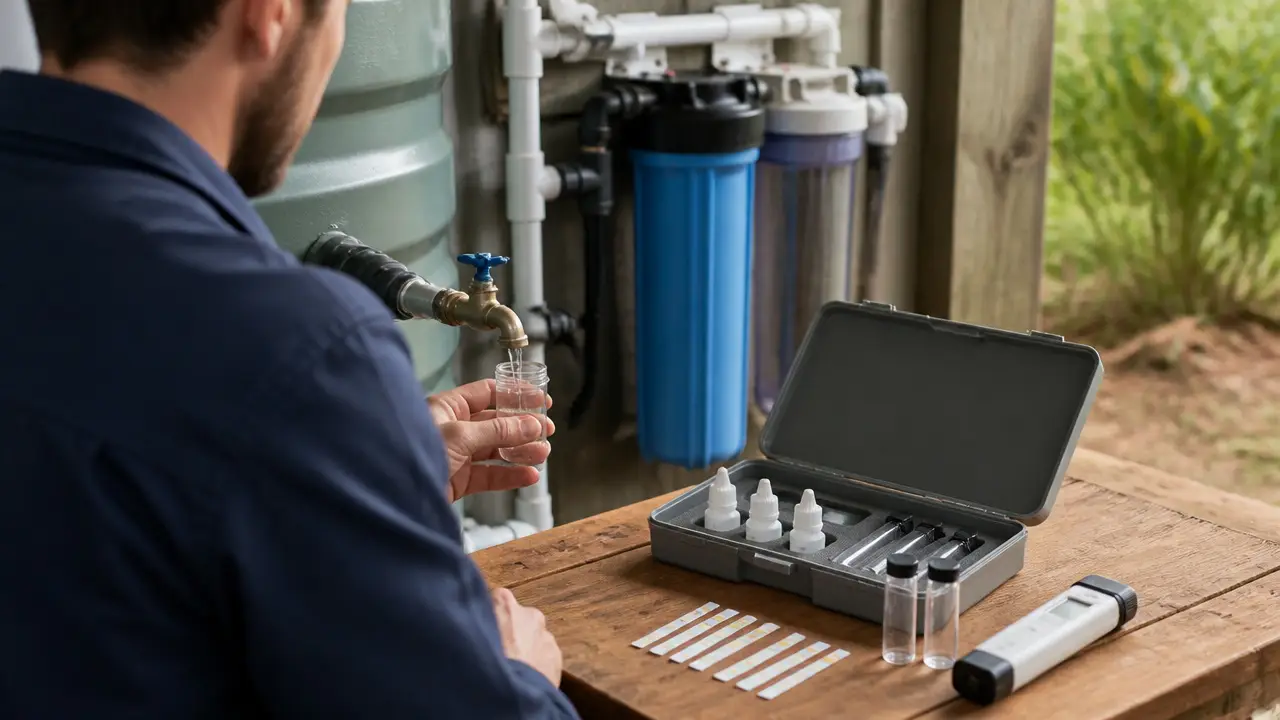
A home rainwater test kit is useful for routine screening, troubleshooting, and deciding what needs a closer look. It can help you track pH, hardness, chlorine, metals, or bacteria depending on the kit. What it cannot do is give one universal “safe to drink” answer for roof-collected water.
Rainwater quality changes with the roof, gutters, first flush, storage tank, animals, dust, smoke, treatment equipment, and how long the water sits. A strip that reads normal for pH or hardness says nothing about contaminants it does not test. Even a home bacteria test has detection limits and does not replace a full laboratory assessment when drinking-water safety matters.
The six options here serve different jobs. Some provide broad multi-parameter strips. One focuses on bacteria. One is a reusable digital meter for pH, TDS, and EC rather than contaminants. Choose the tool that answers the exact question you have.
Rainwater Test Kits at a Glance
| Product | Best For | Key Strength | Tradeoff |
|---|---|---|---|
| VARIFY 17-in-1 Kit | General home screening | 100 strips plus two bacteria tests | Color strips still need careful timing and interpretation |
| SJ WAVE 22-in-1 Kit | Broad parameter coverage | Large strip supply plus lead and bacteria tests | Several colors must be read quickly and some ranges are broad |
| Safe Home Bacteria Test | Focused bacteria screening | Dedicated coliform/E. coli screening with results from about 6-72 hours | Tests bacteria only, not chemicals or metals |
| Safe Home 14-in-1 Kit | Simpler mixed screening | Lead, bacteria, pH, nitrates and other basic parameters | Fewer repeated strips than large-strip kits |
| bestprod 21-in-1 Kit | Recording repeated checks | 120-count supply and data sheet | Invalid or pre-reacted tests have occurred |
| VIVOSUN Digital pH/TDS/EC Meter | Repeated meter readings | Reusable digital measurement instead of disposable strips | Does not identify bacteria, lead, pesticides, or specific pathogens |
Start With the Question, Not the Number of Tests
A kit with 22 parameters is not automatically better than one with 14. If your concern is bacteria after a tank cleaning, a focused bacteria test may be more useful. If you are checking how stored water changes over time, repeated pH or TDS measurements may be enough to show a trend, but they still do not identify every contaminant.
For roof-collected water, common questions include whether pH is shifting, whether dissolved minerals are changing, whether a treatment stage is affecting chlorine, or whether coliform bacteria are present. Choose the test that directly answers that question.
When the water may be used for drinking, food preparation, or other sensitive household use, use current laboratory testing appropriate to the water source and local requirements. Home kits are screening tools, not a substitute for a complete drinking-water assessment.
A Broad Kit With Plenty of Repeat Tests
1 / 6
VARIFY 17-in-1 Water Test Kit

Strips
100
Bacteria Tests
2
pH Range
0-14
The VARIFY kit is the best all-around choice when you want broad home screening and enough strips to repeat the test. It includes 100 multi-parameter strips divided into sealed pouches plus two separate bacteria tests. The strip system covers parameters that include pH, hardness, chlorine, fluoride, lead, iron, and copper.
The large strip supply is valuable for rainwater because one reading is less useful than a pattern. You can test after a tank cleaning, after a long dry period, after maintenance, or before and after a treatment change without using the entire kit in a few sessions.
The bacteria tests take longer than the strip readings, with results around 48 hours. Follow timing and color-reading instructions closely. Broad strip kits are convenient, but subtle color differences can still make borderline readings hard to interpret.
Why It Works
- 100 strips support repeated monitoring instead of a single snapshot.
- Two bacteria tests add a separate microbiological screen.
- pH range covers 0-14.
- Multiple sealed pouches help protect unused strips between testing sessions.
What To Keep In Mind
- A normal strip does not rule out contaminants the kit does not test.
- Color comparison and timing affect the usefulness of the result.
- Drinking-water decisions still need suitable treatment and current testing for the whole system.
A 22-Parameter Kit for Broad Screening
2 / 6
SJ WAVE 22-in-1 Water Test Kit

Main Strips
125
Parameters
22
pH Range
6-9
The SJ WAVE kit provides one of the widest test menus here. It combines a large supply of strips with dedicated lead and bacteria tests, covering parameters that include pH, hardness, chlorine, lead, iron, copper, nitrate, nitrite, and several other water-quality indicators.
For a rainwater system, that breadth can help when you do not yet know which basic chemistry issue deserves attention. It also gives you enough strips for repeat checks, which is useful when comparing stored water before and after cleaning or treatment changes.
The tradeoff is reading complexity. Several color pads can change quickly, and some parameter ranges are too broad to answer a fine-grained question. If one result lands near a decision threshold or conflicts with what you expect, use a more specific test or laboratory analysis rather than treating the strip as the final word.
Why It Works
- Broad 22-parameter menu screens many common water characteristics.
- 125 main strips support repeated checks.
- Dedicated lead and bacteria tests add targeted screening.
- Good fit when you want one kit for several basic water-quality questions.
What To Keep In Mind
- Many color pads must be read at the correct time.
- Broad ranges can be too coarse for borderline decisions.
- More parameters do not make the kit a complete drinking-water safety test.
A Focused Test for Coliform Bacteria
3 / 6
Safe Home DIY Bacteria in Water Test Kit

Focus
Coliform bacteria including E. coli
Result Window
About 6-72 hours
Format
Single dedicated test
The Safe Home bacteria kit is the better choice when your main question is microbiological rather than general chemistry. It is designed to detect multiple species of coliform bacteria, including E. coli, and can begin showing results in as little as about six hours depending on incubation conditions and concentration.
A dedicated bacteria test makes sense after tank cleaning, plumbing work, suspected contamination, or when a broad strip result does not answer the microbial question. It avoids paying attention to pH and hardness when bacteria are the actual concern.
Results can take up to 72 hours, and home bacteria tests have limits. Product-specific use includes both successful detection and cases where local testing later found bacteria that the kit did not show. Treat a negative home result as one piece of information, not proof that untreated rainwater is drinkable.
Why It Works
- Focuses directly on coliform bacteria including E. coli.
- Results can begin appearing within hours.
- Simple dedicated format avoids interpreting a large multi-color strip.
- Useful as a targeted screen after maintenance or contamination concerns.
What To Keep In Mind
- Bacteria-only testing says nothing about metals, chemicals, or other contaminants.
- A negative result does not guarantee drinking-water safety.
- Follow the full incubation window before deciding the final result.
A Simpler Multi-Parameter Kit With Lead and Bacteria Tests
4 / 6
Safe Home 14-in-1 DIY Water Test Kit

Parameters
14
Includes
Lead and bacteria tests
pH Range
6.5-8.5
The Safe Home 14-in-1 kit is a simpler alternative to the very broad strip packs. It covers 14 parameters, including lead, bacteria, hardness, nitrates, and pH. That is enough for a useful first look without asking you to interpret more than twenty different pads.
Its separate lead and bacteria tests are the main reason to choose it. Those questions often matter more than having a huge strip count when you are screening water from a newly installed or recently serviced rainwater system.
The lead result is designed as a threshold-style test rather than a detailed concentration measurement, and the strip supply is smaller than the bulk kits. It fits an occasional check better than a program of monthly monitoring.
Why It Works
- Combines basic chemistry with separate lead and bacteria screening.
- Fourteen parameters are easier to manage than very broad strip panels.
- Straightforward instructions and color chart suit occasional home checks.
- Useful after moving into a property or changing a water system.
What To Keep In Mind
- Lead screening is not a detailed laboratory concentration analysis.
- Smaller strip supply is less convenient for frequent repeated testing.
- Home results should not be used alone to approve untreated rainwater for drinking.
A Large Strip Supply With a Recording Sheet
5 / 6
bestprod 21-in-1 Water Testing Kit

Strips
120
Includes
2 bacteria tests
Tracking
Data sheet
The bestprod kit is geared toward repeated testing and record keeping. It includes a 120-count strip supply, separate bacteria tests, and a data sheet for recording results. That can be useful if you want to compare tank water across seasons rather than relying on memory.
The strips cover a broad group of parameters including hardness, lead, iron, copper, chlorine, and fluoride. A printed guide lines up with the strip pads, which makes it easier to work through several measurements in a consistent order.
Quality control is the main caution. Product-specific use includes tests that appeared pre-reacted or invalid before use. Inspect the test materials before sampling and discard any strip or bacteria test that does not start in the expected condition.
Why It Works
- 120 strips provide a good supply for repeated monitoring.
- Separate bacteria tests extend the kit beyond basic chemistry strips.
- Data sheet makes seasonal comparisons easier to organize.
- Broad parameter set works for general screening.
What To Keep In Mind
- Inspect unused tests for abnormal color before sampling.
- A suspicious strip result should be repeated with fresh material.
- Laboratory testing is still needed for high-stakes drinking-water decisions.
A Reusable Meter for pH, TDS, and EC Trends
6 / 6
VIVOSUN Digital pH and TDS/EC Meter Set

Measurements
pH, TDS and EC
Format
Digital meters
Use
Repeated water measurements
The VIVOSUN set is different from the strip kits. It uses digital meters for pH and total dissolved solids/electrical conductivity, making it useful when you want repeatable numeric trends rather than a broad contaminant screen.
That can help with rainwater-system maintenance. You can watch whether pH shifts during storage or whether dissolved-solids readings change after blending, treatment, or tank turnover. The meters can be reused, so frequent checks do not consume a strip every time.
The limitation is just as important: pH, TDS, and EC are not bacteria, lead, pesticide, PFAS, or pathogen tests. A low TDS reading does not mean water is safe to drink. Use these meters to track the measurements they actually provide.
Why It Works
- Reusable digital format suits frequent checks.
- Numeric pH readings are easier to trend than color pads.
- TDS and EC can show changes in dissolved-ion levels over time.
- Useful for system monitoring between broader tests.
What To Keep In Mind
- Does not identify bacteria or specific harmful chemicals.
- Meters need proper calibration, rinsing, and storage to stay useful.
- TDS alone is not a drinking-water safety measurement.
What Should You Test in Collected Rainwater?
Start with the intended water use. Garden irrigation, toilet flushing, washing, and drinking do not carry the same risk or treatment requirements.
For routine non-potable system monitoring, pH, visible clarity, odor, and basic chemistry can help identify changes that deserve attention. Bacteria testing becomes more important when people may contact the water closely or when a tank has experienced contamination, maintenance, or long stagnation.
For drinking-water use, a suitable laboratory test plan should reflect the roof material, local environment, treatment system, and local requirements. Test for the hazards that can reasonably enter the system rather than relying on one generic strip panel.
How to Get More Useful Home-Test Results
Use a Clean Sample Container
Do not sample into a dirty watering can or bucket. Contamination from the container can change the result before the test starts.
Follow the Timing Exactly
Strip pads can keep changing color. Read them at the time specified for each kit instead of waiting until every pad looks stable.
Use Good Lighting
Compare colors in neutral daylight or bright white light. Warm indoor bulbs can make similar shades harder to distinguish.
Repeat Unexpected Results
If a reading is surprising, repeat it with a fresh sample and fresh strip. A single odd result is a reason to investigate, not an automatic diagnosis of the whole system.
Keep a Simple Log
Write down date, tank condition, recent rain, treatment status, and results. Trends are more useful than isolated numbers.
When a Home Kit Is Not Enough
Use laboratory testing when the result will decide whether water is safe for drinking, when a vulnerable person may be exposed, when contamination is suspected, or when a home test produces a concerning or unclear result.
Laboratories can measure specific contaminants at useful detection limits and can use methods that home strips cannot reproduce. A professional result also gives you a clearer basis for choosing treatment equipment.
Do not use a filter, UV unit, chlorine treatment, or home test as a standalone promise of potable water. Drinking-water safety is a whole-system decision.
Frequently Asked Questions
Can a home test kit tell me if rainwater is safe to drink?
Not by itself. Home kits test only selected parameters. Drinking-water use needs suitable treatment plus current testing that covers the relevant hazards for the whole system.
What is the best test for bacteria in rainwater?
A dedicated coliform/E. coli test is more useful than a chemistry-only strip when bacteria are the concern. Laboratory testing provides a stronger assessment when safety decisions depend on the result.
Does low TDS mean rainwater is clean?
No. TDS measures dissolved ions. Water can have low TDS and still contain bacteria, organic contaminants, or other hazards that the meter does not detect.
How often should I test stored rainwater?
Frequency depends on intended use, treatment, local conditions, and system changes. Test after contamination concerns, major maintenance, treatment changes, or when water quality changes noticeably.
Why do two test strips give different colors?
Timing, storage, lighting, sample mixing, and strip condition can affect color. Repeat the test carefully and use a more specific method when the result remains unclear.
Should I test before or after filtration?
Test at the point that answers your question. Comparing water before and after a treatment stage can show change, while testing at the final point of use tells you more about the water people actually receive.
For focused microbiological screening, bacteria water test kits narrow the choice to bacteria-focused options. If you want reusable numeric measurements, pH meters for rainwater are better for tracking acidity and alkalinity. TDS meters for rainwater track dissolved-ion changes but should not be treated as contamination detectors. When visible cloudiness is the issue, turbidity meters for rainwater measure a different part of water quality.