
As an affiliate, we may earn a commission from qualifying purchases. We get commissions for purchases made through links on this website from Amazon and other third parties.
Best Overall
Best Smart Upgrade
Best Without Wi-Fi
A digital rain gauge is useful when you want rainfall history without walking outside to read and empty a tube after every storm. For rainwater harvesting, that history can help you compare rainfall with tank-level changes, spot collection problems, and see whether a dry spell is long enough to change how aggressively you use stored water.
The main buying decision is not simply “digital versus analog.” Digital gauges differ in how the outdoor collector communicates, whether the display works without internet access, how much weather data comes along with rainfall, and how much maintenance the outdoor sensor needs.
The four systems here range from a focused La Crosse rain station to full weather stations. If rainfall totals are your only real goal, the simpler La Crosse is easier to justify. If you also want wind, pressure, alerts, app history, or exported records, the Sainlogic and Tempest systems add those functions at the cost of more setup and more dependence on electronics.
Quick Fit Checklist Before You Buy
- Decide whether you need a local display. App-only access is less useful if Wi-Fi or internet service is unreliable.
- Check sensor-to-display distance. Walls, metal roofs, masonry, and terrain can reduce wireless range.
- Choose the right level of weather data. Do not buy a 12-in-1 station if rainfall history is the only measurement you will use.
- Plan the outdoor mounting point. The rain sensor needs clear exposure and must remain level.
- Budget for batteries or charging. Battery count and power source differ substantially between systems.
- Expect cleaning. Tipping-bucket collectors can be blocked by insects, debris, or spider webs.
Digital Rain Gauges at a Glance
| Product | Best For | Key Strength | Tradeoff |
|---|---|---|---|
| La Crosse 724-1415BL | Straightforward rainfall history | Current, hourly, daily, weekly, monthly, yearly, and total rainfall on a dedicated display | Outdoor collector needs cleaning and batteries |
| WeatherFlow Tempest | App-based weather and rainfall monitoring | Solar-powered outdoor sensor, long wireless range, no conventional rain bucket | Higher complexity and dependence on app ecosystem |
| Sainlogic 12-in-1 Weather Station | Broad weather data without Wi-Fi | Rainfall plus wind, pressure, temperature, humidity, and local display | More sensors and display information than a rain-only user needs |
| Sainlogic Smart WiFi Weather Station | Long-term data and export | 2.4 GHz Wi-Fi, app alerts, and documented two-year archive/export | App and connectivity longevity matter to long-term value |
Which Digital Rain Gauge Fits a Rainwater System?
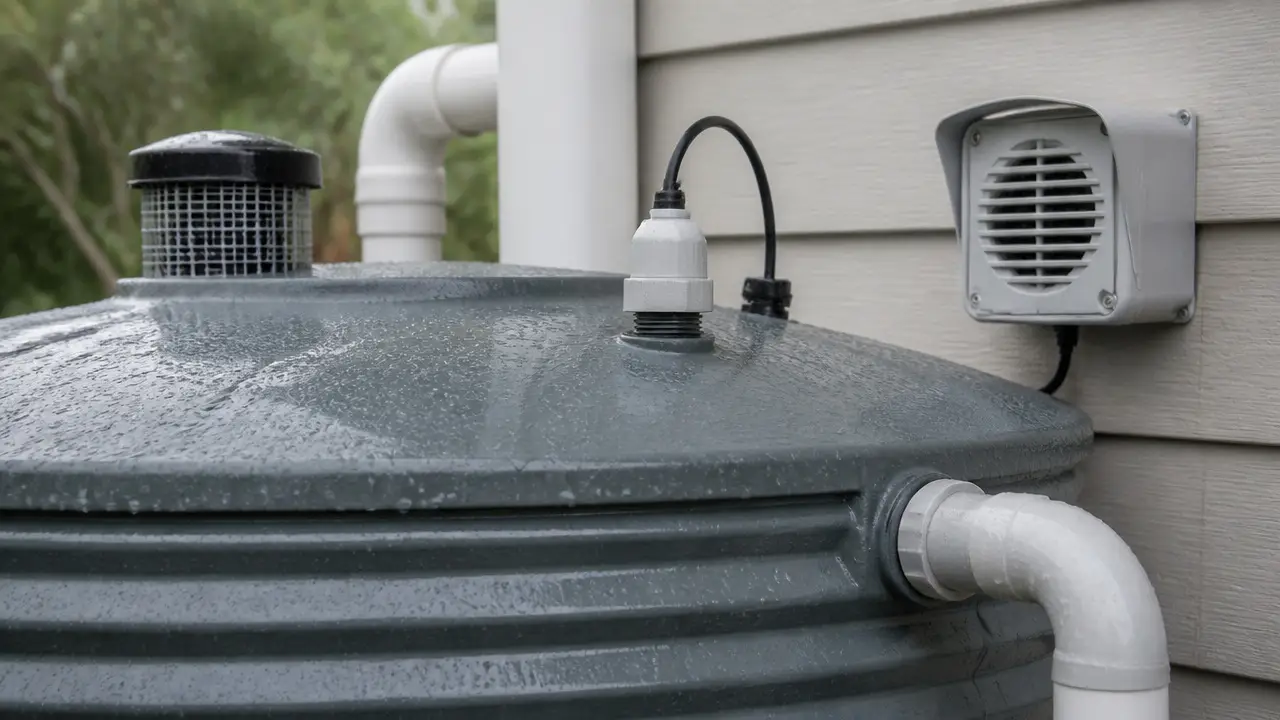
The La Crosse 724-1415BL is the strongest overall choice for a reader whose main question is rainfall. Its self-emptying outdoor bucket sends data to an indoor display and keeps multiple rainfall-history periods without requiring a full smart-weather platform. That focus makes it easier to use as a rainwater-management tool rather than as a hobby weather station.
The WeatherFlow Tempest is the most advanced system here. It uses a solar-powered outdoor sensor, provides app-based history, and includes measurements beyond precipitation such as wind, temperature, UV, and lightning activity. Its lack of a conventional tipping-bucket rain collector can reduce moving-part maintenance, but it is a much larger ecosystem commitment than a dedicated rain gauge.
The Sainlogic 12-in-1 is the best fit when you want a local console and broad weather data without depending on Wi-Fi. It tracks rainfall along with wind, pressure, temperature, humidity, and other values. The tradeoff is that calibration, display density, and multi-sensor setup make it less simple than the La Crosse.
The Sainlogic Smart WiFi Weather Station is more compelling when historical data and phone access are central. It adds app alerts, Wi-Fi connectivity, and a documented two-year archive with Excel export. That can be useful for comparing rainfall seasons with rainwater consumption, but long-term usefulness depends on the app and cloud service continuing to work reliably.
Best Overall: La Crosse 724-1415BL Wireless Rain Station
1 / 4
La Crosse 724-1415BL Wireless Rain Station

Rain History
Current to yearly total
Transmission
Over 330 ft claimed
Power
AA batteries
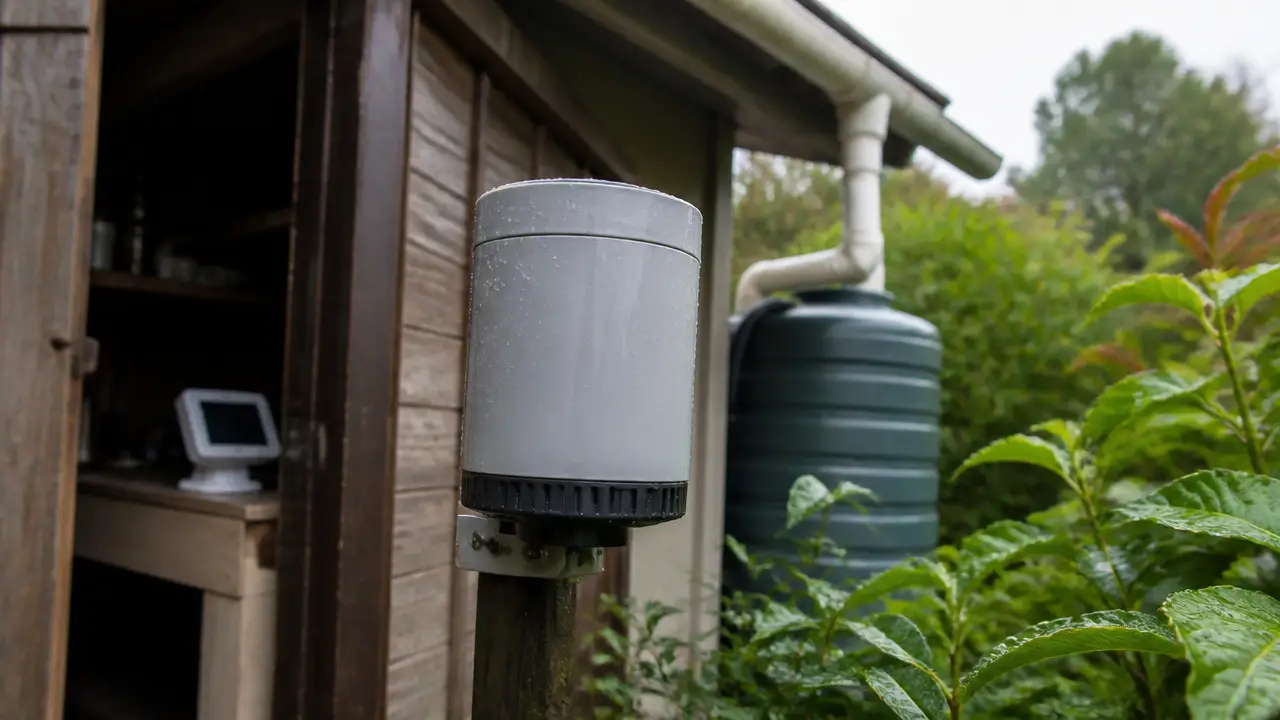
The La Crosse 724-1415BL keeps the focus on rainfall while adding temperature and humidity as secondary information. Its outdoor rain bucket uses a self-emptying rocker and transmits measurements to the indoor display, where you can view current rainfall as well as one-hour, 24-hour, seven-day, monthly, yearly, and total values.
That history is useful for rainwater harvesting because a single storm total often matters less than the pattern. A seven-day accumulation can explain why a tank is still full despite modest daily showers, while monthly totals help you compare stored-water availability across seasons.
The outdoor bucket has a documented transmission range over 330 feet in ideal conditions. Real installations can be shorter when the signal has to pass through walls or metal structures, so test the display before permanently mounting the collector.
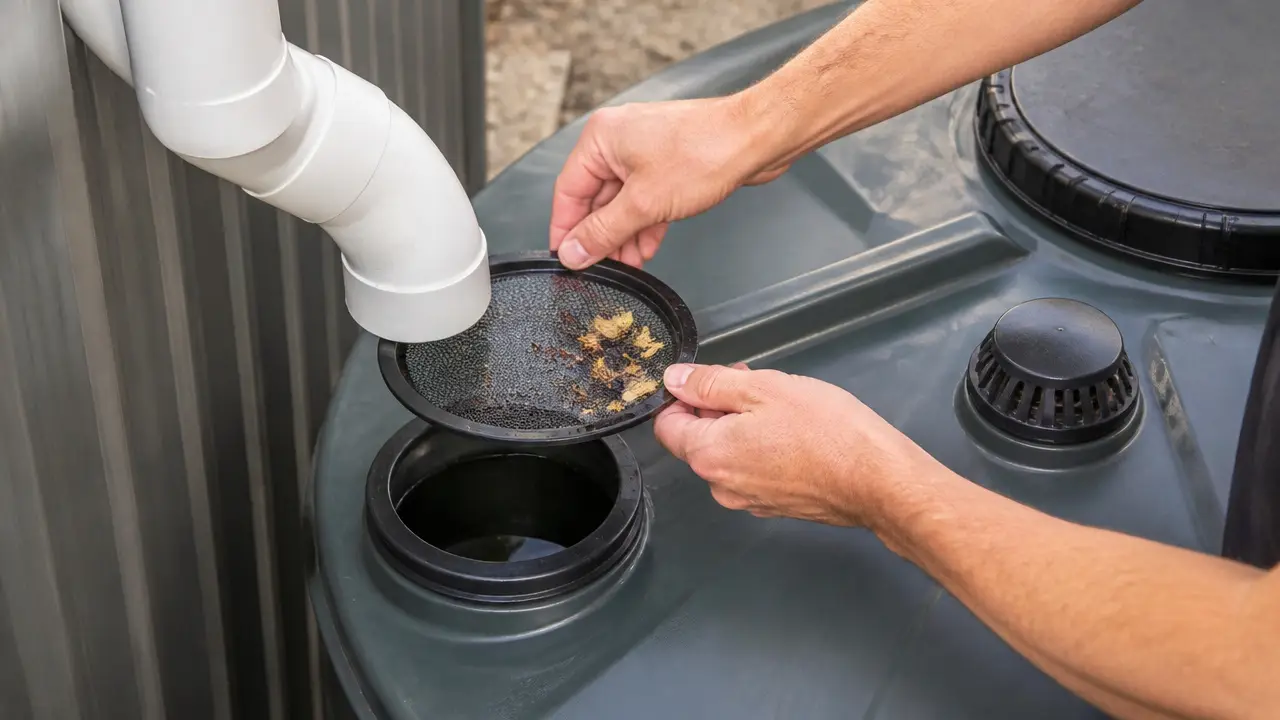
Maintenance is the main tradeoff. Customer evidence includes spider webs and debris interfering with the mechanism, along with units that eventually stopped recording correctly. A tipping mechanism should be treated like any other outdoor moving part: inspect and clean it periodically.
Why It Works
- Multiple rainfall-history periods make the data useful beyond a single storm.
- A dedicated indoor display works without needing an app for every reading.
- The self-emptying bucket avoids manual emptying after each event.
What To Keep In Mind
- The outdoor collector and display require batteries for complete operation.
- Insects, webs, and debris can stop the tipping mechanism from recording correctly.
- Wireless range through buildings may be much shorter than the open-area specification.
Best Smart Upgrade: WeatherFlow Tempest Weather Station
2 / 4
WeatherFlow Tempest Weather Station
Outdoor Power
Solar
Wireless Range
Up to 1,000+ ft claimed
Measures
Rain, wind, temperature, UV, lightning
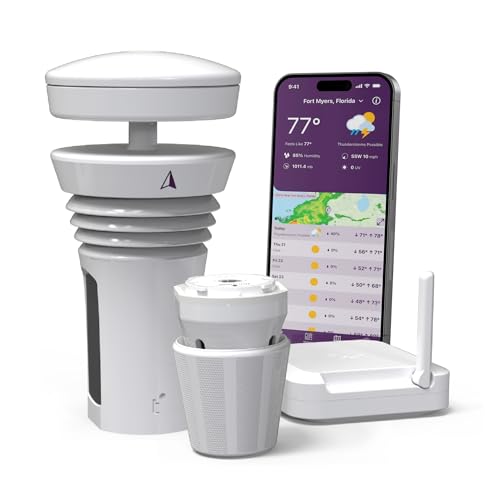
Tempest is the most technology-heavy option in this roundup, but it also solves several maintenance issues associated with conventional weather stations. The outdoor unit has no traditional rain-bucket rocker or cup anemometer, so there are fewer moving parts to clog or wear.
For rainwater planning, its value is the combination of local precipitation history and broader weather context. Temperature, wind, UV, and lightning data do not directly increase tank yield, but the app's historical graphs can help a user understand seasonal patterns and compare rainfall with irrigation demand.
The outdoor sensor is solar powered and communicates wirelessly to the system hub. The manufacturer documents more than 1,000 feet of wireless range under suitable conditions, which gives it a clearer role on larger properties where the best exposed mounting point is far from the house.
Customer evidence is generally positive about setup, local accuracy, and historical graphs. The tradeoff is ecosystem dependence. Integrations, app services, and third-party connections can add complexity or separate costs, so buy it for the core weather data first rather than assuming every integration will remain unchanged.
Why It Works
- Solar-powered outdoor sensing reduces routine battery replacement.
- No conventional tipping bucket means fewer moving rain-collector parts to clean.
- Long-range wireless design suits larger properties.
- App history provides more context than a single rainfall total.
What To Keep In Mind
- It is more system than most rain-only users need.
- Smart integrations and third-party services can change over time.
- Sensor placement still matters even when there is no physical rain bucket.
Best Without Wi-Fi: Sainlogic 12-in-1 Weather Station
3 / 4
Sainlogic 12-in-1 Weather Station

Connectivity
Wireless to local display
Display
6.5 in
Measures
Rain plus multiple weather variables
The Sainlogic 12-in-1 is the practical middle ground for someone who wants much more than rainfall but does not want Wi-Fi to be a requirement for normal viewing. Its outdoor station sends measurements wirelessly to a 6.5-inch indoor display and includes rainfall, wind, pressure, temperature, humidity, and other weather information.
This is useful when rainwater use is tied closely to garden conditions. Rainfall tells you what entered the collection system; temperature, humidity, and wind help explain how quickly soil and plants may need that stored water afterward.
The station also supports manual calibration. That is helpful if you have a trusted local reference, but calibration can become another maintenance task. Customer evidence includes both accurate rainfall experiences and reports of setup or calibration frustration.
Why It Works
- The local display provides weather data without requiring Wi-Fi for basic operation.
- Multiple measurements can support both collection and irrigation decisions.
- A large display is easier to read than phone-only dashboards for routine checks.
What To Keep In Mind
- It is unnecessarily complex if rainfall is the only value you need.
- Calibration and multi-sensor setup require more attention than a dedicated rain gauge.
- Loss of power at the display can affect retained history depending on configuration.
Best for Data Export: Sainlogic Smart WiFi Weather Station
4 / 4
Sainlogic Smart WiFi Weather Station

Wi-Fi
2.4 GHz
Data Archive
Up to 2 years claimed
Export
Excel
The Wi-Fi Sainlogic station is the clearest fit for a rainwater owner who wants to keep and analyze more than a few weeks of rainfall records. The manufacturer documents a two-year weather archive and Excel export, along with phone alerts and app-based charts.
That kind of history can be useful for comparing yearly rainfall with tank capacity or irrigation use. If your system repeatedly overflows during certain months and runs short during others, exported data can help show whether the problem is tank size, collection efficiency, or demand timing.
The outdoor sensor also measures more than rain, and the display provides a local view. The main caution is that cloud-connected products depend on software as much as hardware. Customer evidence includes concerns about pairing and older app support, which makes long-term service continuity a legitimate buying consideration.
Why It Works
- Historical archiving is useful for seasonal rainwater analysis.
- Excel export makes the data easier to compare with tank or irrigation records.
- Phone alerts and app access support remote monitoring.
What To Keep In Mind
- Wi-Fi connection is limited to 2.4 GHz according to the product evidence.
- App support and cloud-service continuity matter to long-term value.
- More data does not compensate for poor outdoor sensor placement.
How Digital Rain Gauges Help With Rainwater Harvesting
A digital gauge can reveal patterns that are easy to miss with memory alone. If the display shows two inches of rain over a week but the tank gained much less water than expected, investigate the collection path. If the tank repeatedly overflows after moderate storms, the rainfall history can help quantify how frequently existing storage reaches capacity.
The best approach is to record both rainfall and stored-water change. A rain station tells you what fell at the property. A tank-level reading or flow measurement tells you what the system actually captured or delivered. The difference between those values is often where maintenance problems become visible.
Common Digital Rain-Gauge Problems
The Gauge Records Too Little Rain
Check for debris, insect nests, spider webs, or a tipping bucket that cannot move freely. Make sure the collector is level and not sheltered by a roof edge or tree.
The Display Loses the Outdoor Sensor
Move the display temporarily closer to the sensor. Walls, metal siding, foil insulation, and other radio devices can reduce signal quality. Replace batteries before assuming the sensor has failed.
The Data Looks Wrong After a Power Loss
Some systems may lose history or reset settings after power interruptions. Review the manual for backup behavior, then reset units, calibration values, and clock settings as needed after an outage.
App Data Stops Updating
Separate the problem into three links: outdoor sensor to hub/display, hub/display to Wi-Fi, and app/cloud service to phone. A working outdoor sensor does not guarantee the cloud connection is still active.
Frequently Asked Questions
Are digital rain gauges more accurate than manual rain gauges?
Not automatically. Digital systems reduce reading and recordkeeping effort, but collector design, calibration, level placement, debris, and maintenance still determine whether rainfall is measured correctly.
Do digital rain gauges need Wi-Fi?
No. Some use radio-frequency communication between an outdoor sensor and indoor display. Wi-Fi is mainly needed for app access, remote alerts, cloud history, or online integrations.
How often should I clean a digital rain collector?
Inspect it regularly during the rainy season and whenever readings seem low or stop entirely. Tipping mechanisms are especially vulnerable to debris, insects, and spider webs.
Can I estimate tank yield from a digital rain gauge?
Yes, but rainfall depth is only one input. Roof area, runoff losses, diverters, filters, and tank overflow all affect how much water is actually captured.
Is a full weather station worth it for rainwater harvesting?
It can be when you also use temperature, humidity, wind, or historical data to manage irrigation. If you only need rainfall totals, a dedicated rain station is simpler and usually easier to maintain.
What happens if the outdoor rain sensor loses connection?
The display or app will stop receiving current data until the connection returns. Check batteries, distance, obstructions, pairing, and network status before replacing hardware.
If you want the simplest non-electronic reference for checking digital readings, compare the options in best rain gauges. To measure water after it has entered the collection system, water flow meters for rainwater systems can track volume moving through compatible hose connections.