As an affiliate, we may earn a commission from qualifying purchases. We get commissions for purchases made through links on this website from Amazon and other third parties.
Gutters usually overflow in heavy rain for one of four reasons: they are clogged, they are not sloped correctly, the downspouts cannot carry water away fast enough, or the gutter system is too small for the roof and rainfall.
Start by checking for blockages and drainage problems. If the gutters are clean but still overflow during strong storms, you may need more downspout capacity or a larger gutter system.
Find Out Where the Gutter Is Overflowing
Where the water spills over can tell you what is wrong.
If water overflows near a downspout, the downspout or its outlet may be blocked. If water spills over at the middle of a long gutter run, the gutter may sag or lack enough slope. If water shoots over the outside edge during hard rain, runoff may be moving down the roof faster than the gutter can catch it.
Watch the system from the ground during a safe rainfall if you can. Do not climb onto a wet roof or ladder during a storm.
Clean the Gutters and Downspouts First
Leaves, pine needles, roofing grit, seed pods, and other debris reduce the amount of water a gutter can carry.
Clean debris from the gutter channel and check each downspout opening. A downspout can look clear at the top while being plugged farther down.
You can also check the outlet where the downspout empties. Water needs somewhere to go. A buried drain, pipe, or extension that is clogged can cause water to back up into the gutter.
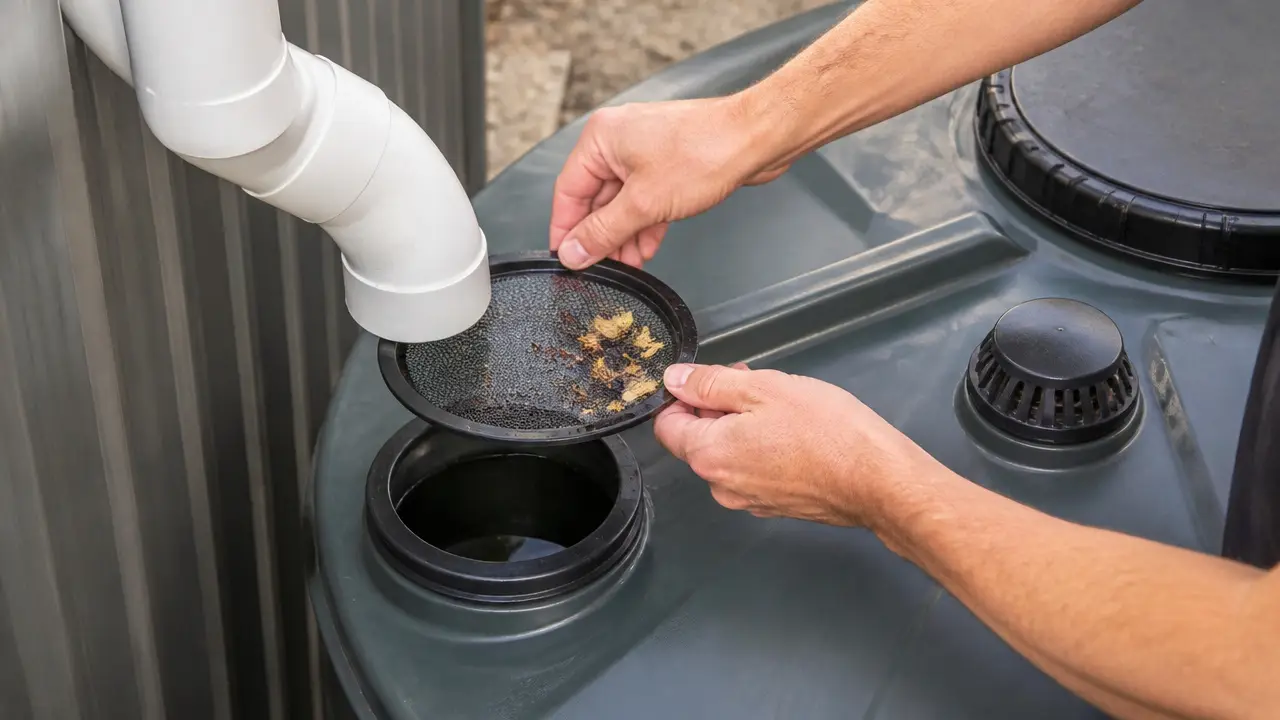
If your roof supplies a rain barrel or cistern, check the screen, rain head, diverter, and other fittings too. A blocked rainwater component can restrict the downspout just like a clog.
Check the Gutter Slope
Gutters need a slight slope toward their downspouts. Water should not sit in large pools after the rain stops.
A gutter that sags between hangers can create a low spot. Water collects there until it reaches the edge and spills over.
Loose or damaged hangers may be responsible. The fascia board behind the gutter can also deteriorate, making it difficult for the gutter to stay in the right position.
Small alignment problems may be suitable for DIY repair if the gutter is safely accessible. Long sections, high roofs, damaged fascia, or difficult ladder work are better handled by a qualified gutter installer.
Make Sure the Downspouts Can Keep Up
A gutter can only drain as fast as its outlets and downspouts allow.
One small downspout may not be enough for a long roof section during intense rainfall. Adding another properly located downspout can shorten the distance water must travel through the gutter.
This can be especially useful when overflow happens near the far end of a long gutter run.
Downspout size matters too. A larger outlet and downspout can usually move more water, but every part of the path needs to match. Installing a larger downspout below a small, restrictive gutter outlet may provide little improvement.
Also check elbows. Several sharp turns can slow water and provide places for debris to collect.
Check Whether the Gutters Are Large Enough
Sometimes nothing is wrong with the installation. The system simply cannot handle the amount of water coming off the roof.
The required drainage capacity depends mainly on:
- The roof area draining into that section of gutter
- Roof shape and slope
- Local rainfall intensity
- Gutter size and shape
- Number, size, and location of downspouts
A large roof section can send hundreds of gallons of water toward the gutters during a strong storm.
For example, about 0.623 gallons of water falls on each square foot of horizontal roof area for every inch of rain before allowing for losses. That means a 1,000-square-foot roof receives roughly 623 gallons from one inch of rainfall.
The important issue for gutter overflow is not only the total amount of rain. It is how quickly the rain falls.
One inch spread over several hours is much easier for a gutter to handle than one inch falling in a short, intense storm.
If clean, correctly sloped gutters repeatedly overflow during heavy rainfall, ask a gutter professional to evaluate the roof drainage area and local design rainfall rather than guessing at a larger size.
Watch for Water Shooting Past the Gutter
On steep roofs, valleys can concentrate a large amount of runoff into one small part of the gutter.
Instead of filling the gutter from below, fast-moving water may shoot over its outer edge.
This often happens where two roof sections meet and create a valley.
A properly designed splash guard or other gutter modification may help contain this concentrated flow. However, simply installing a tall barrier without considering drainage capacity can move the problem somewhere else.
The gutter and downspout still need enough capacity to carry the collected water away.
Check Gutter Position Under the Roof Edge
A gutter can overflow even when it has enough capacity if water does not enter it correctly.
The gutter should be positioned so roof runoff naturally reaches the channel. If it is installed too low, too far away from the roof edge, or at an unsuitable angle, fast runoff may pass over it.
Roof edges and flashing also matter. Water should drain from the roof into the gutter rather than behind it.
Reviewing common rain-diverter problems helps assess installation details that support reliable daily use.
Water running behind the gutter can damage fascia and may eventually affect walls or other parts of the building.
Because roof-edge flashing is part of the roofing system, problems in this area may require a roofer rather than a gutter adjustment alone.
Be Careful With Gutter Guards
Gutter guards can reduce the amount of large debris entering a gutter, but they do not automatically stop overflow.
Fine debris can still build up. Some guard designs may also struggle when a large amount of water reaches them quickly.
If an existing guarded gutter overflows, inspect both the top surface of the guard and the gutter beneath it.
Cleaning and maintenance are still required.
If the Gutter Feeds a Rainwater Tank
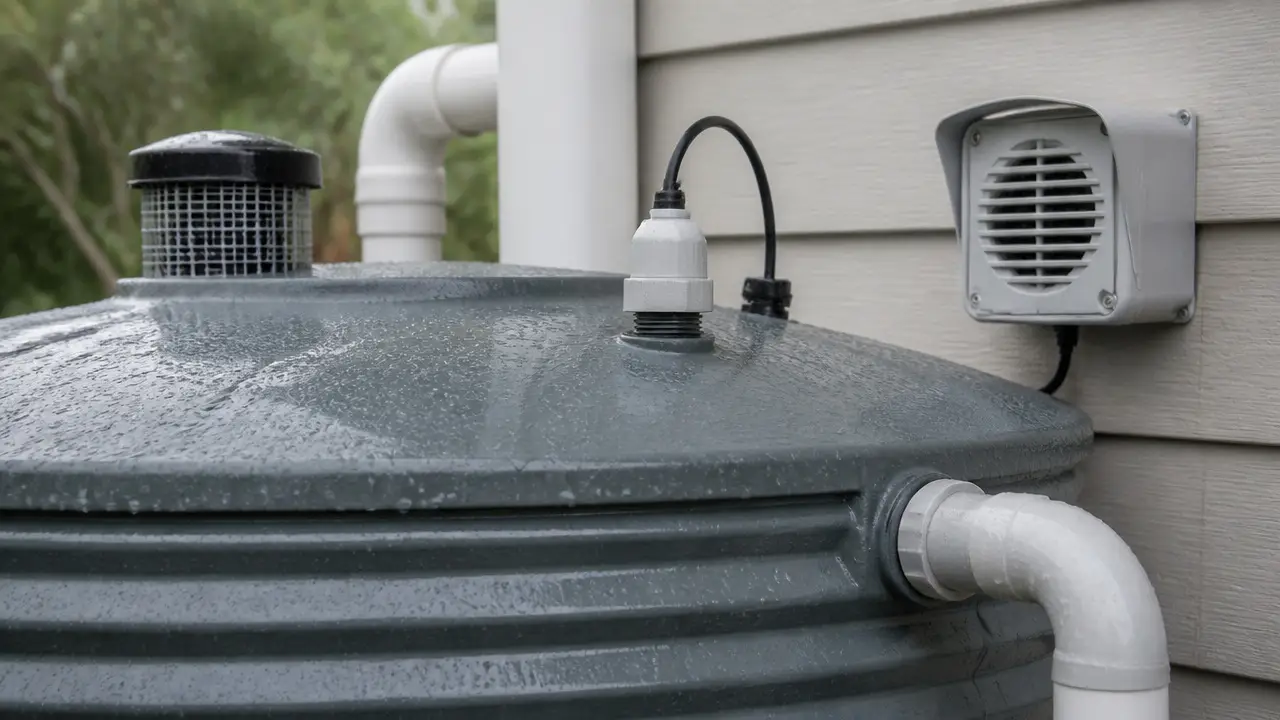
A rainwater harvesting system adds several possible restrictions to the drainage path.
Check the:
- Leaf screen or rain head
- Downspout diverter
- First-flush device
- Inlet screen
- Connecting pipes
- Tank inlet
- Tank overflow
A first-flush device diverts some of the first roof runoff away from storage so dirt and debris washed from the roof are less likely to enter the tank.
These parts should not restrict the roof drainage system enough to make gutters back up during rain.
The tank also needs a working overflow. Once the tank is full, additional rainwater must have a safe path away from the tank and building.
Do not seal or restrict a rainwater system in an attempt to force more water into storage. Roof drainage still needs to function when the tank is full.
Make Sure Water Can Leave the Downspout
Fixing the gutter does little good if the water backs up at ground level.
Downspouts should discharge to an appropriate drainage location according to local requirements. Extensions, drains, and pipes should remain open.
If a downspout connects to an underground drain, slow drainage during storms may indicate a blockage or an undersized drainage system.
Avoid directing large amounts of water toward foundations, neighboring property, or areas where erosion may occur.
A Practical Order for Fixing Overflow
Work from the simplest causes toward larger system changes.
- Remove debris from gutters and downspouts.
- Check that downspout outlets and drains are open.
- Look for sagging or standing water in the gutter.
- Check whether overflow is concentrated near roof valleys.
- Inspect the position of the gutter under the roof edge.
- Check rainwater diverters, screens, and tank connections for restrictions.
- Consider additional or larger downspouts if drainage remains too slow.
- Have the gutter capacity evaluated if the system still overflows during heavy storms.
This approach helps you avoid replacing gutters when the real problem is only a blockage or drainage restriction.
When to Call a Professional
Professional help is a good choice when the problem involves a high or steep roof, damaged fascia, roof flashing, long gutter sections, major resizing, or repeated overflow that has no obvious cause.
A professional can also determine whether the gutter and downspout capacity suits the roof area and the rainfall intensity used for drainage design in your area.
Stay off roofs and ladders during storms. Wet roofing, gutters, and ground conditions make falls much more likely.
Frequently Asked Questions
Why do my gutters overflow only during very heavy rain?
The gutter system may have enough capacity for normal rain but not for intense storms. Clean gutters can still overflow if the roof sends water into them faster than the downspouts can remove it.
Will adding another downspout stop gutter overflow?
It can help when a long gutter run cannot drain quickly enough. An additional downspout shortens the distance water has to travel. The outlet, downspout, and downstream drainage path must all have enough capacity.
Can clogged downspouts make gutters overflow?
Yes. A downspout blockage slows or stops drainage, causing water to rise in the gutter until it spills over the edge.
Why does water overflow at one corner of my gutter?
That area may receive concentrated runoff from a roof valley, or the gutter may have a low spot there. A clogged nearby downspout can cause the same symptom.
Do gutter guards prevent overflowing gutters?
Not necessarily. Guards can reduce large debris, but they may become covered with material or have trouble accepting very fast runoff. Gutters beneath them still need inspection and cleaning.
Should I install larger gutters?
Larger gutters may be appropriate when the existing system is undersized, but check clogs, slope, downspouts, and gutter position first. Proper sizing should account for the roof drainage area and local rainfall intensity.
Can a rain barrel cause my gutters to overflow?
Yes, if a diverter, screen, pipe, or other connection restricts the downspout. A rain barrel system should allow roof drainage to continue safely when the barrel is full.