As an affiliate, we may earn a commission from qualifying purchases. We get commissions for purchases made through links on this website from Amazon and other third parties.
A 100-gallon rain barrel holds about 378.5 liters of water and takes up about 13.4 cubic feet of internal volume. The exact outside size depends on the shape of the barrel.
As a rough planning guide, a 100-gallon container may be around 2.5 to 3 feet wide and 3 to 4.5 feet tall. Slim tanks can be taller and narrower. Squat tanks can be wider and shorter.
The important point is to check the actual outside dimensions before building a base or choosing a location. Two tanks that both hold 100 gallons can have very different shapes.
How Much Space Does 100 Gallons Take Up?
One US gallon equals about 0.134 cubic feet.
So:
100 gallons × 0.134 = about 13.4 cubic feet
If you could make a perfectly cubic 100-gallon tank, each side would be about 28.5 inches long.
Real rain barrels are rarely perfect cubes. Most are cylinders, rectangular tanks, or decorative shapes. They also need extra space for fittings, lids, overflow pipes, and sometimes a stand.
Example Cylinder Sizes
The same 100 gallons can fit into cylinders with very different dimensions.
For example, ignoring wall thickness and unused space:
| Approximate diameter | Approximate height needed for 100 gallons |
|---|---|
| 24 inches | 51 inches |
| 30 inches | 33 inches |
| 36 inches | 23 inches |
These are volume examples, not standard rain barrel dimensions. An actual barrel will usually need somewhat different outside dimensions because of its walls, shape, lid, fittings, and usable fill level.
How Heavy Is a Full 100-Gallon Rain Barrel?
Water is heavy.
One US gallon of water weighs about 8.34 pounds. That means 100 gallons of water weighs about:
834 pounds
Then you need to add the weight of the tank itself and any stand or supporting equipment.
A full 100-gallon rain barrel can therefore put well over 800 pounds on its base.
That load matters much more than the empty barrel's weight.
Use a Solid, Level Base
A 100-gallon barrel should sit on a firm, level surface that can support the full load without sinking, tilting, or shifting.
Suitable setups may include a properly prepared ground-level pad or another structure designed for the expected load.
Be more cautious with:
- decks
- balconies
- raised wooden platforms
- loose soil
- uneven pavers
- soft ground that becomes muddy after rain
Do not assume an existing deck or platform can safely hold the tank. Structural capacity depends on how the structure was built and where the load is placed.
How Much Ground Space Should You Allow?
Do not plan around the barrel dimensions alone.
You also need room for the water connections.
Allow space for:
- the downspout or rainwater inlet
- an overflow pipe
- a hose or irrigation connection
- the outlet valve
- a linking hose if you connect several barrels
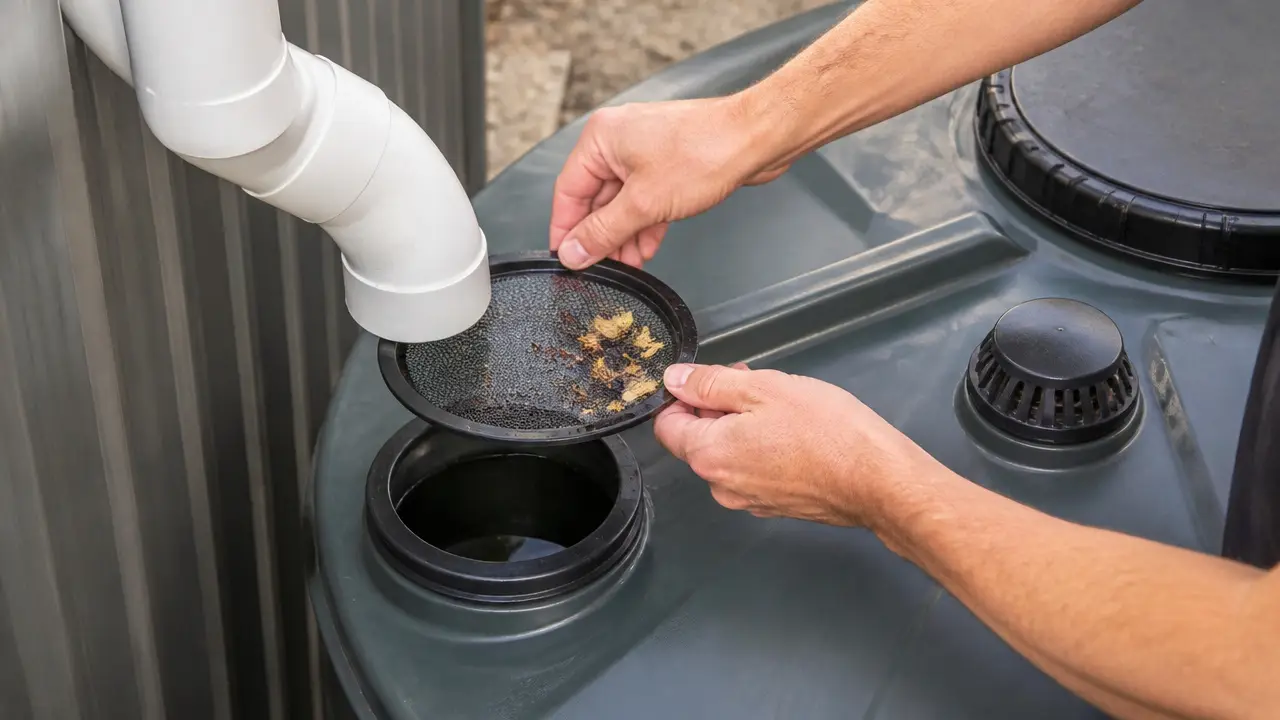
- access to the lid or screen
- cleaning and maintenance
A barrel that is 30 inches wide, for example, should not necessarily be placed in a space only 30 inches wide.
You need enough room to reach the fittings and remove or clean parts later.
How Much Roof Can Fill a 100-Gallon Barrel?
It usually takes less rainfall than people expect to fill a 100-gallon barrel.
A useful rainwater-yield estimate is:
Gallons collected = roof area in square feet × rainfall in inches × 0.623
For example, 200 square feet of roof receiving 1 inch of rain has a theoretical yield of:
200 × 1 × 0.623 = about 125 gallons
Actual collection will be lower because some water is lost to wetting the roof, splashing, gutter losses, leaks, debris removal, and any first-flush system.
A first flush device diverts some of the first roof runoff away from storage. That early runoff often carries more dirt and debris from the roof.
This means even a relatively small section of roof can fill a 100-gallon barrel during a good rain.
Is 100 Gallons Enough for a Garden?
It can be useful, but 100 gallons does not go as far as its size may suggest.
For a small garden, containers, or occasional hand watering, it can provide a useful supply between rains.
A larger garden can use 100 gallons quickly.
For example, if your irrigation setup delivers 2 gallons per minute in total, 100 gallons would provide no more than about 50 minutes of theoretical watering time. The actual usable amount may be lower because the barrel may not drain completely and flow can fall as the water level drops.
Before choosing a barrel size, think about:
- how much roof area will feed it
- how often rain falls in your area
- how much water you normally use
- how long you want stored water to last
A larger tank does not create more rainwater. It simply lets you store more of the runoff available between storms.
Will a 100-Gallon Barrel Have Good Water Pressure?
Not necessarily.
Tank capacity and water pressure are different things.
A 100-gallon barrel sitting on the ground can hold plenty of water while still producing weak gravity pressure at a hose.
Gravity pressure depends mainly on head height, which is the vertical distance between the water surface and the point where you use the water.
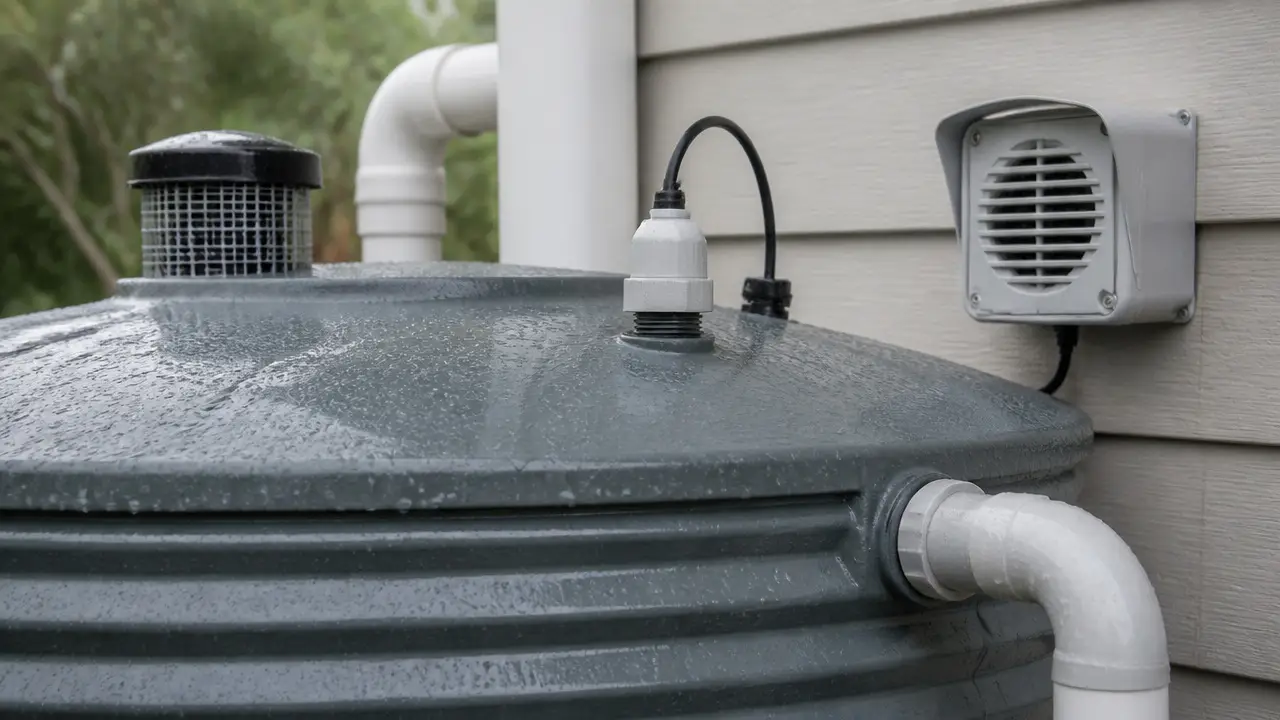
Evaluate key facts about the typical sizes of rainwater barrels to assess tank venting and overflow control during extended storage.
As a rough rule, every 2.31 feet of vertical water height produces about 1 psi of pressure.
That means raising a rain barrel only a foot or two does not produce household-style water pressure.
Gravity flow can still work well for:
- filling watering cans
- slow hose filling
- some low-pressure drip irrigation
- transferring water downhill
Sprinklers and other equipment that require higher pressure may need a suitable pump.
Do not build a high barrel stand simply to increase pressure without considering the weight. A full 100-gallon tank creates a very large load, and elevated tank structures need to be designed accordingly.
Is a 100-Gallon Rain Barrel Bigger Than an IBC Tote?
No.
A common full-size IBC tote holds considerably more water than a 100-gallon rain barrel. IBC totes are often used when a homeowner needs several hundred gallons of storage rather than a small amount beside a downspout.
A 100-gallon barrel has some advantages when space is limited. It may fit beside a house, shed, greenhouse, or garden where a larger tank would be impractical.
The right choice depends more on available space and expected water use than on capacity alone.
Make Sure the Barrel Fits the Whole System
Before buying or placing a 100-gallon rain barrel, check more than its capacity.
Inlet
Make sure your downspout, diverter, or inlet can connect to the barrel without awkward bends or uphill sections.
A diverter sends some downspout water into the barrel while allowing excess water to continue through the drainage system.
Overflow
A 100-gallon barrel can fill quickly.
Once it is full, every additional gallon has to go somewhere. The overflow should carry water safely away from places where it could cause erosion, foundation moisture, or localized flooding.
An overflow outlet that is too small can become a problem during heavy rain.
Outlet Height
Most gravity-fed barrels have an outlet near the bottom.
Check whether there is enough space to connect a hose or place a watering can under the valve. A low outlet can be difficult to use if the barrel sits directly on the ground.
Screens and Covers
Openings should be protected from leaves, insects, animals, and accidental entry.
A screen also helps keep larger debris out of the barrel, though it does not make roof runoff safe to drink.
Can You Use a 100-Gallon Barrel for Drinking Water?
A barrel's capacity does not tell you whether its water is suitable for drinking.
Roof runoff can pick up dirt, animal waste, roofing materials, microorganisms, chemicals, and other contaminants before entering storage.
Drinking-water use requires a whole-system approach. That can include suitable collection surfaces, debris control, appropriate storage, treatment stages, current laboratory testing, regular maintenance, and compliance with applicable local requirements.
A screen, sediment filter, UV unit, purifier, chemical treatment, test strip, or handheld meter by itself does not establish that collected rainwater is safe to drink.
For household drinking-water systems, use current public-health guidance and qualified professional help where appropriate.
How to Decide Whether 100 Gallons Is the Right Size
A 100-gallon rain barrel makes sense when you want more storage than a small barrel provides but do not have room or need for a large cistern.
Before choosing one, measure:
- available width
- available depth
- available height
- downspout location
- inlet height
- overflow route
- maintenance access
Then check the manufacturer's actual dimensions.
Also plan for the barrel's 800-plus-pound filled weight, not just whether the empty container physically fits.
If you regularly fill and empty a 100-gallon barrel, adding another linked barrel or moving to a larger tank may provide more useful storage than trying to conserve every gallon in a single container.
Frequently Asked Questions
What are the dimensions of a 100-gallon rain barrel?
There is no standard size. A rough planning range is about 2.5 to 3 feet wide and 3 to 4.5 feet tall, but the actual dimensions depend on the shape. Always check the specific tank's outside measurements.
How much does 100 gallons of water weigh?
One hundred US gallons of water weighs about 834 pounds. The tank and supporting structure add additional weight.
How many liters are in a 100-gallon rain barrel?
A 100-US-gallon barrel holds about 378.5 liters.
How quickly can a 100-gallon rain barrel fill?
It can fill during a single storm if enough roof area drains into it. For example, 200 square feet of roof receiving 1 inch of rain has a theoretical runoff yield of about 125 gallons before collection losses.
Can I put a 100-gallon rain barrel on a deck?
Only if the structure is suitable for the load. The water alone weighs about 834 pounds, concentrated in a relatively small area. Do not assume a deck or balcony can safely support it.
Does a 100-gallon barrel provide more water pressure than a smaller barrel?
Not simply because it holds more water. Gravity pressure mainly depends on the vertical height of the water above the outlet or point of use.
Can I connect two 100-gallon rain barrels together?
Yes, if the tanks and fittings are suitable. Linked barrels need correctly sized connections, stable bases, and an overflow arrangement capable of handling incoming rain once the combined storage is full.