As an affiliate, we may earn a commission from qualifying purchases. We get commissions for purchases made through links on this website from Amazon and other third parties.
A wireless weather station is “best” when it gives dependable readings at your property, stays connected, and measures the weather you actually care about. For rainwater harvesting, the most useful station is usually one with a good rain gauge, temperature and humidity sensors, wind measurement, and a reliable wireless connection to an indoor display or internet gateway.
There is no single wireless weather station that stays “best rated.” Retail ratings change, and high ratings often reflect app design, setup, or extra features rather than measurement quality. For rainwater planning, rainfall accuracy, sensor placement, reliability, and access to historical data matter more than the highest star rating.
What Type of Wireless Weather Station Is Best?
For most homeowners, a full outdoor weather station with separate or well-positioned sensors is the best choice.
A useful home station normally measures:
- Rainfall
- Outdoor temperature
- Relative humidity
- Wind speed
- Wind direction
- Barometric pressure
Some stations also measure solar radiation, UV levels, lightning, soil moisture, or indoor air conditions. Those readings can be useful, but they are not necessary for most rainwater systems.
If your main goal is tracking how much rain reaches your property, put the quality and placement of the rain gauge ahead of extra features.
Best Wireless Weather Station Type by Use
| Your main use | Best station type | Most important feature |
|---|---|---|
| Rainwater harvesting | Full station with dependable rain measurement | Rain gauge accuracy |
| Garden irrigation | Rain, temperature, and humidity station | Rainfall history |
| General home weather | All-in-one wireless station | Reliable sensors and display |
| Detailed weather records | Higher-quality station with data export | Historical data access |
| Wind monitoring | Station with properly mounted anemometer | Flexible wind sensor placement |
| Remote property or cabin | Long-range wireless or internet-connected station | Connection reliability |
For a rainwater system, a station that records rainfall over days, weeks, months, and years is especially useful. A simple current-weather display cannot tell you nearly as much about how your water supply changes through the seasons.
Why Rainfall Measurement Matters Most for Rainwater Harvesting
Rainfall tells you how much water could reach your storage system.
A basic estimate is:
Collected water = roof area × rainfall × collection efficiency
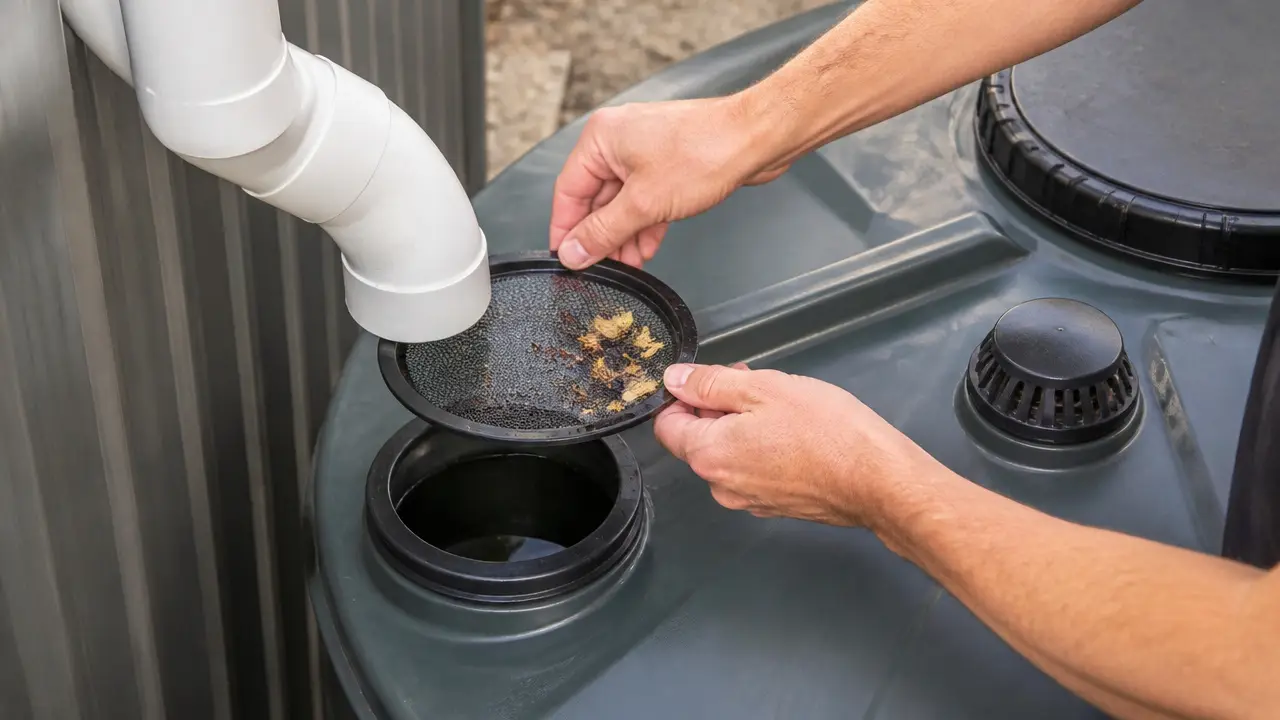
Actual collection will be lower than the theoretical maximum. Water can be lost through splash, gutter overflow, leaks, evaporation, debris screens, and a first-flush system.
A first flush is a device that diverts the first portion of roof runoff. This water may carry more dust, pollen, bird droppings, leaves, and other material from the roof.
A weather station gives you local rainfall data instead of relying only on measurements from an airport or weather station several miles away.
That difference can matter. Summer storms, thunderstorms, and mountain or coastal weather can produce very different rainfall totals over short distances.
A High Rating Does Not Guarantee Accurate Rain Data
Consumer ratings can help identify problems such as difficult setup or frequent connection failures. They cannot tell you whether a station is installed correctly.
Sensor location can make a large difference.
The National Weather Service notes that rain gauge exposure is important for accurate precipitation measurements. Nearby trees and buildings can disturb falling rain, while very exposed or elevated locations can also create wind-related errors.
This means a highly rated station mounted in a poor location can provide worse rainfall data than a simpler station installed correctly.
All-in-One vs. Separate Sensors
Wireless home stations commonly use one of two designs.
All-in-one sensor stations
An all-in-one station places the rain gauge, temperature sensor, humidity sensor, and wind instruments on one outdoor assembly.
The main advantages are:
- Easier installation
- Fewer mounting points
- Less wiring
- Simple setup
The problem is that different weather sensors have different ideal locations.
A wind sensor works best with plenty of open exposure. A temperature sensor needs protection from heat sources and poor airflow. A rain gauge needs suitable exposure without severe wind turbulence.
One mounting point may not be ideal for all three.
Modular or separate-sensor stations
A modular station lets you place some sensors separately.
This can make installation more complicated, but it gives you more control over measurement quality.
For example, you could place:
- The temperature sensor over representative ground
- The rain gauge in an appropriate open location
- The wind sensor higher and farther from nearby obstacles
For someone who cares about the quality of the weather record, this flexibility can be more valuable than a simpler all-in-one design.
Check Rain Gauge Design
Many home weather stations use a small tipping mechanism to measure rainfall.
The comparison “What Is the Best Digital Weather Station for Home Use?” shows how sensor placement and reporting affect a useful reading.
Rain enters a collector and fills one side of a small tipping bucket. When enough water enters, the bucket tips. The station counts these movements and converts them into rainfall.
Other stations use different electronic rain-sensing methods.
Whatever design you choose, check whether the rain sensor can be:
- Cleaned easily
- Inspected for insects and debris
- Checked for level
- Calibrated or corrected if necessary
- Protected from leaves without blocking rain
A rain gauge that cannot be maintained easily may become less useful over time.
Leaves, spider webs, insects, dirt, and bird debris can interfere with small rain collectors.
Look for Historical Rainfall Data
For rainwater harvesting, yesterday's rainfall total is only part of the story.
Historical data lets you compare:
- Daily rainfall
- Weekly totals
- Monthly totals
- Dry periods
- Wet seasons
- Rainfall between tank overflows
- Rainfall between periods when storage becomes low
This information can help you understand how your storage system behaves.
For example, suppose your tank repeatedly becomes full after moderate storms. Additional storage might capture water that is currently overflowing.
If the tank frequently becomes empty during long dry periods, however, storage capacity is only one part of the problem. Your roof collection area, water demand, seasonal rainfall, and backup supply may also matter.
A station with downloadable records is therefore more useful for serious system planning than one that stores only short-term readings.
Check Wireless Range Carefully
The advertised wireless range is not the same as the range you will always get at home.
Walls, metal siding, roofs, trees, terrain, appliances, and other radio equipment can affect the connection.
Before choosing a station, think about the path between the outdoor sensor and its receiver.
A station installed on a detached garage, barn, garden structure, or distant tank may need much more wireless range than a station mounted close to the house.
Do not choose based only on the maximum range printed in specifications. Look for information about expected range when walls and other obstacles are present.
Wi-Fi Is Not the Same as Sensor Wireless
These terms can be confusing.
A wireless weather station may use one radio connection between the outdoor sensors and an indoor console. The console may then use Wi-Fi to send information to the internet.
So there may actually be two connections:
Outdoor sensor → indoor receiver → Wi-Fi router → internet service
A strong home Wi-Fi signal does not guarantee that the outdoor sensor can communicate with the indoor receiver.
Check both connections when planning the installation.
Sensor Placement Can Matter More Than Sensor Specifications
A temperature sensor beside a sunny wall can read warmer than the surrounding air.
A wind sensor below a roofline may read lower wind speeds.
A rain gauge under a tree may miss rain or collect dripping water after the storm.
The National Weather Service recommends placing temperature instrumentation over representative ground with good ventilation and away from surfaces that can affect readings. Its guidance also stresses the importance of keeping precipitation gauges away from obstructions that disturb rainfall.
For wind measurements, professional standards generally place instruments much higher than most homeowners can practically achieve. NWS guidance for personal stations recognizes that residential properties often require compromises because of buildings, trees, yard size, and other limits.
Use recommended wireless rain gauges for remote rainfall monitoring to compare the selection in relation to the complete water route.
The technical overview “What Is the Best Home Weather Station in 2026?” connects monitoring accuracy to storage and irrigation decisions.
You do not need a professional weather site in your backyard. You should simply understand that location affects the readings.
Features Worth Paying Attention To
Extra features are useful only when they solve a real problem.
For a dependable wireless station, focus on these areas.
Replaceable or serviceable sensors
Outdoor sensors spend years in sun, rain, heat, cold, dust, and wind.
A station is easier to keep running if common parts can be cleaned, replaced, or serviced instead of requiring replacement of the whole system.
Data export
Look for a way to download your weather history if long-term rainfall records matter.
Standard file formats are especially useful because you are less dependent on one app.
Local storage
Cloud access is convenient, but local storage can preserve measurements during an internet outage.
Check what happens when internet service fails.
Calibration or correction
Some stations allow rainfall, temperature, humidity, or pressure measurements to be adjusted.
This does not automatically make a station accurate. It does give you a way to correct a known, repeatable measurement error.
Update frequency
A station that updates frequently provides more useful wind and storm information.
Rainwater planning usually does not require updates every few seconds, but long delays can make a station feel less useful for current conditions.
Power system
Outdoor units may use batteries, solar-assisted power, or both.
Check what happens during long cloudy periods and whether batteries are easily replaceable.
Cold weather can also reduce battery performance.
Weather Station Features You May Not Need
It is easy to choose a station based on the longest feature list.
For rainwater harvesting, features such as indoor comfort forecasts, moon phases, elaborate color displays, voice assistants, and decorative forecast icons usually have little effect on the usefulness of your rainfall record.
Prioritize measurement and reliability first.
A simpler station with a dependable rain gauge and accessible historical data may be a better choice than a feature-heavy station that is difficult to maintain.
Can a Weather Station Tell You How Much Water Is in Your Tank?
No.
A weather station measures conditions such as rainfall. It does not directly measure stored water unless it is connected to a separate tank-level system.
Rainfall data can help estimate incoming water, but actual storage depends on many other factors, including:
- Roof area
- Gutter performance
- First-flush diversion
- Screen and filter losses
- Overflow
- Leaks
- Water use
- Tank capacity
If knowing your actual stored volume matters, use an appropriate tank-level sensor rather than calculating it from rainfall alone.
The related explainer “Which Weather Station Is the Most Reliable?” helps distinguish a useful alert from a misleading measurement.
Can Weather Station Rainfall Replace a Tank-Sizing Calculation?
Not by itself.
Historical measurements from your own property can improve a rainwater plan, but you still need to consider collection area, water demand, storage capacity, and seasonal rainfall.
A year with unusually heavy or light rainfall should also not be treated as a guarantee of future conditions.
For an initial system design, long-term rainfall records from a suitable official source are usually more useful than a short record from a new backyard station. Your personal station can then help you understand how conditions at your property compare.
What About Weather Stations That Share Data Online?
Internet sharing can be useful if you want to see your station remotely or contribute observations to a larger network.
The National Weather Service's Citizen Weather Observer Program, or CWOP, accepts observations from properly configured personal weather stations. NWS emphasizes both proper station siting and suitable data transmission when using these observations.
Network compatibility can therefore be a useful feature if you want more than a private backyard display.
It is not necessary for basic rainwater monitoring.
How to Choose the Best Wireless Weather Station
For most homeowners, use this order when comparing stations:
- Decide what you need to measure. For rainwater harvesting, rainfall should usually come first.
- Check whether you have a good sensor location. Think about trees, walls, roofs, pavement, and wind exposure.
- Check rain gauge maintenance. You should be able to inspect and clean it.
- Check wireless distance. Consider walls and buildings between the outdoor unit and receiver.
- Look at historical data storage. Monthly and yearly rainfall records are useful for water planning.
- Check data access. Decide whether you want an indoor console, phone access, computer downloads, or all three.
- Consider replaceable parts and batteries. Outdoor equipment eventually needs maintenance.
- Check internet dependence. Know which functions stop working if your internet connection goes down.
For rainwater use, these factors are more important than simply choosing whichever station currently has the highest consumer rating.
The Best Choice for RainwaterGuide Readers
For rainwater harvesting and garden use, the strongest overall choice is usually a wireless weather station with dependable rainfall measurement, accessible historical records, serviceable outdoor sensors, and enough placement flexibility to avoid obvious measurement problems.
If you only want rainfall data, a dedicated wireless rain gauge may be all you need.
If you also want wind, temperature, humidity, and pressure records, a complete weather station makes more sense.
If accurate weather records are a priority, a station that allows better placement of individual sensors has an advantage over a compact design that forces every sensor into the same location.
In every case, installation matters. A well-sited, maintained station can provide much more useful information than a highly rated station placed where the roof, trees, pavement, or nearby walls distort its readings.
Frequently Asked Questions
What is the best wireless weather station for rainwater harvesting?
Choose a station with dependable rainfall measurement, historical rainfall records, reliable wireless communication, and a rain gauge that can be cleaned and inspected easily. Extra weather features are secondary.
Are expensive wireless weather stations always more accurate?
No. Cost and feature count do not guarantee better readings. Sensor design, calibration, maintenance, and especially installation location can all affect measurement quality.
Is an all-in-one weather station accurate enough?
It can be useful for normal home monitoring. The compromise is placement because temperature, rain, and wind sensors do not all have the same ideal location. Separate sensors provide more installation flexibility when measurement quality matters.
Where should I put a wireless rain gauge?
Place it where nearby objects will not block rainfall or create severe turbulence. Avoid installing it directly under trees, beside walls, or in other locations that obviously disturb falling rain. Follow the manufacturer's mounting instructions and keep the gauge level when required.
Can I put my entire weather station on the roof?
A roof may improve wind exposure, but it can create problems for temperature and rainfall measurements. Roof surfaces can heat the surrounding air, and elevated locations may expose rain gauges to more wind. Roof work also adds fall and lightning risks, so do not climb or install equipment where you cannot work safely.
How often should a weather station rain gauge be cleaned?
Inspect it regularly and after conditions likely to introduce debris. Leaves, insects, dirt, pollen, and spider webs can interfere with a small rain collector. Follow the manufacturer's cleaning instructions and avoid damaging the tipping or sensing mechanism.
Do I need Wi-Fi for a wireless weather station?
Not necessarily. Many stations communicate wirelessly between the outdoor sensors and an indoor receiver without Wi-Fi. Internet-connected features such as remote viewing, cloud history, or online weather sharing may require Wi-Fi or another internet connection.
Can a personal weather station predict how much rainwater I will collect?
It can provide local rainfall measurements that help estimate collection, but it cannot determine your stored volume by itself. Roof area, first-flush diversion, gutter losses, filters, overflow, leaks, tank size, and water use also affect how much water remains in storage.