As an affiliate, we may earn a commission from qualifying purchases. We get commissions for purchases made through links on this website from Amazon and other third parties.
Yes. Rain barrels can be used for irrigation, and garden watering is one of their most practical uses. They work especially well for watering individual plants, raised beds, and small garden areas.
The main limitation is pressure. A rain barrel usually provides much less water pressure than a household faucet. Your irrigation setup must be designed to work with that low pressure, or you may need a pump.
How Rain Barrel Irrigation Works
A basic system follows a simple path:
Roof → gutter → downspout → rain barrel → irrigation line → plants
Rain falls on the roof and moves through the gutters into the barrel. Water then leaves through a fitting or spigot near the bottom.
From there, you can use the water with:
- A watering can
- A garden hose for slow watering
- A soaker hose designed for low pressure
- A gravity-fed drip irrigation system
- A pump-fed irrigation system
The best choice depends on the size of the garden and how much pressure the irrigation equipment needs.
Gravity-Fed Irrigation Is the Simplest Option
A rain barrel can feed an irrigation line without electricity if the barrel is higher than the area being watered.
This is called gravity-fed irrigation.
Water pressure increases as the water surface gets higher above the outlet or irrigation line. This vertical difference is sometimes called head height.
A typical rain barrel sitting only a few feet above a garden produces fairly low pressure. That is much less than the pressure available from a household water supply.
This means a standard irrigation system designed for city-water pressure may not work correctly.
Raising the Barrel Can Help
Placing a rain barrel on a stable platform increases the height difference between the stored water and the garden.
Even so, do not raise a full barrel on a weak stand just to gain pressure.
Water is heavy. A full 55-gallon barrel contains roughly 460 pounds of water, before adding the weight of the barrel and fittings. The base should be level, stable, and able to support the load.
Raising a barrel a few feet improves gravity flow, but it does not turn the system into a normal pressurized water supply.
Drip Irrigation Can Work Well With Rain Barrels
Drip irrigation is often a good match because it applies water slowly near plant roots.
However, not every drip system works at very low pressure.
Many conventional drip components are designed to receive higher and more consistent pressure than a barrel provides. Pressure-compensating emitters, some timers, filters, and valves may have minimum operating-pressure requirements.
For a gravity system, look for irrigation components specifically designed for low-pressure or gravity-fed operation.
A simple setup might include:
- A screened rain barrel
- A bottom outlet
- A shutoff valve
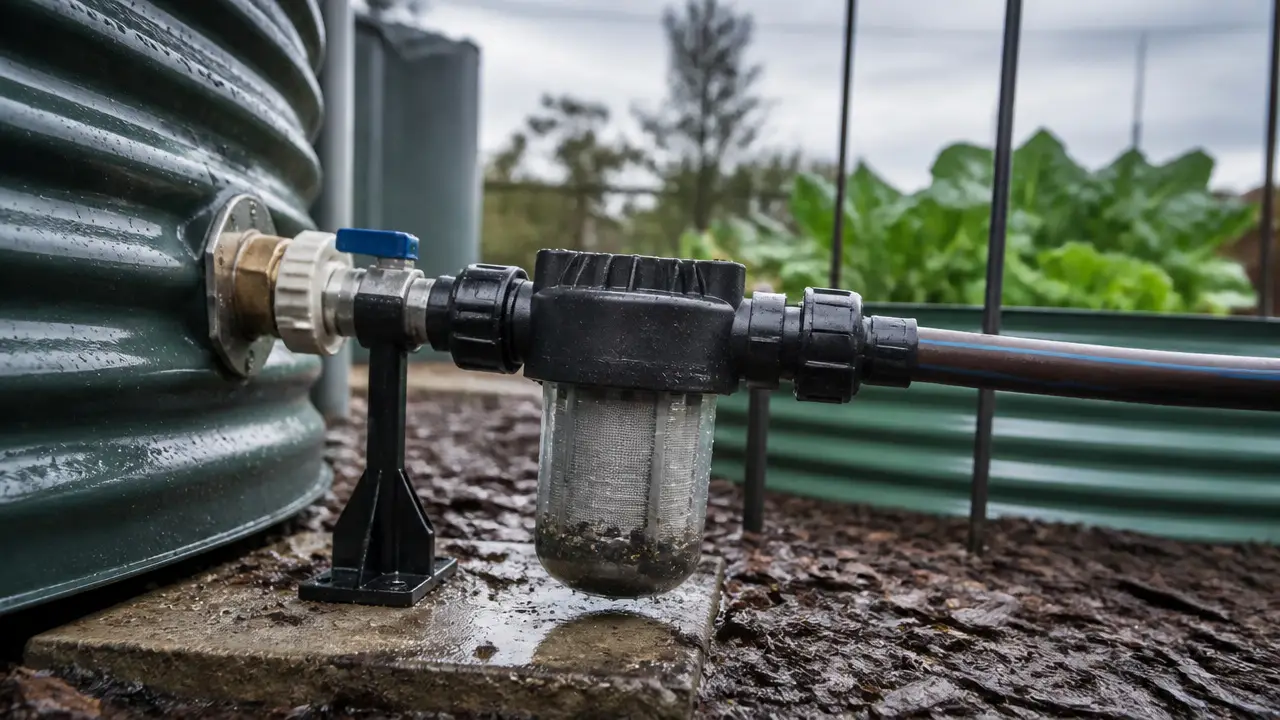
- A filter or screen
- Low-pressure irrigation tubing
- Suitable drip emitters or open-ended distribution lines
Keeping the irrigation runs relatively short can also help produce more even watering.
A Pump Can Provide More Pressure
A pump may make sense when you want to water:
- A larger garden
- An area uphill from the barrel
- Long irrigation lines
- Multiple irrigation zones
- Equipment that needs more pressure than gravity can provide
Pump selection depends on both flow rate and pressure.
Flow rate describes how much water the pump can move over a period of time, often measured in gallons per minute.
You also need to consider the vertical lift, pipe or hose length, fittings, and the pressure required by the irrigation equipment.
Do not choose a pump based only on its maximum advertised flow. Its actual output changes as it works against greater height and pressure.
Dry-running is another concern. A pump can be damaged if the barrel empties while the pump is operating. A suitable low-water shutoff or dry-run protection can help protect the system.
Outdoor electrical pumps should be installed according to the manufacturer's requirements and applicable electrical rules. Have a qualified professional handle electrical work when needed.
Add a Filter Before Small Irrigation Openings
Roof runoff can carry:
- Leaves
- Seeds
- Insects
- Roof debris
- Sediment
- Small organic particles
Large debris should be kept out of the barrel with appropriate inlet screening.
If you use drip emitters or other irrigation parts with small openings, additional filtration may be necessary. Small particles that pass through a barrel screen can clog emitters.
The filter should match the requirements of the irrigation equipment. A finer filter is not automatically better because very fine filters can require more cleaning and may restrict flow in a low-pressure system.
Inspect and clean the filter regularly rather than waiting until water flow noticeably drops.
Keep the Barrel Covered and Screened
An irrigation barrel should not be left as an open container.
Use a secure cover and appropriate screening at openings where mosquitoes or debris could enter. The exact setup depends on how the downspout connects to the barrel.
Also provide a controlled overflow.
Once the barrel fills, additional rain needs somewhere safe to go. The overflow should carry water away without causing erosion, foundation problems, or unwanted drainage onto neighboring property.
Is Rain Barrel Water Safe for Vegetable Gardens?
Rainwater collected from a roof is not automatically clean just because it came from rain.
Roof runoff can pick up contaminants from roofing materials, animal droppings, airborne material, gutters, and accumulated debris.
For ornamental plants, this is usually less complicated because the water is not being applied to food.
For edible gardens, use more care. Avoid treating untreated roof runoff as drinking-quality water. Where collected rainwater is used around edible crops, irrigation methods that apply water to the soil rather than spraying the edible portions of the plant can reduce direct contact.
The suitability of a particular roof and collection system also matters. Roof materials, coatings, nearby contamination sources, and local requirements can affect how collected water should be used.
Factor in drip irrigation supplied by a rain barrel to evaluate the storage-vessel configuration for the installation area.
If rainwater will be used in a way that could affect human consumption, especially for drinking or household uses, treat that as a separate water-quality question. Making harvested rainwater potable requires a properly designed collection and treatment system, ongoing maintenance, appropriate laboratory testing, and compliance with applicable local requirements. A basic irrigation filter does not make roof runoff potable.
How Much Garden Can One Rain Barrel Water?
That depends on both barrel capacity and the plants.
A common 55-gallon barrel holds only 55 gallons when completely full. In practice, some usable capacity may be lost because of the inlet position, sediment space, outlet height, or overflow arrangement.
A garden can use that amount quickly during hot or dry weather.
Rain barrels are therefore better thought of as temporary storage rather than an unlimited irrigation supply.
For larger gardens, you may need:
- Multiple connected barrels
- A larger tank or cistern
- More selective watering
- Another water source during dry periods
Your roof may be capable of collecting much more water than one barrel can store during a strong storm. Extra storage can capture more of that water, provided the tanks are safely installed and properly connected.
Can Multiple Rain Barrels Feed One Irrigation System?
Yes, but the barrels need to be connected correctly.
Barrels can be connected so water moves between them as they fill or drains through a shared outlet system. Connections should be large enough for the expected flow and installed so they do not leak.
A bulkhead fitting is a fitting designed to create a sealed pipe or hose connection through the wall of a tank or barrel.
When connecting several barrels, pay attention to:
- Barrel heights
- Connection size
- Outlet location
- Overflow capacity
- Shutoff valves
- Access for cleaning
- Support under every barrel
If the barrels are expected to drain together by gravity, keeping their bases at similar elevations usually makes the system easier to manage.
Automatic Watering Needs More Planning
You can automate rain barrel irrigation, but ordinary garden timers do not always work well with gravity pressure.
Some valves require a minimum amount of water pressure to open or close correctly. Check the operating requirements before adding a timer.
Also consider what happens when the barrel becomes empty.
An automatic irrigation system should not assume that rainwater is always available. A garden may still need another source of irrigation during long periods without rain.
Systems that automatically switch between harvested rainwater and a household water supply require additional safeguards. The two water systems should not simply be connected together. Proper backflow or separation measures may be required to protect the potable water supply.
That is a good point to involve a qualified plumber or irrigation professional and follow local plumbing requirements.
Cold-Weather Irrigation Systems Need Freeze Protection
In freezing climates, water left inside barrels, hoses, valves, filters, pumps, and irrigation tubing can freeze and damage equipment.
Before sustained freezing conditions, the system may need to be drained and winterized according to the requirements of its components.
Do not assume that an empty-looking barrel means every fitting and low section of hose is free of trapped water.
Pumps are especially important to protect because freeze damage can affect housings, seals, and plumbing connections.
A Simple Rain Barrel Irrigation Setup
For a small garden located below the barrel, a practical system can stay simple.
You may only need:
- A securely installed, covered rain barrel
- An inlet screen
- A safe overflow
- A stable barrel base
- A bottom outlet and valve
- A cleanable filter
- Low-pressure irrigation tubing
- Gravity-compatible watering outlets
Start with a small watering area. Watch how evenly the system distributes water before extending the irrigation lines.
If the far end receives very little water, adding more tubing may make the problem worse. You may need shorter irrigation zones, greater elevation, larger supply tubing, or a properly sized pump.
Maintain the Whole Water Path
Rain barrel irrigation works better when the collection system is maintained from the roof to the garden.
Periodically inspect:
- Gutters and downspouts
- Inlet screens
- Barrel lids
- Overflow lines
- Tank fittings
- Filters
- Hoses and tubing
- Irrigation emitters
- Pumps and controls, if installed
Remove accumulated debris and sediment as needed.
A clogged screen or filter can reduce flow enough to make a gravity irrigation system appear to have a pressure problem.
Also check for leaks. A small leak that seems unimportant during a storm can empty stored irrigation water between watering days.
Frequently Asked Questions
Can I connect a garden hose directly to a rain barrel?
Yes, if the barrel has a suitable outlet. However, the flow and pressure will usually be much lower than you get from a household faucet. Gravity alone may be adequate for slow watering but not for equipment designed for normal household water pressure.
Can a rain barrel run a sprinkler?
Usually not very well by gravity alone. Most conventional sprinklers need more pressure than a typical rain barrel can provide. A correctly sized pump may make sprinkler use possible, although drip irrigation is often a more efficient match for limited stored water.
Do I need a pump for rain barrel irrigation?
Not always. Small gardens located below the barrel can often use gravity-fed irrigation. A pump becomes more useful for larger areas, uphill watering, long irrigation lines, or equipment requiring higher pressure.
Can I use a normal drip irrigation kit with a rain barrel?
Sometimes, but check its minimum pressure requirements. Many standard drip components are designed for pressurized household water. Components made specifically for gravity-fed or low-pressure systems are generally a better fit.
Should I filter rain barrel water before irrigation?
A filter is especially useful when the system has drip emitters or other small openings that can clog. The barrel should also have suitable screening to keep larger debris and mosquitoes out.
Can I water vegetables with collected rainwater?
Roof runoff may contain contaminants from the roof, gutters, animals, and surrounding environment. If it is used around edible plants, consider the collection surface and local guidance, and favor watering the soil rather than spraying the edible parts. Do not assume untreated roof runoff is potable.
Can I leave my irrigation rain barrel full over winter?
Not where freezing conditions could damage the barrel, valves, fittings, pumps, or connected plumbing. Follow the equipment manufacturer's winterization instructions and drain vulnerable parts before sustained freezing weather.