As an affiliate, we may earn a commission from qualifying purchases. We get commissions for purchases made through links on this website from Amazon and other third parties.
A rain barrel can water plants automatically, but the setup must match the very low pressure that a barrel provides. The simplest system is usually a low-pressure timer connected to drip tubing or a soaker hose. If gravity cannot provide enough flow, a small pump can supply the needed pressure.
The key is not just adding a timer. The timer, filter, tubing, emitters, and barrel outlet all need to work together at the pressure and flow your barrel can actually provide.
The Simplest Automatic Rain Barrel Watering Setup
For many gardens, the basic layout looks like this:
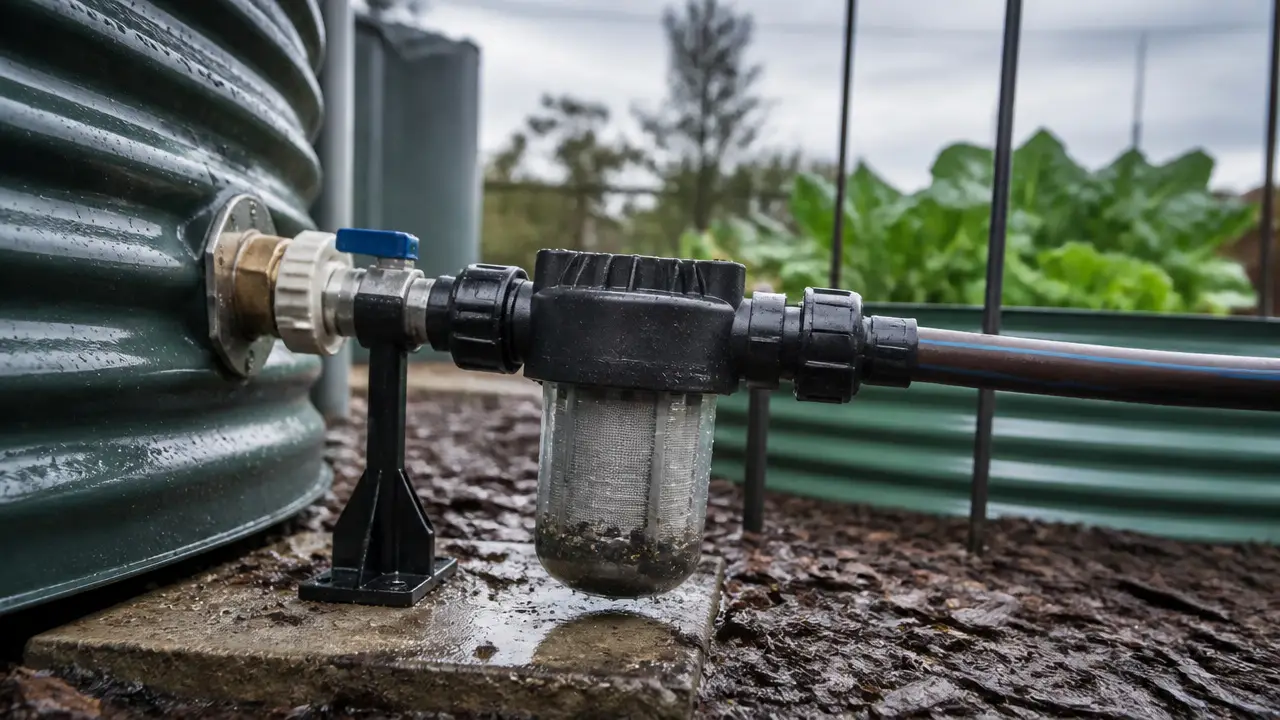
Rain barrel → filter → low-pressure timer → main tubing → drip lines or soaker hose
The timer opens the water line at set times. Gravity moves the water from the barrel through the irrigation system.
This works best when:
- The barrel is higher than the plants.
- The irrigation lines are fairly short.
- The garden is level or downhill from the barrel.
- The timer can operate at very low pressure.
- The emitters do not require normal household water pressure.
A typical hose timer made for a house faucet may not work properly on a rain barrel. Many timers depend on more pressure than gravity can provide.
Why Rain Barrel Pressure Matters
Water pressure from a rain barrel comes mainly from head height.
Head height is the vertical distance between the water level in the barrel and the irrigation outlet or emitters.
Each foot of water height creates about 0.43 psi of pressure.
For example:
| Water height above emitters | Approximate pressure |
|---|---|
| 1 foot | 0.43 psi |
| 2 feet | 0.87 psi |
| 4 feet | 1.73 psi |
| 6 feet | 2.60 psi |
That is very little pressure compared with a normal outdoor faucet.
Also remember that pressure drops as the barrel empties. A full barrel may run your irrigation system reasonably well, while the same system may slow down when only a few inches of water remain.
This is why equipment designed specifically for gravity-fed or very-low-pressure irrigation is important.
Option 1: Use Gravity-Fed Drip Irrigation
Gravity-fed drip irrigation is usually the best choice for automatically watering individual plants.
Drip tubing carries water through the garden. Small outlets or emitters release it near each plant.
Basic setup
- Connect the irrigation line to the barrel outlet.
- Install a filter after the outlet.
- Install a timer that works with gravity-fed systems.
- Run main tubing into the garden.
- Add smaller drip lines or compatible emitters near the plants.
- Flush the tubing before putting it into regular use.
- Program a short watering cycle and watch how evenly the plants receive water.
Start with a small irrigation zone rather than trying to water a large garden from one barrel.
Choose emitters carefully
Many standard drip emitters are designed for pressurized irrigation.
They may barely flow from a rain barrel.
Look for irrigation components intended for:
- Gravity-fed systems
- Very low pressure
- Rain barrel irrigation
Simple open-ended drip lines may sometimes work better than pressure-regulating emitters when very little pressure is available.
Option 2: Use a Soaker Hose
A short soaker hose can also work from an elevated rain barrel.
The arrangement is simple:
Barrel → filter → low-pressure timer → soaker hose
However, soaker hoses can be unpredictable at low pressure.
Water may come out strongly near the barrel but barely reach the far end. Long hoses make the problem worse.
A soaker hose is most practical when:
- The hose is short.
- The ground is fairly level.
- The barrel is elevated.
- The plants do not require very even water delivery.
Test the entire hose before depending on it for automatic watering.
Elevating the Rain Barrel Can Improve Flow
Raising the barrel increases head height and therefore pressure.
Even a modest increase can help gravity-fed irrigation.
But do not raise a full barrel on an unstable stack of blocks, wood, or makeshift furniture.
Water is heavy. One gallon weighs about 8.3 pounds. The water alone in a 55-gallon barrel weighs roughly 460 pounds.
The base should be:
- Level
- Stable
- Resistant to sinking
- Strong enough for the full barrel
- Wide enough that the barrel cannot easily tip
Do not raise the barrel higher than necessary just to gain irrigation pressure. If your system needs much more pressure, a pump is usually a better solution.
Option 3: Add a Pump
A pump can make automatic rain barrel irrigation much easier when gravity is not enough.
The system may look like:
Rain barrel → inlet filter → pump → timer or irrigation controller → drip system
A pump can help when:
- The garden is uphill from the barrel.
- Irrigation lines are long.
- You have several watering zones.
- Your emitters need more pressure.
- You want more even flow as the barrel empties.
Check the pump's requirements
Do not choose a pump based only on maximum pressure.
Consider:
Flow rate: How much water the pump can move.
Pressure: Whether it can supply the pressure your irrigation equipment requires.
Lift: How far the pump must move water vertically.
Power: Whether the pump uses household electricity, a battery, or another power source.
Connections: Whether the pump fittings match the barrel and irrigation tubing.
Dry-run protection: Whether the pump can shut down if the barrel becomes empty.
Running some pumps without water can damage them.
Electrical equipment used outdoors should be installed and powered in a way suitable for wet outdoor conditions. More complicated permanent electrical or pressurized systems are a good place to involve a qualified professional.
Put a Filter Before Your Irrigation System
Rain barrels can contain small pieces of:
- Leaves
- Roof debris
- Insects
- Sediment
- Organic material
Small irrigation passages clog easily.
Install a filter before narrow tubing and emitters. Choose a filter that can handle the flow you need and that is easy to open and clean.
The barrel should also have suitable screening where rainwater enters. A first-flush system can reduce some of the dirt washed from the roof at the beginning of a rain event.
A first flush device diverts the first portion of roof runoff before cleaner water enters storage.
Filtration for irrigation mainly protects the irrigation equipment. It does not make roof runoff safe for drinking.
Make Sure the Timer Works Without Household Water Pressure
The timer is one of the most common trouble spots in a rain barrel watering system.
Some automatic hose timers contain valves that need pressure from a normal faucet to open or close correctly.
Before using one on a barrel, check its stated operating pressure.
For a gravity system, you want a timer intended to operate at:
- Zero pressure, or
- Very low pressure
Do not assume that every battery-powered hose timer will work.
If you use a pump, you have more timer choices because the pump can provide normal irrigation pressure. However, the controls must be arranged so the timer and pump work together correctly.
Keep the Irrigation Zone Small
One rain barrel does not hold as much irrigation water as it may seem.
For example, a 55-gallon barrel contains at most 55 gallons when completely full. The usable amount will normally be somewhat less because of outlet position, sediment space, overflow design, and other system details.
Instead of trying to water an entire yard, a barrel is often better suited to a specific area such as:
- A raised bed
- Several tomato plants
- A small vegetable garden
- A flower bed
- A row of shrubs
If you need more storage, multiple barrels or a larger tank may be more useful than trying to stretch a small barrel across a large irrigation system.
Divide Larger Gardens Into Zones
Factor in automatic valves for gravity-fed rainwater to verify pump safeguards for the planned suction arrangement.
A larger garden can sometimes be split into smaller watering zones.
For example:
Zone 1: Raised vegetable bed Zone 2: Berry plants Zone 3: Flower bed
Smaller zones reduce the amount of water that must move through the system at once.
With a simple gravity system, you may operate one zone at a time. More advanced systems can use valves and irrigation controls, but the increased complexity may also require a pump.
How Long Should the Timer Run?
There is no single correct watering time.
The right schedule depends on:
- Plant type
- Soil type
- Weather
- Shade
- Mulch
- Flow from the emitters
- Number of emitters
- Amount of water stored
Do not start by programming a long watering cycle.
Run the system while you are present and see how much water it actually delivers.
One useful method is to place a container under an emitter and run the system for a measured amount of time. This gives you a rough idea of how much water that emitter delivers under your actual barrel pressure.
Check several locations, especially the emitter farthest from the barrel.
Gravity-fed systems can have large differences in flow between the beginning and end of a line.
Watch the Barrel's Water Level
Automatic irrigation cannot deliver water after the barrel runs dry.
That sounds obvious, but it matters when the timer continues operating whether or not rain has refilled the barrel.
For a gravity system, an empty barrel usually just means no water comes out.
A pumped system needs more protection. A suitable low-water shutoff or dry-run protection can prevent the pump from continuing to operate without enough water.
Do not depend on rainfall occurring before every scheduled watering cycle.
Make Sure Air Can Enter the Barrel
Water leaving a sealed container needs to be replaced by air.
A properly designed rain barrel normally has screened openings or venting that allows this to happen while limiting insect access.
Do not tightly seal every opening in a barrel and then expect water to flow freely from the outlet.
At the same time, openings should be screened where needed to reduce mosquito access.
Keep the Overflow Working
Automatic irrigation does not replace the barrel's overflow system.
During heavy rain, the barrel may fill much faster than your plants can use the water.
The overflow should direct excess water somewhere suitable and away from areas where it could cause problems around a building.
Do not block or reduce the overflow just because an irrigation line has been added.
Prevent Clogs
Automatic watering is much more reliable when the system is kept clean.
Check periodically for:
- Sediment in the barrel
- Clogged filters
- Blocked emitters
- Algae growth
- Kinked tubing
- Loose fittings
- Leaks
- Insect screens covered with debris
Flush irrigation lines occasionally, especially after cleaning the barrel or after debris has entered the system.
A system that works well when installed may slowly lose flow as filters and emitters collect material.
Plan for Freezing Weather
If your area freezes, automatic irrigation equipment should not remain full of water where trapped water can freeze and expand.
Before freezing weather, follow the equipment manufacturer's winterizing instructions.
Depending on the system, this may involve draining:
- Exposed tubing
- Filters
- Timers
- Pumps
- Valves
Do not assume that disconnecting one hose completely drains every part of the system.
A Practical Setup for a Small Garden
For a small raised-bed garden below a rain barrel, a simple system could be:
Screened barrel → barrel outlet → cleanable filter → low-pressure timer → main tubing → gravity-compatible drip lines
Keep the tubing short and avoid large changes in elevation.
Run the system manually the first several times. Check the flow when the barrel is full and again when the water level is low.
If the difference is too large, consider reducing the size of the irrigation zone or adding a properly matched pump.
Common Problems With Automatic Rain Barrel Watering
Water barely comes out
Possible causes include:
- Barrel is too low
- Timer requires more pressure
- Filter is clogged
- Tubing is too long
- Too many emitters are connected
- Emitters require higher pressure
Reduce restrictions and confirm that every component works at your available pressure.
Plants near the barrel get more water
Pressure is dropping along the irrigation line.
Shorter lines, fewer emitters, smaller zones, or a pump may improve distribution.
Timer opens but nothing flows
Remove the timer temporarily and check whether water flows freely from the barrel.
If it does, the timer may not work at gravity pressure.
Flow gets much weaker as the barrel empties
This is normal for gravity-fed irrigation because the head height decreases with the water level.
A pump can provide more consistent pressure if steady flow is important.
Emitters keep clogging
Clean the filter and inspect the barrel for sediment.
You may need better prefiltration before water reaches the irrigation tubing.
Frequently Asked Questions
Can I put a timer directly on a rain barrel?
Yes, if the timer is designed to work at the very low pressure produced by a rain barrel. Many standard hose timers require household water pressure and may not work correctly.
Does a rain barrel have enough pressure for drip irrigation?
Sometimes. Gravity-fed drip irrigation can work well when the barrel is above the garden and the tubing and emitters are designed for low pressure. Standard pressurized drip systems may require a pump.
How high should a rain barrel be for irrigation?
More height creates more pressure, but even several feet of elevation provides only a few psi. Raise the barrel only on a strong, stable base. If considerable pressure is needed, use a suitable pump rather than building an excessively tall stand.
Can I run a soaker hose from a rain barrel?
Yes, but results vary. Short soaker hoses on level or downhill ground usually have a better chance of working than long hoses. Test the entire hose because low pressure can cause uneven watering.
Do I need a pump for automatic rain barrel watering?
Not always. A small gravity-fed system can often operate without one. A pump becomes useful when the garden is uphill, irrigation lines are long, several zones are involved, or the irrigation equipment requires more pressure.
Should I filter rain barrel water before using drip irrigation?
Yes. A filter helps keep sediment and roof debris from clogging small irrigation passages. The filter should be accessible so it can be cleaned regularly.
What happens if my rain barrel runs dry while the timer is on?
A gravity system will usually stop delivering water. A pumped system may risk damaging the pump if it operates dry, unless the pump or controller has suitable low-water or dry-run protection.
Can an automatic rain barrel system water my plants while I am away?
It can, but test it thoroughly first. Confirm that the timer works at the available pressure, the barrel holds enough water, emitters are flowing properly, overflow remains clear, and a pump—if used—has appropriate protection. A rain barrel system still depends on having enough stored water between rain events.