As an affiliate, we may earn a commission from qualifying purchases. We get commissions for purchases made through links on this website from Amazon and other third parties.
For many home drip irrigation systems, 30 psi is not too high. In fact, many standard drip systems are designed to work around 20 to 30 psi. Colorado State University Extension notes that drip systems commonly operate in this range, although the correct pressure depends on the parts being used.
However, 30 psi is not safe for every type of drip irrigation. Thin-wall drip tape, some small fittings, and certain emitters may need much lower pressure. The safest rule is simple: use the pressure range listed for your tubing, emitters, and fittings rather than assuming 30 psi is suitable for the whole system.
Is 30 PSI a Normal Pressure for Drip Irrigation?
Yes. For standard landscape drip tubing and many drip emitters, 30 psi is a common operating pressure.
Some drip equipment is specifically designed around a 25- to 30-psi regulated supply. Rain Bird, for example, uses 30-psi regulators for several of its drip irrigation assemblies and lists some dripline products with operating ranges that include 30 psi.
A simple way to think about common pressures is:
| System type | What 30 psi usually means |
|---|---|
| Standard landscape drip tubing | Often acceptable |
| Pressure-compensating emitters | Often acceptable if within specifications |
| Adjustable drip emitters or micro-sprays | May be near the upper end |
| Thin-wall drip tape | May be too high |
| Gravity-fed rain barrel | Usually produces far less than 30 psi |
| Pump-fed rainwater system | May need a pressure regulator |
These are general categories, not universal pressure limits. Always check the actual components in your system.
When 30 PSI Can Be Too High
The biggest exception is drip tape.
Drip tape is a thin, flat tubing commonly used for vegetable rows and seasonal garden beds. It is much thinner than standard polyethylene drip tubing.
Some drip tape is designed to operate at only about 4 to 15 psi. Other heavier or pressure-compensating dripline can tolerate considerably more pressure. For example, current Netafim specifications show that maximum operating pressure can vary widely depending on dripline diameter and wall thickness.
That means you should not use the pressure rating from one type of drip line for another.
If your tape has a maximum operating pressure of 15 psi, supplying it with 30 psi is too high even though 30 psi would be perfectly normal for another drip system.
Excess pressure can contribute to:
- fittings pulling or leaking
- drip tape splitting or swelling
- emitters releasing more water than intended
- small sprayers throwing water farther than expected
- uneven watering with pressure-sensitive emitters
- unnecessary stress on tubing and connectors
Pressure-compensating emitters handle changing pressure better, but they still have an allowable operating range.
What Pressure Should a Drip System Have?
For many home landscape systems, 20 to 30 psi is a useful general range. Colorado State University Extension describes household water pressure as commonly around 50 to 60 psi while drip systems are generally designed around 20 to 30 psi, depending on the manufacturer.
But there is no single correct pressure for all drip irrigation.
The correct pressure is the one that keeps every important part of the zone within its rated operating range.
Pay attention to the specifications for:
- the main drip tubing
- drip tape, if used
- emitters
- micro-sprayers or bubblers
- fittings and valves
- filters
- the pressure regulator
The lowest pressure limit in the system may determine how the whole zone needs to be regulated.
Should You Use a Pressure Regulator?
If your water source supplies considerably more pressure than the drip equipment needs, a pressure regulator is usually an important part of the system.
A pressure regulator reduces higher incoming pressure to a lower pressure suitable for the drip zone.
For example, a house hose bib might supply much more pressure than a low-pressure irrigation system needs. A regulator installed at the start of the drip zone can keep the downstream pressure near the desired level.
Colorado State University Extension includes a pressure regulator as part of a typical drip-system head assembly and recommends maintaining pressure according to the equipment manufacturer's specifications.
Do not automatically choose a 30-psi regulator just because you are installing drip irrigation.
If your drip tape needs 10 or 15 psi, use a regulator designed for that system instead. Some thin-wall tape products have operating limits well below 30 psi.
Also check the regulator's required flow range. Regulators may not regulate correctly if the irrigation zone uses less or more water than the regulator was designed to handle.
Where Should You Measure the Pressure?
Measure pressure while the irrigation zone is actually running.
This is called dynamic pressure. It is the water pressure available while water is flowing.
Static pressure is the pressure you see when the water is turned on but nothing is flowing. It can be much higher than the pressure available once dozens of emitters begin releasing water.
For troubleshooting, useful measurement points include:
- just before the pressure regulator
- just after the regulator
- near the beginning of the drip line
- near the end of a long line
The pressure after the regulator is usually the most useful number for deciding whether your drip equipment is being supplied correctly.
Why Pressure Drops Along a Drip Line
Even if you begin with 30 psi, the end of the irrigation line may not have 30 psi.
Pressure is lost as water moves through tubing and fittings. Longer tubing, small tubing, high flow, many fittings, and elevation changes can all affect pressure.
This is one reason a system should not simply be adjusted until the pressure at the source "looks right."
A very long zone can have high pressure near the inlet and inadequate pressure near its far end.
If the end of the line is not watering well, raising the source pressure is not always the right fix. You may instead need to:
- shorten the irrigation runs
- divide the area into more zones
- use larger mainline tubing
- reduce the number of emitters per zone
- use pressure-compensating emitters
- correct undersized filters or fittings
Colorado State University Extension also notes that elevation matters. Water moving uphill loses pressure, while changes in system layout and friction also affect the pressure available to the emitters.
Pressure-Compensating vs. Regular Emitters
The type of emitter matters when deciding whether 30 psi is acceptable.
Pressure-compensating emitters
A pressure-compensating emitter is designed to maintain roughly the intended flow across a specified range of water pressures.
These emitters can help when a garden has:
- long irrigation lines
- sloping ground
- pressure differences from one area to another
Check pressure regulators suited to drip irrigation to understand the outlet’s required pressure, flow, and lift.
Some pressure-compensating emitters have operating ranges that comfortably include 30 psi.
They still need to remain within the manufacturer's stated pressure limits.
Non-pressure-compensating emitters
Regular emitters are more affected by pressure.
At higher pressure, an emitter near the beginning of the line may release more water than an emitter near the end. This can make irrigation less even.
Keeping the system close to its intended operating pressure becomes especially important with these emitters.
What About Drip Irrigation From a Rain Barrel?
A normal ground-level rain barrel is unlikely to create anything close to 30 psi by gravity alone.
Gravity systems depend on head height, which means the vertical distance between the water level in the tank and the irrigation outlet.
A barrel raised a few feet above a garden often has enough pressure for specially designed low-pressure or gravity drip equipment, but it may not operate standard pressure-dependent emitters well.
Adding a pressure regulator to an already low-pressure gravity system can make the situation worse because regulators themselves need enough inlet pressure and flow to work properly.
If your rainwater system cannot provide enough pressure, options include:
- using gravity-compatible drip equipment
- raising the tank where structurally safe
- shortening irrigation lines
- creating smaller zones
- using larger supply tubing
- adding a suitable irrigation pump
Do not place a heavily filled rain barrel or tank on a raised platform unless the structure is designed for the load.
What About a Pumped Rainwater System?
A pump can easily create more pressure than drip irrigation needs.
This is common with cistern systems where one pump supplies garden hoses, irrigation, or other non-potable uses.
If a pump produces 40, 50, or more psi but the drip irrigation requires 20 or 30 psi, regulate the pressure for the drip zone rather than trying to make the entire rainwater system operate at the lower pressure.
A typical layout may include:
water source → pump → appropriate filtration → pressure control → drip zone
The exact arrangement depends on the pump, filter, regulator, valves, and intended water use.
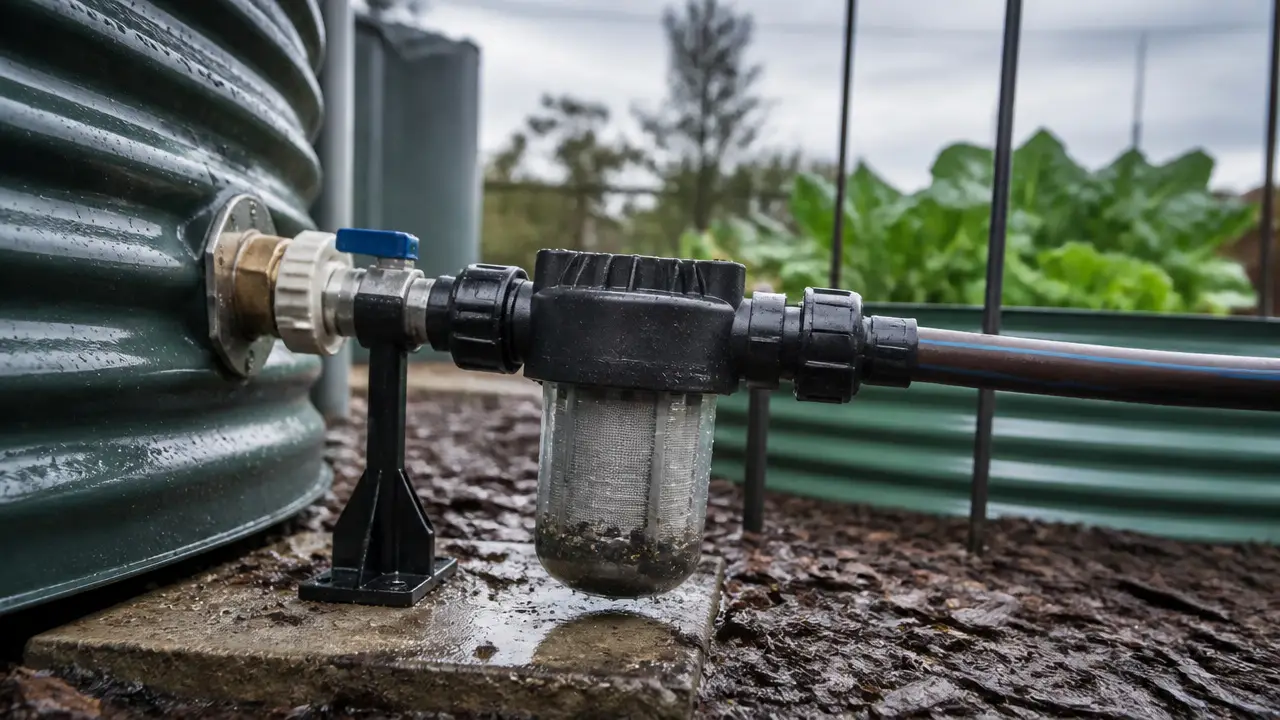
Rainwater also carries sediment and organic material that can clog small drip passages. Filtration is therefore just as important as pressure control. Choose the filter based on the emitter manufacturer's filtration requirement rather than assuming one screen size works for every system.
Signs Your Drip Pressure May Be Too High
Check the pressure if you notice:
- fittings repeatedly popping apart
- leaks developing around connectors
- drip tape becoming unusually round or stretched
- emitters spraying instead of dripping
- adjustable emitters producing excessive flow
- noticeably heavier watering near the beginning of a line
- repeated tubing or fitting failures
Do not assume pressure is the problem without measuring it. Poor fittings, incorrect tubing sizes, damaged connectors, clogged emitters, or improper installation can cause similar symptoms.
Signs the Pressure May Be Too Low
Low pressure can cause a different set of problems.
You may see:
- emitters near the end barely flowing
- micro-sprayers failing to open correctly
- uneven watering
- very slow filling of drip lines
- poor performance on uphill runs
Before increasing pressure, check for clogged filters, closed valves, kinked tubing, excessive line length, and too many emitters on one zone.
The problem may be insufficient flow rate rather than pressure.
Flow rate is the amount of water moving through the system over time, usually measured in gallons per minute (gpm) or gallons per hour (gph). A system can have acceptable pressure but still lack enough flow to operate a large irrigation zone.
The Practical Rule for 30 PSI
If you have standard landscape drip tubing and emitters rated for 30 psi, 30 psi is normally a reasonable operating pressure and is not automatically too high.
If you use thin-wall drip tape, however, 30 psi may exceed its safe operating pressure.
Before changing anything, find the manufacturer's operating-pressure range for the tubing and emitters you actually have. Then measure the pressure while the irrigation zone is running.
When the water source has more pressure than the drip system needs, use a pressure regulator matched to both the required outlet pressure and the zone's flow.
Frequently Asked Questions
Is 30 psi good for drip irrigation?
Yes, 30 psi is suitable for many standard landscape drip systems. Some drip tubing and emitters are designed to operate around 20 to 30 psi. Check the specifications for your particular components before choosing a regulator.
Do I need a pressure regulator at 30 psi?
If your actual operating pressure is already a steady 30 psi and all of your drip components are rated for it, another regulator may not be needed. If the supply pressure can rise above the system's allowed range, regulation may still be useful.
Is 30 psi too high for drip tape?
It can be. Many thin-wall drip tapes operate at pressures well below 30 psi. Use the maximum operating pressure printed in the tape specifications rather than treating standard drip tubing and drip tape as interchangeable.
Can too much pressure damage drip irrigation?
Yes. Pressure above the rated limit of the tubing, fittings, or emitters can cause leaks, fitting failures, damaged tape, or excessive emitter flow.
What pressure regulator should I use for drip irrigation?
Choose a regulator that matches the operating pressure required by your tubing and emitters. Also make sure its rated flow range matches the total flow of the irrigation zone.
Why is my drip line weak even though I have 30 psi?
You may have pressure loss from a long run, uphill elevation, clogged filter, small tubing, too many emitters, or inadequate source flow. Measure pressure while the system is running and check both the beginning and end of the zone.
Can a rain barrel produce 30 psi for drip irrigation?
A normal ground-level or slightly raised rain barrel generally produces much less pressure. Gravity-fed systems usually need low-pressure drip equipment, careful layout, or a suitable pump if higher pressure is required.