As an affiliate, we may earn a commission from qualifying purchases. We get commissions for purchases made through links on this website from Amazon and other third parties.
For most homeowners, Rain Bird is one of the best all-around companies to start with for drip irrigation. It has a broad range of dripline, small tubing, emitters, filters, pressure-control parts, and fittings designed for residential landscapes. However, Netafim may be a better fit for larger agricultural systems, while Hunter is strong for professional landscape irrigation and individual plant watering.
The best company is the one that provides a complete system that matches your water source, pressure, layout, and maintenance needs.
Best Drip Irrigation Companies by Use
| Company | Best fit | Main strength |
|---|---|---|
| Rain Bird | Home gardens and landscapes | Broad residential drip system |
| Netafim | Farms, orchards, greenhouses, and long runs | Advanced dripline and pressure-compensating emitters |
| Hunter | Residential and commercial landscaping | Point-source emitters and landscape irrigation integration |
| DripWorks | DIY gardens and small growing areas | Complete kits and easy system planning |
This comparison is based on the companies' current drip irrigation offerings as of September 2026.
Rain Bird Is a Strong Choice for Most Homeowners
Rain Bird is a practical starting point if you are building drip irrigation around a house, garden, raised bed, shrubs, or landscaping.
Its residential drip range includes dripline, distribution tubing, control-zone parts, and other low-volume irrigation components. Rain Bird says its homeowner drip range includes more than 150 products.
This broad selection matters because drip systems work best when the components are designed to work together.
For example, you may need:
- A filter
- A pressure regulator
- Main tubing
- Smaller distribution tubing
- Dripline or individual emitters
- Compatible fittings
- Flush ends
- Valves or a timer
Buying random parts based only on tubing diameter can cause trouble. Tubing dimensions, fitting styles, operating pressures, and filtration requirements can differ.
Rain Bird is especially useful when you already have a conventional landscape irrigation system and want to add or convert an area to drip. The company publishes design and conversion guidance for these installations.
Netafim Is Better Suited to Many Larger Drip Systems
Netafim is especially strong in agricultural drip irrigation.
Its current range includes both pressure-compensating and non-pressure-compensating drippers, along with driplines for fields, orchards, greenhouses, nurseries, and other growing systems.
A pressure-compensating emitter is designed to keep its water flow more consistent as pressure changes within its specified operating range. This can be useful on longer irrigation runs and ground with elevation changes.
Netafim specifically recommends pressure-compensating drippers for varied terrain and longer fields, while non-pressure-compensating versions are more suited to flatter areas and shorter runs.
That makes Netafim worth considering for:
- Orchards
- Row crops
- Greenhouses
- Nurseries
- Long irrigation laterals
- Sloping ground
- Permanent or semi-permanent drip installations
For a few raised beds behind a house, this level of equipment may be more than you need.
Hunter Is Strong for Landscape and Point-Source Irrigation
Hunter is another established choice for residential and commercial landscape irrigation.
Its point-source drip emitters are designed to water individual plants. Current models include several flow rates and use pressure-compensating designs.
Point-source irrigation is useful when plants are spaced unevenly.
For example, consider a landscape containing:
- One small tree
- Three shrubs
- Several large pots
- A few widely spaced perennial plants
A dripline with emitters at fixed spacing may put water where no plant needs it. Individual emitters can instead be placed near each plant.
Hunter therefore makes sense when drip irrigation is part of a larger professional-style landscape system rather than a stand-alone vegetable garden.
DripWorks Can Be Easier for a DIY Garden
DripWorks takes a different approach. It sells irrigation components but also organizes many of them into kits for specific types of gardens and planting layouts.
For example, its current kits can combine components such as filtration, pressure regulation, mainline tubing, smaller tubing, emitters, and stakes.
That can make system planning easier for someone building a first drip system.
The tradeoff is that you still need to understand the basic requirements of your installation. A kit cannot correct inadequate water pressure, poor filtration, excessive line length, or a water source that cannot provide enough flow.
What Matters More Than the Company Name
A good brand cannot make a poorly designed drip system work properly.
Before choosing a company, check these factors.
Water pressure
Drip components are designed for specific pressure ranges.
Household water pressure may be much higher than a drip system needs, so pressure regulation is commonly required.
Rainwater systems present the opposite problem. A gravity-fed barrel or tote may provide much less pressure than a household faucet.
That means an emitter designed for a pressurized irrigation system may perform poorly when connected directly to a low rain barrel.
Check the manufacturer's required operating pressure before buying the emitters.
Available flow
Flow rate is the amount of water moving through the system over time.
Each emitter uses some of that available flow.
For example, adding more emitters does not automatically make more water available. Eventually, the water source, pipe, pump, regulator, or other components can limit the system.
Long lines also create pressure losses.
Filtration
Small drip passages can clog.
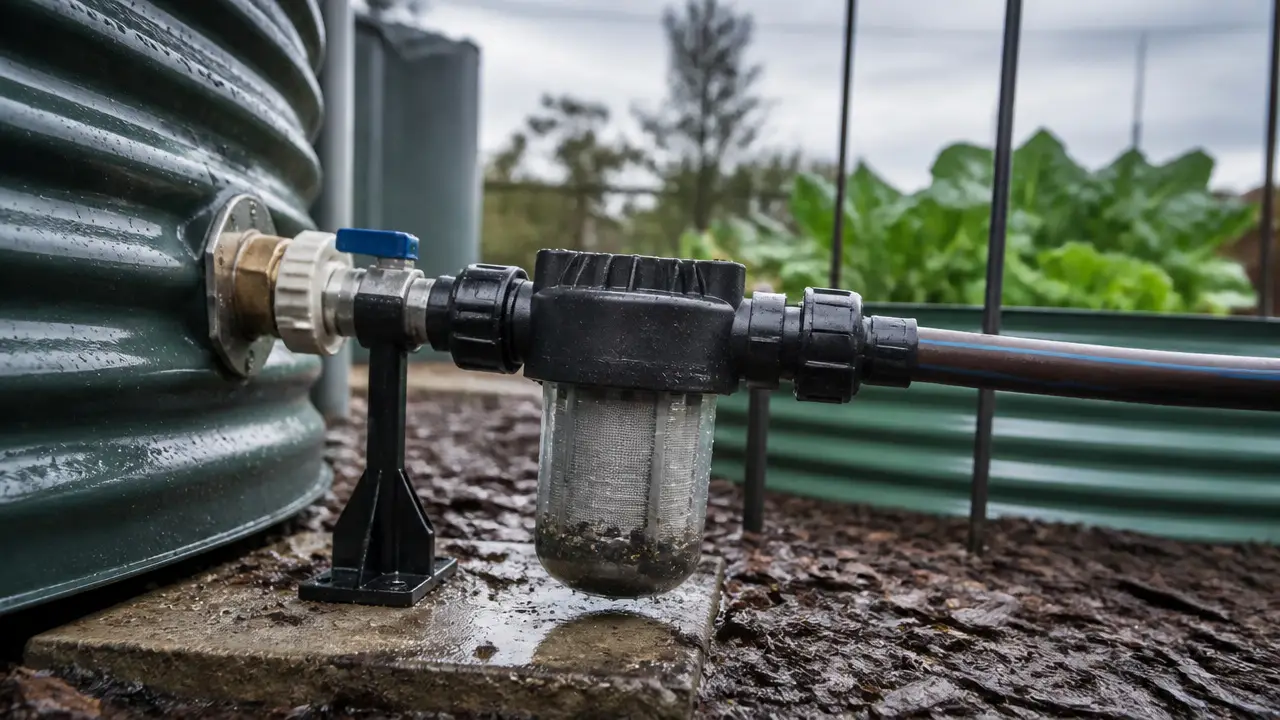
This becomes especially important with collected rainwater because storage tanks can contain fine roof debris, sediment, organic material, or biological growth.
Use filtration that meets the requirements of the specific dripline or emitter.
There is no single filter size that is right for every drip product. For example, Rain Bird specifies different filtration requirements for different types of dripline in its current range.
Tubing and fitting compatibility
A label such as "1/2-inch tubing" does not always tell you everything needed to select a fitting.
Drip tubing can be specified by outside diameter, inside diameter, or a nominal size.
Check actual dimensions and the fitting system recommended by the tubing manufacturer.
Staying within one compatible product family can make a first installation much easier.
Emitter spacing
Review comparing brand drip irrigation system options to verify available rainwater compared with seasonal garden use.
Dripline contains emitters at fixed intervals.
That works well for regularly spaced planting beds.
Individual emitters are usually more practical when plants are far apart or irregularly positioned. Netafim makes the same basic distinction between dripline for regularly distributed plants and individual drippers for irregular spacing.
Terrain
Pressure changes matter more on hills.
Water pressure increases toward lower areas and decreases as water is lifted.
Pressure-compensating emitters can help maintain more even output where elevation or line length causes pressure differences, provided the system remains within the emitter's required operating range.
They do not solve inadequate source pressure.
Which Company Is Best for Rainwater Drip Irrigation?
There is no single best company specifically for every rainwater system.
Start with the water source.
A pumped cistern that supplies steady irrigation pressure can often operate conventional drip equipment once appropriate filtration and pressure regulation are installed.
A rain barrel sitting only a short distance above the garden is different. Gravity produces relatively little pressure, and some conventional pressure-compensating emitters may not work correctly.
For a rainwater-fed system, choose the irrigation equipment only after checking:
- Available pressure at the drip system
- Pump pressure if a pump is used
- Available water flow
- Filter requirements
- Required emitter operating pressure
- Tubing and fitting sizes
- Length and elevation of each irrigation zone
Do not choose an emitter simply because it is described as "low pressure."
Confirm its actual operating range.
Do You Need Pressure-Compensating Emitters?
Not always.
A small, flat vegetable bed supplied by a stable pressure source may work well with a simpler system.
Pressure compensation becomes more useful when you have long runs, elevation changes, or a layout where keeping emitter output similar from one end of the line to the other is important.
Netafim, Rain Bird, and Hunter all offer pressure-compensating options for appropriate applications.
Remember that "pressure compensating" does not mean "works without pressure." Every emitter still has an operating range.
Do Not Mix Components Without Checking Their Sizes
Mixing brands is possible, but do it carefully.
You may successfully use one company's filter with another company's tubing, for example, if the connection sizes, pressure limits, flow capacity, and filtration specifications all match.
Problems often appear where tubing and fittings connect.
Before combining products, check:
- Tubing outside diameter
- Tubing inside diameter when relevant
- Thread size and type
- Barb size
- Maximum pressure
- Regulated operating pressure
- Filter rating
- Required flow capacity
If this is your first drip system, using compatible parts from one system family is often simpler.
Maintenance Matters With Every Brand
No drip company eliminates routine maintenance.
At minimum, inspect the system during the growing season for blocked emitters, damaged tubing, loose fittings, leaking connections, and uneven watering.
Flush lines as required by the system design and manufacturer instructions.
Filters also need cleaning or replacement according to their type and the condition of the incoming water.
Rainwater systems deserve extra attention because debris can enter during collection or settle inside storage. A clean-looking tank does not guarantee that fine material will not reach the irrigation system.
In freezing climates, exposed irrigation components may also require seasonal shutdown or winter protection. Follow the instructions for your specific valves, filters, regulators, tubing, and other equipment rather than assuming that flexible drip tubing makes the whole system freeze-proof.
Which Drip Company Should You Choose?
For a typical homeowner building a garden or landscape drip system, Rain Bird is a strong general choice because of its wide residential product range and system documentation.
Consider Netafim when you have a larger farm, orchard, greenhouse, long irrigation runs, or more demanding pressure and terrain conditions.
Consider Hunter when you are integrating drip irrigation into a residential or commercial landscape system, especially when individual plants need point-source emitters.
Consider DripWorks when you want a DIY-oriented system with components organized around particular garden layouts.
For rainwater irrigation, put pressure, filtration, flow, and component compatibility ahead of brand preference. The best drip equipment is equipment that can operate correctly with the water your tank or pump can actually provide.
Frequently Asked Questions
What is the best drip irrigation company for a home garden?
Rain Bird is a strong all-around choice for many residential gardens because it offers dripline, tubing, control components, and other parts for low-volume landscape irrigation. The best choice still depends on your pressure, layout, and water source.
Is Netafim better than Rain Bird?
Neither is better for every system. Netafim has a particularly broad focus on agricultural and precision drip irrigation. Rain Bird has extensive residential and landscape irrigation options. Choose according to the type and scale of system you are building.
Can I mix different drip irrigation brands?
Yes, sometimes. Verify tubing dimensions, fitting types, pressure ratings, flow capacity, filtration requirements, and thread sizes before combining components. Similar-looking parts are not always compatible.
Can I run normal drip irrigation directly from a rain barrel?
Sometimes, but many conventional emitters require more pressure than a low gravity-fed rain barrel provides. Check the emitter's minimum operating pressure. A pump or equipment designed for very low pressure may be needed for some systems.
Do I need a filter when using rainwater for drip irrigation?
Usually, filtration is an important part of a rainwater-fed drip system because small emitter passages can clog with sediment or debris. Match the filter to the requirements of the specific emitter or dripline rather than choosing a filter by guesswork.
Are pressure-compensating drippers always better?
No. They are especially useful for longer lines and changing elevations because they can maintain more consistent flow within their specified pressure range. A short, flat system may not need them.
Should I use dripline or individual emitters?
Use dripline when plants are regularly spaced and you want water delivered along an entire bed or row. Individual emitters are often better for trees, pots, shrubs, and other plants with irregular spacing.