As an affiliate, we may earn a commission from qualifying purchases. We get commissions for purchases made through links on this website from Amazon and other third parties.
Professional water tank cleaning is more than spraying the inside with a hose. A proper job usually includes inspection, safe draining, sediment removal, surface cleaning, disinfection when needed, rinsing, and checking the tank before it goes back into service.
The exact process depends on what the water is used for. A rainwater tank feeding a garden line does not need the same treatment plan as a cistern supplying household drinking water.
How Professionals Clean a Water Tank
Most professional tank-cleaning jobs follow the same basic sequence:
- Inspect the tank and the water system.
- Isolate and safely drain the tank.
- Remove sediment and sludge.
- Clean the inside surfaces.
- Inspect fittings and the tank structure.
- Disinfect the tank when the intended use requires it.
- Rinse or refill as required.
- Return the system to service and, when appropriate, test the water.
The important difference between professional cleaning and simple DIY cleaning is often the safety planning. Large tanks can involve confined-space entry, pumps, chemicals, slippery surfaces, electrical equipment, and difficult access.
1. They Inspect the Tank Before Cleaning
A professional usually starts by finding out what is inside the tank and how the tank is connected to the rest of the water system.
They may check:
- What the tank previously stored
- Whether the water is potable or non-potable
- How much sediment is on the bottom
- Whether algae, insects, leaves, or other debris are present
- The condition of the inlet and overflow
- Screens, vents, and access covers
- Tank walls, seams, and supports
- Valves, bulkhead fittings, and pipe connections
- Pumps, filters, and treatment equipment connected to the tank
Potable means intended to be safe for drinking. Non-potable water is used for purposes such as irrigation, toilet flushing, or other uses where drinking-water quality is not required.
Professionals also want to know what previously occupied the tank. A tank that held fuel, pesticides, sewage, or another hazardous substance should not simply be washed and converted into a drinking-water tank. CDC guidance warns against using water-storage containers that previously held toxic chemicals.
2. They Isolate and Drain the Tank
Before cleaning starts, the tank is normally separated from equipment that should not receive dirty water or cleaning chemicals.
Depending on the system, that can include:
- Pumps
- Pressure tanks
- Water heaters
- Cartridge filters
- UV systems
- Irrigation equipment
- Household plumbing
The tank is then drained through a suitable outlet or pumped down.
Professionals try to manage the dirty water rather than simply releasing it wherever it happens to flow. Sediment, disinfectant, contaminated floodwater, or other residues may affect plants, waterways, septic systems, or drainage systems.
WHO's guidance for water-storage tanks similarly puts draining, cleaning, disinfection, and safe disposal of liquid waste into separate parts of the cleaning process.
3. They Remove Sediment and Sludge
Sediment is one of the main reasons tanks need physical cleaning.
Even a rainwater system with gutter screens and a first-flush diverter can slowly collect fine material. A first-flush diverter directs the first portion of roof runoff away from the tank, helping reduce dirt entering storage. It does not stop every fine particle.
Sediment may include:
- Roof dust
- Fine soil
- Plant material
- Insect debris
- Organic matter
- Rust or mineral deposits from parts of the system
Professionals may use pumps, wet vacuums, suction hoses, or other equipment to remove this material.
Where possible, they may work through an access opening rather than entering the tank. WHO guidance notes that brushes attached to long poles or pressure jets can sometimes clean internal surfaces without requiring tank entry.
Removing the sludge matters because disinfectant is not a substitute for physical cleaning. Dirt and organic deposits can make effective disinfection harder. CDC guidance also recommends cleaning surfaces before disinfection for this reason.
4. They Wash the Tank Surfaces
After loose material is removed, the walls and floor can be cleaned.
The method depends on the tank material and condition. Professionals may use:
- Long-handled brushes
- Suitable cleaning solutions
- Low- or controlled-pressure washing
- Rinsing equipment
- Pumps or vacuums to remove wash water
The goal is to physically remove the film and deposits stuck to the tank.
More pressure is not always better. Aggressive pressure washing can damage some coatings, liners, seals, or aging tank surfaces. The tank manufacturer's cleaning instructions should be followed when available.
This stage also gives the cleaner a better view of the tank once the dirt is gone.
5. They Inspect the Empty Tank
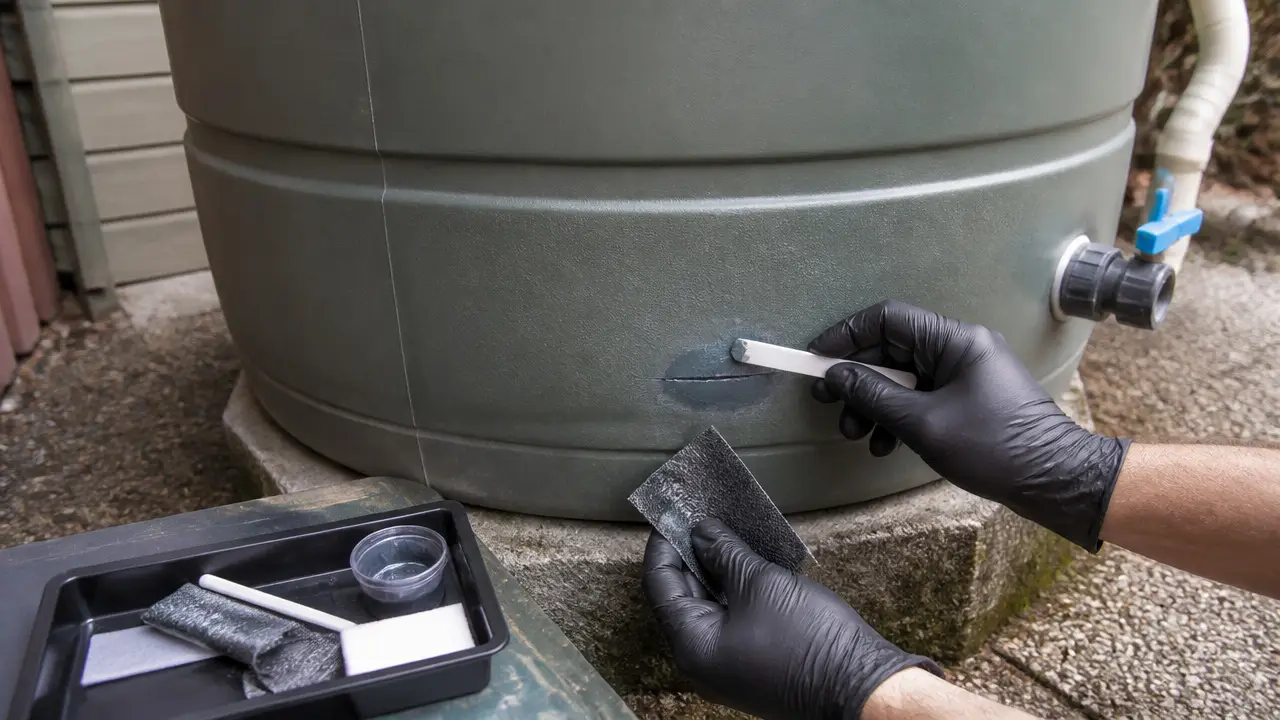
An empty, clean tank can reveal problems that were difficult to see while it contained water and sediment.
A professional may look for:
- Cracks
- Corrosion
- Damaged liners
- Loose fittings
- Failed seals
- Leaks
- Damaged access covers
- Poor vent screening
- Damaged overflow screens
- Internal corrosion around metal parts
- Signs that roots, insects, or animals have gained access
For rainwater systems, this is also a useful time to check why excessive debris entered the tank in the first place.
Cleaning the tank without correcting a damaged screen, dirty gutter, poorly protected inlet, or ineffective prefiltration means the tank may become dirty again quickly.
Tank Entry Is a Major Safety Issue
Large tanks and cisterns should not be treated like oversized buckets.
A tank may qualify as a confined space because it can be large enough to enter while having restricted access and not being designed for people to occupy continuously. Hazards can include low oxygen, harmful gases, difficult rescue, slippery surfaces, electrical hazards, and falls. OSHA specifically identifies tanks as spaces that can create serious confined-space hazards.
For work covered by U.S. workplace rules, certain water-tank entries can require a formal confined-space program, atmospheric testing, ventilation, trained workers, rescue planning, and other controls.
This is one of the clearest places where a DIY cleaning job should stop.
Do not climb into a large cistern or storage tank just because the opening looks accessible. Professional tank cleaners may use equipment that allows cleaning from outside specifically to avoid unnecessary entry.
6. They Disinfect the Tank When Needed
Cleaning and disinfecting are different jobs.
Cleaning removes sediment, dirt, films, and other material.
Disinfection uses an approved method to reduce microorganisms after the physical dirt has been removed.
For a drinking-water system, a professional may disinfect the cleaned tank according to the tank size, water use, applicable public-health requirements, and treatment method being used.
Chlorine is commonly used for water-system disinfection. However, the amount, concentration, contact time, flushing procedure, and final water condition all matter. These should not be guessed.
CDC, for example, publishes specific procedures for disinfecting cisterns after floods or heavy rains, including chlorine concentration and contact-time instructions.
Professionals also keep disinfectant away from equipment that could be damaged by a strong cleaning concentration. Treatment systems may have their own sanitation procedures.
Alongside a suitable thing to clean a water tank with, assess long-term tank ventilation with dependable overflow handling.
Never mix bleach with other cleaning chemicals. Chemical mixtures can create dangerous gases or other hazards.
7. They Rinse, Refill, and Return the Tank to Service
What happens after disinfection depends on the process used.
A tank may need to be drained and rinsed, or a treated solution may need to remain for a specified contact period before the system is flushed and returned to service.
A professional may then:
- Reopen isolated valves
- Reconnect treatment equipment
- Prime or restart the pump
- Check fittings for leaks
- Flush connected pipework where required
- Replace or service filters
- Confirm that covers and screens are secure
For a rainwater tank, they may also check that the overflow has a clear path and that mosquitoes and other pests cannot enter through vents or openings.
Does Professional Cleaning Make Rainwater Safe to Drink?
Not by itself.
A professionally cleaned tank can be an important part of maintaining a drinking-water system, but tank cleaning alone does not prove that the water is potable.
Roof runoff can contain microorganisms, animal waste, roofing contaminants, airborne material, and other pollutants. Water quality can also change after it enters the tank.
A drinking-water rainwater system should be considered as a whole. It may require suitable collection surfaces, debris control, first-flush management, protected storage, appropriate treatment, routine maintenance, and current laboratory testing.
A single filter, UV unit, chlorine treatment, meter, or tank-cleaning visit does not provide a complete drinking-water safety assessment.
If stored rainwater is intended for drinking, cooking, or other potable household uses, follow current requirements from your local health or water authority and use qualified water-treatment help when needed.
How Professional Cleaning Differs for Rainwater Tanks
Rainwater tanks have a useful advantage: the cleaner can often trace the dirt back through the collection system.
If a large amount of sediment has accumulated, a professional may check the complete path:
Roof → gutters → screens → first flush → inlet → tank → pump → filters → point of use
Cleaning only the final storage tank treats the buildup but may not fix its cause.
For example, a tank may become dirty quickly because:
- Gutters hold leaves and decomposing material.
- An inlet screen is missing.
- The first-flush system is blocked.
- The tank inlet stirs sediment from the bottom.
- An overflow opening allows insects or debris inside.
- The tank cover does not seal properly.
Correcting those problems can reduce how much material reaches the tank between cleanings.
Can Professionals Clean a Tank Without Emptying It?
Sometimes, but it depends on the tank and the goal.
Specialized contractors may have equipment that removes bottom sediment while leaving much of the water in place. This can be useful for some large tanks where completely draining the storage would be difficult.
That is different from a full clean-and-disinfect procedure.
If the tank has been contaminated by flooding, sewage, chemicals, animals, or another significant contamination event, simple sediment removal may not be enough. CDC recommends cleaning and disinfection procedures for cisterns affected by floods and heavy rains when appropriate.
When Is Professional Tank Cleaning Worth It?
Professional help makes the most sense when:
- Someone would need to enter the tank.
- The tank is large or difficult to drain safely.
- Access requires working at height.
- Heavy sludge has accumulated.
- The tank has suffered flood contamination.
- There is an unexplained odor, color, or contamination problem.
- The tank supplies potable water.
- Pumps or treatment equipment must be isolated and recommissioned.
- The tank may have structural damage.
- Cleaning chemicals require controlled handling.
- You do not know what the tank previously stored.
Small rain barrels used only for garden watering are often much simpler to clean safely from outside. Large cisterns and household water-storage systems can require a different level of planning.
How Often Should a Water Tank Be Professionally Cleaned?
There is no single cleaning interval that fits every water tank.
How fast a tank becomes dirty depends on the water source, prefiltration, tank design, climate, surrounding trees, roof condition, water turnover, sediment load, and intended use.
Instead of relying only on a calendar date, inspect the system regularly.
Look for increasing sediment, odors, unusual water appearance, damaged screens, pest entry, or changes in system performance. Potable-water systems may also have maintenance and testing schedules set by the treatment equipment, water-quality plan, or local requirements.
Good upstream maintenance can reduce how quickly sediment accumulates.
Frequently Asked Questions
Do professional tank cleaners climb inside the tank?
Not always. Professionals often try to clean through an access opening using suction equipment, long-handled tools, or washing equipment. Entering a large tank can create confined-space hazards and requires appropriate safety controls.
Do water tanks have to be completely empty before cleaning?
A full physical clean normally requires draining enough water to reach and remove sediment and deposits. Some specialized services can remove bottom sediment without completely emptying certain tanks, but that is not the same as a full clean and disinfection.
What do professionals use to clean water tanks?
The equipment varies but may include pumps, suction hoses, wet vacuums, brushes, washing equipment, and suitable cleaning or disinfection products. The method should be compatible with the tank material and the intended water use.
Is pressure washing safe inside a water tank?
It can be suitable for some tanks, but excessive pressure can damage liners, coatings, seals, or older surfaces. Professionals adjust their method to the tank construction and manufacturer guidance.
Is disinfecting the same as cleaning a tank?
No. Cleaning physically removes dirt, sludge, and films. Disinfection reduces microorganisms after the tank has been properly cleaned. Dirt should generally be removed before a disinfection step.
Can I drink rainwater after the tank has been professionally cleaned?
Tank cleaning alone does not establish that rainwater is safe to drink. Potable rainwater use requires suitable collection and storage, appropriate treatment, maintenance, current water testing, and compliance with applicable local requirements.
When should I call a professional instead of cleaning the tank myself?
Professional help is appropriate when tank entry is required, access is unsafe, contamination is significant, the system supplies drinking water, electrical or pressure equipment is involved, or you cannot safely remove the sediment while staying outside the tank.