As an affiliate, we may earn a commission from qualifying purchases. We get commissions for purchases made through links on this website from Amazon and other third parties.
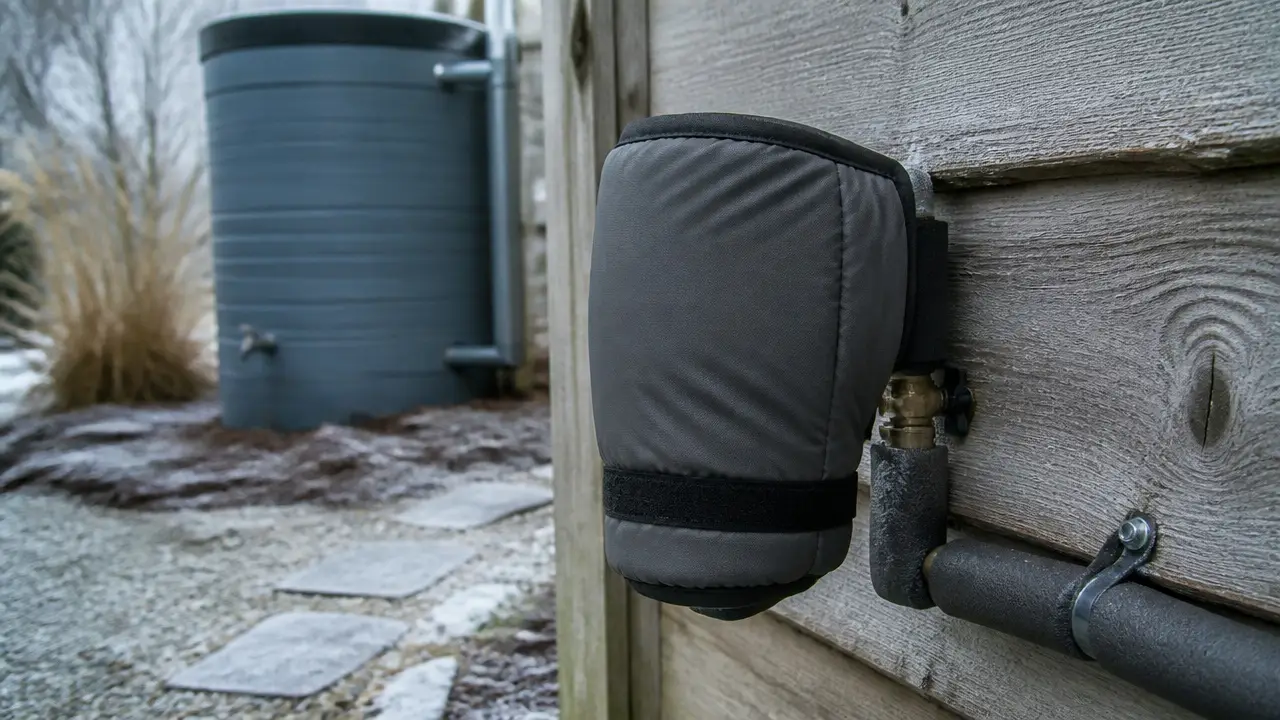
A good cover for an outdoor water spigot is an insulated faucet cover that fits tightly over the entire spigot and seals against the wall. For freezing weather, the cover should block wind and help hold in heat coming through the wall from the building.
The cover is only one part of freeze protection. If your plumbing has an indoor shutoff valve, draining the outdoor line is usually more dependable than relying on insulation alone.
What Type of Spigot Cover Works Best?
Most outdoor faucet covers fall into two basic types.
Rigid insulated covers
These are usually dome-shaped covers made from foam or another insulating material. A cord, hook, or strap holds the cover against the wall.
They are a good choice when:
- The spigot sticks straight out from a flat wall.
- You want a firm cover that will not collapse.
- The faucet is exposed to wind.
- The cover fits completely over the handle and valve body.
The most important feature is not the shape of the cover. It is the fit. The edge should sit firmly against the wall without large gaps.
Soft insulated covers
Soft covers look more like padded bags. They normally slip over the faucet and close with a drawstring or strap.
They can work well when:
- The faucet has an unusual shape.
- Pipes or fittings make a rigid cover difficult to install.
- You need more room around the handle.
- The wall surface makes a rigid cover hard to seat.
Make sure the opening can be tightened around the pipe or against the wall. A loose bag that lets cold air flow through it provides less protection.
What Makes a Good Outdoor Faucet Cover?
Look for a cover that meets four basic needs.
It covers the whole faucet
The cover should fit over the valve body, handle, and exposed pipe near the wall.
Do not force a cover that is too small over the faucet. Compressing the insulation or leaving part of the valve exposed defeats much of its purpose.
It seals reasonably well against the wall
Cold moving air can remove heat quickly. A cover that sits tightly against the siding or wall helps reduce that airflow.
Uneven stone, brick, pipes, or mounting hardware can make sealing harder. A flexible cover may work better in those situations.
It contains real insulation
A thin plastic shell by itself does little to slow heat loss.
Foam, fiber insulation, or another insulating layer is more useful. The goal is to slow the movement of heat away from the faucet.
It stays attached
Wind can loosen poorly secured covers. The attachment should hold the cover firmly without putting damaging pressure on the faucet or pipe.
Check the cover periodically during winter, especially after storms or strong winds.
A Cover Does Not Heat the Spigot
An insulated cover does not produce heat. It simply slows heat loss.
This distinction matters during long periods of very cold weather. If the plumbing behind the wall is also cold, the cover may eventually reach freezing temperatures.
How well a cover works depends on factors such as:
- Outdoor temperature
- How long temperatures stay below freezing
- Wind exposure
- How much pipe is outdoors
- Whether the wall behind the faucet is heated
- Pipe location and insulation
- Whether water remains trapped inside the pipe
A faucet on a heated house wall may have much more heat available than one attached to an unheated garage, shed, cabin, or exposed plumbing line.
Remove Hoses Before Installing the Cover
Disconnect garden hoses, splitters, timers, spray nozzles, and similar attachments before freezing weather unless the plumbing system was specifically designed to remain connected.
A connected hose can trap water in or near the faucet. This can interfere with drainage, including on some frost-resistant faucets.
Let remaining water drain before installing the cover.
If you use the spigot for a rain barrel, tank, or garden irrigation system, also consider whether the connected hose and fittings need to be drained or winterized.
Is a Faucet Cover Enough to Prevent Frozen Pipes?
Not always.
A cover can provide useful extra protection during cold weather, but it should not be treated as a guarantee against freezing.
Regarding selecting an outdoor faucet cover, verify serviceable protection for outdoor water hardware.
If your outdoor faucet has a dedicated indoor shutoff valve, a common winter preparation method is to:
- Disconnect anything attached to the outdoor faucet.
- Shut off the water supply to that branch.
- Open the outdoor faucet so trapped water can drain.
- Follow the plumbing system's intended winterizing procedure.
- Install an insulated cover for additional protection.
Plumbing layouts vary. Some systems also have drain or bleeder valves that need to be used correctly.
If you are unsure which valve controls the faucet, do not start opening unfamiliar plumbing fittings. A plumber can identify the correct winterizing method.
What About Frost-Free Outdoor Faucets?
A frost-free or frost-proof faucet places its actual shutoff point farther inside the building, where temperatures are normally warmer.
These faucets can offer better freeze protection when installed correctly, but they still need proper use. A garden hose or other attachment left connected can prevent water from draining from the faucet body.
An insulated cover can add protection, but it does not correct a badly installed faucet, an improperly sloped pipe, or plumbing located in an unheated area.
When a Basic Cover May Not Be Enough
Pay closer attention when the spigot is connected to:
- An unheated garage
- A shed
- A seasonal cabin
- An exposed crawlspace
- Exterior piping
- An outdoor pump
- A rainwater tank
- An IBC tote
- Irrigation plumbing
These systems may have little or no indoor heat reaching the pipe.
In that situation, protecting only the faucet handle may leave the rest of the plumbing exposed. The system may need to be drained or winterized rather than simply covered.
Avoid Improvised Covers That Trap Water
Wrapping a faucet with towels or cloth may seem convenient, but absorbent material can become wet. Wet insulation is usually much less useful, and repeated freezing can make the setup worse.
If you make your own cover, the insulating material should stay dry and should not place weight or strain on the pipe.
Also avoid packing insulation so tightly that it interferes with valves or damages fittings.
Check the Wall Penetration Too
Sometimes the weak point is not the faucet itself.
Look where the pipe enters the wall. Large openings can allow cold air into the wall cavity around the plumbing.
Appropriate exterior sealing around penetrations may help reduce drafts, but do not block required drainage openings or apply sealants where they could interfere with the faucet assembly.
If you find damaged siding, loose plumbing, serious gaps, or signs that water has been leaking into the wall, fix the underlying problem rather than hiding it behind a cover.
A Simple Choice for Most Homes
For a normal outdoor house spigot, choose an insulated cover large enough to enclose the full faucet, with a secure attachment and an edge that fits closely against the wall.
A rigid foam cover is often convenient on a simple faucet mounted to a flat wall. A soft insulated cover may fit better around awkward valves or uneven surfaces.
Before installing either type, disconnect hoses and drain the faucet as your plumbing system allows. In areas with sustained freezing temperatures, use the cover as added protection rather than your only winterizing step.
Frequently Asked Questions
Do outdoor spigot covers really work?
They can reduce heat loss and protect a faucet from cold wind. Their effectiveness depends on the temperature, exposure, plumbing layout, insulation, and heat available from the building. They cannot guarantee that a pipe will not freeze.
Should I cover a frost-free faucet?
You can. An insulated cover provides another layer of protection. More importantly, remove hoses and attachments so the frost-free faucet can drain as designed.
Should I leave my outdoor faucet open under the cover?
If you shut off and drain a dedicated outdoor water line, the faucet may be left open as part of that system's winterizing procedure. Do not shut off or drain unfamiliar plumbing without knowing how the system is designed.
Can I use a towel instead of a faucet cover?
A dry towel may provide some temporary insulation, but it can absorb rain, snow, or condensation. A purpose-made weather-resistant insulated cover is generally easier to keep dry and securely attached.
How tight should an outdoor faucet cover be?
It should sit firmly against the wall and resist wind, but it should not bend the faucet, pull on the pipe, or crush fittings.
Do I need to remove my garden hose in winter?
Yes, in freezing conditions it is generally wise to disconnect the hose. A connected hose can hold water and may stop some faucets from draining properly.
What should I do with an outdoor spigot connected to a rainwater tank?
Protect the entire water path, not just the spigot. Drain hoses, valves, filters, pumps, and exposed lines as required for your climate and equipment. An insulated faucet cover alone cannot protect a water-filled outdoor system from a hard freeze.