
As an affiliate, we may earn a commission from qualifying purchases. We get commissions for purchases made through links on this website from Amazon and other third parties.
Best Overall
Best for 4-Inch Round Pipe
Best for Existing 4.5-Inch ID Inlets
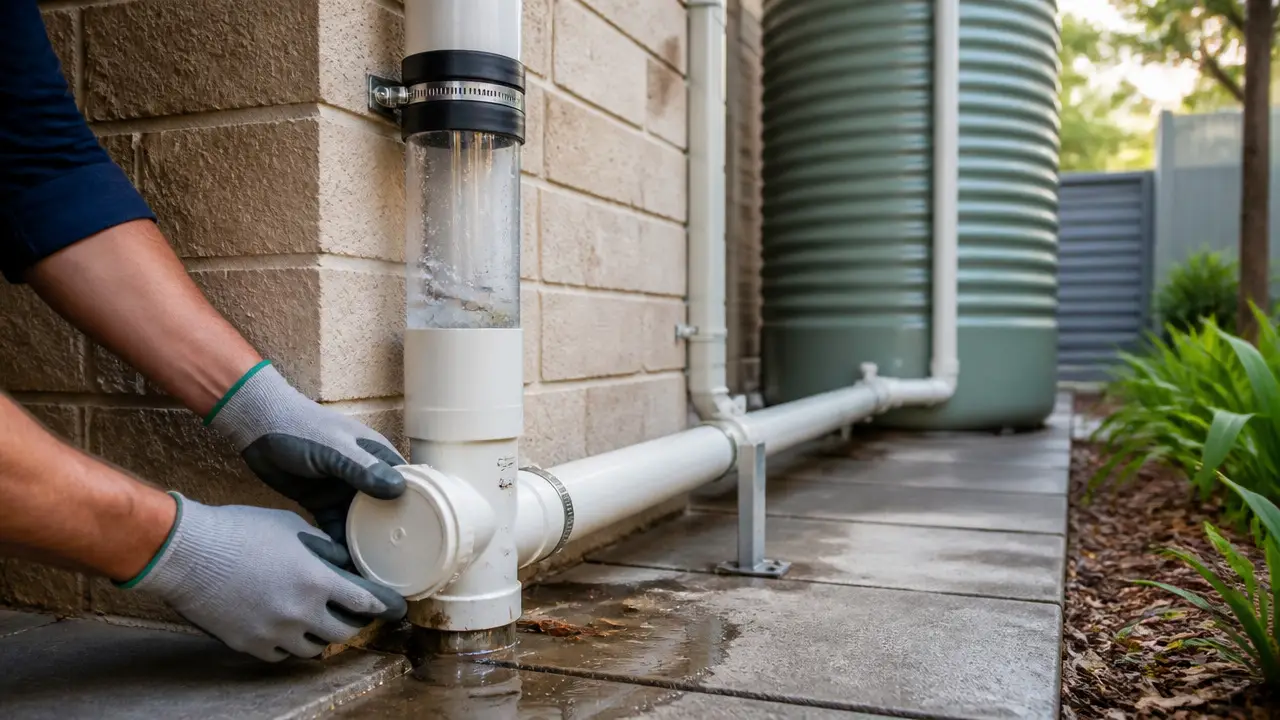
A first flush diverter helps keep the dirtiest initial roof runoff from going straight into your rainwater tank. It gives that early water a separate chamber while later runoff continues toward storage. The idea is simple, but the installation only works well when the pipe size, chamber volume, seals, drain rate, and maintenance access all match the system.
The three diverters here are all from Rain Harvesting, but they are not interchangeable. One is built around 3-inch round pipe, one is built around 4-inch round pipe with a Catch-All Tee, and one uses a larger documented inlet connection with a 4-inch outlet. The most important buying decision is therefore pipe fit, not a small difference in body material or appearance.
A first flush device is also not a water purifier. It can reduce the amount of early roof debris that reaches storage, but later runoff can still contain fine sediment, microorganisms, chemicals, and other contaminants. Any potable-water plan needs suitable collection, treatment, maintenance, and current water testing for the whole system.
Quick Comparison
| First Flush Diverter | Best For | Connection Focus | Chamber Setup | Main Tradeoff |
|---|---|---|---|---|
| Rain Harvesting 3-Inch First Flush Diverter | Most straightforward round-pipe setup | 3-inch round pipe | Add pipe to set diversion volume | Kit contents should be checked before installation |
| Rain Harvesting 4-Inch Catch-All Tee | 4-inch round-pipe systems | 4-inch round pipe | Add 4-inch pipe to set chamber volume | Pipe/fitting size differences can create fit problems |
| Rain Harvesting WDDP111 | Existing systems matching its larger inlet geometry | 4.5-inch ID inlet, 4-inch outlet | Separate chamber assembly | Adapter fit and lower clear section can leak |
How a First Flush Diverter Fits Into a Rainwater System
The first flush device sits upstream of the tank. When rain starts, roof dust, bird droppings, pollen, leaves, and other material begin moving toward the downspout. The diverter sends a planned amount of that initial runoff into a chamber. Once that chamber fills, later runoff is allowed to continue toward storage.
That does not mean “the first five gallons is always enough” or that one chamber size works for every roof. The amount you choose to divert depends on the collection area, roof condition, local conditions, how long it has been dry, and the intended water use. The products here let you create the chamber with added pipe, so the physical chamber length becomes part of the design.
The chamber also has to reset after rain. These models use a slow-release drain so the stored first-flush water can leave and the device can be ready for the next event. If that drain clogs or drains too slowly, the next storm can arrive while the chamber is still full.
The Most Straightforward 3-Inch Setup
1 / 3
Rain Harvesting First Flush Downspout Diverter Kit for 3-Inch Round Pipe

Pipe Fit
3-inch round
Body Size
4 x 6 x 8 in
Reset
Slow-release auto drain
This Rain Harvesting kit is the cleanest starting point of the three when your collection line already uses 3-inch round pipe. It is designed specifically around that pipe size and uses a ball-and-seat approach rather than a powered or manually switched mechanism. You add the chamber pipe separately, which lets you set the diversion volume by changing the chamber length.
The automatic drain is another useful part of the layout. A slow-release valve empties the chamber after rainfall so the first-flush volume can be available again for the next storm. That is a practical advantage over a chamber that must be manually emptied every time, but the drain still needs inspection. If the small outlet becomes blocked, the reset cycle stops working as intended.
The main setup risk is receiving incomplete or damaged parts. Users have encountered missing clear sections and broken filter pieces, so lay out every component before cutting pipe. The body is also lighter and thinner than standard 3-inch PVC pipe, which matters in strong sun or exposed installations. Support the plumbing independently rather than expecting the diverter body to carry unsupported pipe weight.
Why It Works
- Designed specifically for 3-inch round pipe, which removes much of the connection ambiguity found in more generic kits.
- Chamber volume can be adjusted by changing the length of added 3-inch pipe.
- Slow-release drainage resets the chamber without requiring a manual emptying step after every rain.
What To Keep In Mind
- The chamber pipe is not the whole kit; you still need to add suitable 3-inch pipe for the diversion column.
- Check the package for all required parts before starting installation.
- Exposed plastic and seals should be inspected where strong sun and heat are part of the installation.
A 4-Inch Catch-All Tee System
2 / 3
Rain Harvesting First Flush With Catch-All Tee Water Diverter Kit, 4-Inch

Pipe Fit
4-inch round
Inlet
4 in
Reset
Slow-release auto drain
The 4-inch Catch-All Tee version is the better match when the rainwater collection line is built around 4-inch round pipe. The kit is intended to sit in that larger pipe path, and you add 4-inch pipe below the tee to create the first-flush chamber. A Catch-All Tee is designed to keep the incoming stream directed into the chamber until the first-flush volume has filled rather than letting water skip directly toward the tank too early.
Like the 3-inch model, it uses a slow-release drain to reset the chamber. The drain includes a funnel-style layout intended to keep water moving through the small outlet and reduce clogging. That still does not make it maintenance-free. The drain, ball, O-ring, and tee need to remain clean enough to move freely.
Connection fit is the main caution. “Four inch” can refer to different pipe standards and outside diameters, and users have found that seemingly matching fittings do not always seat together. There have also been packages missing the float ball, adapters, or flow-control parts. Before gluing or permanently mounting anything, dry-fit the actual pipe and account for every component.
Why It Works
- Purpose-built for systems using 4-inch round rainwater pipe.
- Lets you customize diversion volume by changing the length of the added chamber pipe.
- Catch-All Tee and slow-release drain create a clear automatic first-flush and reset sequence.
What To Keep In Mind
- Different 4-inch pipe standards can create frustrating fit differences even when both parts carry a 4-inch label.
- O-rings and included adapters should be checked for a clean seal before permanent assembly.
- Missing kit components can stop installation, so inventory the package before cutting or gluing pipe.
A Larger-Inlet Option for a Specific Existing Connection
3 / 3
Rain Harvesting WDDP111 Downpipe First Flush Water Diverter Kit

Inlet
4.5-inch ID
Outlet
4 in
Ports
3
The WDDP111 is the most connection-specific product here. Its documented specifications show a 4.5-inch inside-diameter inlet and a 4-inch outlet, which makes it worth considering only when those dimensions make sense in the existing pipe layout. This is not the model to buy first and adapt later. Measure the actual pipe and fittings before treating the nominal size as a match.
When the chamber and ball system are set up correctly, the diverter can separate a useful amount of early roof runoff before storage begins filling. The basic mechanism is simple, and the lower assembly can be opened for cleaning. That maintenance access matters because the device is intentionally collecting the part of the runoff most likely to carry roof debris.
Its weak point is connection and seal reliability. Users have had to improvise around loose adapters, and the clear lower section has warped or leaked in hot exposure. The available overall dimensions also conflict, so they are not a safe comparison point. Focus on the documented inlet and outlet connections and the physical fit you can measure.
Why It Works
- Gives a clearly documented 4.5-inch ID inlet and 4-inch outlet for systems that genuinely use those connection dimensions.
- Ball-and-chamber layout performs the first-flush job without powered controls.
- The lower portion can be accessed for periodic cleaning of accumulated debris.
What To Keep In Mind
- Loose or mismatched adapters can turn installation into a custom-fit job.
- The lower clear section has shown heat-related warping and leakage in exposed installations.
- Do not rely on conflicting overall dimension values when planning space around this model.
Choosing the Right Pipe Size
Match Actual Pipe, Not the Name Alone
The biggest mistake with first flush diverters is buying from the label “3 inch” or “4 inch” without checking what that dimension refers to. Pipe can be sized by nominal diameter, inside diameter, outside diameter, or a specific standard. Two components can both be sold as 4-inch parts and still fail to fit together.
Measure the pipe that will connect to the diverter and compare that measurement with the manufacturer's connection drawing or directions. A dry fit before permanent assembly is much easier to correct than a glued connection that turns out to be wrong.
Support the Added Chamber
A long vertical chamber fills with water and becomes heavy. Do not hang that weight from a small plastic tee or a short downspout connection. Support the pipe according to the installation requirements so the diverter body and seals are not carrying the full water load.
The same applies to wind and vibration. A tall unsupported pipe column can move enough to loosen a marginal joint or wear an O-ring over time.
Setting First-Flush Volume
The adjustable feature on these products is mainly the chamber you build below the tee. A longer pipe holds more first-flush water before later runoff is routed onward. The right volume is a system-design decision, not a universal product setting.
Think about the roof area feeding the downspout, the amount of debris that tends to collect, the length of dry periods, and the intended water use. A small roof section and a large whole-house roof do not need to be treated as if they produce the same initial runoff load.
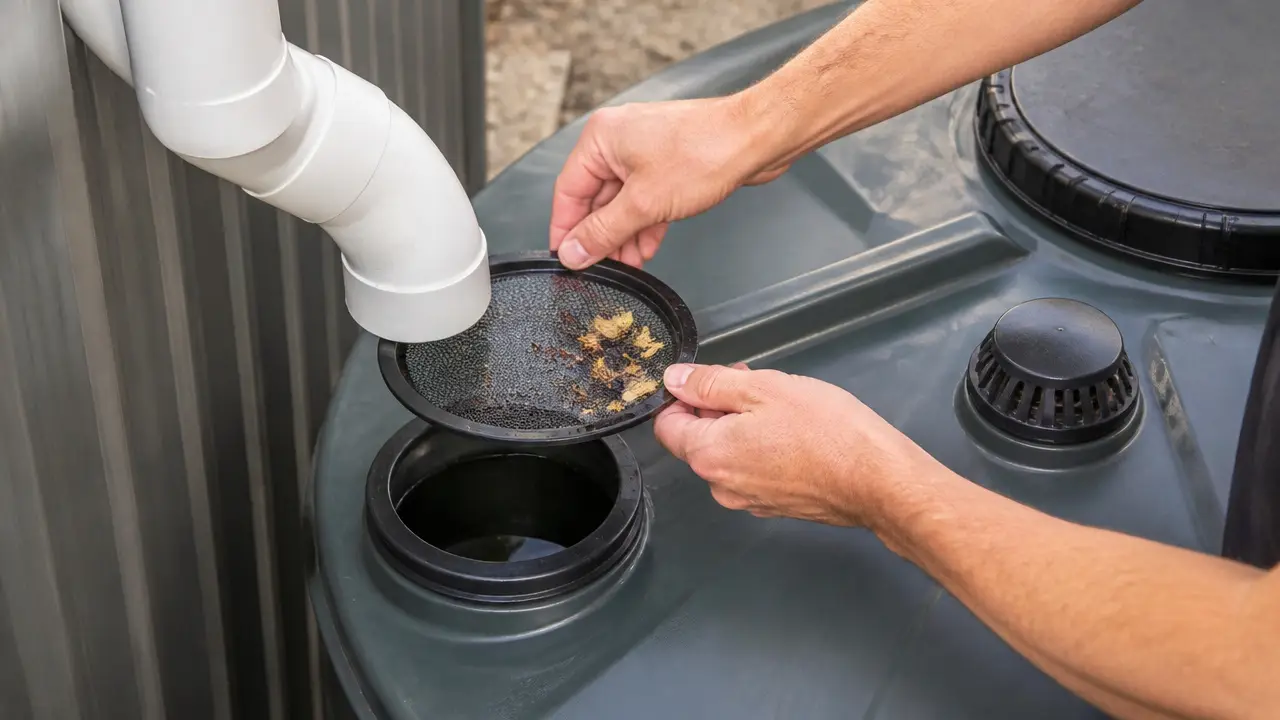
If water quality is important, use first flush as only one part of a larger approach. Roof cleaning practices, leaf screens, tank inlet screens, covered storage, sediment management, treatment, and testing can all matter downstream.
Drain and Reset Maintenance
Watch the Slow-Release Outlet
The drain opening is intentionally small so the chamber does not empty as fast as it fills during a storm. That same small opening is easy for sediment to block. Inspect it periodically and after storms that carry a heavy load of debris.
A chamber that stays full after rain cannot capture the next first flush. You do not need to watch it after every shower, but routine inspection should show that it drains between events.
Keep the Ball and Seat Free
Ball-and-seat systems depend on the float moving and sealing where intended. Grit, organic material, or a damaged seat can interfere with that movement. Cleaning the chamber is not just cosmetic; it protects the basic operating sequence.
If the ball remains stuck against the drain or seat, the system can behave differently from the intended fill-and-bypass cycle. Clean the parts and inspect the seals rather than trying to compensate by changing the chamber size.
Replace Damaged Seals Early
An O-ring that is loose, pinched, or hardened can leak around the connection. A small leak may not stop collection, but constant wetting around a joint can make maintenance harder and can wash debris into places you do not want it.
Use the correct replacement size and material specified for the product. Do not force a nearly matching seal into a joint and assume extra tightening will fix it.
What First Flush Can and Cannot Do
A first flush diverter can reduce the amount of material washed off the roof at the start of a storm. That can keep some dirt, leaves, organic matter, and other early runoff out of storage. It is especially useful after a dry period when more material has accumulated on the collection surface.
It cannot guarantee that the later runoff is clean, sterile, or safe to drink. Contaminants may continue washing from the roof throughout a storm, and dissolved material is not removed simply because the first few gallons went elsewhere.
For garden or other non-potable uses, first flush can be a practical debris-management step. For potable use, it belongs within a complete collection and treatment plan based on current water testing and local requirements.
Common First Flush Problems
The Chamber Does Not Empty
Start with the slow-release drain. Fine grit or organic matter can block the small opening. Clean the drain and make sure the outlet has somewhere to discharge without backing up.
The Float Ball Sticks
Debris, poor alignment, or suction can keep the ball where it should not be. Open the accessible section, clean the seat and ball, and check that the chamber is installed in the orientation required by the manufacturer.
The Pipe Does Not Fit the Tee
Stop before forcing the joint. Measure the actual outside and inside diameters and identify the pipe standard. An adapter may be needed, but a loose improvised connection is not a good substitute for a supported, leak-resistant fit.
Parts Are Missing From the Box
First flush kits use several small but essential components, including float balls, seals, flow-control pieces, and adapters. Inventory the kit before scheduling installation. Missing a small part can make the entire device unusable until a correct replacement arrives.
Frequently Asked Questions
What does a first flush diverter do?
It sends an initial portion of roof runoff into a separate chamber before later runoff continues toward the rainwater tank. This can reduce the amount of early roof debris that reaches storage.
How big should a first flush chamber be?
There is no single chamber size for every system. The volume should reflect the collection area, roof condition, local rainfall pattern, dry periods, and intended water use. These kits let you change chamber volume by changing the length of added pipe.
Is a 3-inch first flush diverter better than a 4-inch model?
Neither size is automatically better. Choose the model that matches the actual round-pipe system. A correctly fitted 3-inch device is better than a 4-inch device that needs loose or improvised adapters.
Does first flush make rainwater safe to drink?
No. It is an upstream runoff-management step, not complete treatment. Potable use needs suitable collection, treatment, maintenance, current water testing, and applicable local requirements.
Why does a first flush diverter need a drain?
The chamber must empty after rain so it is ready to capture the initial runoff from the next storm. A slow-release drain lets it reset without dumping the chamber immediately while rain is still falling.
How often should I clean a first flush diverter?
Inspect it often enough to keep the chamber, float, seat, and slow-release drain working freely. Systems under trees or in dusty areas may need more frequent cleaning, especially after long dry periods or debris-heavy storms.
Can a first flush diverter clog?
Yes. The chamber is intentionally receiving dirty initial runoff, so sediment and organic debris can collect inside. The small drain opening is particularly vulnerable to blockage and should be part of routine inspection.
If you are still building the roof-to-barrel connection, rainwater harvesting kits show compact ways to route downspout flow into storage. Larger debris needs its own barrier, and rain barrel screens can protect open barrel inlets from leaves and insects. Once runoff reaches storage, rainwater test kits can help with basic screening while making clear where laboratory testing is still needed.