As an affiliate, we may earn a commission from qualifying purchases. We get commissions for purchases made through links on this website from Amazon and other third parties.
Emptying a rain barrel is usually simple: use the spigot or a hose to drain most of the water, then remove the small amount left at the bottom by tipping the barrel carefully or opening a low drain fitting if your barrel has one.
The best method depends on why you are emptying it. Routine watering is different from draining a barrel for cleaning, repairs, or winter storage.
Before You Empty the Barrel
Decide where the water should go before you open the drain.
Rain barrel water is usually best treated as non-potable water, which means water that is not intended for drinking. Depending on how the water was collected and what it has contacted, you may be able to use it for:
- Trees and shrubs
- Ornamental plants
- Lawn areas
- Other outdoor uses that are suitable for untreated roof runoff
Do not send a large amount of water toward your foundation, septic system, neighboring property, or an area that already drains poorly.
If the barrel contains dirty water, algae, cleaning solution, or another contaminant, do not automatically use it on plants. Dispose of it in a way that fits the material involved and your local requirements.
How to Empty a Rain Barrel Through the Spigot
For a normal rain barrel with a bottom spigot, this is usually the easiest method.
1. Disconnect Incoming Rainwater
If possible, stop the downspout or diverter from sending more water into the barrel while you work.
A downspout diverter may have a bypass position. Other systems may require temporarily redirecting the downspout.
This is especially helpful if rain is expected.
2. Attach a Hose
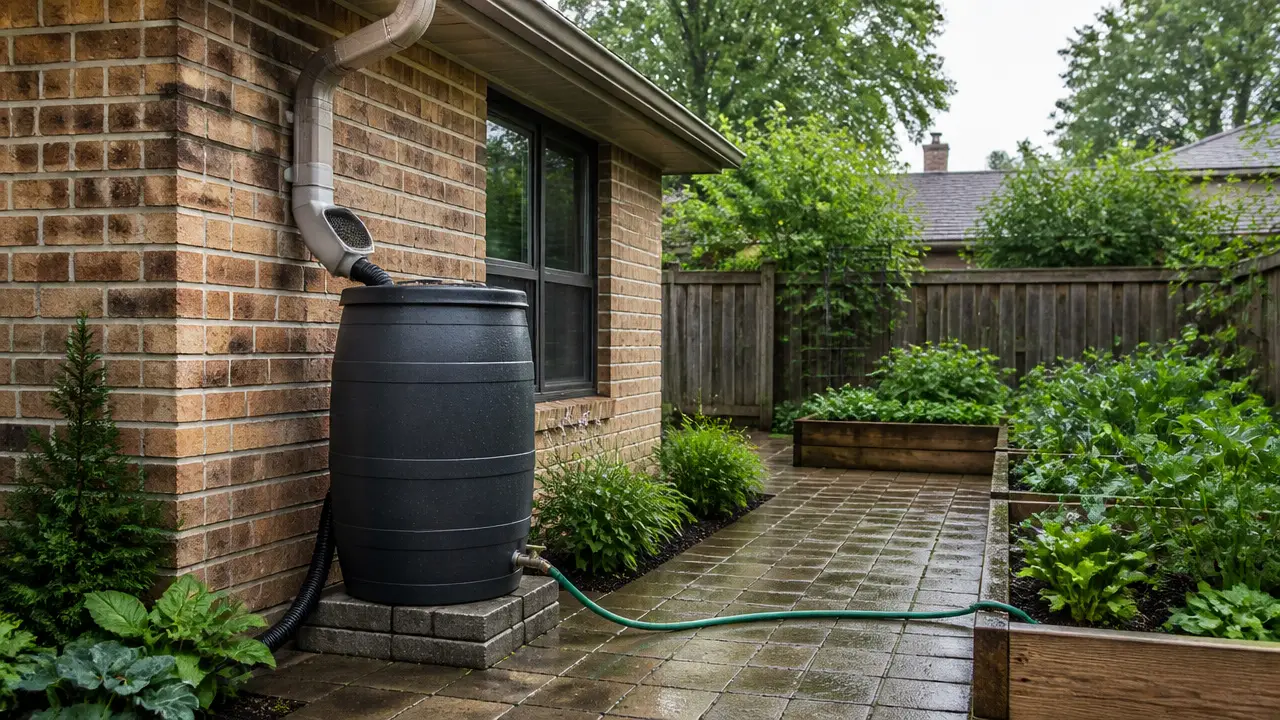
Connect a garden hose to the barrel's spigot if the connection is compatible.
Run the hose downhill toward the area where you want the water to discharge.
Gravity provides the pressure. The farther the hose rises above the water level in the barrel, the harder it will be for water to flow.
3. Open the Spigot
Open the valve and allow the barrel to drain.
A full barrel may take some time to empty, especially if:
- The spigot opening is small
- The hose is long
- The hose climbs uphill
- Sediment is partly blocking the outlet
- The water level is almost even with the hose outlet
As the water level drops, gravity pressure also falls. The last part of the barrel will normally drain more slowly.
4. Check the Discharge Area
Make sure water is soaking into the ground rather than pooling against a building or washing away soil.
You can move the hose between different areas if necessary.
How to Remove Water Below the Spigot
Most rain barrel spigots sit slightly above the bottom. This prevents some sediment from entering the outlet, but it also leaves a few inches of water behind.
If you need the barrel completely empty, you have several options.
Use a Bottom Drain
Some barrels have a separate drain plug or low outlet near the base. Open it after the main spigot has stopped flowing.
Keep the opening clear of sediment.
Carefully Tip an Emptying Barrel
After most of the water has drained, you may be able to tilt a small barrel slightly so the remaining water reaches the outlet.
Be cautious. Water is heavy. One U.S. gallon weighs about 8.3 pounds, and even a partly filled barrel can be difficult to control.
Do not try to lift or tip a barrel containing a large amount of water.
Use a Small Pump
A suitable utility or transfer pump can remove water that gravity cannot reach.
Check that the pump is designed for the type of water involved. Rain barrels can contain leaves, grit, insects, and sediment that may clog pumps intended only for clean water.
Follow the pump manufacturer's requirements for minimum water depth, electrical safety, and dry-run operation.
How to Empty a Rain Barrel for Cleaning
If you are draining the barrel because it needs cleaning, remove as much water as possible before opening or moving anything.
A simple sequence is:
- Stop incoming rainwater.
- Drain usable water through the spigot.
- Remove the remaining bottom water.
- Disconnect hoses or linking pipes if needed.
- Remove loose sediment and debris.
- Clean the barrel using a method suitable for its material and intended water use.
- Rinse as needed.
- Check the screen, fittings, overflow, and seals before reconnecting it.
Do not climb inside a tank or large cistern to clean it. Larger tanks can create confined-space hazards and should be handled with suitable equipment and professional help when entry would be required.
How to Empty a Rain Barrel Before Freezing Weather
If your barrel or its fittings could freeze, draining the system before sustained freezing conditions can reduce the chance of damage.
Empty the barrel as fully as practical, then also drain parts that can trap water, including:
- Spigots
- Valves
- Garden hoses
- Connecting hoses between barrels
- Pumps
- Filters
- First-flush devices
- Exposed irrigation tubing
A first-flush device diverts the first portion of roof runoff so some of the dirt and debris washed from the roof does not immediately enter storage.
Simply draining the main barrel does not guarantee that every fitting is protected from freezing. Follow the winterizing instructions for any pump, filter, valve, or other equipment connected to the system.
What If the Rain Barrel Will Not Drain?
Details about practical steps for emptying a 55 gallon water barrel help compare tank materials suited to the water’s intended use.
A barrel that drains very slowly or not at all may have an outlet problem.
Check the Spigot
Open and close the valve several times. Make sure the handle is actually moving the valve mechanism.
Check for Sediment
Leaves, grit, organic matter, and other debris can collect near the bottom outlet.
If the barrel is nearly empty and you can safely access the inside from above, check for debris around the outlet without climbing into the container.
Check the Hose
A kinked or clogged hose can stop the flow.
Disconnect the hose briefly. If water comes freely from the spigot, the restriction is probably in the hose rather than the barrel.
Look at the Hose Route
Gravity cannot push water through a hose that has to rise too high above the barrel's water level.
Route the discharge hose downhill whenever possible.
Check the Vent
Water leaving the barrel must be replaced by air. A completely sealed container may drain poorly.
Rain barrels normally have screened openings or other ventilation. Make sure these are not blocked, but keep mosquito protection in place.
Can You Siphon Water Out of a Rain Barrel?
Yes, siphoning can work when the discharge end of the hose can remain below the water level in the barrel.
Once the hose is filled with water and the flow starts, gravity can keep the siphon running.
Do not start a siphon by sucking on a hose with your mouth. Collected rainwater can contain microorganisms and contaminants from roofs, gutters, animals, and stored sediment.
A siphon also will not normally remove every last bit of water because the intake must remain submerged.
Should You Completely Empty a Rain Barrel Regularly?
Not every time you use it.
During normal use, you can simply draw water from the barrel as needed. Completely draining it becomes more useful when you need to:
- Clean accumulated sediment
- Repair a fitting
- Move the barrel
- Prepare for freezing conditions
- Inspect the inside
- Deal with poor-smelling or heavily contaminated stored water
How often cleaning is needed depends on the roof, gutter screens, inlet protection, local debris, storage conditions, and how quickly sediment builds up.
Check the barrel rather than relying only on a fixed calendar.
Never Move a Full Rain Barrel
Drain the barrel before trying to relocate it.
Water adds weight very quickly. For example, 50 gallons of water alone weighs roughly 417 pounds, not including the barrel.
Large tanks and IBC totes can hold far more.
Trying to shift a partly full container can damage the barrel, its fittings, or its support. It can also cause the container to move unexpectedly.
If a tank is large enough that moving or servicing it creates a lifting, structural, or access hazard, use suitable equipment or professional help.
Check the System Before Refilling
Once the barrel is empty, it is a good time to look for problems that are harder to see while it is full.
Check:
- The inlet screen for leaves and damage
- The overflow connection for blockage
- The spigot for leaks
- Bulkhead fittings for movement or damaged seals
- Connecting hoses for cracks
- The barrel for splits or deformation
- The base for settling or instability
- Sediment at the bottom
A bulkhead fitting is a fitting that passes through the wall of the barrel and creates a sealed connection for a pipe, valve, or hose.
Do not tighten plastic fittings aggressively just because you see moisture. Overtightening can deform seals or damage the barrel wall.
Frequently Asked Questions
How do you get all the water out of a rain barrel?
Drain as much as possible through the lowest outlet. Water below the spigot can be removed through a bottom drain, with a suitable small pump, or by carefully tilting a nearly empty barrel. Do not try to tip a barrel that still contains a large amount of water.
Can I drain a rain barrel with a garden hose?
Yes. Attach a compatible hose to the spigot and route it downhill. Gravity will move the water as long as the hose arrangement does not require more pressure than the barrel can provide.
Why does my rain barrel stop draining before it is empty?
The spigot is usually installed above the floor of the barrel. Once the water level falls below the outlet, gravity can no longer push the remaining water through it.
Why is my rain barrel draining slowly?
Common causes include low water level, a long or uphill hose, a kinked hose, sediment around the outlet, a partially blocked valve, or poor air entry into the barrel.
Should I empty my rain barrel for winter?
If the barrel or its plumbing may be exposed to freezing conditions, draining and winterizing the system is generally a sensible precaution. Also drain hoses, valves, pumps, filters, and other components according to their requirements.
Can I dump rain barrel water on the lawn?
Untreated collected rainwater is often used for suitable outdoor irrigation, including lawns, but consider what the water has contacted and whether it contains cleaners, chemicals, heavy sediment, or other contamination. Keep large discharges away from foundations and areas with drainage problems.
Can I move a rain barrel while it still has water in it?
It is safer to drain it first. Water weighs about 8.3 pounds per U.S. gallon, so even a modest amount can make a barrel difficult to control and place heavy loads on its fittings and base.