As an affiliate, we may earn a commission from qualifying purchases. We get commissions for purchases made through links on this website from Amazon and other third parties.
How Long Does Leak Seal Tape Last?
Leak seal tape can last from a short emergency repair to several years, depending on the type of tape and where you use it. There is no single lifespan that applies to every leak-sealing tape.
For a leaking pipe, hose, rain barrel fitting, or water line, it is safest to treat most wrap-around repair tape as a temporary repair. Some self-fusing silicone tapes can stay intact for a long time, but manufacturers still describe many pipe-repair uses as temporary because pressure, heat, movement, and the damaged pipe itself can cause the repair to fail without warning.
Thread-seal tape is different. PTFE thread tape is installed inside a threaded fitting rather than wrapped over a leak. When the fitting is assembled correctly and remains undisturbed, the seal can remain in service for years.
The Type of Tape Matters
Several products may be called "leak seal tape," but they do different jobs.
| Type of tape | Best use | How to think about lifespan |
|---|---|---|
| Self-fusing silicone tape | Small pipe or hose leaks | Temporary repair unless the manufacturer specifically approves the application as permanent |
| Waterproof adhesive repair tape | Low-pressure patches and surface leaks | Often temporary, especially outdoors or on wet surfaces |
| Fiberglass pipe-repair wrap | Cracked or damaged pipe | Depends on the repair system and pipe conditions |
| PTFE thread-seal tape | Threaded pipe connections | Can stay in place for years while the joint remains sound |
Do not use ordinary adhesive repair tape where PTFE thread tape is needed, or PTFE tape as a patch over a cracked pipe.
How Long Does Self-Fusing Silicone Leak Tape Last?
Self-fusing silicone tape has no dependable universal service life.
This tape has no sticky adhesive. Instead, stretched layers bond to each other and form a tight rubber wrap. Some versions resist water, sunlight, and a wide range of temperatures.
That durability does not make every pipe repair permanent. For example, Weld-On says its silicone pipe-repair wrap can provide a long-lasting repair but is not intended as a permanent repair, especially on pressurized pipes and hoses. Henkel also describes its Loctite SI 5075 self-fusing wrap as suitable for temporary pipe and hose repairs.
The tape may continue holding well after the immediate problem is stopped. The trouble is that you cannot predict exactly when the damaged pipe, fitting, or wrap will fail.
For that reason, replace or properly repair a damaged pressurized water line instead of deciding that a tape repair is permanent simply because it has not leaked again.
How Long Does PTFE Thread-Seal Tape Last?
PTFE tape, often called plumber's tape or thread-seal tape, is made for threaded fittings.
You wrap it around male pipe threads before screwing the fitting together. The tape helps fill small spaces between the threads and makes the connection easier to seal.
PTFE itself is very resistant to water and many chemicals. Manufacturers describe PTFE thread tape as a durable material for plumbing connections.
A correctly assembled threaded fitting can therefore remain sealed for many years. There is normally no routine schedule that says you must replace the tape after a certain number of months.
Replace it when you take the joint apart. Old PTFE tape should normally be removed from the threads before fresh tape is applied and the fitting is reassembled.
Remember that PTFE tape will not repair:
- A cracked PVC fitting
- A split pipe
- A leaking tank wall
- A damaged hose
- A failed gasket
- A loose bulkhead fitting
A bulkhead fitting is the fitting that passes through the wall of a rain barrel, tank, or cistern. It usually seals with a gasket. Tape wrapped around the outside of a leaking bulkhead is not a substitute for correcting the gasket or fitting problem.
What Makes Leak Seal Tape Fail Faster?
Water pressure
Pressure continually pushes against a pipe repair.
A tape patch on a gravity-fed rain barrel has a much easier job than a patch on a pressurized household water line. Higher pressure also makes the consequences of failure greater.
If a pressurized pipe is cracked, corroded, badly damaged, or beginning to split, repair or replace the pipe instead of relying on tape.
The size of the damage
A tiny pinhole is easier to contain than a long crack.
Tape cannot restore the structural strength of a badly damaged pipe. A crack can also keep growing underneath a wrap even when you cannot see it.
Surface condition
Different tapes have different application rules.
Some self-fusing silicone products can be used on wet or dirty surfaces because they bond to themselves rather than relying on adhesive.
Adhesive-backed tapes may behave very differently. Dirt, algae, oil, loose paint, and constant moisture can keep the adhesive from making a reliable bond.
Follow the instructions for the exact tape you have rather than assuming every waterproof tape works the same way.
Sunlight
Outdoor rainwater systems can leave repairs exposed to strong sunlight every day.
Some silicone repair tapes are specifically made to resist UV exposure. Other tapes may become brittle, loose, or damaged outdoors.
Check whether the tape is rated for outdoor exposure.
Temperature
Heat and freezing conditions can stress both the tape and the plumbing beneath it.
A repair that works on a cool garden hose may not be suitable for hot water. Likewise, wrapping a leaking PVC connection will not prevent trapped water from freezing and damaging the pipe.
Check the tape's stated temperature range for your application.
Pipe movement
Hoses, pump lines, and irrigation connections may flex every time the pump starts or someone moves the hose.
That repeated movement can loosen a patch or cause the original crack to grow.
Study practical considerations for there a tape that will stop a leak to verify fitting standards across the complete plumbing path.
A rigid, properly supported repair usually has a better chance of staying sealed.
Leak Tape on Rain Barrels and Water Tanks
Tape can be useful for troubleshooting a rainwater system, but first find out why the leak started.
A dripping rain barrel outlet might be caused by:
- A loose fitting
- A damaged gasket
- A cracked fitting
- Damaged threads
- A poorly drilled opening
- Stress from a heavy hose hanging from the outlet
- A crack in the barrel itself
Wrapping tape over the outside may hide the symptom without fixing the cause.
For a threaded connection, the better fix may be rebuilding the connection with the correct thread sealant. For a bulkhead fitting, you may need to drain the tank below the fitting and inspect the gasket and tank wall.
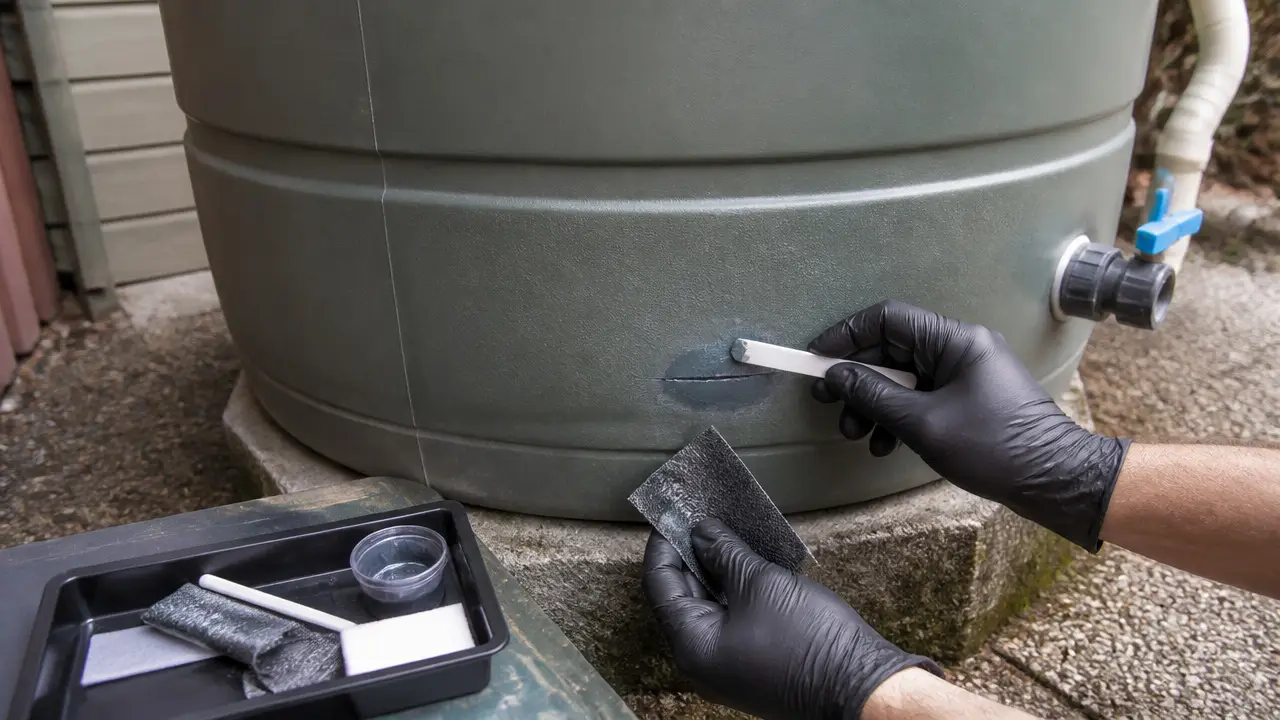
If the tank itself is cracked, check whether the tank manufacturer has an approved repair method. Large water tanks carry substantial weight. Water weighs roughly 8.3 pounds per U.S. gallon, so a tank failure can release a large amount of water quickly.
Do not depend on tape to hold a badly cracked tank wall.
What About IBC Totes?
A small leak around an IBC tote valve or adapter should also be traced to its source.
IBC tote connections may use gaskets, specialized threads, or adapters that do not match ordinary pipe threads. Adding more tape cannot correct incompatible fittings.
Check:
- Where the water is actually escaping.
- Whether the gasket is damaged or out of position.
- Whether the adapter matches the tote connection.
- Whether the leak is coming from the fitting or the tote itself.
- Whether the container has been damaged.
Do not use a repaired container for drinking-water storage unless the container, its previous use, the repair materials, and the complete water system are suitable for that purpose.
When Should You Replace a Tape Repair?
Inspect a temporary tape repair regularly.
Replace or properly repair the damaged part if you notice:
- Water starting to seep through
- The tape lifting or unwinding
- A bulge forming under the tape
- The crack getting longer
- Pipe movement around the repair
- Changes in the tape's texture
- Damage from sunlight or weather
- Increasing corrosion around the leak
For pressurized plumbing, a tape repair should give you time to arrange the correct repair rather than become something you stop checking.
Shut the water off and get qualified plumbing help when the pipe is badly corroded, the damage is growing, the line cannot be safely isolated, or a failed repair could damage the building.
Is Leak Seal Tape a Permanent Fix?
Sometimes a manufacturer may describe a particular tape or repair system as suitable for long-term use. Other manufacturers clearly label very similar-looking products as temporary repairs.
For example, fiberglass and resin pipe-repair systems form a hard shell around the pipe and work differently from thin adhesive tape or self-fusing silicone wrap. Their allowable pipe materials, pressure, temperature, curing process, and service conditions can also differ.
Do not judge a repair only by the word "waterproof."
Check the instructions for:
- Pipe material
- Pressure
- Temperature
- Pipe diameter
- Type and size of damage
- Required number of layers
- Surface preparation
- Cure time
- Whether the repair is temporary or permanent
The pipe itself also has to remain structurally sound.
A Better Rule for Rainwater Systems
For rain barrels, cistern plumbing, pumps, and irrigation lines, use leak tape according to the job:
Use PTFE thread tape when it is the correct sealant for compatible threaded fittings.
Use self-fusing repair tape as a short-term way to control a suitable small leak while planning a proper repair.
Replace cracked fittings and damaged hose when practical instead of repeatedly adding tape.
Repair leaking tank fittings at the gasket or connection instead of wrapping the outside indefinitely.
This approach usually makes the system easier to inspect and maintain.
Frequently Asked Questions
Can leak seal tape last for years?
Some tape may physically remain in place for years, especially when protected from movement and weather. That does not mean every tape-covered pipe leak is safe as a permanent repair. Follow the manufacturer's intended use and repair damaged pressurized plumbing properly.
How long does waterproof tape last outside?
There is no standard lifespan. Sunlight, heat, cold, moisture, movement, and the type of adhesive or silicone all matter. Use tape that is specifically rated for outdoor exposure and inspect it regularly.
Is silicone repair tape permanent?
It depends on the product and application. Some manufacturers describe their silicone wraps as durable or long-lasting, while others specifically classify pipe repairs as temporary. Check the instructions for your exact tape.
Does leak seal tape work on a wet pipe?
Some self-fusing silicone repair tapes are designed to work even when the surface is wet because the tape bonds to itself. Adhesive-backed tapes may require different surface conditions. Follow the manufacturer's directions.
Can I put leak tape over a leaking PVC joint?
Tape may temporarily slow some small leaks, but first determine why the PVC joint leaks. A cracked fitting, failed glued joint, damaged threaded fitting, or incompatible connection usually needs a proper repair or replacement.
Does PTFE tape need to be replaced over time?
Normally not while a threaded joint remains assembled and leak-free. If you disconnect the fitting, remove the old tape, inspect the threads, and use fresh thread sealant when rebuilding the connection.
Can I use leak seal tape on a rain barrel?
It may be useful for a minor temporary repair, but a leak around the outlet often means the gasket, bulkhead fitting, threads, or barrel wall needs attention. Correcting that underlying problem is more dependable than simply covering the area with tape.