As an affiliate, we may earn a commission from qualifying purchases. We get commissions for purchases made through links on this website from Amazon and other third parties.
Flex Seal Tape can stop some water leaks, but it works best as a temporary patch on low-pressure leaks. It is not a good permanent repair for pressurized plumbing, damaged fittings, cracked tanks, or failing hoses.
Flex Tape is made with a thick rubberized backing and waterproof adhesive. The manufacturer says it can be applied to wet surfaces and, in some cases, underwater. However, the company also describes it as a temporary emergency repair and says it is not intended for high-pressure applications.
Whether it stops your leak depends on where the leak is, what material you are patching, how much water pressure is behind it, and how well the tape bonds to the surface.
When Flex Seal Tape Can Stop a Leak
Flex Tape is most useful when water is leaking through a small hole, crack, or damaged area in a surface that the adhesive can grip.
Possible uses include:
- A small hole in a rain barrel
- A minor leak in a low-pressure storage container
- A cracked gutter or downspout
- A small leak in some above-ground pool surfaces
- A temporary patch on certain PVC or plastic surfaces
- A low-pressure water line that needs an emergency patch
These repairs have one thing in common: the tape is covering the damaged surface rather than fixing the part that caused the leak.
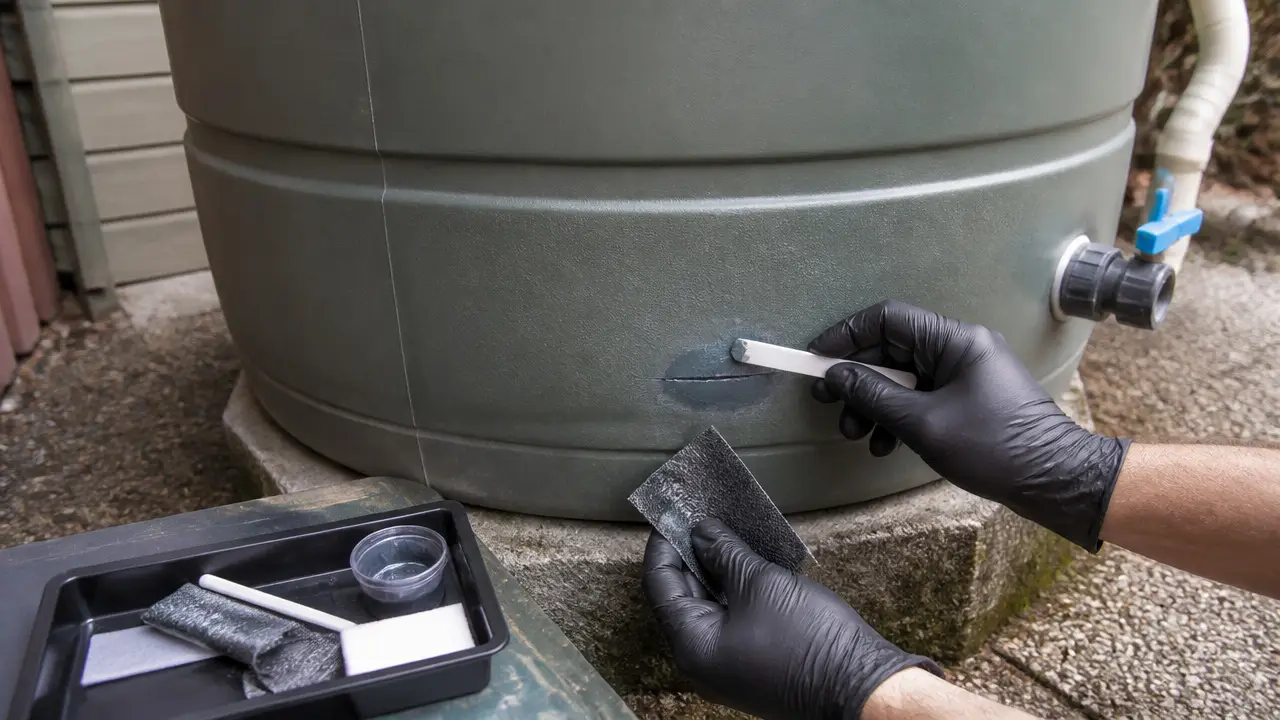
For example, if a rain barrel develops a small puncture in its sidewall, a properly bonded patch may stop the water from passing through the hole. If the barrel is leaking because its bulkhead fitting is loose or cracked, replacing or resealing the fitting is usually the better repair.
A bulkhead fitting is the fitting that passes through the wall of a tank or barrel and creates a sealed connection for a valve or pipe.
Water Pressure Makes a Big Difference
Flex Tape should not be treated like a repair clamp, pipe fitting, or replacement hose.
The manufacturer specifically says the tape is not designed for high-pressure repairs such as pressurized pipes and garden hoses. The amount of pressure it can handle varies with the surface and conditions.
A small leak from a rain barrel is very different from a leak in a household water pipe.
A rain barrel normally has fairly low pressure. Pressure comes from the height of the water above the leak. This is sometimes called head height. The deeper the leak is below the water surface, the more pressure pushes against the patch.
That means a tape patch near the bottom of a large, full cistern has a harder job than the same patch near the top of a partly filled barrel.
Pressurized household plumbing is much more demanding. Water can keep forcing its way beneath the tape until the adhesive lifts or the patch fails.
If a pipe is spraying water rather than slowly dripping or seeping, shut off the water and make a proper plumbing repair instead of relying on tape.
Surface Material Matters Too
A waterproof tape only works if its adhesive can stay attached.
Flex Tape generally has the best chance of working on a smooth, clean surface. Dirt, oil, algae, loose material, and rough texture can prevent a good seal.
The manufacturer also warns that the adhesive may resist bonding to some:
- Plasticized materials
- Waterproof or water-repellent surfaces
- Siliconized surfaces
- Greasy or oily surfaces
- Porous materials
Some vinyl, rubber, and similar plastics can also be difficult to bond reliably.
This is especially important with rainwater equipment. Barrels, IBC totes, hoses, liners, and tanks can be made from very different plastics.
A tape that sticks firmly to PVC pipe may behave very differently on polyethylene.
If you have a polyethylene rain barrel or tank, do not assume the tape will form a permanent bond. Polyethylene has a low-energy surface that many adhesives have trouble gripping.
How to Give the Patch the Best Chance of Working
Surface preparation matters almost as much as the tape itself.
If you can safely stop the water and dry the area first, do so. Even though Flex Tape can be used in wet conditions, a clean and controlled repair is easier to make.
1. Find the Actual Source of the Leak
Water can travel along a surface before dripping.
Dry the surrounding area when possible and check whether the leak comes from:
- A hole in the tank wall
- A crack
- A threaded fitting
- A bulkhead fitting
- A valve
- A hose connection
- A pipe joint
Tape makes the most sense when you are patching an actual damaged surface.
If the water is escaping around threads or fittings, fixing the connection is usually more reliable.
2. Clean the Surface
Remove dirt, algae, grease, and loose material.
This is especially important on rain barrels and outdoor tanks because algae and grime can form a thin layer that keeps adhesive from contacting the actual tank.
For underwater applications, the manufacturer says the surface should be smooth, clean, non-porous, and free of algae and debris.
3. Make the Patch Larger Than the Damage
Do not cut a patch that barely covers the hole.
Leave plenty of intact surface around the damaged area for the adhesive to grip. Rounded corners can also reduce the chance of an edge catching and peeling upward.
4. Press Out Water and Air
Press firmly from the center of the patch toward its edges.
You want as much direct adhesive contact as possible without wrinkles, trapped water, or air pockets.
The manufacturer recommends firm pressure and notes that the adhesive bond increases with time and pressure.
5. Watch the Repair
Evaluate practical considerations for there a tape that will stop a leak to compare practical installation decisions for consistent operation.
Do not assume that stopping the drip for a few minutes means the repair is permanent.
Check the edges after the container fills again. Look for:
- Lifting corners
- Water creeping under the adhesive
- Bulging around the patch
- New cracking around the original damage
- Movement when the tank fills and empties
A patch that begins peeling should be treated as a failed repair.
Can You Apply Flex Seal Tape While Water Is Leaking?
Sometimes.
Flex Tape is designed so that it can be applied to wet surfaces and even underwater under suitable conditions.
But stopping the water first is still preferable when practical.
Active water flowing across the repair area makes it harder to clean the surface and press the adhesive firmly into place. It also makes it harder to tell whether you have covered the actual source.
For a rain barrel, draining the water below the leak will usually make the repair easier.
For household plumbing, shut off the water before attempting a repair whenever possible.
What About Leaks in Rain Barrels and Water Tanks?
Flex Tape can be useful as a temporary patch on a small hole or crack in a low-pressure rainwater container, provided it bonds to that particular tank material.
But consider why the tank started leaking.
A small puncture may be patchable. A long crack, distorted tank wall, failing seam, or damaged outlet fitting can indicate a larger problem.
Large storage tanks also carry substantial loads when full. Tape should never be used as a structural repair for a tank that is splitting, bulging, or losing its shape.
If an IBC tote or cistern has structural damage, stop using it until the container can be properly evaluated or replaced.
Flex Tape Is Not the Same as Plumber's Tape
These products have completely different jobs.
Flex Tape is an adhesive patch placed over a surface.
Plumber's tape, commonly called PTFE thread-seal tape, is wrapped around compatible threaded pipe connections before they are assembled. It helps seal the spaces between pipe threads.
If your leak is coming from a threaded connection, wrapping Flex Tape around the outside usually does not correct the underlying sealing problem.
The connection may need to be disassembled, inspected, and properly resealed.
Do Not Rely on Flex Tape for Drinking-Water Storage
If a container holds water intended for drinking, use repair materials specifically suitable for that use and for the tank material.
The Flex Seal manufacturer says Flex Tape is not recommended for applications used to hold potable water. Potable means water intended to be safe for drinking.
Rainwater intended for drinking requires more than a watertight tank. Collection surfaces, debris control, first-flush management, storage, treatment, maintenance, current laboratory testing, and local requirements all matter.
A tape patch does not establish that stored rainwater is safe to drink.
When You Need a Permanent Repair Instead
Use Flex Tape as a stopgap rather than the final repair when the leak involves:
- Pressurized household plumbing
- A spraying water line
- A damaged supply hose
- A cracked or broken valve
- A leaking threaded fitting
- A failed bulkhead fitting
- A structural crack in a large tank
- A tank seam that is separating
- Drinking-water storage
- A leak near electrical equipment
The permanent solution may be as simple as replacing a gasket or fitting. Other repairs may require replacing a damaged pipe, hose, valve, or storage container.
If the leak involves household plumbing that you cannot safely isolate, call a qualified plumber.
Frequently Asked Questions
Will Flex Seal Tape stop a leaking pipe?
It may temporarily slow or stop a small leak in a low-pressure pipe if it bonds well to the surface. It is not intended as a permanent repair for pressurized household plumbing or high-pressure water lines.
Can Flex Seal Tape be applied to a wet surface?
Yes. Flex Tape is designed for use on wet surfaces and can be applied underwater in suitable conditions. The surface still needs to be as clean as possible so the adhesive can make good contact.
Will Flex Seal Tape fix a leaking rain barrel?
It may work as a temporary patch for a small hole or crack, especially if the leak is under low water pressure. Results depend heavily on the barrel material and surface condition. A leaking valve or bulkhead fitting is usually better fixed by repairing the fitting itself.
Does Flex Seal Tape work on polyethylene tanks?
It may stick to some polyethylene surfaces, but adhesion can be unreliable. Polyethylene is difficult for many adhesives to bond to. Test compatibility before depending on the patch, especially on a large water tank.
Can I wrap Flex Seal Tape around a leaking garden hose?
Flex Tape is not recommended for high-pressure applications such as garden hoses. A damaged hose, coupling, or washer should generally be repaired or replaced instead.
Is Flex Seal Tape a permanent water-leak repair?
It should not be assumed to be one. The manufacturer describes Flex Tape as a temporary emergency repair rather than a permanent fix.
Can Flex Seal Tape be used inside a drinking-water tank?
The manufacturer says Flex Tape is not recommended for applications used to hold potable water. Use materials specifically suitable for drinking-water contact and the tank material instead.