As an affiliate, we may earn a commission from qualifying purchases. We get commissions for purchases made through links on this website from Amazon and other third parties.
For most rainwater-system jobs, 100% silicone sealant is the most water-resistant type of silicone sealant. It stays flexible, handles repeated wetting well, and does not soften like many water-based caulks.
But there is an important limit: ordinary 100% silicone is not automatically suitable for permanent underwater use. Many common bathroom, window, and exterior silicone products specifically say they are not recommended for continuous water immersion.
If the joint will stay underwater, use a silicone that is specifically rated for that use. If the sealant will contact drinking water, it also needs the right drinking-water certification.
The Best Silicone Depends on Where the Water Is
There is no single silicone formula that is best for every rainwater system.
| Application | What to look for |
|---|---|
| Gutters and downspouts | Exterior-grade 100% silicone compatible with the materials |
| Rain barrel lid or above-water seam | 100% silicone rated for outdoor wet areas |
| Wet plumbing area | Plumbing-grade 100% silicone |
| Permanently submerged joint | Silicone specifically approved for continuous immersion |
| Glass water tank | Aquarium-grade silicone designed for submerged glass joints |
| Potable-water tank | Sealant specifically certified for drinking-water contact |
| Polyethylene rain tank or IBC tote | Usually a gasketed fitting rather than silicone alone |
The words "100% silicone" are a good starting point, not the whole specification.
The product label and technical data sheet still need to match the job.
Why 100% Silicone Handles Water So Well
Once fully cured, silicone forms a rubber-like material. It does not depend on a water-based binder that can soften when it stays wet.
A suitable 100% silicone sealant also has several useful properties for rainwater systems.
It stays flexible as surfaces expand and contract. It handles outdoor weather well. It can tolerate repeated wet and dry cycles. It also adheres well to materials such as glass, ceramic, and some metals when the surface is properly prepared.
That flexibility matters.
A rigid seal can crack when a tank wall, gutter, pipe, or fitting moves slightly. Silicone can stretch with small movements instead.
However, water resistance does not help if the silicone does not bond to the material underneath it.
Continuous Water Immersion Is Different
A sealant used around a gutter sees rain for a few hours and then dries.
A sealant inside a full tank may stay underwater for months.
Those are very different conditions.
Many regular 100% silicone sealants are intended for showers, sinks, windows, doors, and exterior joints. They can withstand heavy moisture but still carry instructions saying they should not be used for continuous water immersion. For example, current technical information from both Dow and DAP includes this restriction on some general-purpose silicone products.
So do not assume that a label saying:
- waterproof
- kitchen and bath
- exterior
- weather resistant
- 100% silicone
means the product can sit underwater indefinitely.
For an underwater tank joint, look for a manufacturer-approved application such as aquarium construction, water-retaining structures, or continuous immersion.
Aquarium silicone is one example. It is made for joints that remain submerged after the silicone has fully cured. Some aquarium manufacturers describe their silicone as forming a permanent watertight seal for freshwater and saltwater tanks.
That still does not automatically make aquarium silicone appropriate for drinking water.
Aquarium-Safe Does Not Mean Potable-Water Approved
This distinction is especially important with harvested rainwater.
Potable means intended for drinking.
A silicone may be safe for fish after curing without having been evaluated for use in a drinking-water system.
For sealants that will contact potable water, look for certification specifically covering drinking-water contact. In the United States and Canada, NSF/ANSI/CAN 61 is a major standard used for materials and components that contact drinking water. It includes joining and sealing materials.
NSF maintains current listings of certified products, including some sealants.
For a potable rainwater system, check the exact product rather than relying on phrases such as:
- food safe
- non-toxic
- aquarium safe
- FDA compliant
- pure silicone
Those statements are not the same as certification for drinking-water contact.
And a certified sealant does not make collected rainwater safe to drink by itself. Potable rainwater requires suitable collection, debris control, treatment, current laboratory testing, maintenance, and compliance with applicable local requirements.
Acetoxy vs. Neutral-Cure Silicone
You may see silicone described as acetoxy cure or neutral cure.
Both types can be highly water resistant after curing.
Acetoxy silicone
Acetoxy silicone often has a vinegar-like smell while curing.
It commonly bonds very well to glass and ceramic. This is one reason acetoxy formulations are often used for aquarium applications.
But the curing chemistry can react with some metals and other sensitive materials. Some manufacturers warn against using certain acetoxy silicones near copper, brass, zinc, galvanized metal, and similar surfaces.
Neutral-cure silicone
Neutral-cure silicone releases less aggressive compounds while curing.
It is often a better choice around metals and mixed construction materials, provided the specific product lists those materials as compatible.
Neither type is automatically more waterproof.
For rainwater equipment, material compatibility and the product's approved application matter more than choosing acetoxy or neutral cure based only on water resistance.
Be Careful With Polyethylene Rain Tanks and IBC Totes
Silicone is often used as a quick fix when a rain tank fitting starts leaking.
That can be a mistake.
Many molded rainwater tanks and IBC tote bottles are made from polyethylene. Polyethylene has a low-energy surface, which makes it difficult for many adhesives and sealants to grip reliably.
Some silicone manufacturers specifically note poor adhesion to polyethylene and polypropylene.
If a tank outlet leaks, first check the mechanical connection.
A typical tank connection may use a bulkhead fitting. A bulkhead fitting passes through the tank wall and uses a flange, gasket, and nut to make a watertight connection.
The gasket usually provides the main seal.
Adding a thick layer of silicone around a badly installed fitting may hide the leak for a while without fixing its cause.
Common problems include:
- damaged or missing gaskets
- dirt under the gasket
- a fitting installed in the wrong size hole
- a fitting sitting across a molded ridge
- a loose connection
- an overtightened fitting that distorted the gasket
- cracks around the tank opening
Study recommended water-safe sealants for rainwater tanks to compare a storage-tank design compatible with the location.
Use the fitting or tank manufacturer's approved sealing method whenever possible.
Avoid Mold-Resistant Silicone Inside Water Storage
Bathroom silicone often contains additives intended to slow mold or mildew growth.
That can be useful around showers.
It is not automatically appropriate for the inside of a rainwater tank.
For stored water contact, especially water that may eventually be treated for household or drinking use, use a sealant whose manufacturer specifically approves that application.
Do not assume that "bathroom grade" is better because bathrooms are wet.
The extra additives may be unnecessary or unsuitable for your water system.
Surface Preparation Matters as Much as the Silicone
Even the right silicone can leak if it is applied over a poor surface.
The joint normally needs to be:
- clean
- dry
- solid
- free of loose old sealant
- free of oil and grease
- compatible with the silicone
Follow the sealant manufacturer's instructions for cleaning and priming.
Do not trap uncured silicone between surfaces without checking the cure requirements. One-part silicone usually cures when moisture from the air reaches it. Very thick beads or enclosed spaces can take much longer to cure.
Several manufacturers also warn that silicone may not cure correctly in completely confined spaces.
Let Silicone Fully Cure Before Filling the System
"Cured" is different from "dry to the touch."
The outside of a silicone bead may form a skin quickly while the material deeper in the joint remains uncured.
Cure time depends on:
- bead thickness
- temperature
- humidity
- silicone chemistry
- airflow
- joint design
Do not guess based on how the surface feels.
Follow the manufacturer's stated cure time before exposing the joint to water. For a submerged or water-contact application, this is especially important.
When Silicone Is the Wrong Repair
Silicone is a sealant. It should not be expected to repair every water leak.
A different solution may be needed for:
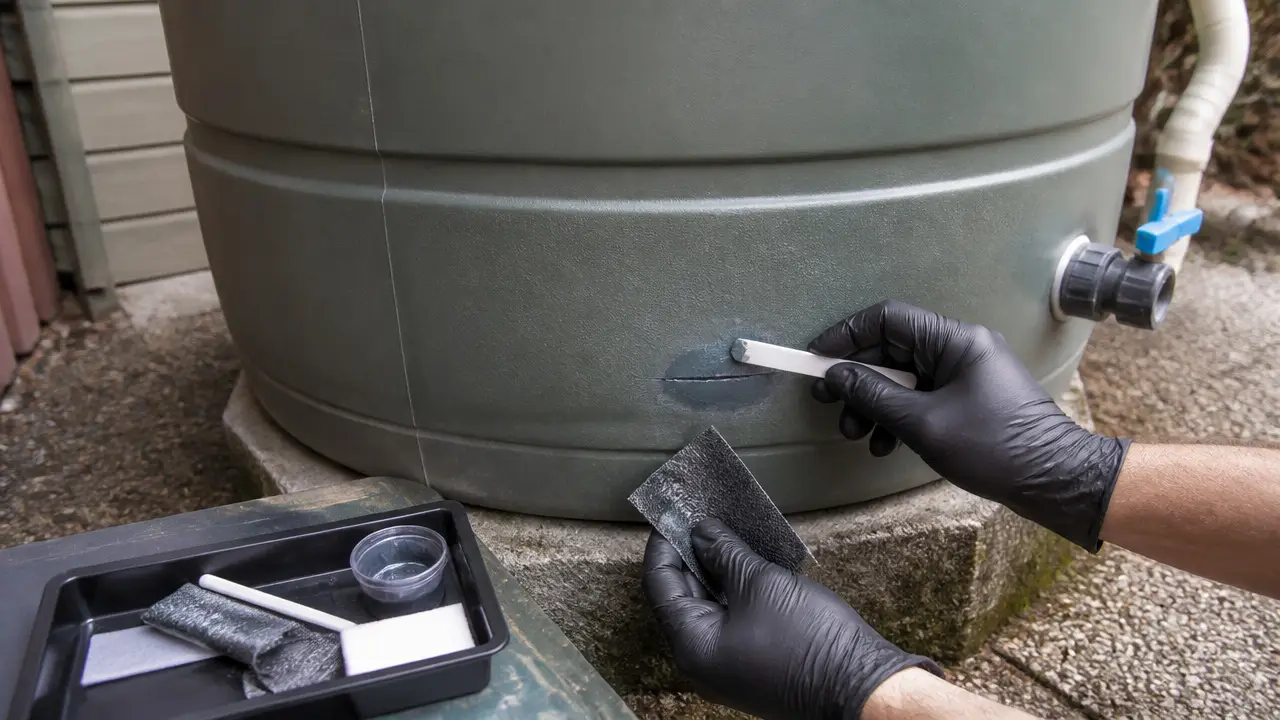
Cracked tank walls
A structural crack in a plastic tank can continue to move even after silicone is applied over it.
Use a repair method approved for the tank material, or contact the tank manufacturer.
Leaking threaded connections
Threads may require the correct gasket, O-ring, thread sealant, or thread tape rather than silicone around the outside.
Loose bulkhead fittings
Fix the gasket and fitting installation first.
Pressurized plumbing
A pressurized joint needs components and seals rated for its operating pressure. Do not rely on an external bead of silicone to hold pressure.
Large gaps
Silicone works best when the joint has the dimensions and support recommended by the manufacturer. It is not a good substitute for missing material or a poorly fitting part.
What to Look for on the Label
Instead of choosing silicone only because it says "waterproof," check several things.
Look for:
- 100% silicone if you need a flexible silicone seal rather than a siliconized acrylic caulk.
- Material compatibility with the tank, pipe, gutter, glass, or metal you are sealing.
- Continuous-immersion approval if the joint will remain underwater.
- Outdoor and UV suitability for exposed gutters, downspouts, and tank fittings.
- Drinking-water certification if the cured sealant will contact potable water.
- Cure requirements before exposure to water.
- Temperature limits appropriate for your climate and application.
These details are more useful than choosing a sealant based only on the strongest waterproof claim on the front of the cartridge.
The Practical Choice for a Rainwater System
For an ordinary above-water rainwater-system joint, a good-quality 100% silicone that is approved for the specific materials and outdoor wet conditions is usually the most water-resistant silicone choice.
For a joint that stays underwater, move one step further. Choose a silicone specifically approved for continuous immersion.
For drinking-water contact, move another step further. Use a sealant with appropriate potable-water certification, such as an applicable NSF/ANSI/CAN 61 listing, and confirm that its certified conditions match your installation.
And when working with polyethylene rain tanks or IBC totes, do not expect silicone alone to compensate for a poor mechanical connection. A correctly installed gasketed fitting is usually the more dependable starting point.
Frequently Asked Questions
Is 100% silicone completely waterproof?
Fully cured 100% silicone can form a very water-resistant seal, but that does not mean every product is approved for continuous underwater use. Check the manufacturer's application limits.
Is aquarium silicone more waterproof than regular silicone?
Aquarium silicone is designed for joints that remain submerged, so it can be a better choice for suitable underwater applications. Regular kitchen, bath, window, or exterior silicone may specifically exclude continuous immersion.
Can I use bathroom silicone inside a rainwater tank?
Do not use it automatically. Bathroom silicone may contain mold-resistant additives, and many formulas are not approved for permanent immersion or stored-water contact. Use a product specifically approved for the tank application.
Can silicone seal a leaking IBC tote?
It may help in some non-structural applications, but silicone often bonds poorly to the polyethylene used in IBC bottles. If the leak is around the outlet, inspect the gasket, bulkhead fitting, threads, and tank surface first.
Is aquarium silicone safe for drinking-water tanks?
Not necessarily. Fish-safe or aquarium-safe labeling does not by itself establish suitability for drinking-water contact. For potable applications, look for the required drinking-water certification and verify the exact product listing.
Is neutral-cure silicone more waterproof than acetoxy silicone?
Not simply because it is neutral cure. Both can provide excellent water resistance. Neutral-cure silicone may be more compatible with certain metals and materials, while some acetoxy silicones bond very well to glass. Follow the manufacturer's compatibility information.
How long should silicone cure before getting wet?
Use the cure time stated by the manufacturer. A bead can feel dry on the outside while still curing inside. Thick joints, cool temperatures, low humidity, and limited airflow can extend the cure time.