As an affiliate, we may earn a commission from qualifying purchases. We get commissions for purchases made through links on this website from Amazon and other third parties.
A leaky water tank can often be sealed without replacing the whole tank. The right repair depends on where the leak is, what the tank is made from, and whether the damage is a loose fitting, failed gasket, small crack, or larger structural problem.
Start by finding the exact source of the leak. A wet spot on the outside of a tank does not always mean the tank wall is cracked. Water can travel along fittings, seams, hoses, or the tank surface before dripping somewhere else.
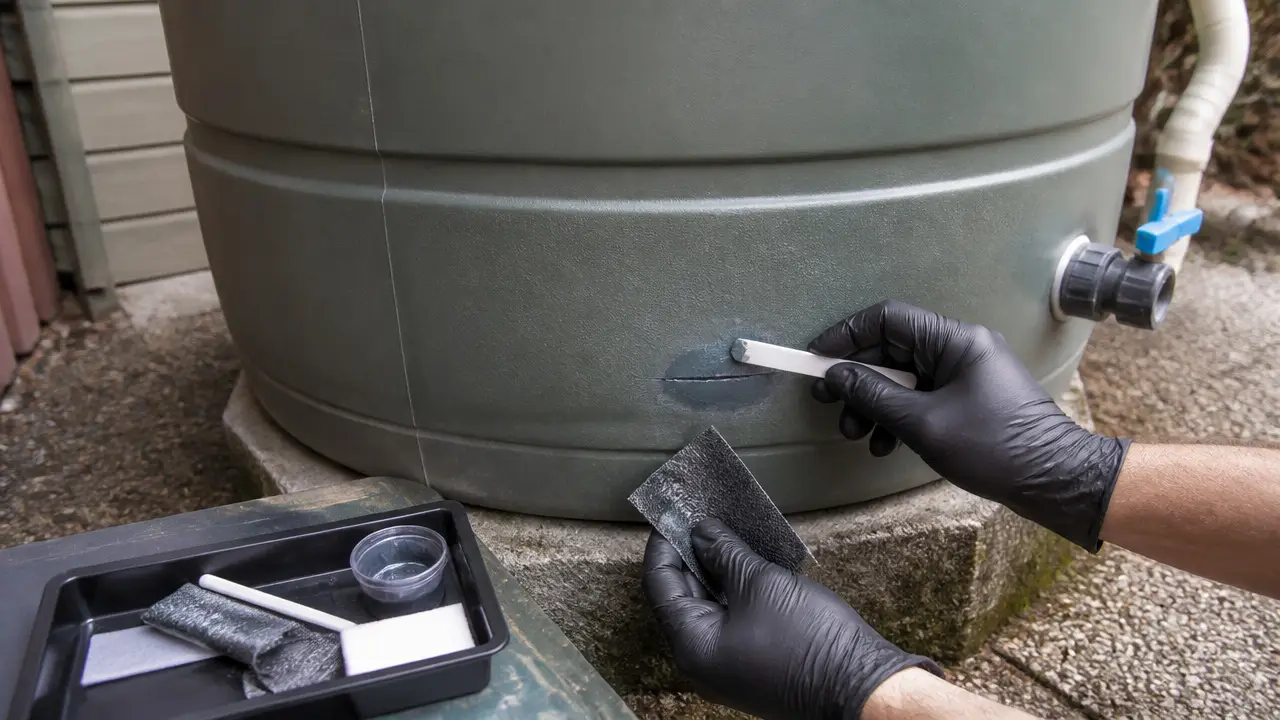
For a small leak, the usual fix is to drain the water below the damaged area, clean and dry the surface, then repair the fitting, gasket, or tank material with a method made for that type of tank.
Find Where the Water Is Actually Leaking
Before applying sealant, dry the outside of the tank and watch where fresh water first appears.
Common leak points include:
- Threaded outlets
- Bulkhead fittings
- Drain valves
- Hose connections
- Gaskets
- Tank seams
- Small cracks in the tank wall
- Damage around fittings
- Overflow connections
A bulkhead fitting is a fitting that passes through the wall of the tank. It normally uses a gasket and a retaining nut to make a watertight connection.
If the tank is wet around a fitting, the tank itself may be fine. A loose fitting, damaged gasket, cracked adapter, or poorly sealed thread may be the real problem.
Lower the Water Level Before Repairing the Tank
Drain the tank until the water level is below the leak.
This reduces water pressure on the damaged area and gives the repair surface a better chance to stay dry.
For leaks close to the bottom of the tank, you may need to drain most or all of the water.
Do not work inside a large enclosed tank. Tanks and cisterns can be confined spaces with serious hazards. Repairs that require someone to enter a tank should be handled by people trained and equipped for confined-space work.
Clean the Repair Area
Sealants and repair materials work poorly on dirt, algae, mineral deposits, or wet surfaces.
Clean the area around the leak using a method that will not damage the tank material. Remove:
- Dirt
- Slime
- Loose sealant
- Scale
- Grease
- Old tape
- Flaking repair material
Allow the area to dry if the repair product requires a dry surface.
Follow the preparation instructions for the repair material you plan to use. Some products require sanding or roughening. Others must be applied to smooth, clean plastic.
How to Seal a Leaking Tank Fitting
Leaks around outlets and valves are often easier to fix than cracks in the tank wall.
Check the Threaded Connection
If water appears where two threaded fittings join, the threads may not be sealed correctly.
Drain the water below the connection. Then disconnect the fitting and inspect it.
Look for:
- Cross-threaded parts
- Cracked adapters
- Damaged threads
- Old or poorly applied thread sealant
- Mismatched thread types
Thread-sealing tape or a suitable pipe-thread sealant may solve the leak if the threads and fittings are otherwise sound.
Do not keep tightening a plastic fitting until the leak stops. Excess force can crack the fitting or tank connection.
Check the Bulkhead Gasket
If water is leaking where a bulkhead passes through the tank wall, inspect the gasket.
A gasket can leak because it is:
- Twisted
- Cracked
- Hardened
- Dirty
- Installed on the wrong side
- Compressed unevenly
The fitting may need to be removed, cleaned, and reinstalled with a sound gasket.
Do not rely on a thick layer of sealant to compensate for a badly installed bulkhead fitting. The gasket should normally make the seal.
Check for Damage Around the Opening
Sometimes a fitting leaks because the tank wall around it has cracked or distorted.
This is more serious.
Tightening the bulkhead may make the crack larger. If the tank wall is damaged, the tank material itself may need repair before the fitting can seal properly.
How to Seal a Small Crack in a Plastic Water Tank
Many rain barrels, storage tanks, and IBC tote bottles are made from polyethylene.
Polyethylene can be difficult to repair with ordinary household adhesives because many glues do not bond well to it.
For a small crack, a repair designed specifically for the tank material is usually more reliable than general-purpose caulk.
Possible methods include:
- Polyethylene-compatible repair systems
- Plastic welding
- Manufacturer-approved patching methods
Plastic welding uses heat to join compatible plastic material around the damaged area. It can work well on some polyethylene tanks, but the repair must match the tank material and the crack must not be caused by a larger structural problem.
A crack that continues spreading after repair usually means the damaged area is still under stress.
Do Not Drill the Crack Unless the Repair Method Calls for It
Some plastic repair techniques use a small hole at the end of a crack to reduce further crack growth.
That does not mean every tank crack should be drilled.
Drilling creates permanent additional damage and can make a repair harder if it is done in the wrong place or with the wrong repair method.
Follow the instructions for the specific plastic repair process being used.
Can You Use Silicone to Seal a Water Tank?
Sometimes, but silicone is not a universal tank repair.
Silicone may work well for certain compatible fittings, surfaces, and applications. It is much less dependable when used as a patch over flexible polyethylene tank walls.
A bead of silicone placed over a crack may appear to stop the leak for a while but separate as the tank expands, contracts, or flexes.
Check that any sealant you use is:
- Compatible with the tank material
- Suitable for constant water contact
- Suitable for outdoor temperatures if the tank is outside
- Appropriate for the intended use of the stored water
If the tank stores water for drinking or food-related uses, repair materials should also be suitable for that application.
Can Epoxy Seal a Leaking Water Tank?
Epoxy can work on some rigid materials, but it does not bond equally well to every tank.
It may be useful for certain:
- Fiberglass tanks
- Metal tanks
- Concrete tanks
- Rigid plastics that the epoxy manufacturer lists as compatible
Standard epoxy is usually a poor choice for polyethylene unless the product is specifically designed for it.
A strong-looking patch is not useful if it separates from the tank after the wall flexes.
Repairing a Metal Water Tank
A metal tank may leak because of:
- Corrosion
- Failed seams
- Cracked welds
- Damage around fittings
- Pinholes
Small isolated defects may sometimes be repaired with a coating, patch, or welding process suitable for the metal.
Widespread corrosion is different. If several pinholes are appearing, sealing one hole may only reveal another later.
A heavily corroded tank may be nearing the end of its useful life.
Welding tanks also requires appropriate safety precautions. Do not weld a tank that has held fuel, chemicals, or unknown substances unless it has been professionally assessed and made safe.
Repairing a Fiberglass Tank
Fiberglass tanks are often repaired using resin and fiberglass reinforcement compatible with the original tank.
The surface normally needs careful preparation so the new material can bond properly.
Review repairing a leaking water tank to assess airflow and overflow provisions around the storage vessel.
A small surface defect may be repairable. Large cracks, delamination, or structural damage should be assessed before patching because the visible crack may only be part of the problem.
Repairing a Concrete Cistern
Concrete storage tanks can develop leaks from:
- Cracks
- Failed joints
- Pipe penetrations
- Movement between sections
- Deteriorated coatings
The correct repair depends on whether the crack is simply allowing water through or is still moving.
A patch applied over a moving structural crack may fail again.
Large cracks, foundation movement, or significant deterioration should be assessed by someone familiar with concrete water-storage structures.
Why Tank Cracks Often Come Back
A repair may fail even if the patch material was applied correctly.
The underlying cause may still be present.
Common causes include:
Poor Tank Support
A full tank is extremely heavy.
Water weighs about 8.34 pounds per U.S. gallon, or about 1 kilogram per liter.
A 500-gallon tank holds more than 4,000 pounds of water before the tank itself is included.
If the base is uneven, soft, or poorly supported, the tank can twist or sag. This puts extra stress on the tank wall and fittings.
Pipe Stress
Rigid plumbing can pull sideways on a tank outlet.
A valve, pump line, or long pipe attached directly to the tank can place leverage on the fitting as the tank moves slightly during filling and emptying.
Supporting the pipe separately can reduce this stress.
Overtightened Fittings
Plastic fittings can crack when they are tightened too much.
Tighter does not always mean better.
Freezing Water
Water expands as it freezes.
A full tank, trapped pipe section, valve, or fitting exposed to freezing temperatures can crack.
A repair will not prevent future freeze damage if water can still become trapped in vulnerable parts of the system.
How to Test the Repair
Do not immediately fill the tank completely after a repair unless the repair instructions say otherwise.
Allow the repair material to cure for the required time.
Then add water gradually.
Watch the repaired area as the water level rises.
Check for:
- Dampness
- Slow seepage
- Movement around the fitting
- Expansion of the crack
- Distortion of the tank wall
Some leaks only appear when the water reaches a certain level because higher water creates more pressure near the bottom of the tank.
When a Leaking Water Tank Should Be Replaced
Not every tank is worth repairing.
Replacement may be safer when:
- A crack is large or spreading
- The tank wall is badly distorted
- Several cracks are developing
- The tank has severe UV damage
- Metal corrosion is widespread
- The bottom of the tank is failing
- The tank has structural damage
- The outlet area is badly torn
- Previous repairs keep failing
Also inspect the tank support.
Replacing a damaged tank without correcting an uneven or unstable base can lead to the same problem again.
What If the Tank Holds Drinking Water?
Use more caution with any tank that supplies drinking water.
Repair materials, coatings, fittings, hoses, and sealants should be suitable for the intended water use. A repair can also introduce dirt or contaminants into the tank.
Do not assume clear-looking stored rainwater is safe to drink.
Drinking-water use should be treated as a complete system. That includes suitable collection surfaces, debris control, treatment, cleaning, maintenance, and appropriate water-quality testing. Local health and plumbing requirements may also apply.
After repairing or working inside a potable-water system, follow the appropriate cleaning, treatment, and testing procedures for that system before returning the water to drinking use.
Preventing Future Tank Leaks
A few system checks can reduce the chance of another leak.
Make sure the tank sits on the type of level, stable base required for that tank.
Support connected plumbing so the tank fitting is not carrying the weight of long pipes, pumps, or hoses.
Inspect outlets and valves from time to time. A small drip is easier to deal with before it damages the surrounding tank wall.
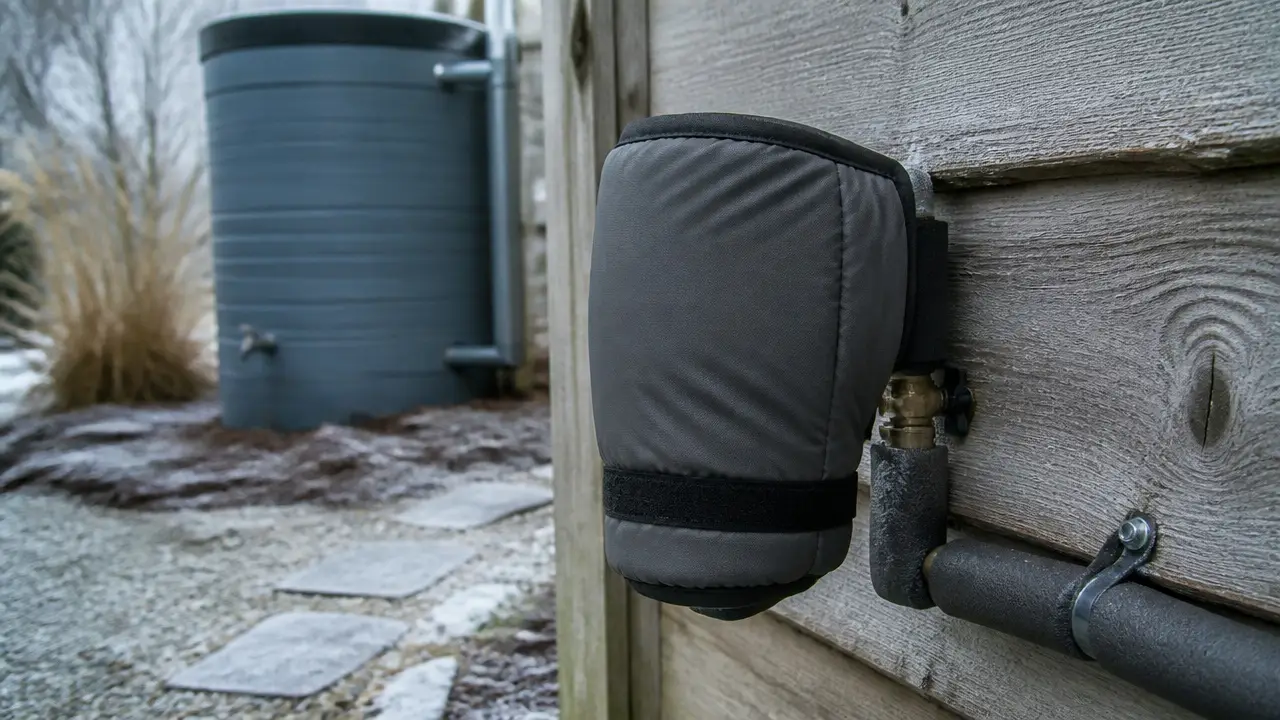
If the system is exposed to freezing weather, plan how tanks, valves, pumps, and pipes will be drained, protected, or taken out of service before freezing conditions arrive.
Also keep overflow lines clear. A blocked overflow can place water where the tank system was not designed to handle it.
Frequently Asked Questions
Can I seal a water tank while it is still full?
Usually, you will get a more reliable repair by lowering the water below the leak. Water pressure and moisture can prevent many repair materials from bonding correctly. Some specialty products can be applied to wet surfaces, but they should only be used according to their instructions.
What is the best sealant for a polyethylene water tank?
There is no single best sealant for every polyethylene tank. Many ordinary adhesives and caulks bond poorly to polyethylene. Use a repair method specifically listed as compatible with polyethylene, such as an appropriate plastic repair system or plastic-welding method.
Will silicone stop a leaking plastic tank?
It may stop some fitting leaks when the silicone is compatible with the materials involved. It is usually less dependable as a permanent patch over a flexible polyethylene crack.
Can I use epoxy on a water tank?
Yes, on tank materials that the epoxy is designed to bond to. Many normal epoxies do not bond reliably to polyethylene. Always check material compatibility and whether the cured product is suitable for the intended water use.
Why does my tank leak only when it is full?
Water pressure increases with depth. A weak fitting or small crack may stay dry at low water levels but begin leaking when the tank fills and pressure increases.
Should I tighten a leaking bulkhead fitting?
A slightly loose fitting may need adjustment, but overtightening can damage the gasket, fitting, or tank wall. If tightening does not quickly solve the problem, drain the water below the fitting and inspect the gasket and tank opening.
Can a cracked rain barrel be repaired?
Many small cracks can be repaired if the surrounding plastic is still strong. Large cracks, badly weathered plastic, or damage around the bottom of the barrel may make replacement more practical.
How long should a tank repair cure before refilling?
It depends on the repair material. Follow the manufacturer's curing instructions. Temperature, humidity, material thickness, and the type of adhesive or coating can all affect curing time.