As an affiliate, we may earn a commission from qualifying purchases. We get commissions for purchases made through links on this website from Amazon and other third parties.
Twenty minutes can be long enough to water grass, but the clock alone does not tell you whether the lawn received enough water. A high-output sprinkler may apply plenty of water in 20 minutes. A low-flow sprinkler, especially one running from a rain barrel or low-pressure system, may apply very little.
The better method is to measure how much water reaches the grass. As a general starting point, the U.S. EPA says many landscapes need about 1 inch of water per week, including rainfall, though the amount varies with climate, weather, soil, and plants.
How Much Water Does 20 Minutes of Sprinkling Apply?
There is no standard answer. Two sprinklers can run for 20 minutes and put down very different amounts of water.
The result depends on:
- Sprinkler type and nozzle size
- Water pressure
- Available flow rate
- Distance from the sprinkler
- Wind
- Overlap between sprinkler patterns
- Clogged or damaged sprinkler heads
For example, an in-ground spray head may put water down much faster than an oscillating sprinkler. A sprinkler connected to a pump may also behave very differently from the same sprinkler connected directly to a rain barrel.
That is why setting every lawn sprinkler to "20 minutes" is not a reliable watering plan.
Measure Your Sprinkler Instead of Guessing
A simple catch-can test will tell you whether 20 minutes is enough.
Place several straight-sided containers around the area being watered. Small food cans or similar shallow containers work well.
Then:
- Run the sprinkler for 20 minutes.
- Measure the depth of water in each container.
- Add the measurements together.
- Divide by the number of containers to find the average depth.
EPA WaterSense suggests placing several empty tuna cans around a lawn and measuring how long the sprinkler takes to apply 1/2 inch of water. That measured time can then be used as a starting point for watering about twice per week, with adjustments for rainfall and weather.
For example, suppose your containers average 1/4 inch after 20 minutes. At roughly the same sprinkler output, it would take about 40 minutes to apply 1/2 inch.
This does not mean every lawn needs exactly that schedule. It simply tells you what your sprinkler is actually delivering.
Is 20 Minutes Twice a Week Enough?
It might be.
If your sprinkler applies about 1/2 inch during each 20-minute session, two sessions would provide about 1 inch for the week before subtracting rainfall.
If it applies only 1/8 inch in 20 minutes, the same schedule would provide only about 1/4 inch per week.
Rainfall matters too. EPA WaterSense notes that the commonly used 1-inch weekly guideline includes rain, not just irrigation. Local conditions can change the amount your lawn needs.
A lawn that receives a good soaking rain may not need the sprinkler at all that week.
Soil Type Changes How Long You Should Water
The amount of water matters, but so does how quickly the soil can absorb it.
Sandy soil
Sandy soil drains quickly. Water can move through it faster, so the lawn may need watering more often than a lawn growing in heavier soil.
Long watering sessions can also send water below the main root zone before the grass can use it.
Loam
Loamy soil usually holds moisture better while still allowing reasonable drainage. It is often easier to water deeply without creating immediate runoff.
Clay soil
Clay absorbs water slowly.
A sprinkler may apply water faster than clay can take it in. If you see puddles or water running onto a driveway or sidewalk, continuing for 20 minutes straight can waste water.
EPA recommends using shorter watering periods separated by soak times on clay soils or slopes. This is often called cycle-and-soak watering.
For example, rather than running one continuous session, you may divide the needed watering time into several shorter cycles. The exact timing depends on how quickly your soil begins to produce runoff.
Deep, Less-Frequent Watering Is Usually Better
For an established lawn, several short, shallow waterings every day are generally less useful than giving the soil a deeper watering when the grass actually needs it.
Frequent shallow watering keeps most of the moisture close to the surface. Deeper watering encourages roots to make better use of moisture farther down in the soil.
EPA also cautions that watering grass too frequently can contribute to shallow roots.
There are exceptions. Newly seeded lawns, new sod, and recently repaired patches may need much more frequent moisture while they become established. Follow guidance for the grass being established rather than an established-lawn schedule.
Watch the Lawn, Not Just the Timer
Your grass can give you clues that it needs water.
Use typical sprinkler-system flow rates to evaluate component ratings under sustained system demand.
Possible signs include:
- Grass blades folding or curling
- A dull or gray-green appearance
- Footprints remaining visible after you walk across the lawn
- Soil becoming dry below the surface
Do not assume brown grass always needs immediate watering. Some grass types can enter dormancy during hot or dry periods.
Likewise, green grass does not necessarily need another scheduled watering. EPA recommends irrigating only when the landscape needs it rather than relying only on a fixed timer.
When Is the Best Time to Water Grass?
Early morning is usually a practical time to irrigate.
Conditions are generally cooler than during the middle of the day, which reduces unnecessary evaporation. Wind may also be lighter.
Avoid watering during hot midday conditions when a larger share of the sprayed water can evaporate before reaching the plants.
Also avoid watering when strong wind is blowing the spray away from the lawn.
Does the 20-Minute Rule Work With Rainwater?
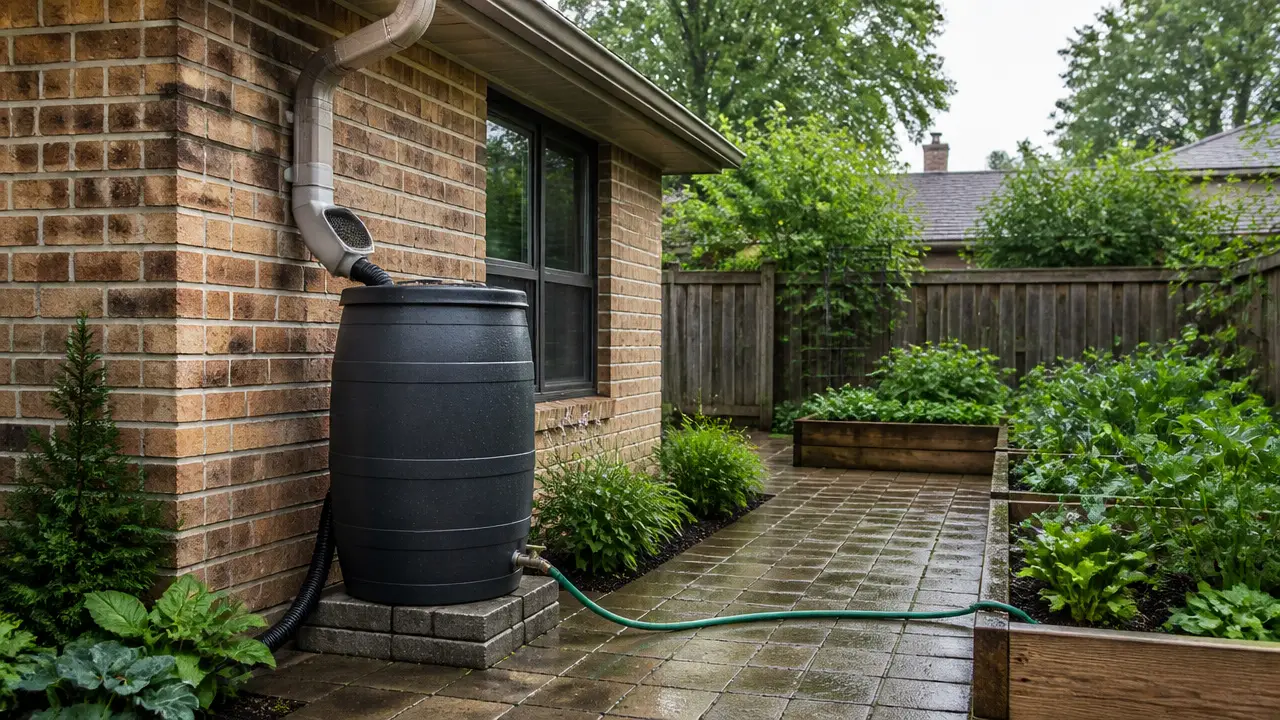
If you irrigate with stored rainwater, measure sprinkler output rather than copying a municipal-water schedule.
A rainwater system may have very different:
- Flow
- Pressure
- Pump performance
- Pipe size
- Hose length
- Elevation difference
- Available stored water
A sprinkler that produces good coverage from a pressurized household connection may perform poorly when connected directly to a rain barrel.
Gravity-fed barrels often provide much less pressure than a normal pressurized irrigation supply. If the sprinkler barely reaches its intended area, running it for 20 minutes longer may not solve the coverage problem.
If you use a pump, make sure its available flow and pressure match the irrigation setup. Protect the pump from running dry when the tank becomes empty.
The catch-can test is useful here because it measures the water that actually reaches the lawn, regardless of where the water comes from.
Account for Rain Before Running the Sprinkler
Do not automatically water after a rainy week.
If your lawn has already received much of the water it needs from rainfall, reduce or skip irrigation.
A rain gauge can make this easier. You can compare recent rainfall with the amount your sprinkler normally applies.
Weather-based and soil-moisture irrigation controllers can also reduce unnecessary watering by adjusting or preventing irrigation when conditions do not call for it.
Local watering restrictions may also control what days or times irrigation is allowed. Check your local water utility or local government if restrictions apply in your area.
A Simple Way to Set Your Watering Time
Instead of deciding that your lawn always needs 20, 30, or 60 minutes, use this approach:
- Put several catch containers around the lawn.
- Run the sprinkler for 20 minutes.
- Measure the average water depth.
- Check whether water is soaking in or running off.
- Account for recent rainfall.
- Adjust the runtime until the lawn receives an appropriate amount for your soil, grass, and local weather.
- Recheck the system occasionally because pressure, clogged heads, seasonal weather, and sprinkler adjustments can change the output.
For many established lawns, a useful starting point is to work toward the locally appropriate weekly water amount with fewer, deeper watering sessions rather than automatically watering for 20 minutes every day.
The key point is simple: 20 minutes is enough only when your sprinkler delivers enough water in those 20 minutes. Measure the water depth once, and you will have a much better answer than a timer can give you.
Frequently Asked Questions
How many inches of water should grass get in 20 minutes?
There is no fixed amount. Sprinkler output varies greatly with nozzle type, pressure, flow, and coverage. Place several containers on the lawn, run the sprinkler for 20 minutes, and measure the average depth.
Is watering grass for 20 minutes every day too much?
It can be. Established lawns generally should not be watered automatically every day unless local conditions or the grass type call for it. Frequent shallow irrigation can encourage shallow roots and waste water.
How long should I run a sprinkler to get half an inch of water?
Measure it rather than estimating. Put several straight-sided containers around the lawn and time how long it takes them to collect an average of 1/2 inch.
Is it better to water grass for 20 minutes or 40 minutes?
Neither time is automatically better. The right runtime depends on sprinkler output and how quickly your soil absorbs water. If runoff starts before a longer session is complete, divide the watering into shorter cycles with soak periods between them.
Should I water my lawn after it rains?
Only if the soil and grass still need water. Rainfall counts toward the lawn's total water supply, so a good rain may allow you to shorten or skip irrigation.
Can I water a lawn directly from a rain barrel?
Sometimes, but many lawn sprinklers need more pressure than a gravity-fed rain barrel provides. Low pressure can give poor coverage. A pump may be needed for some systems, and it must be matched to the required flow, pressure, and available water supply.
What is the best time of day to water grass?
Early morning is generally a good choice because temperatures are cooler and evaporation is lower than during the middle of the day. Avoid watering when strong wind is carrying spray away from the lawn.