As an affiliate, we may earn a commission from qualifying purchases. We get commissions for purchases made through links on this website from Amazon and other third parties.
Gorilla and 3M both make good tape, but neither brand is better for every job. Gorilla Tape is often the better choice for heavy outdoor repairs, rough surfaces, and strong permanent patches. 3M is often better when you need a tape made for a specific purpose, such as long-term weather exposure or cleaner removal.
For rain barrels, gutters, tanks, hoses, and other rainwater equipment, the surface material and type of leak matter more than the brand name.
Gorilla vs. 3M Tape: Quick Comparison
| Job | Better starting choice | Why |
|---|---|---|
| Rough or uneven surface | Gorilla | Thick adhesive grips rough materials well |
| General heavy-duty repair | Gorilla | Strong backing and thick adhesive |
| Outdoor weather exposure | Either | Both have outdoor-specific tapes |
| Waterproof patch | Gorilla waterproofing tape | Made specifically to seal out water |
| Temporary outdoor repair | 3M | Some versions are designed for easier removal |
| Repair where residue matters | 3M | Certain 3M tapes are designed for clean removal |
| Rain barrel or tank structural repair | Neither | Use a proper fitting or repair method |
| Pressurized pipe leak | Neither | Tape is usually not a proper permanent repair |
| Contact with drinking water | Neither unless specifically approved | Ordinary repair tape should not be assumed safe for potable water |
The important point is that you need to compare specific tape types, not simply Gorilla against 3M.
Where Gorilla Tape Has an Advantage
Standard Gorilla Tape uses a double-thick adhesive and reinforced backing. It is designed to grip smooth, rough, and uneven surfaces such as metal, vinyl, wood, stone, and brick. It is also made for indoor and outdoor use.
That makes it useful around rainwater systems for jobs such as:
- Holding a loose cover temporarily
- Patching a torn tarp
- Securing an outdoor hose or cable
- Making a temporary repair to a gutter
- Holding insulation or protective material in place
- Repairing non-water-contact parts of outdoor equipment
Its thick adhesive can be especially helpful when a thinner tape cannot make good contact with a textured surface.
Gorilla All-Weather Tape
Gorilla also makes an All-Weather version with a permanent butyl adhesive. Butyl is a sticky rubber-like material often used where moisture resistance is important.
Gorilla describes this tape as waterproof and intended for long-term outdoor repairs exposed to sunlight, heat, cold, and moisture.
This makes it more suitable than ordinary duct tape for something that will stay outdoors.
However, surface compatibility still matters. Gorilla states that its All-Weather Tape works with many plastics, including polyethylene and polypropylene, but is not suitable for some materials such as PVC and EPDM rubber.
That distinction matters in rainwater systems because:
- Many barrels and IBC totes are polyethylene.
- Many pipes and fittings are PVC.
- Some seals and flexible parts are EPDM rubber.
One roll of tape may therefore stick well to the tank but poorly to the connected pipe or gasket.
Where 3M Tape Has an Advantage
3M makes many different tapes, so "3M tape" can mean anything from basic utility duct tape to specialized outdoor repair tape.
For example, 3M All Weather Duct Tape is specifically intended for outdoor repairs. It is designed to withstand sunlight, precipitation, heat, and cold and is listed for use from -20°F to 200°F.
It can be a good choice for:
- Outdoor equipment
- Temporary gutter repairs
- Reinforcing covers
- Holding protective material in place
- General weather-exposed repairs
A major advantage of 3M is the number of task-specific tape options available.
For example, 3M Performance Plus Duct Tape 8979 is designed for outdoor use while also allowing clean removal from many opaque surfaces for up to six months.
That can matter when you want a repair to come apart later.
A very aggressive permanent tape is not always better.
Gorilla Is Usually Better When Maximum Grip Matters
If you are comparing ordinary heavy-duty duct-style tapes, Gorilla is often the simpler choice when your main concern is getting strong adhesion to a difficult surface.
Its thick adhesive is especially useful on:
- Rough plastic
- Uneven metal
- Wood
- Textured equipment
- Outdoor materials
- Irregular surfaces
But stronger adhesion also has a downside.
Permanent tape may:
- Leave adhesive behind
- Pull paint from a surface
- Make later repairs harder
- Be difficult to reposition
- Damage some surfaces during removal
If you expect to take the repair apart later, maximum adhesive strength may not be what you want.
3M Is Often Better When You Need a Specific Tape Behavior
3M can make more sense when your priority is something other than maximum grip.
You may want:
- Better weather resistance
- Cleaner removal
- A specific backing material
- A known operating temperature
- A tape designed for a particular surface
- Temporary rather than permanent adhesion
For example, 3M's consumer All Weather tape includes UV protection and is designed to last longer outdoors than its general-use duct tape.
Instead of asking which brand is stronger, ask what you need the tape to do.
Which Is Better for Rain Barrels?
For most rain-barrel repairs, neither Gorilla nor 3M tape should be your first choice for repairing a serious crack, failed fitting, or leaking outlet.
A rain barrel can hold hundreds of pounds of water. Water constantly pushes against the walls and fittings.
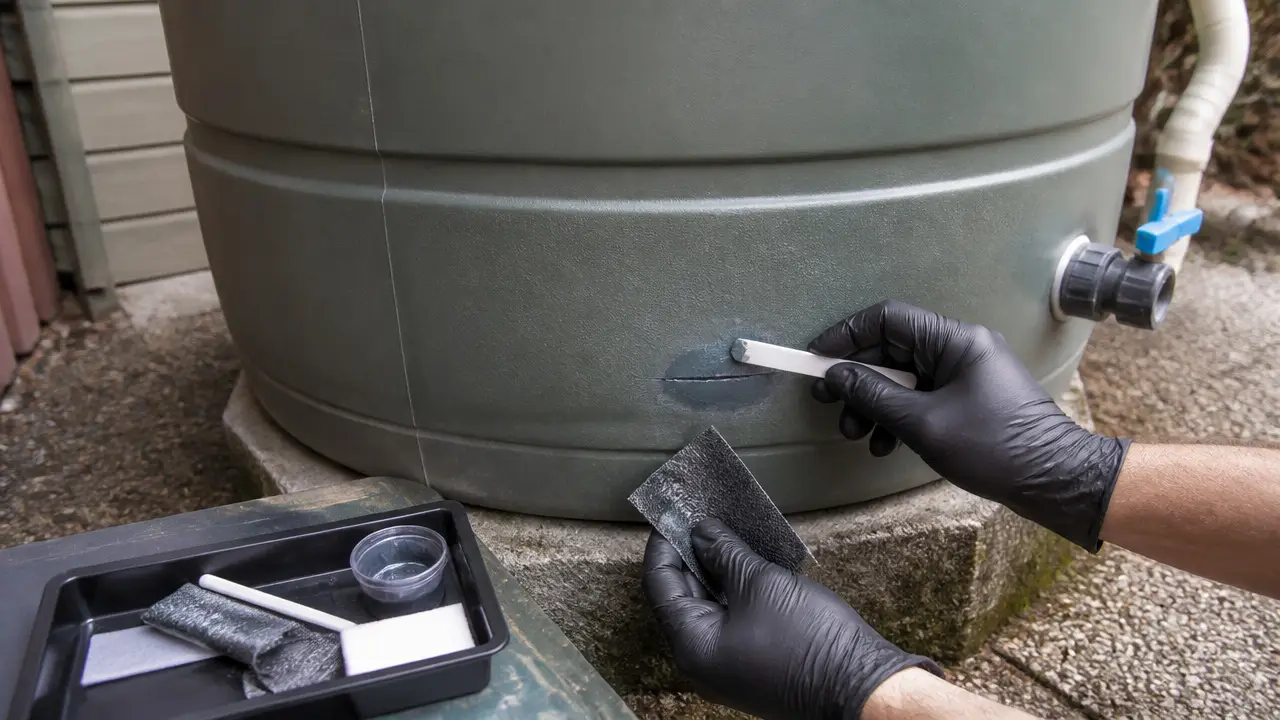
Tape may help with a small temporary exterior patch, but it does not restore the strength of a damaged barrel.
Small Exterior Damage
A waterproof patching tape may work as a temporary repair to a small hole or crack if the barrel material is compatible.
Gorilla Waterproofing Tape, for example, uses a thick adhesive layer and UV-resistant backing and is intended to seal water, air, and moisture. The manufacturer also lists underwater application.
Even so, a crack that continues spreading is a sign that the container itself may be failing.
Replacing the barrel is safer than repeatedly covering a growing crack with tape.
Leaking Spigots and Bulkhead Fittings
Do not wrap tape around the outside of a leaking tank fitting and assume the problem is solved.
A bulkhead fitting is a fitting that passes through the wall of a tank and creates a sealed connection.
Leaks around one are more often caused by:
- A damaged gasket
- A loose fitting
- A distorted tank wall
- A cracked fitting
- Incorrect installation
- A hole that is the wrong size
Fix the fitting rather than covering it with layers of tape.
Which Is Better for IBC Totes?
IBC totes are commonly made from high-density polyethylene, or HDPE.
Some heavy-duty tapes can stick to polyethylene, but adhesion alone does not make tape a suitable structural repair.
Do not depend on tape to repair:
- A large tank crack
- A damaged outlet
- A split valve
- A failed tank wall
- Structural damage to the tote
An IBC tote can contain a large amount of water. A failed repair can release that water very quickly.
Tape is better suited to non-structural jobs such as securing a cover or temporarily holding protective material.
Which Is Better for Gutters?
Tape is much more useful on a gutter than on a tank under water pressure.
For a small gutter hole or seam leak, an outdoor waterproof patching tape can provide a useful repair if the surface is compatible.
Gorilla's waterproof patch products are specifically promoted for applications that include gutters.
3M's outdoor duct tapes can also be useful for weather-exposed patching and reinforcing.
For the best bond:
- Remove dirt and loose material.
- Clean away oily residue.
- Let the surface dry unless the exact tape allows wet application.
- Apply the tape over an area larger than the damaged spot.
- Press the entire tape firmly against the surface.
- Pay extra attention to the edges.
Check adhesion limits of Gorilla Tape on wet surfaces to verify installation planning for dependable ongoing service.
A badly rusted, cracked, or separated gutter section should usually be repaired or replaced rather than repeatedly taped.
Which Is Better for PVC Pipe?
Be careful here.
Ordinary Gorilla Tape is not recommended by the manufacturer for some PVC applications because of compatibility with the adhesive.
More importantly, duct-style tape is not the normal permanent repair for leaking PVC plumbing.
A leak may require:
- Tightening or replacing a threaded fitting
- Replacing a damaged gasket
- Replacing a cracked fitting
- Properly solvent-welding a new PVC section
- Rebuilding the connection
For a rainwater pipe carrying water by gravity, tape may temporarily slow a small exterior leak.
For a pressurized pump line, fix the actual plumbing problem.
Waterproof and Water-Resistant Are Not the Same
This is one of the biggest differences to check when choosing tape.
Water-resistant tape can tolerate moisture and occasional rain.
Waterproof tape is designed to provide a stronger barrier against water when applied correctly.
Neither term means the tape will repair every leaking water system.
A tape can be waterproof while still failing because:
- It does not stick to the surface.
- The surface is dirty.
- Water pressure pushes underneath it.
- The material flexes.
- A crack keeps spreading.
- Heat and cold move the surfaces.
- The tape edge begins to lift.
Read the specifications for the exact tape rather than assuming all outdoor tape is waterproof.
Do Not Use Ordinary Tape to Make Rainwater Safe to Drink
Ordinary Gorilla or 3M repair tape should not be assumed suitable for contact with drinking water.
Gorilla specifically states that standard Gorilla Tape and Gorilla All-Weather Tape should not be considered food-safe.
Do not place ordinary repair tape inside a drinking-water tank unless the exact product has suitable certification or approval for that use.
Potable means water intended to be safe for drinking.
Making harvested rainwater potable involves much more than patching the storage container. Collection surfaces, debris removal, storage conditions, treatment, maintenance, current water testing, and local requirements all matter.
How to Choose Between Gorilla and 3M Tape
Before choosing a roll, check five things.
1. What Surface Are You Taping?
Identify whether it is:
- Polyethylene
- Polypropylene
- PVC
- Vinyl
- EPDM rubber
- Metal
- Glass
- Wood
- Painted material
Plastic is not one single material. Tape that works well on one plastic may barely stick to another.
2. Will It Stay Outdoors?
For an exposed rainwater system, choose tape specifically made to handle outdoor conditions.
Sunlight is especially important. UV exposure can weaken some tape backings and adhesives.
3. Will the Tape Be Under Water?
Outdoor tape and waterproof patching tape are not necessarily the same product.
If the repair will be submerged, use only a tape whose manufacturer specifically allows that type of application.
4. Is the Water Under Pressure?
Pressure changes the repair completely.
Tape may work on a torn cover but fail quickly on a pressurized pump line.
If a pump, pressure tank, or pressurized irrigation system is involved, repair the fitting or pipe rather than relying on an exterior tape wrap.
5. Does the Repair Need to Come Apart Later?
If you expect to remove the tape, a product designed for cleaner removal may be much easier to work with.
A permanent heavy-duty adhesive can make future maintenance difficult.
Gorilla or 3M: Which Should You Choose?
For rainwater-system work, a useful general rule is:
Choose Gorilla when you need a very aggressive heavy-duty grip or a dedicated waterproof patch. Choose 3M when you want a tape selected for a more specific job, especially weather exposure or controlled removal.
But do not let the brand name make the decision.
Check:
- Surface compatibility
- Water exposure
- UV exposure
- Temperature
- Pressure
- Whether the repair is temporary or permanent
- Whether the tape will contact stored water
For fittings, structural tank damage, and pressurized plumbing, the better answer is often no tape at all.
Frequently Asked Questions
Is Gorilla Tape stronger than 3M duct tape?
It depends on which products you compare. Standard Gorilla Tape uses a thick adhesive and reinforced backing designed for heavy-duty repairs and rough surfaces. 3M makes several duct tapes with different strength, weather, and removal characteristics. Compare the specifications of the exact two tapes rather than the brands alone.
Is Gorilla Tape better for outdoor use?
Gorilla makes several tapes designed for outdoor use, including its standard, All-Weather, and waterproofing products. 3M also makes tapes specifically designed for outdoor weather exposure. Either can work well when the specific product matches the surface and conditions.
Can Gorilla Tape stop a leaking rain barrel?
It may temporarily patch some small leaks if the tape is compatible with the barrel material, but it should not be relied on for a large crack or structural failure. Leaking fittings should normally be repaired by fixing the fitting or gasket.
Can 3M tape be used on gutters?
Some 3M outdoor and All Weather duct tapes can be used for outdoor patching. A small gutter repair may be suitable, but badly damaged or corroded gutter sections should be repaired properly or replaced.
Can I use Gorilla or 3M tape on PVC pipe?
Do not assume the tape will bond properly to PVC. Compatibility depends on the exact product. Tape is also not a good permanent repair for a cracked or leaking pressurized PVC line. Repair or replace the damaged plumbing instead.
Is waterproof tape safe inside a drinking-water tank?
Not automatically. "Waterproof" describes resistance to water, not suitability for drinking-water contact. Only use materials specifically approved or certified for the intended potable-water application.
Which tape is better for an IBC tote?
Tape can be useful for securing covers and making minor non-structural repairs, but it should not be relied on to repair structural damage to an IBC tote. For a leak around the outlet, valve, or bulkhead fitting, repair the actual component.