As an affiliate, we may earn a commission from qualifying purchases. We get commissions for purchases made through links on this website from Amazon and other third parties.
Should You Leave Heat Tape Plugged In All the Time?
You can leave some heat tape plugged in through the freezing season, but only if the cable is designed for that use and installed exactly as its instructions require.
Many modern pipe-heating cables have a thermostat, self-regulating heating cable, or both. These systems are made to reduce heat or switch heating on and off as conditions change. Older or manually controlled heat tape may keep heating whenever it has power.
That difference matters.
For a rainwater system, well line, garden supply pipe, cabin plumbing, or exposed water pipe, the safest rule is:
- Leave it connected during freezing weather only if the manufacturer allows continuous seasonal operation.
- Unplug manually controlled heat tape when freeze protection is not needed.
- Do not leave damaged, unknown, or poorly installed heat tape energized.
- Inspect the cable before each cold season.
- Follow the instructions for the exact cable, pipe material, insulation, thermostat, and electrical connection.
The U.S. Consumer Product Safety Commission (CPSC) notes that some heat tapes are plugged in for long periods and controlled by a thermostat. It also warns that damaged or improperly installed heat tape can create a fire hazard.
Leaving Heat Tape Plugged In All Winter vs. All Year
These are two different questions.
Leaving it plugged in all winter
This can be normal for a heat cable designed for continuous seasonal connection.
A thermostatically controlled cable senses temperature and supplies heat when conditions get cold enough. This removes the need to run outside and plug the cable in every time the temperature drops.
A self-regulating cable works differently. Its heating material changes its heat output based on temperature. Colder sections produce more heat, while warmer sections produce less. Self-regulating does not necessarily mean completely switched off, so the cable can still use electricity while connected.
Manufacturers also make separate thermostatic controls specifically to switch pipe-heating circuits according to pipe or air temperature.
Leaving it plugged in all year
That is usually unnecessary for freeze protection.
Once freezing weather is over, there is normally no reason to keep a pipe-freeze cable energized unless its manufacturer specifically calls for year-round connection.
Unplugging it after the freezing season also gives you a good opportunity to inspect the cable, plug, pipe, insulation, and nearby area.
Do not assume that an old heat tape is safe simply because it worked last winter.
Know What Type of Heat Tape You Have
Before deciding whether to leave it plugged in, identify how it is controlled.
Thermostatically controlled heat cable
A thermostatic heat cable uses a temperature sensor to decide when heating is needed.
Depending on the design, the sensor may measure:
- Outdoor air temperature
- Air temperature near the pipe
- Pipe surface temperature
These systems are often suitable for remaining connected through the cold season because the thermostat controls when power reaches the heating cable.
Sensor placement matters. A thermostat in a warm room cannot accurately control a pipe in a freezing crawl space. Follow the manufacturer's placement instructions.
Self-regulating heating cable
Self-regulating cable automatically changes its heat output along its length.
A cold part of the pipe can receive more heat while a warmer section receives less. This makes self-regulating cable useful where pipe temperatures are not the same everywhere.
For example, a rainwater supply line may run from a buried cistern into an exposed pump shed. The exposed portion may cool much faster than the rest of the pipe.
Self-regulating cable can adapt its heat output, but it still needs correct installation and electrical protection. Some systems also use a thermostat to reduce unnecessary operation.
Constant-wattage or manually controlled heat tape
Some cable produces heat whenever it receives power.
The use-case discussion in “Are Pipe Heating Cables Safe?” clarifies the plumbing detail that should be checked before installation.
If there is no thermostat or automatic control, leaving it plugged in during warmer weather may waste electricity and could expose an incorrect installation to unnecessary heating.
Use these cables only as their instructions specify.
If you cannot identify the cable or find its operating instructions, do not assume it is safe for continuous operation.
Inspect Heat Tape Before Leaving It Energized
A cable that stays connected for weeks or months should be in good condition.
Before the freezing season, unplug the system and inspect all accessible parts.
Look for:
- Cracks in the cable covering
- Cuts or worn spots
- Bare wires
- Discoloration
- Charring
- Damaged plugs
- Loose electrical connections
- Damaged end seals
- Insulation that has shifted
- Signs that water has entered electrical parts
CPSC recommends replacing heat tape showing cracking, charring, exposed conductors, or other deterioration rather than continuing to use it.
If the cable disappears into an inaccessible area or you are not comfortable checking the electrical installation, have a qualified electrician inspect it.
Never Assume More Insulation Is Better
Pipe insulation and heat cable often work well together. The cable adds heat, while the insulation slows heat loss.
But they must be compatible.
Do not simply wrap a thick layer of insulation around any heat tape you find.
Some heat cables are designed to operate under approved pipe insulation. Others have limits on insulation type and thickness. Excess insulation can trap more heat than a cable was designed to handle.
CPSC advises users to cover heat tape with insulation only when the manufacturer's instructions allow it and to follow the specified insulation requirements.
The same caution applies to homemade coverings. Do not surround heat cable with leaves, clothing, plastic sheeting, foam scraps, or other materials simply to make the pipe "warmer."
Do Not Overlap Heat Tape Unless It Is Specifically Allowed
Look closely at recommended pipe heat cables for rainwater systems to assess thermal protection with access to inspection points.
One of the most important installation rules is to avoid crossing or overlapping heating cable unless the manufacturer specifically states that the particular cable can do so.
Traditional heat tape can become dangerously hot where one heated section crosses another.
CPSC specifically warns against overlapping heat tape unless its instructions permit it.
Buy a cable that matches the pipe length rather than trying to use up extra cable by doubling it back on itself.
Use the Correct Cable for the Pipe
Heat cable is not interchangeable between every application.
Check whether the cable is approved for:
- The pipe material
- The pipe diameter
- The required length
- Indoor or outdoor use
- Wet or damp locations
- The insulation you plan to install
- The temperatures expected at the site
This is especially important with plastic water lines. A cable suitable for metal pipe is not automatically suitable for PVC, PEX, polyethylene, or another plastic pipe.
CPSC recommends choosing heat tape according to the pipe size, material, and manufacturer's intended application.
Use Proper Electrical Protection
Heat tape operates in places where moisture is common. Crawl spaces, pump houses, outdoor pipe runs, and rainwater systems can all expose electrical equipment to damp conditions.
CPSC recommends connecting heat tape to a grounded three-prong outlet with ground-fault circuit-interrupter protection, commonly called a GFCI. A GFCI disconnects power when it detects certain electrical leakage that could create a shock hazard.
Do not remove the grounding pin to make a plug fit an older outlet.
Avoid improvised electrical connections. The receptacle, cable, thermostat, and any extension equipment must be suitable for the location and electrical load.
The comparison “What Are the Best Roof Heating Cables?” helps match flow, pressure, and compatible plumbing components.
If a new outdoor circuit, receptacle, hardwired thermostat, or other permanent electrical work is required, that is a good point to involve a qualified electrician.
Heat Tape Is Only One Part of Freeze Protection
Keeping a cable plugged in does not guarantee that a water system cannot freeze.
Freeze protection depends on the whole setup.
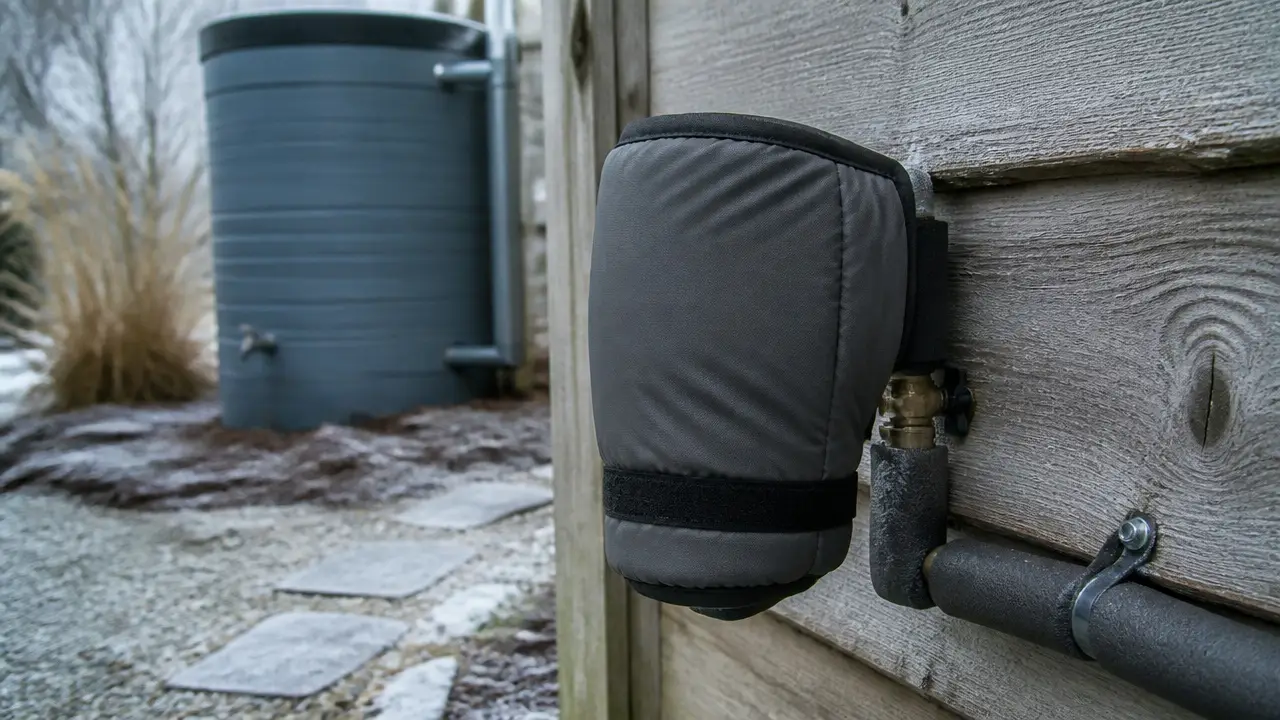
For a rainwater system, check exposed parts such as:
- Tank outlets
- Bulkhead fittings
- Valves
- Filters
- Pump housings
- Pressure switches
- Short pipe sections near walls
- Above-ground supply lines
- Hose connections
A bulkhead fitting is the fitting that passes through the wall of a tank and creates a connection for a pipe or valve.
Heat tape on the main pipe will not protect a nearby filter housing or pump full of standing water.
Insulation can reduce heat loss, but insulation does not create heat. During a long cold spell, an insulated pipe can still eventually reach freezing temperatures.
In some systems, draining an unused seasonal line is simpler and more dependable than trying to heat every exposed component.
When Should You Unplug Heat Tape?
For a cable used only for freeze protection, unplug it when the freezing season has passed unless the manufacturer's instructions say otherwise.
Also unplug it immediately if you notice:
- Burning smells
- Charring or discoloration
- Melted insulation
- A damaged cable
- An unusually hot plug or connection
- Water entering an electrical connection
- Repeated GFCI or breaker trips
Do not repeatedly reset a breaker or GFCI without finding out why it is tripping.
A trip can indicate an electrical fault. Stop using the system and have it checked if the cause is not obvious and safely correctable.
A Simple Seasonal Routine
Heat tape is easier to manage when it becomes part of normal cold-weather maintenance.
Before freezing weather:
- Inspect the pipe and heating cable while power is disconnected.
- Check the plug, cable jacket, end seal, thermostat, and insulation.
- Confirm that the cable is approved for your pipe and installation.
- Make sure insulation is installed as the cable manufacturer requires.
- Check that the electrical connection is suitable for the location.
- Connect the cable when freezing conditions become possible if it is designed for seasonal continuous connection.
- Check the protected water system periodically through winter.
After the freezing season, disconnect freeze-protection cable unless its instructions call for another operating method.
Do not treat heat tape as something you can install and forget for years. CPSC recommends inspecting heat tape regularly and replacing damaged cable rather than trying to repair deteriorated heating sections.
Frequently Asked Questions
Does heat tape turn itself off?
Some does, but not all. Thermostatically controlled heat cable can switch heating on and off according to temperature. Self-regulating cable reduces its heat output as it gets warmer, but that does not necessarily mean it completely disconnects power. Check the instructions for your specific cable.
Can I leave heat tape plugged in all winter?
Yes, if the manufacturer says the cable is designed for continuous seasonal connection and it has been installed correctly. Inspect it before winter and follow its requirements for the pipe, insulation, thermostat, and electrical connection.
Should I unplug heat tape in summer?
For pipe-freeze protection, it is generally reasonable to disconnect the cable once freezing weather is over unless its manufacturer specifies otherwise. There is usually no freeze-protection benefit from energizing it through warm weather.
Can heat tape start a fire?
Damaged, old, incorrectly installed, or incorrectly insulated heat tape can create a fire hazard. Avoid overlapping cable unless specifically permitted, use only approved insulation, and replace cable showing damage or charring.
Can I put pipe insulation over heat tape?
Only if the heat-cable manufacturer allows it. Follow the specified insulation material and thickness. Do not assume that adding more insulation is always safer.
Does self-regulating heat cable need a thermostat?
Not always. Self-regulating cable changes its heat output as temperature changes, and some systems are designed to operate without a separate thermostat. A thermostat may still be used to control the circuit and reduce unnecessary operation. Follow the requirements for the specific heating system.
Should heat tape be plugged into a GFCI outlet?
For residential pipe-heating applications, GFCI protection is an important electrical safety measure. CPSC recommends using a grounded, GFCI-protected outlet for heat tape. The electrical installation must also follow the cable instructions and applicable local electrical requirements.