As an affiliate, we may earn a commission from qualifying purchases. We get commissions for purchases made through links on this website from Amazon and other third parties.
If you do not have a hose clamp, the safest choice is usually to wait and use the correct clamp rather than rely on a makeshift substitute. A temporary tie can sometimes hold a low-pressure hose in place, but it should not be trusted on pressurized water lines, pump connections, or any fitting where a leak could cause damage.
For rain barrels and other low-pressure rainwater systems, a heavy-duty cable tie may work briefly if the hose already fits tightly over the fitting. Wire can also provide temporary holding force, but it can cut into the hose and is easy to overtighten.
What Can Replace a Hose Clamp Temporarily?
The right substitute depends on what the clamp is doing.
Heavy-Duty Cable Ties
Strong cable ties can sometimes hold a flexible hose on a fitting when there is little or no water pressure.
They are most useful for:
- Rain barrel overflow hoses
- Gravity-fed garden lines
- Drain hoses
- Temporary hose positioning
Use more than one tie if needed, and place them over the section of hose that covers the fitting.
Cable ties are not a good permanent replacement. They can loosen, become brittle outdoors, or fail when pressure increases.
Wire
Strong wire can be wrapped around a hose and twisted tight enough to provide some clamping force.
This is only a temporary option. Wire has several drawbacks:
- It can cut into soft hose.
- The pressure may not be even around the connection.
- Sharp wire ends can cause injury.
- It can corrode outdoors.
- Overtightening can damage the hose.
Do not use thin electrical wire or other wire that is likely to break.
A Tight-Fitting Hose
Sometimes no temporary clamp is needed if the system is not yet in service.
For example, you may be able to push a flexible hose fully onto a barbed fitting and leave the water turned off until you can install the proper clamp.
A barbed fitting has raised ridges that help grip the inside of a flexible hose.
Do not assume a tight push-fit connection will stay secure once water starts flowing. Pressure, vibration, heat, and hose movement can pull it apart.
What Should Not Be Used as a Hose Clamp?
Some common household items may look useful but do not provide dependable clamping force.
Avoid relying on:
- Duct tape
- Electrical tape
- String
- Rubber bands
- Twist ties
- Adhesive alone
- Thin household wire
Tape can sometimes help support or temporarily seal a nonpressurized drain connection, but it does not replace the mechanical grip of a clamp.
Water can work its way beneath tape, and wet surfaces often reduce adhesion.
When a Temporary Clamp May Be Acceptable
A temporary substitute is less risky when all of these conditions apply:
- The water is gravity-fed rather than pumped.
- The connection is outdoors or somewhere a small leak will not cause damage.
- The hose already fits firmly over the fitting.
- The connection can be watched closely.
- The substitute will soon be replaced with the correct hardware.
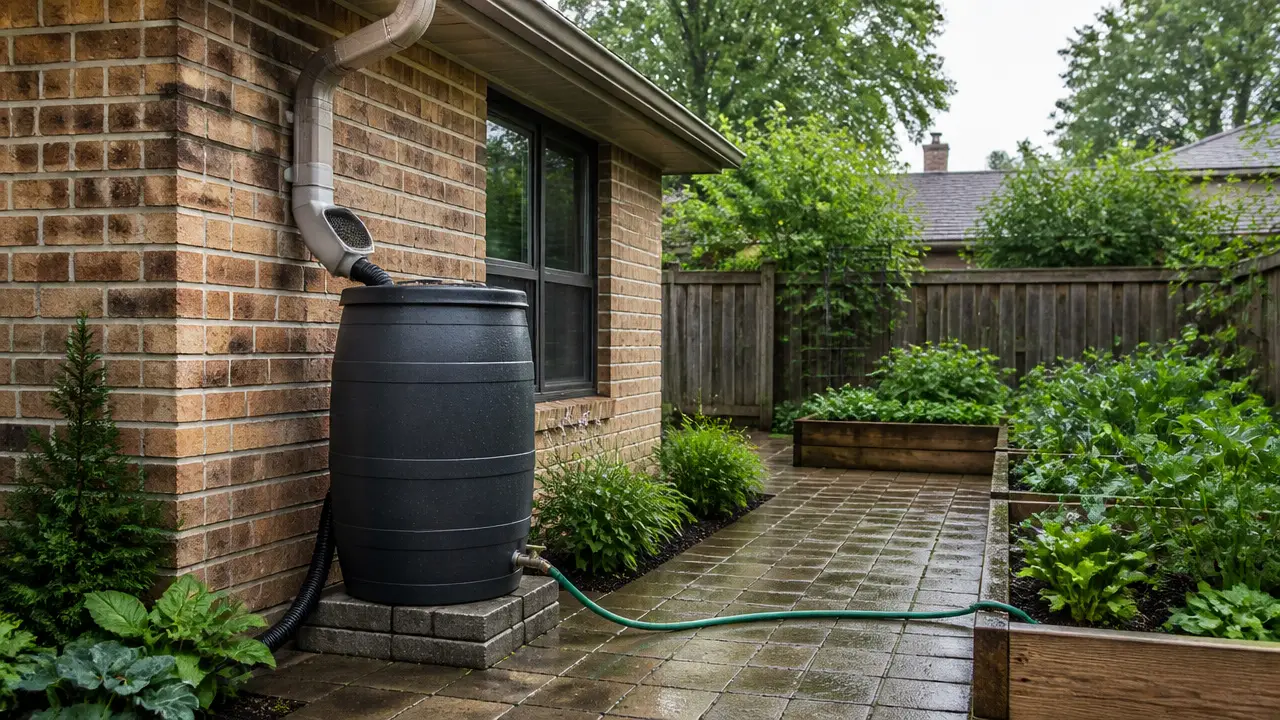
A rain barrel overflow hose is one example. Water usually moves through it with very little pressure, so the connection is less demanding than a pump discharge line.
Even then, check the connection whenever the barrel fills.
When You Should Wait for the Correct Clamp
Do not improvise a clamp on connections that can experience significant pressure or where failure could create a safety problem.
Use the proper fitting and clamp for:
- Pump outlets
- Pressurized irrigation lines
- Household plumbing
- Pressure tanks
- Lines entering buildings
- Connections near electrical equipment
- Connections where a leak could damage a structure
- Drinking-water treatment systems
Pump systems can produce much more pressure than a gravity-fed rain barrel. A connection that appears secure while the pump is off can separate when the pump starts.
Choosing the Correct Hose Clamp
Explore comparing reliable hose connectors to understand this choice within the overall harvesting layout.
For a flexible hose pushed over a barbed fitting, choose a clamp designed for the hose diameter and application.
The clamp should tighten around the hose without reaching the end of its adjustment range.
Position it over the barbed section of the fitting rather than at the very end of the hose.
Tighten it enough to stop the hose from slipping and leaking. Do not keep tightening after the connection is secure. Excessive force can cut, crush, or deform some hose materials.
Outdoor rainwater systems also need hardware that can tolerate moisture and weather. Corrosion can weaken a clamp over time, so include clamps in your regular system inspection.
What If the Hose Keeps Coming Off?
A missing clamp may not be the only problem.
Check whether:
- The hose is the correct inside diameter.
- The fitting is designed for flexible hose.
- The hose has hardened or stretched.
- The fitting is cracked.
- The hose is being pulled sideways.
- Water pressure is higher than the connection can handle.
If the hose slides easily onto and off the fitting, adding more clamping force may not solve the underlying compatibility problem.
A properly matched hose and fitting should provide much of the mechanical connection. The clamp helps secure that connection.
Rain Barrel Connections Need the Right Parts Too
A simple rain barrel usually operates with low pressure, but leaks can still waste stored water or soften the ground around a foundation.
Common rainwater connections may include:
- Threaded fittings
- Barbed hose fittings
- Bulkhead fittings
- Flexible tubing
- Garden hose connections
A bulkhead fitting passes through the wall of a tank and creates a sealed connection for a valve, pipe, or hose.
Do not substitute a hose clamp for a fitting that actually needs threads, a gasket, or a bulkhead connection. Each part serves a different purpose.
The Best Long-Term Fix
For a permanent rainwater system, use the clamp or connector intended for the hose and fitting.
Improvised ties are most useful for holding things together until the proper hardware is available. They should not become permanent simply because they have not leaked yet.
After installing the proper clamp, run water through the connection and inspect it. Check it again after the system has gone through a few fill-and-drain cycles.
Frequently Asked Questions
Can I use a zip tie instead of a hose clamp?
A heavy-duty cable or zip tie can sometimes work temporarily on a low-pressure hose, such as a rain barrel overflow line. It should not be relied on for pressurized plumbing or pump connections.
Can I use duct tape instead of a hose clamp?
Duct tape does not provide the same mechanical grip as a hose clamp. It may help temporarily support a nonpressurized connection, but it is not a dependable clamp replacement.
Can I use wire as a hose clamp?
Wire can provide temporary clamping force, but it can cut into the hose or tighten unevenly. Replace it with the correct clamp as soon as practical.
Do gravity-fed rainwater hoses need clamps?
Some tightly fitted gravity-fed connections may stay together without much pressure, but a proper clamp helps prevent hoses from slipping off as they move, soften, or age.
Why does my hose keep slipping off the fitting?
The hose may be too large, the fitting may be the wrong type, or the hose may have stretched or hardened. High pressure and sideways tension can also pull a hose loose.
Can I run my rainwater pump without a hose clamp?
Do not rely on an unsecured hose connection on a pump. Pump pressure can force the hose off unexpectedly. Use fittings and clamps rated for the system before operating it.
How tight should a hose clamp be?
Tighten it until the hose is firmly held and the connection does not leak or slip. Avoid excessive tightening because it can damage the hose or fitting.