As an affiliate, we may earn a commission from qualifying purchases. We get commissions for purchases made through links on this website from Amazon and other third parties.
For most rain barrels, the best way to keep the water clean is not to add chemicals on a routine schedule. Keep leaves, insects, sunlight, and dirty roof runoff out of the barrel instead.
A screened inlet, covered and opaque barrel, clean gutters, good overflow, regular water use, and periodic cleaning do more for water quality than most additives. If mosquitoes are a problem, a Bti mosquito larvicide labeled for the intended use can be appropriate. Bleach, vinegar, and detergent are generally more useful for cleaning an emptied barrel than for treating stored water.
Rain barrel water should still be treated as non-potable, which means it is not considered drinking water. Roof runoff can contain bird droppings, dust, microorganisms, metals, and chemicals even when the water looks clear.
What Can You Safely Put in a Rain Barrel?
What belongs in the barrel depends on the problem you are trying to solve.
| Problem | What may help | Better first step |
|---|---|---|
| Mosquito larvae | A Bti larvicide labeled for the intended use | Screen every opening and use the water regularly |
| Algae | Usually no additive is needed | Block sunlight and remove debris |
| Bad smell | Do not try to cover the odor with chemicals | Drain, inspect, and clean the barrel |
| Slime or sediment | Clean the empty barrel | Improve inlet screening and gutter cleaning |
| General water quality | No simple additive makes roof runoff clean | Reduce contamination before water reaches storage |
| Drinking-water safety | Do not rely on a barrel additive | Use a properly designed treatment system and current water testing |
The main idea is simple: prevent contamination instead of trying to treat it after it enters the barrel.
Bti Can Help With Mosquitoes
Mosquito control is one situation where adding something to stored rainwater may make sense.
Bti, short for Bacillus thuringiensis israelensis, is a naturally occurring bacterium used to control mosquito larvae. It is commonly sold in dunks, briquettes, granules, and similar products.
The EPA says Bti can be used in standing-water locations where mosquitoes breed. It targets mosquito, black fly, and fungus gnat larvae. EPA also notes that product labels differ. Some Bti products are approved for certain water-storage uses while others are not. Follow the label for the exact product rather than assuming every mosquito dunk can be used the same way.
Bti is a backup measure, not a substitute for a well-sealed barrel.
Start by:
- Covering the inlet with intact fine screening.
- Screening overflow openings where practical.
- Closing gaps around lids and fittings.
- Clearing leaves from the screen.
- Using stored water regularly.
- Preventing puddles from forming on top of the barrel.
CDC recommends screening rainwater systems or regularly emptying rain barrels to reduce mosquito breeding. EPA also recommends changing or emptying standing water frequently where practical.
If mosquitoes are getting into the barrel despite a screen, inspect the entire system. The real problem may be an open overflow pipe, damaged screen, loose lid, or standing water outside the barrel.
Should You Put Bleach in a Rain Barrel?
Bleach should not be treated as a universal rain-barrel additive.
Some Extension guidance has used carefully measured unscented bleach for specific non-potable irrigation or storage situations. But there is no single bleach dose that is right for every rain barrel. Household bleach comes in different concentrations, barrel sizes vary, contamination varies, and the intended use of the water matters.
Bleach is often more useful when the barrel is empty and needs to be cleaned or sanitized.
For routine garden rain barrels, a simpler approach is usually better:
- Drain the barrel.
- Remove leaves, sediment, and sludge.
- Scrub the inside as recommended for the barrel material.
- Rinse it thoroughly.
- Clean the inlet screen and fittings.
- Fix whatever allowed excess debris into the barrel.
University of Minnesota Extension, for example, recommends draining the barrel, removing debris, scrubbing with water and detergent, and rinsing with clean water.
Do not guess at bleach concentrations or keep adding bleach whenever the water looks cloudy. Chlorination does not remove every possible chemical contaminant from roof runoff, and chlorine alone does not turn a basic rain barrel into a potable-water system.
Can You Put Vinegar in a Rain Barrel?
Vinegar can be useful as part of cleaning an empty barrel, but adding vinegar to stored rainwater is usually unnecessary.
If algae, slime, or odor has built up, drain the barrel first. Physical scrubbing is important because deposits can stick to the walls and bottom.
Do not expect vinegar poured into a full barrel to solve the cause of dirty water. If leaves, roof debris, sunlight, or stagnant water continue entering the system, the problem will return.
Rinse cleaning residue from the barrel before putting it back into service.
The Best "Additive" Is Less Dirt Entering the Barrel
Most rain-barrel water-quality problems begin before the water reaches storage.
Rain falling onto a roof can pick up:
- Bird and animal droppings
- Leaves and pollen
- Dust and soil
- Insects
- Roofing particles
- Metals from roofing or gutters
- Other airborne or surface contaminants
CDC notes that roof runoff can contain both germs and chemicals. The first runoff after a dry period can carry a larger amount of material that accumulated on the roof.
Several simple changes can reduce this load.
Keep Gutters Clean
Leaves sitting in a gutter break down into organic matter. That material can enter the barrel and feed algae and microorganisms.
Check gutters, downspouts, and inlet screens often enough that water can move freely.
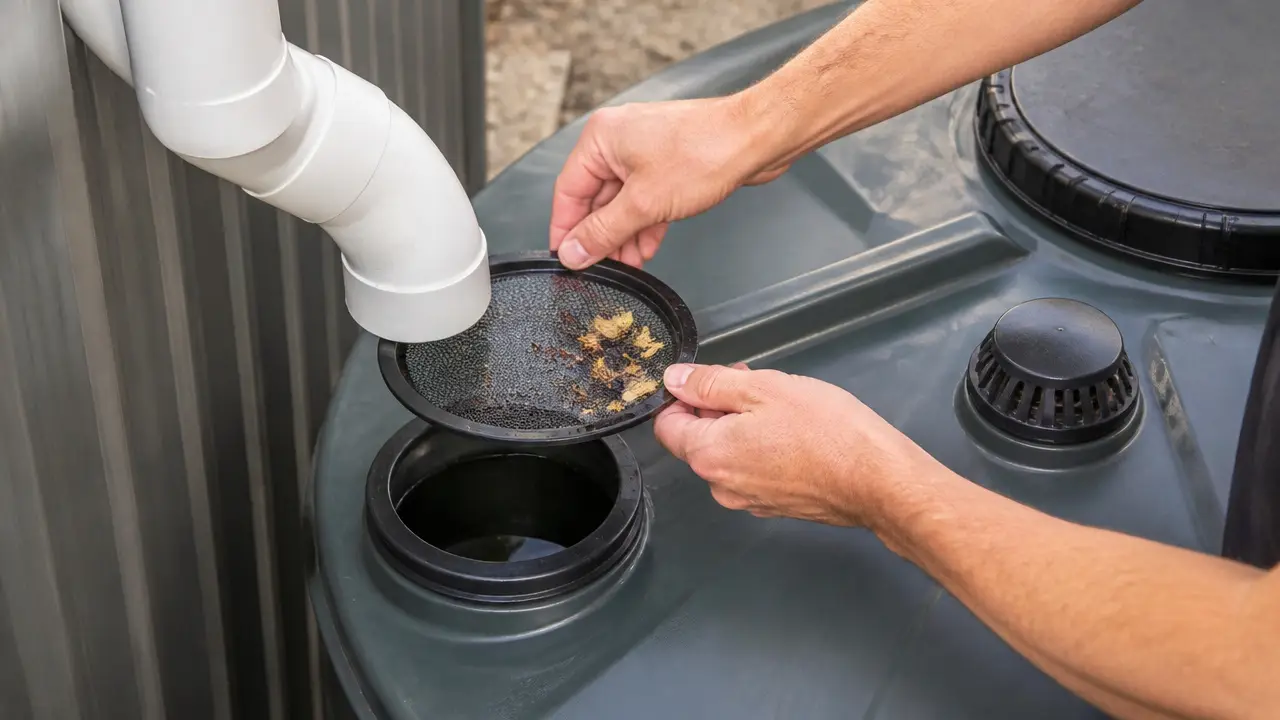
Use an Inlet Screen
A screen catches leaves, sticks, seeds, and larger insects before they enter the barrel.
The screen also needs maintenance. A clogged screen can make water spill beside the barrel instead of entering it.
Replace torn or stretched screens promptly.
Consider a First-Flush Diverter
A first-flush diverter sends the first portion of roof runoff away from the storage tank.
That early runoff often carries much of the loose dirt, droppings, and debris that collected on the roof between storms.
CDC specifically recommends considering a first-flush device to improve collected rainwater quality. The amount that should be diverted depends in part on the roof and collection system, so there is no single correct first-flush volume for every house.
Keep Sunlight Out
Sunlight encourages algae growth.
Use an opaque barrel that does not allow light through the walls. Keep the lid closed. If you can clearly see sunlight glowing through a plastic barrel, algae is more likely to become a recurring problem.
Shade can also help, although the barrel still needs a stable location and safe overflow route.
Use the Water Regularly
Water that remains undisturbed for long periods gives sediment time to collect and mosquitoes more opportunity to reproduce if they gain access.
Rain barrels work best as active storage rather than as containers that stay full for months.
Regular use also creates room for the next storm.
What Not to Put in a Rain Barrel
Avoid experimenting with household or pool chemicals simply because they kill algae or germs somewhere else.
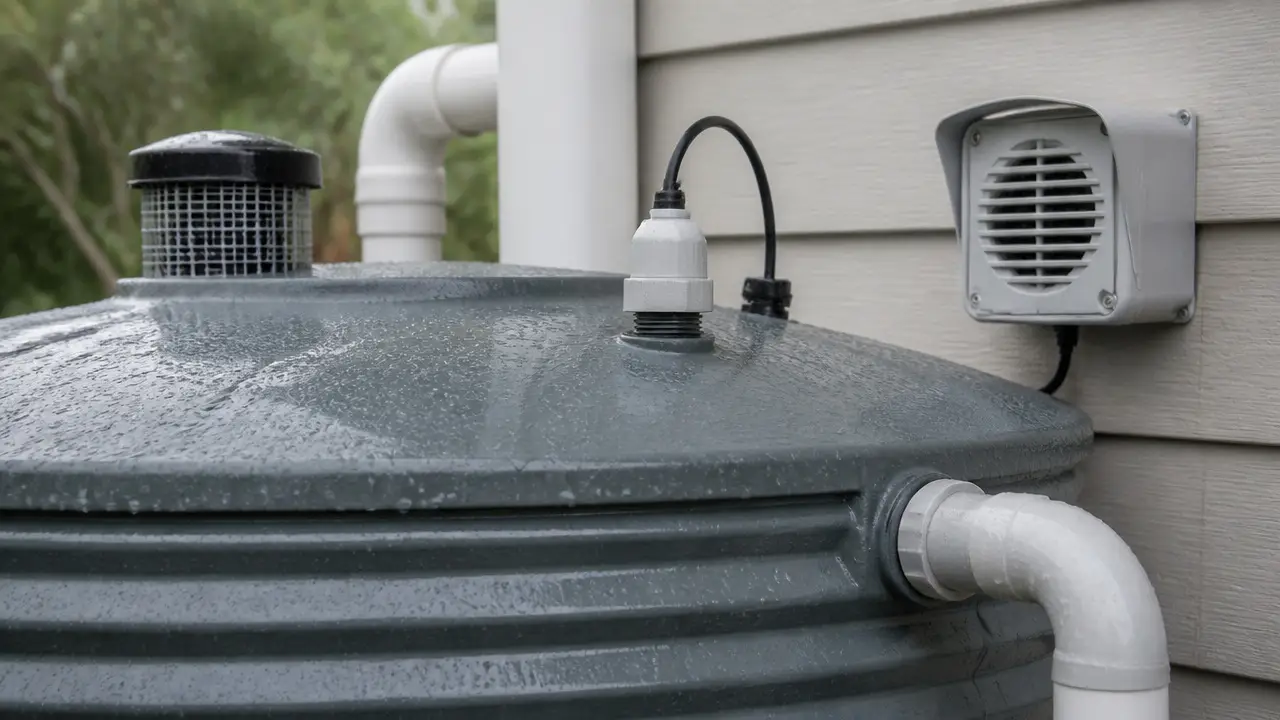
Consider whether to treat the water in the rain barrel is necessary to compare tank venting and overflow control during extended storage.
Unless an appropriate product label or qualified local guidance specifically supports the use, do not routinely add:
- Pool algaecides
- Pool shock
- Copper sulfate
- Soap or detergent to stored water
- Cooking oil or other oil
- Fragrances
- Aquarium chemicals
- Random disinfectants
- Pesticides not labeled for the application
These materials may affect plants, soil, pets, wildlife, pumps, irrigation parts, or people who later come into contact with the water.
Also avoid adding chemicals simply to make bad-smelling water smell better. Odor is a reason to empty and inspect the barrel.
What About Goldfish or Other Fish?
Putting fish in a basic rain barrel is generally a poor mosquito-control strategy.
A typical rain barrel can become hot, low in oxygen, or nearly empty as water is used. Fresh roof runoff can also bring contaminants into the barrel. The container usually was not designed as a healthy aquatic habitat.
A screened barrel or properly labeled mosquito larvicide is a simpler way to manage mosquitoes.
How to Keep Rain Barrel Water From Growing Algae
If the water repeatedly turns green, additives should not be the first response.
Check for light.
An opaque barrel should block nearly all sunlight. Pay particular attention to translucent lids, inlet openings, inspection ports, and light-colored plastic.
Then check for organic material. Leaves, pollen, and roof debris provide nutrients that encourage growth.
A practical cleanup is to:
- Drain the barrel.
- Remove bottom sediment.
- Scrub deposits from the walls.
- Rinse the barrel.
- Clean the inlet screen.
- Clean gutters if needed.
- Block openings that admit sunlight.
- Put the barrel back into service.
If algae returns quickly, the barrel may be receiving too much sunlight or too much debris.
What to Do If Rain Barrel Water Smells Bad
Normal stored rainwater should not require perfume, deodorizer, or another masking chemical.
A strong swampy, rotten, or sewage-like smell often means organic material has been sitting in the barrel and breaking down.
Drain the barrel and look for:
- Thick bottom sediment
- Decaying leaves
- Dead insects or small animals
- Algae
- Clogged screens
- Dirty gutters
- Water trapped in connecting pipes
- Long periods without water use
Clean the barrel and correct the source of the material.
If the barrel receives runoff from an unsuitable roof or has been contaminated by sewage, fuel, pesticides, or another hazardous material, do not assume cleaning or adding disinfectant makes the water suitable for normal reuse.
Be More Careful When Watering Food Crops
Rain-barrel water collected from a roof is different from treated tap water.
CDC advises considering safer water sources for plants that will be eaten because roof-collected rainwater can contain germs and chemicals. University of Minnesota Extension similarly recommends keeping typical rain-barrel water away from edible plant parts and using it mainly for non-edible landscape plants.
If local guidance allows rainwater use in a vegetable garden, soil-level or drip application reduces contact with leaves, fruits, and vegetables compared with overhead spraying.
The roof also matters. Runoff from roofs containing questionable metals, coatings, treated materials, or other contaminants may not be appropriate for food-growing areas.
Adding Something Does Not Make Rainwater Drinkable
A clean-looking barrel is not the same as a potable water system.
Potable means suitable for drinking.
Roof runoff may contain contaminants that cannot be seen, smelled, or removed by one additive. CDC recommends regular testing for germs and chemicals when collected rainwater is used for drinking, cooking, or bathing. Treatment should be chosen to address the contaminants that are actually present.
A drinking-water rainwater system may require suitable collection surfaces, first-flush management, prefiltration, storage designed for potable use, multiple treatment stages, current laboratory testing, regular maintenance, and compliance with local requirements.
A mosquito dunk, sediment filter, UV light, chlorine dose, or other single step does not by itself establish that roof runoff is safe to drink.
A Simple Rain Barrel Maintenance Routine
For a barrel used mainly to water ornamental plants, keeping the system simple is usually best.
During the season, check the inlet screen, lid, overflow, spigot, and connections. Remove accumulated leaves and use the stored water regularly.
Periodically inspect the bottom of the barrel. If sediment or slime is building up, drain and clean it.
At least seasonally, or sooner when conditions require it, give the barrel a more complete inspection and cleaning. Penn State Extension recommends routine inspection, screen cleaning, and periodic cleaning of the barrel itself.
In freezing climates, drain and protect the barrel before water inside can freeze and expand. A full or partly full barrel can crack when trapped water freezes.
The goal is not to keep stored rainwater sterile. It is to keep the system reasonably clean and suitable for its intended non-potable use.
Frequently Asked Questions
Can I put bleach in my rain barrel to keep the water clean?
Bleach is not a good universal maintenance treatment for every rain barrel. Some guidance uses carefully controlled chlorination for specific applications, but the correct amount depends on bleach strength, water volume, intended use, and other factors. For an ordinary garden barrel, prevention and periodic cleaning are usually better than routinely dosing the stored water.
Can I put vinegar in a rain barrel?
Vinegar may be useful when cleaning an emptied barrel, but routinely pouring it into stored rainwater is usually unnecessary. If the barrel has algae, slime, or odor, drain it, scrub away deposits, rinse it, and correct the cause.
Are mosquito dunks safe for rain barrels?
Bti mosquito larvicides are commonly used for mosquito control in standing water, including small containers. Use only a product whose label allows your intended application, and follow its directions. EPA notes that Bti product labels differ, especially regarding water-storage uses.
Can I put baking soda in a rain barrel?
There is normally no reason to add baking soda to a rain barrel. It does not solve the main causes of dirty stored rainwater, such as roof debris, sunlight, sediment, or mosquito access.
How do I stop algae from growing in my rain barrel?
Keep sunlight out by using an opaque, covered barrel. Screen out debris, clean gutters, remove sediment, and clean the barrel when buildup appears. Adding an algaecide should not be the first approach.
Can rain barrel water be used on vegetables?
Roof runoff can contain germs and chemicals, so use extra care with edible crops. Avoid spraying untreated rain-barrel water onto edible plant parts. Depending on your location and collection surface, local Extension or health guidance may recommend using another water source for food crops.
Why does my rain barrel water smell bad?
Bad odors commonly develop when leaves, pollen, sediment, insects, or other organic material decomposes in stagnant water. Drain and clean the barrel rather than adding something to hide the smell, then check the gutters and inlet screen for the source of the debris.