As an affiliate, we may earn a commission from qualifying purchases. We get commissions for purchases made through links on this website from Amazon and other third parties.
What Is the Order in a 3-Stage Water Filter?
In a common 3-stage water filter, the order is:
- Sediment filter — catches dirt, rust, sand, and other particles.
- Activated carbon filter — reduces certain chemicals, odors, and unwanted tastes.
- Carbon block or specialty filter — provides finer treatment or targets a specific water-quality problem.
The exact cartridges can vary. What matters is that water usually moves from coarse treatment to more sensitive treatment. The first stage protects the filters that come after it.
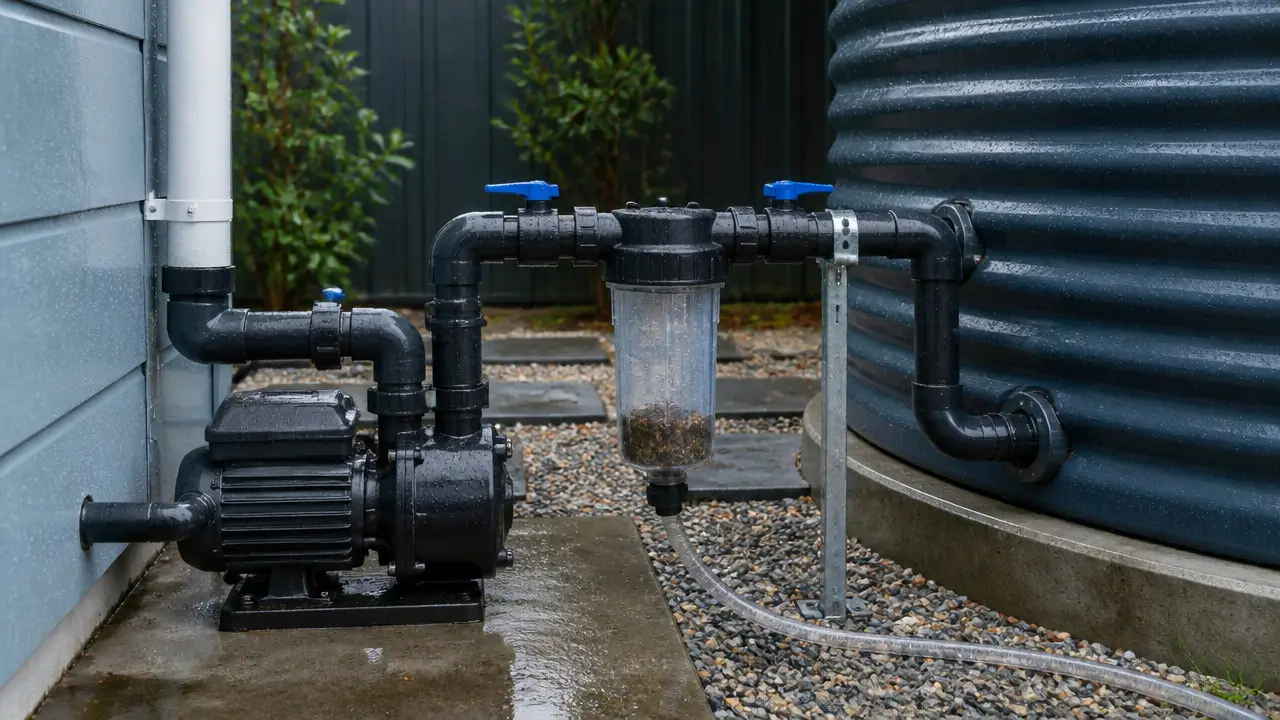
For a rainwater system, these three cartridges are only part of the system. Roof screening, first-flush control, tank management, and any treatment required for the intended use happen outside the filter housings.
Why Filter Order Matters
Each filter has a different job.
Putting them in the wrong order can cause a filter to clog faster or prevent it from working as intended. For example, sending dirty rainwater straight into a carbon block can fill its small pores with sediment.
A sediment cartridge placed first removes much of that material. The cleaner water can then move through the carbon stages.
The general rule is:
Remove larger particles first, then treat smaller particles or dissolved contaminants.
The manufacturer's instructions should still take priority. Some cartridges are designed for a particular position or flow direction.
Stage 1: Sediment Filter
The first cartridge is normally a sediment filter.
It can catch material such as:
- Sand
- Silt
- Rust
- Dirt
- Small pieces of organic debris
In a rainwater system, much larger debris should already have been kept out by roof screens, gutter guards, inlet screens, or similar prefiltration.
Understanding micron ratings
A micron rating describes the approximate size of particles a filter is designed to catch. A micron is one-thousandth of a millimeter.
A smaller micron number generally means finer filtration.
If several sediment filters are used, it usually makes sense to place the coarser filter before the finer one. This reduces how quickly the fine filter plugs.
Do not choose the smallest micron rating simply because it sounds better. A very fine filter can restrict flow quickly when the incoming water contains a lot of sediment.
Stage 2: Activated Carbon Filter
The second stage is commonly an activated carbon cartridge.
Carbon works differently from a sediment filter. Instead of mainly screening out visible particles, activated carbon can adsorb certain substances onto its large internal surface area.
Depending on the cartridge and its certification, carbon treatment may help with particular:
- Tastes
- Odors
- Organic compounds
- Treatment chemicals such as chlorine
A granular activated carbon, or GAC, cartridge contains loose carbon granules. Other systems use a solid carbon block.
Carbon should not automatically be treated as a drinking-water safety filter. CDC notes that different filters remove different contaminants and that many common carbon filters are intended mainly to improve taste and odor.
That distinction is especially important with collected rainwater. Carbon treatment alone does not establish that roof runoff is safe to drink.
Stage 3: Carbon Block or Specialty Treatment
The third stage depends more heavily on what you need the water to do.
A common setup uses a carbon block as the final cartridge. Carbon blocks can provide additional carbon treatment while also physically filtering particles according to the cartridge's rated performance.
Other systems use the third housing for a specialty cartridge designed for a particular water problem.
Possible examples include media intended for certain:
- Metals
- Minerals
- Dissolved chemicals
- Taste or odor problems
The correct choice should come from the water problem you have identified, not simply from adding another filter.
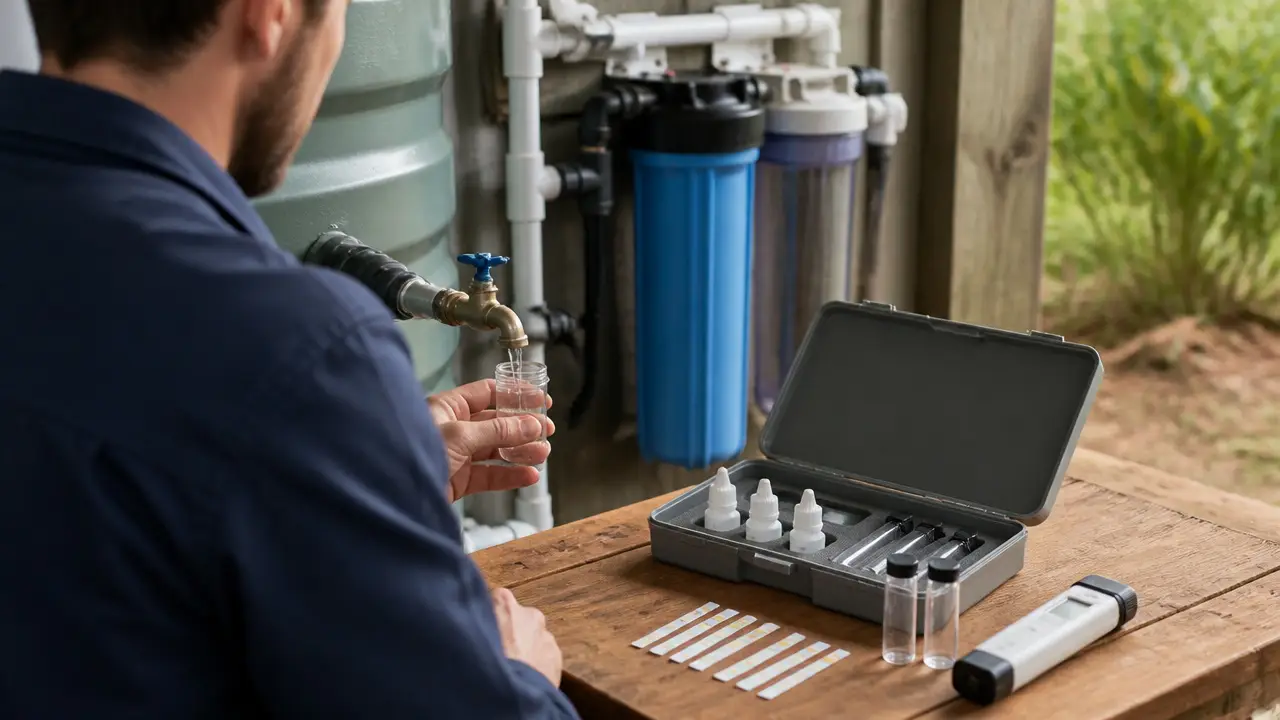
CDC recommends testing water and choosing treatment designed for the specific germs or chemicals of concern. One treatment method may remove contaminants that another does not.
A Typical 3-Stage Filter Layout
For many basic systems, the flow looks like this:
Water source → Sediment → Activated carbon → Carbon block or specialty filter → Use
For harvested rainwater, the full path may be more like:
Roof → debris screening → first flush or other prefiltration → storage tank → pump → sediment filter → carbon treatment → additional treatment if required → point of use
A first flush device diverts some of the first runoff from a roof. That early runoff may carry more dirt and debris that collected on the roof between rains.
The first-flush device is not the same thing as the first cartridge in a 3-stage filter housing.
Should the Coarse Filter Always Go First?
Usually, yes.
If you have more than one mechanical sediment filter, start with the coarser stage and move toward the finer stage.
For example:
Coarse sediment → fine sediment → carbon
This arrangement can make sense when the source water carries more particles than a single sediment cartridge can handle.
However, that means you are using two of your three stages for sediment removal. Whether that is worthwhile depends on your water and intended use.
A garden irrigation system supplied by a rainwater tank has very different treatment needs from water supplied to a kitchen tap.
Does a 3-Stage Reverse Osmosis System Use the Same Order?
Not necessarily.
Consider whether a treatment train benefits from carbon to understand which water-quality questions the current measurements leave open.
A reverse osmosis system includes an RO membrane, which is very different from a normal sediment or carbon cartridge. RO forces water through a semipermeable membrane to separate many dissolved substances from the product water.
A basic RO treatment sequence may place sediment and carbon prefilters before the membrane:
Sediment → Carbon → RO membrane
Larger RO systems may have more prefilters or post-filters, so a system advertised as "3-stage" should not be assumed to have the same three cartridges as an ordinary 3-stage filter housing.
Follow the flow diagram supplied with the system.
What Order Should You Use for Rainwater?
For rainwater, start by asking what the water will be used for.
Garden irrigation
A garden system may primarily need debris and sediment control to keep valves, emitters, and small openings from clogging.
Carbon treatment may provide little benefit for ordinary garden watering unless there is a specific water-quality reason for using it.
Toilets or other non-potable household uses
Non-potable means water that is not intended for drinking.
The treatment needed depends on the system, equipment, local plumbing requirements, and the quality of the stored rainwater. Filtration may be needed to protect pumps, valves, appliances, and fixtures.
Drinking and cooking
Do not assume that sediment plus two carbon cartridges makes collected rainwater potable.
Potable means suitable for drinking.
Roof runoff can contain microbes and chemical contaminants. CDC advises choosing household treatment according to contaminants identified in the water and notes that different technologies have different capabilities.
Drinking-water use should be treated as a complete system. That can involve suitable collection surfaces, debris control, storage management, filtration, properly selected treatment or disinfection, current laboratory testing, ongoing maintenance, and compliance with local requirements.
Filtration and disinfection are also different jobs. In municipal water treatment, for example, filtration and disinfection are separate treatment steps.
Where Does UV Go in a 3-Stage System?
A UV unit is normally a separate treatment device rather than one of the cartridge housings.
If UV treatment is part of a properly designed system, water generally needs appropriate pretreatment before reaching the UV unit. Suspended material or poor water clarity can interfere with some treatment systems.
The exact filter requirements and operating limits depend on the UV equipment. Follow its manufacturer's specifications rather than choosing a cartridge sequence by guesswork.
Also remember that UV treatment does not remove sediment or dissolved chemicals. Every treatment stage needs to match the contaminants of concern.
When Should You Change the Filters?
There is no single replacement schedule for every 3-stage system.
Filter life depends on factors such as:
- How much water passes through the system
- How dirty the incoming water is
- Cartridge type
- Filter size
- Pressure drop
- Water chemistry
- Manufacturer requirements
A rainwater system can load sediment cartridges especially quickly if a tank contains a lot of suspended material.
Watch for reduced flow or pressure, but do not rely on those signs alone. Some treatment media can reach the end of their useful capacity without causing an obvious flow change.
Follow the cartridge manufacturer's replacement instructions.
CDC also stresses regular filter maintenance because poorly maintained filters can allow germs to grow.
Check the Flow Direction Before Installing Cartridges
Before changing cartridge order, confirm which housing is actually first.
Look for arrows or labels showing:
IN → Stage 1 → Stage 2 → Stage 3 → OUT
Do not assume the left-hand housing is always Stage 1. Plumbing layouts vary.
Also check whether individual cartridges have a required flow direction. Some cartridges can work either way, while others are designed for water to enter from a particular side.
Frequently Asked Questions
What is the standard order for a 3-stage water filter?
The most common order is sediment first, activated carbon second, and a carbon block or specialty cartridge third. The exact arrangement depends on the cartridges and the water problem being treated.
Can I put a carbon filter before a sediment filter?
Normally, sediment filtration should come first. Removing dirt and particles before the carbon stage helps keep sediment from clogging the carbon media. Use a different order only when the system manufacturer specifies it.
Which filter should have the lowest micron rating?
If you are using several mechanical sediment filters, the finer filter is generally placed after the coarser filter. Carbon and specialty cartridges cannot be compared only by micron rating because they may work through adsorption or other treatment processes as well as physical filtration.
Is a 3-stage filter enough to make rainwater drinkable?
Not by itself. Three filter cartridges do not establish that collected rainwater is safe to drink. Drinking-water use requires treatment matched to actual contaminants, proper system maintenance, appropriate testing, and compliance with applicable local requirements.
Does activated carbon remove bacteria?
Do not rely on an ordinary activated carbon cartridge as a general bacteria-removal or disinfection stage. Filter performance depends on the specific device and its verified contaminant-reduction claims. CDC notes that many common home filters are not designed to remove germs.
Where should a UV system go?
When UV is part of the treatment design, it is commonly installed after the required prefiltration so the water reaching it meets the UV unit's operating requirements. Follow the manufacturer's specifications for water quality, flow, maintenance, and lamp replacement.
Can I use three sediment filters instead?
Yes, when particle removal is the main problem. A system might use progressively finer sediment filtration. However, that arrangement will not provide the same treatment functions as carbon or other specialty media.