As an affiliate, we may earn a commission from qualifying purchases. We get commissions for purchases made through links on this website from Amazon and other third parties.
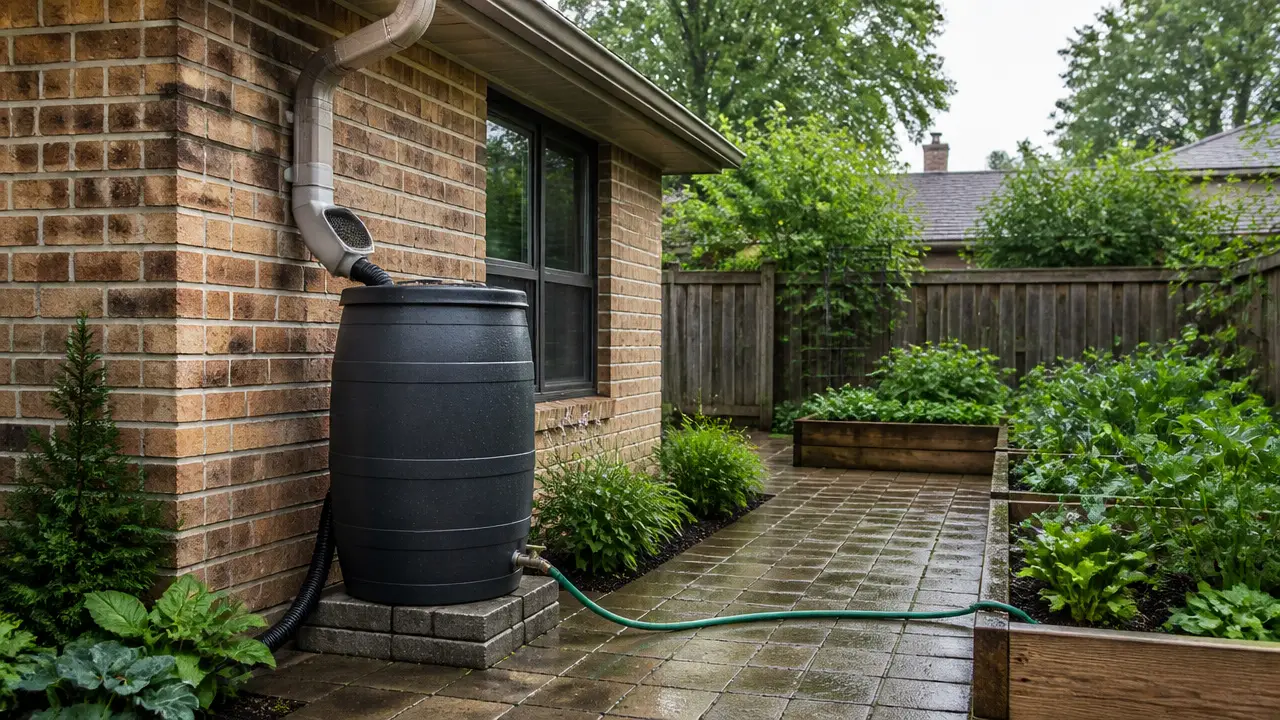
A rain barrel is a container that collects and stores rainwater from a roof. It usually connects to a gutter downspout and holds the water for later outdoor use.
Most rain barrels are used for watering gardens, filling watering cans, or supplying a low-pressure drip line. The collected water is generally considered non-potable, which means it is not treated as drinking water.
How a Rain Barrel Works
A basic rain barrel system is simple.
Rain falls on the roof and flows into the gutters. The gutters direct the water toward a downspout. A diverter or inlet then sends some of that water into the barrel.
The barrel stores the water until you need it. A faucet or hose connection near the bottom lets you draw water out.
When the barrel becomes full, an overflow outlet sends extra water away from the barrel. Some downspout diverters instead return excess water to the original downspout.
Main Parts of a Rain Barrel
Most rain barrels have several basic parts.
Storage Container
The barrel is the main water storage tank. Common residential rain barrels hold tens of gallons, although sizes vary widely.
The container should be suitable for holding water and strong enough to remain stable when full. Water is heavy, so the barrel also needs a firm, level base.
Downspout Connection
The downspout connection directs roof runoff into the barrel.
Some systems cut the downspout and discharge directly into the top of the barrel. Others use a diverter installed in the downspout.
A diverter can make overflow control easier because excess water may continue down the normal drainage path once the barrel is full.
Inlet Screen
A screen can keep leaves, twigs, insects, and larger debris out of the barrel.
The screen still needs cleaning. A clogged inlet can cause water to back up or spill where you do not want it.
Outlet or Spigot
A spigot near the bottom allows you to fill a watering can or connect a hose.
The fitting that passes through the barrel wall must seal properly. A bulkhead fitting is one type of fitting designed to create a sealed connection through the wall of a tank or barrel.
Overflow
An overflow gives excess rainwater somewhere to go after the barrel fills.
This is an important part of the system. Without a suitable overflow route, water may spill next to the foundation, erode soil, or make the area around the barrel muddy.
Route overflow toward an appropriate drainage area while following local drainage requirements.
What Can You Use Rain Barrel Water For?
Rain barrel water is most commonly used outside.
Possible uses include:
- Watering ornamental plants and gardens
- Filling watering cans
- Supplying some drip irrigation systems
- Watering trees and shrubs
- Certain outdoor cleaning jobs
The right use depends on where the water came from and what it may have picked up along the way.
Roof runoff can contain bird droppings, dust, pollen, roofing debris, microorganisms, and other contaminants. The barrel itself can also collect sediment over time.
For that reason, do not assume stored rainwater is clean or safe to drink.
Using harvested rainwater inside a home or for drinking requires much more than a basic rain barrel. Potable use should be treated as a complete water-treatment system involving suitable collection surfaces, prefiltration, treatment, maintenance, current laboratory testing, and applicable local requirements.
How Much Water Can a Rain Barrel Collect?
A surprisingly small amount of rain can fill a barrel.
The amount available from a roof depends mainly on:
- Roof area draining to the barrel
- Amount of rainfall
- Collection losses
- Barrel capacity
For U.S. units, a useful theoretical estimate is:
Gallons = roof area in square feet × rainfall in inches × 0.623
For example, 500 square feet of roof receiving 1 inch of rain has a theoretical yield of:
500 × 1 × 0.623 = about 312 gallons
You normally will not collect every gallon. Some water is lost through splash, wetting of the roof, gutter losses, diversion, leaks, and overflow.
This also shows why a small barrel can fill quickly. If your barrel holds far less water than the roof can produce during a storm, good overflow management becomes especially important.
Does a Rain Barrel Provide Water Pressure?
A rain barrel provides some pressure from gravity, but usually not very much.
Water pressure increases as the water surface gets higher above the outlet. This vertical distance is sometimes called head height.
Putting the barrel on a sturdy raised platform can improve gravity flow. However, raising a full barrel also increases safety concerns because water is heavy.
A 55-gallon barrel can contain roughly 460 pounds of water, not including the barrel or platform. Any stand must be stable and capable of supporting the load.
Planning around using rain barrels for irrigation helps compare vessel capacity and fittings within the available space.
Do not stack or elevate barrels on makeshift supports.
Some drip irrigation equipment can operate at relatively low pressure, while sprinklers and other irrigation devices may need more pressure than a rain barrel can provide. A pump may be necessary when the irrigation system requires steady pressure or greater flow.
Do You Need a First-Flush Diverter?
A first-flush diverter directs the first portion of roof runoff away from the storage tank.
The first runoff after a dry period may carry more dust, pollen, animal droppings, and loose roof debris than later runoff.
Whether a first-flush system makes sense depends on your roof, surrounding trees, intended water use, and overall system design.
It can reduce some incoming debris and contamination, but it does not make rainwater safe to drink. Screens, first-flush devices, and filters each perform different jobs.
Where Should You Put a Rain Barrel?
Choose a location that makes the barrel easy to connect, use, inspect, and drain.
A good location normally has:
- A firm, level base
- Easy access to a downspout
- A safe route for overflow
- Space to reach the inlet and outlet
- Enough clearance for cleaning and maintenance
Avoid placing a heavy barrel on unstable soil or a weak platform.
Also think about what happens during a major storm. The barrel may already be full when more rain arrives, so the original drainage system still needs a safe way to handle excess water.
How Do You Keep a Rain Barrel Clean?
Rain barrels need regular maintenance.
Check the inlet screen and gutters for leaves and other debris. Inspect the overflow and fittings for blockages or leaks. Sediment may eventually collect at the bottom of the barrel and require cleaning.
Keeping the container covered and openings screened also helps limit mosquito access.
A barrel that has developed unusual odors, heavy algae growth, visible contamination, or other water-quality problems should be inspected and cleaned before continued use.
Cleaning frequency depends on the roof, surrounding vegetation, climate, and how quickly sediment builds up.
What Happens in Freezing Weather?
Water expands when it freezes. A barrel, hose, valve, or fitting containing trapped water may be damaged in freezing conditions.
If your area experiences hard freezes, follow the barrel manufacturer's winter-storage instructions. A typical seasonal plan may involve disconnecting the barrel, draining it completely, and making sure the home's normal downspout drainage works properly during winter.
Do not assume a barrel is freeze-proof simply because it is made of plastic.
Is a Rain Barrel the Same as a Cistern?
Both collect rainwater, but a cistern is usually part of a larger storage system.
A rain barrel commonly sits beside a building and receives water from one downspout. It is often intended for simple outdoor watering.
A cistern can hold much more water and may be connected to pumps, filters, controls, multiple roof areas, or household reuse systems.
The basic idea is the same: collect rain when it is available and store it until it is needed.
Is a Rain Barrel Worth Using?
A rain barrel can be a simple way to save roof runoff for garden and outdoor use.
The barrel itself is only one part of a useful system. Pay attention to the downspout connection, inlet screen, stable base, outlet, overflow route, intended water use, and regular cleaning.
For a small garden, one barrel may be enough to provide occasional supplemental water. If you want to supply larger irrigation zones or store water between long dry periods, you may need more storage and a more carefully planned rainwater system.
Frequently Asked Questions
Can you drink water from a rain barrel?
Do not assume rain barrel water is safe to drink. Roof runoff can contain microorganisms, animal waste, dust, roofing contaminants, and other pollutants. Drinking-water use requires an appropriate collection and treatment system, current laboratory testing, maintenance, and compliance with applicable local requirements.
How quickly does a rain barrel fill?
It depends on roof area and rainfall. Even a modest roof section can produce much more water than a typical barrel can hold during a single storm, so the barrel may fill quickly.
Can I attach a garden hose to a rain barrel?
Often, yes, if the barrel has a compatible threaded outlet. Gravity flow may be much weaker than flow from a household faucet, so not every hose attachment, sprinkler, or irrigation device will work well.
Should a rain barrel be raised off the ground?
A modest amount of elevation can make the outlet easier to reach and increase gravity flow. The supporting base must be level, stable, and strong enough to carry the full weight of the barrel and water.
Does a rain barrel need an overflow?
Yes. A barrel needs a controlled way to handle water after it becomes full. The overflow should discharge to a suitable drainage location and should not direct water toward the building foundation.
Do rain barrels attract mosquitoes?
They can if mosquitoes can reach standing water. Keep openings properly covered or screened and repair damaged screens. Also inspect the system regularly so water is not collecting in unintended places.
Can I connect several rain barrels together?
Yes, barrels can be linked to increase storage capacity. The connecting fittings, elevations, overflow arrangement, and support surfaces need to work together so the barrels fill and drain as intended.
Can a rain barrel stay outside during winter?
That depends on the barrel and climate. In freezing areas, water left inside the barrel, valve, or connecting pipes can freeze and cause damage. Follow the manufacturer's winterizing instructions and make sure normal roof drainage remains functional.