As an affiliate, we may earn a commission from qualifying purchases. We get commissions for purchases made through links on this website from Amazon and other third parties.
Yes. Rain barrels are available that use materials intended for food or drinking-water contact. But the label “non-toxic” by itself does not tell you enough.
A better way to choose a rain barrel is to look at the actual material, its intended use, its certification or documentation, and what the barrel held before you bought it.
For ordinary outdoor uses, such as watering flowers and shrubs, a new barrel made from suitable food-contact plastic is often a practical choice. If the water may be used inside a home or as part of a drinking-water system, use a storage tank specifically rated for potable water contact and treat the entire rainwater system as a drinking-water system.
What Does “Non-Toxic Rain Barrel” Actually Mean?
There is no single “non-toxic rain barrel” label that guarantees the barrel is safe for every type of rainwater use.
Manufacturers may use terms such as:
- food-grade
- food-safe
- BPA-free
- potable-water safe
- drinking-water approved
- HDPE
- polyethylene
These terms do not all mean the same thing.
The U.S. Food and Drug Administration regulates substances used in materials that contact food. Its safety evaluations consider the intended use of those materials and whether substances could migrate into food.
That means simply knowing that a barrel is made from plastic does not establish whether the finished barrel is suitable for storing water.
Even knowing the resin type is not enough.
HDPE Is Common, but Look Beyond the Plastic Number
Many rain barrels and water tanks are made from high-density polyethylene, usually shortened to HDPE.
HDPE is also commonly identified by recycling resin code #2. It is widely used for containers, including containers intended for certain food-contact applications.
However, “HDPE” does not automatically mean “safe for drinking water.”
A finished barrel can also contain:
- pigments
- stabilizers
- processing additives
- fittings
- seals and gaskets
- coatings
- liners
The way the container was manufactured also matters.
For example, the FDA has specifically addressed some fluorinated polyethylene containers because certain fluorination processes can form PFAS. The FDA notes that only particular manufacturing conditions are authorized for fluorinated polyethylene food-contact containers.
You do not need to assume that ordinary HDPE rain barrels have this problem. The important lesson is simpler: the resin name alone does not establish the safety of the entire finished container.
Food-Grade and Potable-Water Rated Are Different
This difference matters when shopping for a barrel.
Food-contact barrel
A barrel made for food-contact use has materials intended for appropriate contact with food under stated conditions.
For a simple rain barrel used for landscaping, this can provide more useful information than a vague “non-toxic” claim.
However, food-contact suitability does not mean rainwater stored in the barrel becomes drinking water.
Potable-water storage tank
Potable means suitable for drinking.
If a storage container will be part of a system intended to supply drinking water, look for documentation showing that the finished tank is suitable for potable-water contact.
NSF notes that storage tanks and plumbing components used with rainwater can be evaluated under NSF/ANSI/CAN 61, a standard addressing materials and components that contact drinking water.
Certification is particularly useful because it gives you more information than a manufacturer's broad statement that a barrel is “safe” or “non-toxic.”
What to Look for in a Safer Rain Barrel
For most homeowners collecting water for outdoor non-potable use, look for a barrel with clear information about its construction.
1. A known material
Polyethylene, especially HDPE, is common.
Do not assume a barrel is appropriate simply because it has a recycling symbol. Look for information about the intended use of the finished container.
2. Food-contact or potable-water documentation
The level you need depends on your intended water use.
For watering ornamental plants, a food-contact container may be a reasonable conservative choice.
For drinking-water applications, choose a tank specifically intended for potable water contact, preferably with appropriate third-party certification.
3. A known history
New barrels remove one major uncertainty: you know they have not previously stored some other substance.
With a used barrel, the previous contents matter at least as much as the plastic.
4. An opaque or light-blocking wall
This is mainly a maintenance issue rather than a toxicity issue.
Sunlight entering stored water encourages biological growth. An opaque barrel generally makes stored rainwater easier to manage than a clear or translucent container.
5. Suitable fittings
Check the spigot, bulkhead fitting, hose connections, gaskets, and overflow parts too.
A bulkhead fitting is a fitting that passes through the wall of the barrel while forming a seal around the opening.
A barrel made from an appropriate plastic can still have unsuitable components attached to it.
6. A screened inlet
The barrel should have a way to keep leaves, insects, and larger debris out.
The CDC recommends screening rainwater collection openings or regularly emptying rain barrels to help prevent mosquitoes from breeding in them.
Should You Use a Recycled or Repurposed Barrel?
Repurposed barrels can work for some non-potable applications, but you should know exactly what was previously stored inside them.
Avoid barrels that previously contained:
- pesticides
- solvents
- petroleum products
- industrial chemicals
- cleaning chemicals
- unknown liquids
Cleaning does not necessarily make a container suitable for water storage after it has held an unsuitable chemical.
Plastic can retain residues, and some contaminants may be difficult to remove or even detect.
What about old food barrels?
A barrel that previously held a known food ingredient presents fewer unknowns than an industrial chemical drum.
Even then, inspect its condition and determine whether its original material was intended for food contact.
For a drinking-water system, using a new potable-water-rated tank is the safer and simpler choice.
Is “BPA-Free” Enough?
No.
Account for practical uses for rain-barrel water to understand the storage-vessel configuration for the installation area.
A BPA-free label gives you information about one particular chemical. It does not evaluate everything that could matter in a rain barrel.
It does not tell you:
- whether the container is approved for food or drinking-water contact
- whether other additives are suitable
- what the barrel previously contained
- whether the fittings are appropriate
- whether roof runoff is contaminated
- whether the stored water is safe to drink
Treat BPA-free as one piece of information, not as an overall water-safety certification.
A Safe Barrel Does Not Make Rainwater Safe to Drink
This is one of the most important points when choosing rainwater equipment.
The storage container is only one part of the system.
Rainwater can pick up contaminants from the air and then collect additional material from the:
- roof
- gutters
- flashing
- downspouts
- screens
- pipes
- storage tank
Bird and animal droppings can also introduce germs.
The CDC warns that rainwater that looks clean can still contain germs and chemicals. It recommends higher water-quality precautions when rainwater will be used for drinking, cooking, bathing, or similar uses.
So even a certified potable-water storage tank does not turn untreated roof runoff into potable water.
Consider the Whole Collection System
If you want cleaner stored rainwater, focus on more than the barrel material.
Keep the roof and gutters maintained
Remove heavy debris and correct areas where organic matter collects.
Some roofing materials can also contribute chemicals to runoff, so drinking-water systems require more careful evaluation of the entire catchment surface.
Screen out debris
A screen helps keep leaves, insects, and larger material from reaching the barrel.
It does not disinfect the water.
Consider a first-flush diverter
A first-flush diverter sends the first portion of runoff from a storm away from storage.
That early runoff often carries more dirt, droppings, and debris accumulated on the roof.
The CDC recommends considering a first-flush system as one way to improve collected rainwater quality. The correct amount to divert depends partly on the roof area feeding the system.
A first flush improves the collection process, but it does not make the stored water potable.
Keep the barrel covered
A tight cover helps reduce debris, animals, insects, and sunlight entering the tank.
The system still needs ventilation and overflow arrangements appropriate to its design.
Plan the overflow
Water should leave a full barrel without damaging the house foundation or causing erosion.
Make sure the overflow connection is at least capable of handling the incoming flow expected from the downspout arrangement.
What If You Want to Water a Vegetable Garden?
Be more conservative when the harvested water can come into contact with food.
Current CDC guidance recommends using treated tap water or bottled water, when possible, for watering plants you plan to eat. The CDC also recommends limiting untreated rainwater uses where there is a greater chance of swallowing contaminated water.
The barrel material is only one concern. Roof runoff can contain microorganisms and chemicals before it ever reaches the barrel.
If you plan to use harvested rainwater on edible crops, especially where water contacts edible portions, check guidance from your local health or agricultural authority.
What About Drinking Rainwater?
A typical backyard rain barrel should not be treated as a drinking-water system.
Drinking-water rainwater collection requires a much more complete approach.
That may include:
- a suitable catchment surface
- debris exclusion
- first-flush management
- appropriate storage
- sediment removal
- treatment matched to actual contaminants
- disinfection
- regular maintenance
- current laboratory testing
- protection against cross-connections with treated plumbing
- compliance with applicable local requirements
NSF's rainwater program also includes NSF P151, which evaluates certain rainwater catchment components for their potential to add contaminants to collected water.
No single barrel, filter, UV light, purifier, meter, or test strip establishes that roof-collected rainwater is safe to drink.
If potable use is the goal, work with your health department or a qualified water-treatment professional familiar with rainwater systems.
A Practical Way to Choose
For a basic garden rain barrel, you do not need to find something marketed with the strongest possible “non-toxic” language.
Instead, choose based on verifiable information.
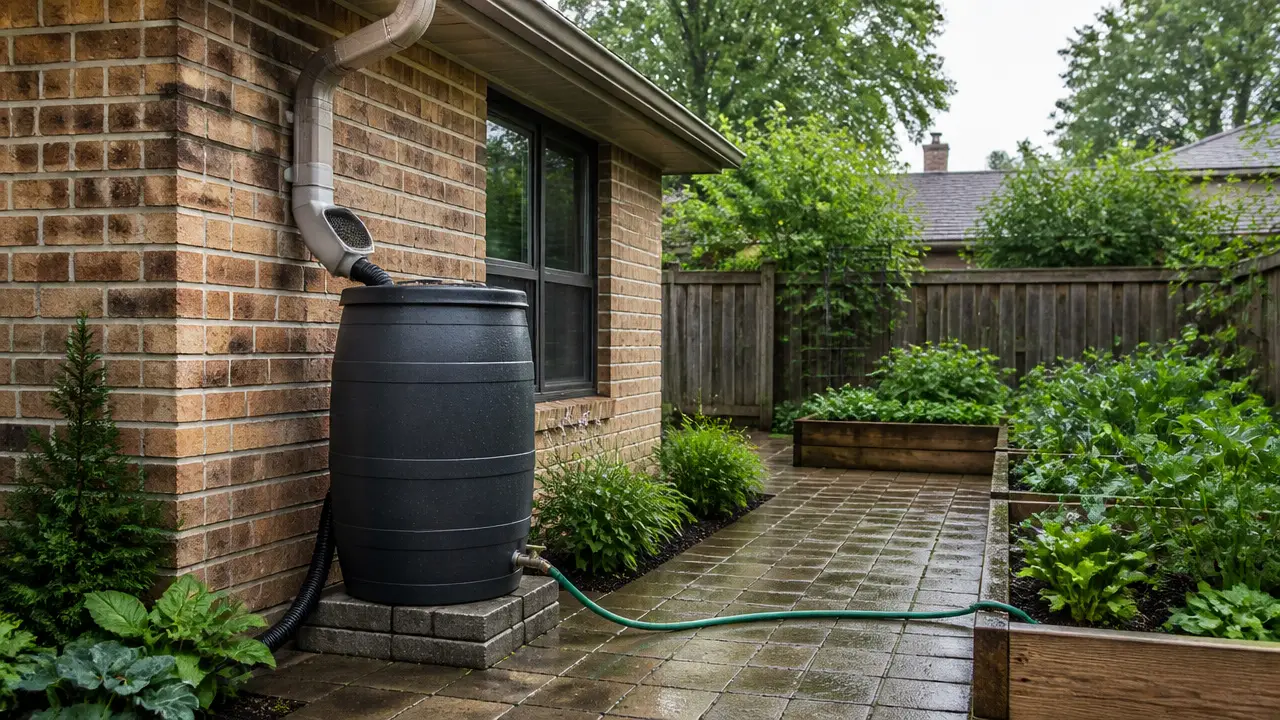
A good starting point is a new, opaque container made from a known material and specifically intended for appropriate water or food contact. Make sure its inlet, outlet, overflow, lid, screens, and fittings are suitable too.
If the seller cannot tell you what the barrel is made from or what it previously contained, choose another container.
For a potable rainwater system, move beyond basic rain barrels and use storage equipment specifically documented or certified for drinking-water contact.
Frequently Asked Questions
Are plastic rain barrels toxic?
Not necessarily. Many rain barrels are made from polyethylene materials also used in food- and water-contact applications. However, the resin type alone does not establish that a finished barrel is appropriate for your intended use. Check the manufacturer's documentation and the barrel's history.
Is HDPE safe for collecting rainwater?
HDPE is commonly used in storage containers and can be used in authorized food-contact applications. Still, an HDPE label or #2 recycling mark does not by itself mean a particular barrel is suitable for drinking-water storage.
Can I use a food-grade barrel for rainwater?
A food-contact barrel can be a practical choice for many non-potable rainwater systems, especially when the barrel is new or its previous contents are known. Food-grade does not mean the collected rainwater is safe to drink.
Should I buy a new rain barrel instead of a used one?
New barrels are easier to evaluate because there is no uncertainty about previous contents. Used barrels can be appropriate for some non-potable uses when their history is documented, but avoid containers that held chemicals or unknown materials.
Are BPA-free rain barrels safer?
BPA-free information can be useful, but it does not establish the overall suitability of the barrel. Material formulation, previous contents, fittings, intended use, and certification can all matter.
Can rain barrel water be used on vegetables?
Use more caution with edible plants. The CDC currently recommends using treated tap or bottled water when possible for plants you plan to eat because roof-collected rainwater can contain germs and chemicals.
Can I drink water from a potable-water-rated rain barrel?
Not simply because the tank is potable-water rated. That rating concerns the storage component. Roof runoff can still contain germs and chemicals and requires a properly designed collection, treatment, testing, and maintenance system before drinking-water use.