As an affiliate, we may earn a commission from qualifying purchases. We get commissions for purchases made through links on this website from Amazon and other third parties.
Yes, you can test water for certain bacteria at home. Home tests can be useful for screening, especially for total coliform bacteria and sometimes E. coli. But an at-home test cannot prove that rainwater is safe to drink.
If the water may be used for drinking, cooking, brushing teeth, or other potable uses, a state-certified drinking water laboratory is the better choice. EPA recommends certified laboratories for drinking-water testing.
What Bacteria Can You Test for at Home?
Most simple home water tests do not look for every harmful bacterium. Instead, they usually look for indicator bacteria.
The most common indicators are:
- Total coliform bacteria
- Fecal coliform bacteria
- E. coli
Total coliforms are a broad group of bacteria found in soil, plants, surface water, and animal waste. Finding them does not automatically mean that the water contains a disease-causing organism. Their presence can show that contamination has entered the water system.
E. coli is more closely linked with fecal contamination. Its detection is more concerning because fecal contamination can also introduce other harmful germs.
CDC lists total coliforms and fecal coliforms/E. coli as important water-quality indicators. These indicators do not identify every germ that could make someone sick.
How an At-Home Bacteria Test Works
Home bacteria tests vary, but many use a small sterile container containing a growth medium.
The basic process is usually:
- Collect a water sample without touching the inside of the container or lid.
- Add the sample as directed by the test instructions.
- Keep the sample under the required conditions for the specified amount of time.
- Check for a color change, fluorescence, or another indicator.
- Compare the result with the manufacturer's instructions.
Some tests simply report bacteria as present or absent. Others may provide a rough estimate of bacterial concentration.
Follow the instructions supplied with the test. Incubation time, temperature, sample volume, and interpretation can differ between methods.
Why Sampling Technique Matters
Bacteria testing is especially sensitive to contamination during sampling.
Touching the inside of the bottle, using a dirty container, or collecting water through a contaminated hose can change the result. A sample can appear positive even when the contamination came from the sampling process rather than the stored water.
For laboratory coliform testing, EPA guidance calls for sterile sample containers and careful collection and handling.
If you are sampling a rainwater system, first decide what you are trying to learn.
For example, a sample taken directly from a storage tank answers a different question from a sample taken at a kitchen faucet after filtration and treatment.
A tank sample may help tell you what is happening inside storage. A faucet sample can tell you more about the water after it has traveled through pumps, pipes, filters, and treatment equipment.
What a Positive Home Test Means
A positive result means you should treat the result seriously, particularly if the water is used for drinking.
Do not assume that running the water through a basic sediment or carbon filter will solve bacterial contamination.
Common causes in rainwater systems can include:
- Animal droppings on the roof
- Leaves and organic debris
- Dirty gutters
- Poorly maintained screens
- Contaminated storage tanks
- Insects or small animals entering the tank
- Sediment buildup
- Dirty pipes or hoses
- Poorly maintained filters
- Failed or improperly operating disinfection equipment
- Contamination introduced during sampling
If potable use is intended, have the water tested by an appropriate certified laboratory and investigate the source of contamination.
A positive bacteria result is a reason to evaluate the whole collection and treatment system, not simply add another filter.
What Does a Negative Home Test Mean?
A negative home test is useful information, but it does not mean the water is proven safe to drink.
There are several reasons.
First, the test may cover only one group of bacteria. It may not detect viruses, protozoa, or every type of harmful bacterium.
Second, bacteria levels can change. A tank that tests negative today could receive contaminated runoff during the next storm.
Third, rainwater can contain contaminants that have nothing to do with bacteria, including chemicals and metals picked up from roofing materials, atmospheric deposits, plumbing, or nearby pollution.
Finally, mistakes in sampling, storage, incubation, or reading the test can affect the result.
A single negative bacteria test should therefore not be treated as a complete water-safety assessment.
At-Home Test vs. Laboratory Test
The right choice depends on what you intend to do with the water.
| Test type | Good for | Main limitation |
|---|---|---|
| Home bacteria screening test | Routine checks and identifying possible problems | Does not establish overall drinking-water safety |
| Certified laboratory bacteria test | More reliable assessment of specific microbial indicators | Still tests only the contaminants ordered |
| Full water-quality testing plan | Evaluating water intended for potable use | Requires choosing tests based on the source and system |
For drinking water, EPA recommends using laboratories certified to perform drinking-water testing.
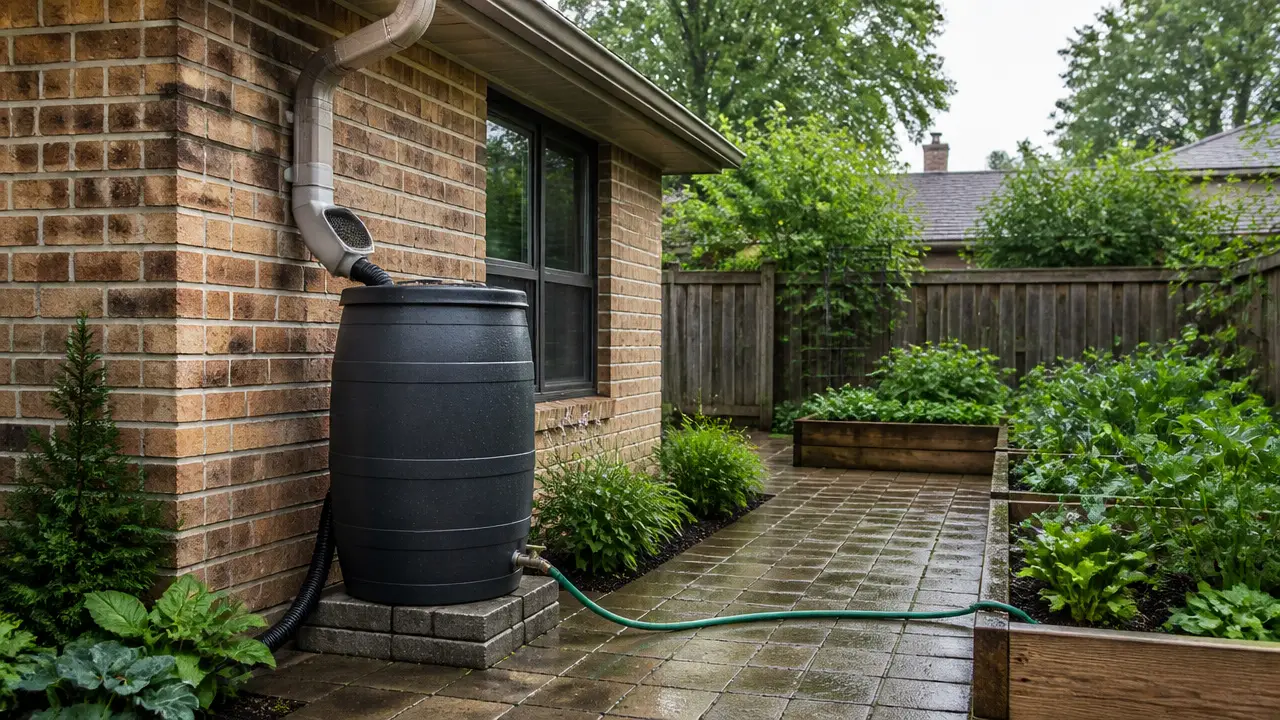
Testing Rainwater Used Only for Irrigation
Regarding home E coli testing, understand upkeep actions that credible water-quality results support.
The testing decision is different when rainwater is used only for non-potable purposes.
Non-potable means water that is not intended for drinking, cooking, or similar household consumption.
For a simple garden rain barrel, routine laboratory bacteria testing may not always be necessary. Good system maintenance is still important. Keep debris out, prevent animals and mosquitoes from entering, clean the storage system when needed, and avoid creating aerosols or using questionable water where exposure matters.
The situation becomes more important when irrigation water contacts food that will be eaten raw or when people are likely to come into direct contact with the water.
The intended use should determine how conservative your testing and treatment plan needs to be.
Testing Rainwater Intended for Drinking
Drinking rainwater requires a much more careful approach.
Collected rainwater is not automatically potable simply because it looks clear or has passed through a filter.
Potable water is water suitable for drinking.
A drinking-water system may need several parts working together, such as:
- A suitable collection surface
- Roof and gutter maintenance
- Screens or debris exclusion
- A first-flush or similar runoff-management system
- Protected storage
- Sediment removal
- Appropriate treatment
- Disinfection
- Routine maintenance
- Water-quality testing
A first flush device diverts some of the initial roof runoff so that dirt and other material accumulated on the collection surface are less likely to enter storage.
Even a well-designed treatment system needs maintenance. A clogged filter, spent treatment media, failed UV lamp, dirty quartz sleeve, incorrect flow rate, or contaminated storage tank can change water quality.
No single filter, UV unit, purifier, test strip, or bacteria test establishes that untreated roof runoff is safe to drink.
For potable rainwater use, work with your local health authority, an appropriate water-treatment professional, or a certified drinking-water laboratory to decide which tests are needed for your system.
When Should You Test?
Testing is especially useful after anything that could change water quality.
Consider bacteria testing when:
- You first put a potable water system into service.
- Floodwater or contaminated surface water may have entered storage.
- Animals have gained access to the tank or collection system.
- You have repaired or altered storage, plumbing, or treatment equipment.
- A disinfection system has failed.
- Water has an unusual appearance, odor, or other change.
- Someone becomes ill and water contamination is suspected.
- A previous sample tested positive.
- You are checking an ongoing potable-water treatment and maintenance program.
EPA recommends annual testing of private wells for total coliform bacteria along with several other basic water-quality measurements and recommends additional testing when contamination is suspected. Although a rainwater system is different from a private well, the guidance illustrates why bacteria testing should be repeated rather than treated as a one-time check.
A Bacteria Test Does Not Replace Other Water Tests
Bacteria are only one part of water quality.
For example, a bacteria test cannot tell you whether water contains:
- Lead
- Copper
- Arsenic
- Nitrate
- Pesticides
- Fuel or solvents
- Other dissolved chemicals
It also cannot tell you whether the water contains every virus or parasite of concern.
Likewise, a total dissolved solids meter does not test for bacteria. Total dissolved solids, or TDS, is a measure related to dissolved substances in water. Low TDS does not mean water is free of harmful germs.
Testing should match the water source, collection materials, nearby contamination risks, treatment system, and intended use.
Frequently Asked Questions
Can a home water test detect E. coli?
Some home tests are designed to screen for E. coli. Follow the test instructions carefully because collection and incubation conditions affect the result. For water intended for drinking, confirm concerns through an appropriate certified laboratory rather than relying only on a home test.
Can you tell if water has bacteria by looking at it?
No. Water can look, smell, and taste normal while containing bacteria. Cloudiness or odor can signal a problem, but clear water does not prove that the water is microbiologically safe.
Does a negative coliform test mean rainwater is safe to drink?
No. It means the tested indicator was not detected under that test's conditions. It does not rule out every microorganism or chemical contaminant, and it does not establish that the entire rainwater system produces potable water.
Should I test water before or after filtration?
It depends on what you want to learn. Testing untreated tank water can help evaluate the source and storage conditions. Testing water after all treatment stages shows more about the water at the point where you intend to use it. Potable systems may benefit from sampling at more than one point when troubleshooting.
Will a sediment filter remove bacteria?
A standard sediment filter should not be assumed to make bacterially contaminated water safe to drink. Sediment filtration can remove suspended particles and may be an important pretreatment stage, but microbial safety requires an appropriate whole-system treatment and testing plan.
Can boiling water fix a positive bacteria test?
Boiling can inactivate many disease-causing microorganisms when done correctly, but it does not remove every possible chemical contaminant. A positive test in a rainwater system should also prompt you to find and correct the contamination source rather than relying on boiling as the permanent system solution.
How often should potable rainwater be tested for bacteria?
There is no single testing schedule that fits every private rainwater system. Frequency depends on intended use, local requirements, treatment design, contamination risks, maintenance, and previous results. A local health authority or certified drinking-water laboratory can help set an appropriate testing plan.