As an affiliate, we may earn a commission from qualifying purchases. We get commissions for purchases made through links on this website from Amazon and other third parties.
A DIY rain barrel filter is usually a debris filter, not a drinking-water filter. Its job is to keep leaves, roof grit, insects, seeds, and other large material out of the barrel.
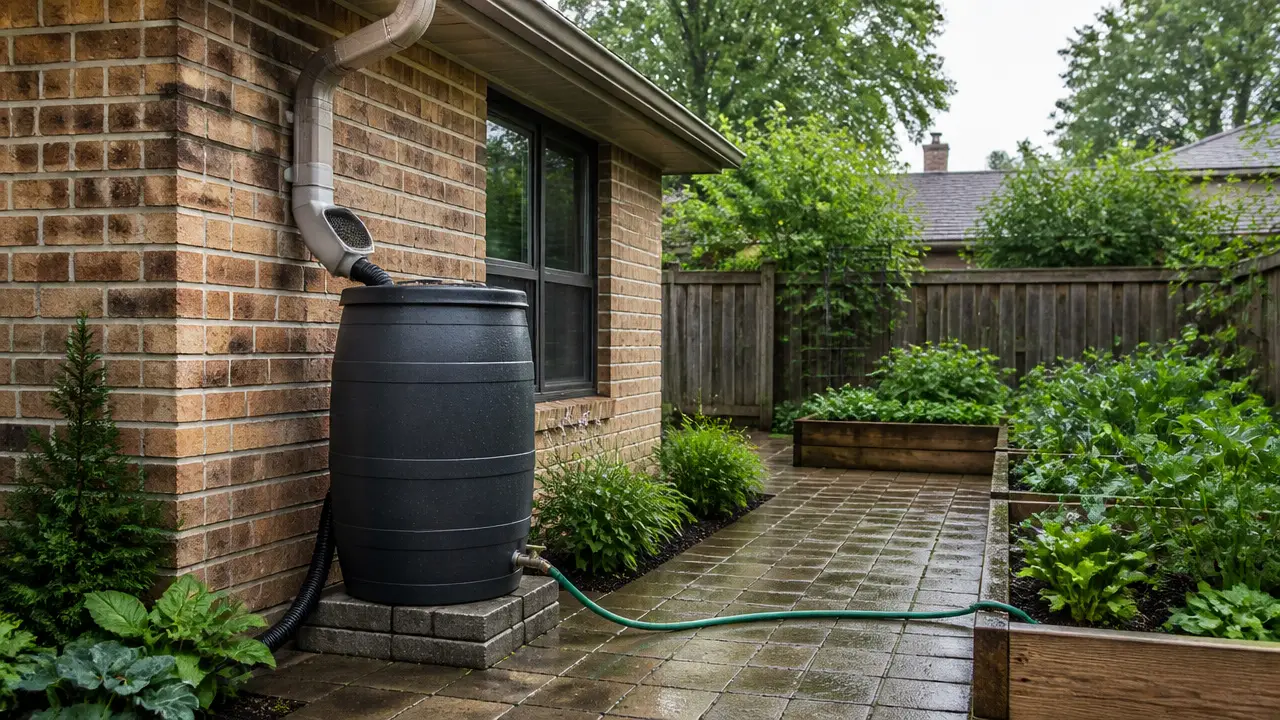
For a simple garden rain barrel, the most useful setup is a coarse screen at the inlet, followed by an optional removable filter basket. You can also add a first-flush diverter upstream to keep some of the dirtiest roof runoff out of the barrel.
A homemade filter can make stored rainwater cleaner and easier to use. It does not make roof runoff safe to drink.
What a Rain Barrel Filter Should Do
Rainwater can pick up material as it moves across your roof and through your gutters. This may include:
- Leaves and twigs
- Roof grit
- Dust and dirt
- Pollen
- Insects
- Bird and animal droppings
The EPA recommends using a screen or filter to keep leaves and other debris out of rainwater storage. Screens can also help keep mosquitoes from getting into the barrel.
For most basic rain barrels, you do not need a complicated filter. You need something that catches debris without slowing the water so much that the gutter backs up during heavy rain.
The Simplest DIY Rain Barrel Filter
A removable filter basket is one of the easiest designs to build and maintain.
You can make one from:
- A plastic plant pot, basket, or food-safe plastic container
- Fine insect screen or similar durable mesh
- A second layer of slightly coarser plastic mesh if needed
- Stainless steel screws, clips, or zip ties
- A barrel with a screened inlet opening
The container should fit beneath the downspout while still being easy to lift out.
Avoid permanently gluing the filter into the barrel. A rainwater filter will collect dirt, so you want to be able to remove and clean it.
Step 1: Make a Support Basket
Choose a container that has plenty of openings for water to pass through.
A plastic plant pot with holes around the sides and bottom can work well. A rigid basket is usually better than hanging a loose piece of screen over the barrel because the basket supports the screen when water is flowing quickly.
Make sure the container is large enough to handle water from the downspout.
A very small filter can fill with leaves during a storm and cause water to spill around the inlet.
Step 2: Add the Screen
Line the basket with insect-resistant screen.
The screen should be fine enough to block mosquitoes and common gutter debris but open enough for rain to flow through quickly.
Do not assume that finer is always better. Very fine fabric can plug with pollen, roof grit, or organic material.
If you want two stages, place coarse mesh above the finer screen. The coarse layer catches leaves and larger material before it reaches the smaller openings.
Step 3: Secure the Screen
Fasten the screen so it cannot fold over or wash into the barrel.
You can attach it around the edge of the basket with clips, stainless hardware, or durable ties.
Keep sharp ends away from places where you will reach when cleaning the filter.
The filter should remain removable.
Step 4: Position It Under the Downspout
Place the filter basket in the barrel's inlet so all incoming water passes through it.
The downspout does not need to touch the screen. Leaving some space makes it easier to remove the basket.
Also make sure water has somewhere safe to go if the filter becomes blocked.
Your gutter and downspout should not depend on a tiny filter opening to handle the full flow from a heavy storm.
Step 5: Cover Any Remaining Openings
Do not leave gaps around the filter where mosquitoes can enter.
The CDC recommends screening the point where water enters a rain barrel or regularly emptying the barrel to help prevent mosquitoes from laying eggs in it.
A fitted lid with screened openings is usually better than leaving the top of the barrel open.
A Better Two-Stage DIY Filter
If your roof drops a lot of leaves or grit into the gutter, use two filtering stages.
Stage 1: Coarse Debris Screen
Put a coarse screen or leaf guard where the downspout enters the system.
It catches:
- Leaves
- Twigs
- Large insects
- Seeds
- Larger pieces of roof material
This screen should be easy to inspect without opening the barrel.
Stage 2: Fine Inlet Screen
Place finer insect screen over or inside the barrel inlet.
This catches smaller debris and helps block mosquitoes.
The goal is not to remove microscopic contaminants. It is simply to keep as much physical debris as practical out of storage.
This two-stage setup often needs less cleaning than trying to make one very fine screen catch everything.
Should You Add Sand, Gravel, or Charcoal?
You will sometimes see DIY rainwater filters made from buckets filled with layers of gravel, sand, cloth, and charcoal.
That approach is not usually necessary for a basic rain barrel used for landscape watering.
Loose filter media creates several problems:
- It can slow water during heavy rain.
- Organic material can collect inside it.
- Wet media can become difficult to clean.
- Channels can form through the filter.
- Fine material can wash into the barrel.
- It may give the impression that the water has been made safe to drink.
For a normal rain barrel, a removable screen and basket are simpler.
If you need finer filtration for drip irrigation or another device with small openings, it is usually better to install a suitable irrigation filter after the barrel outlet rather than trying to perform very fine filtration at the downspout.
Add a First-Flush Diverter if Roof Debris Is a Problem
A filter catches particles as water enters your barrel. A first-flush diverter does something different.
It redirects some of the first runoff from a storm away from the storage tank.
That first water can wash accumulated dust, droppings, pollen, and other material from the roof. The CDC notes that a first-flush diverter can improve the quality of collected rainwater by keeping some of this initial runoff out of storage.
A first-flush diverter does not replace the inlet screen.
Study a suitable filter system for rain barrels to interpret testing and treatment requirements for the planned water use.
A useful order is:
Roof → gutter → leaf screen → first-flush diverter → inlet screen → barrel
Not every small garden system needs all of these parts. If you have a clean roof with little tree cover, a good inlet screen may be enough for your needs.
How Fine Should the Filter Be?
There is no single micron rating you need for a basic rain barrel inlet.
A micron is one-thousandth of a millimeter. Micron ratings are mainly useful when choosing filters designed to remove much smaller particles.
At the barrel inlet, flow capacity matters as much as fineness.
Start with screening that keeps out insects and visible debris. If it clogs quickly, use a larger filter area or add a coarser pre-screen rather than simply switching to an even finer material.
Fine cartridge filters are more useful downstream when a pump, sprinkler, drip system, or other device has a stated filtration requirement.
Filtering Rainwater for Drip Irrigation
Drip irrigation needs more protection than watering with a hose or watering can.
Small emitters can clog with:
- Sediment
- Algae
- Organic particles
- Roof grit
For this setup, use the barrel inlet screen to keep large debris out of storage. Then place a serviceable irrigation filter between the barrel and the drip lines.
The layout might look like:
Barrel → shutoff valve → irrigation filter → pressure equipment if needed → drip tubing
Match the downstream filter to the irrigation equipment you are using. An extremely fine filter that is too small for the required flow can create its own restriction.
Remember that a filter cannot solve every clogging problem. Sludge in the bottom of an old barrel and algae growth inside tubing also need to be controlled through cleaning and maintenance.
Where Should the Barrel Outlet Be?
Try not to pull water from the absolute bottom of the barrel.
Even with good inlet filtration, some fine sediment will eventually settle there.
Installing the outlet slightly above the bottom leaves a small sediment zone beneath it.
If your barrel has a drain at its lowest point, you can use that drain when cleaning the barrel rather than as the main irrigation outlet.
Do not drill or modify a barrel while it contains water.
How Often Should You Clean the Filter?
Check the filter often at first. Your roof and local conditions will tell you how quickly it gets dirty.
You may need to clean it more often during:
- Heavy leaf fall
- Pollen season
- Long dry periods followed by rain
- Storms with strong winds
- Periods when birds are active on the roof
Lift out the screen or basket and remove accumulated debris.
If the screen has developed a layer of mud or organic matter, rinse and clean it before putting it back.
Also inspect the gutter and downspout. A clean barrel filter cannot compensate for a gutter packed with decomposing leaves.
Clean the Barrel Too
An inlet filter reduces sediment. It does not eliminate it.
Fine material can still pass through the screen and settle inside the barrel.
Periodically inspect the barrel for:
- Sediment
- Slime
- Algae
- Odor
- Insect access
- Damaged screens
- Leaking fittings
Keep the barrel closed and limit sunlight entering the stored water. Light encourages algae growth.
How often the barrel needs cleaning depends on the roof, weather, barrel design, and how quickly you use the stored water.
Do Not Treat a DIY Screen as a Drinking-Water Filter
This distinction is important.
Roof runoff can contain germs and chemicals even when the water looks clear. Contaminants can come from the air, roofing materials, gutters, piping, storage materials, dirt, and animal droppings.
A screen that removes leaves does not remove all of those hazards.
Even much finer filters have limits. The CDC notes that different filtration methods remove different contaminants, and some filters do not remove certain viruses or chemicals.
If rainwater will be used for drinking, cooking, brushing teeth, bathing, or another use where people may swallow it, treat the project as a complete water-quality system rather than a rain-barrel filter project.
That may involve suitable collection materials, prefiltration, treatment chosen for the contaminants present, regular maintenance, current laboratory testing, and local health or plumbing requirements. The CDC recommends regular testing for germs and chemicals when collected rainwater is used for drinking, cooking, or bathing.
A Practical DIY Setup for Garden Water
For a basic barrel supplying ornamental plants or general landscape watering, a simple arrangement is often enough:
- Keep the roof and gutters reasonably clean.
- Install a coarse leaf screen before the barrel.
- Add a first-flush diverter if your roof collects a lot of dirt between storms.
- Run the downspout into a removable screened basket.
- Keep all barrel openings screened and covered.
- Install the main outlet above the sediment at the bottom.
- Add a separate irrigation filter if small emitters need protection.
- Clean screens and inspect the barrel regularly.
This approach keeps the filtering system simple and puts each part where it works best.
Frequently Asked Questions
Can I use window screen as a rain barrel filter?
Durable insect screen can work as an inlet screen if it is securely supported and does not contain damaged areas that let insects through. Check it regularly because pollen, leaves, and roof grit can reduce water flow.
Can I put a coffee filter over my rain barrel?
A coffee filter is generally too small and restrictive for downspout flow. It can clog quickly and cause water to spill around the barrel. A larger reusable screen or filter basket is more practical.
Does a rain barrel need a filter?
At minimum, a screened inlet is a good idea. It keeps much of the visible debris out of the barrel and helps prevent mosquitoes from entering. EPA rainwater guidance includes screens or filters as a common feature of collection systems.
Can I use sand to filter rainwater before it enters the barrel?
You can build filters that contain sand, but a loose sand filter is usually more complicated than needed for a garden rain barrel. It can restrict flow and requires careful maintenance. A coarse pre-screen and removable inlet screen are easier for most small systems.
Will a DIY rain barrel filter remove bacteria?
Do not assume it will. A normal debris screen is designed for leaves, insects, and sediment, not microbial treatment. Even specialized water filters differ greatly in what germs and chemicals they can remove.
Where should I put the rain barrel filter?
Put coarse filtering before storage, usually between the gutter or downspout and the barrel. If your irrigation equipment needs finer filtration, add another filter after the barrel outlet.
Is a first-flush diverter the same as a filter?
No. A filter traps debris. A first-flush diverter sends some of the first roof runoff away from the barrel. They can be used together, especially where roofs collect dust, droppings, or other material between storms.