As an affiliate, we may earn a commission from qualifying purchases. We get commissions for purchases made through links on this website from Amazon and other third parties.
Rainwater in a barrel is best used within about 5 to 7 days if you want to keep it relatively fresh for normal outdoor uses. That is a practical turnover schedule, not a hard expiration date. University of Maryland Extension recommends using or emptying stored barrel water at least every 5–7 days.
Water may remain usable longer in a clean, covered, opaque barrel. But the longer untreated roof runoff sits, the more opportunity there is for sediment, algae, microorganisms, odors, and insects to become a problem.
Most important, “fresh” does not mean safe to drink. Even newly collected roof runoff can contain bird droppings, dust, chemicals, and other contaminants picked up from the roof and gutters.
Why Rain Barrel Water Changes Over Time
Rain does not usually enter a barrel as clean water.
Before reaching the barrel, it may flow across:
- Roofing materials
- Bird and animal droppings
- Pollen and dust
- Leaves and small plant debris
- Gutters containing dirt or sediment
- Airborne pollution
Some of this material settles to the bottom. Some stays suspended in the water. Organic matter can also provide food for microorganisms.
Warm temperatures and sunlight can make these problems develop faster.
This means there is no exact number of days when rainwater suddenly becomes “bad.” Storage conditions matter just as much as time.
A 5-to-7-Day Turnover Is a Good Target
For a basic household rain barrel used for landscape watering, try to use most of the collected water within 5 to 7 days.
This has several benefits.
It keeps new water moving through the barrel instead of letting the same water remain stagnant for weeks. It also creates storage space before the next storm.
The City of Alexandria, Virginia, similarly recommends emptying rain barrels about every 5–7 days so they are ready for another rain event.
You do not necessarily need to dump usable water just because it reaches day seven. If the barrel is clean, shaded, securely covered, and used only for suitable non-potable purposes, the water may remain useful longer.
However, routinely storing untreated water for many weeks is not the best way to operate a small rain barrel.
Non-potable means water that is not intended or verified as safe for drinking.
What Makes Rainwater Stay Fresh Longer?
Several parts of the setup affect how quickly stored water changes.
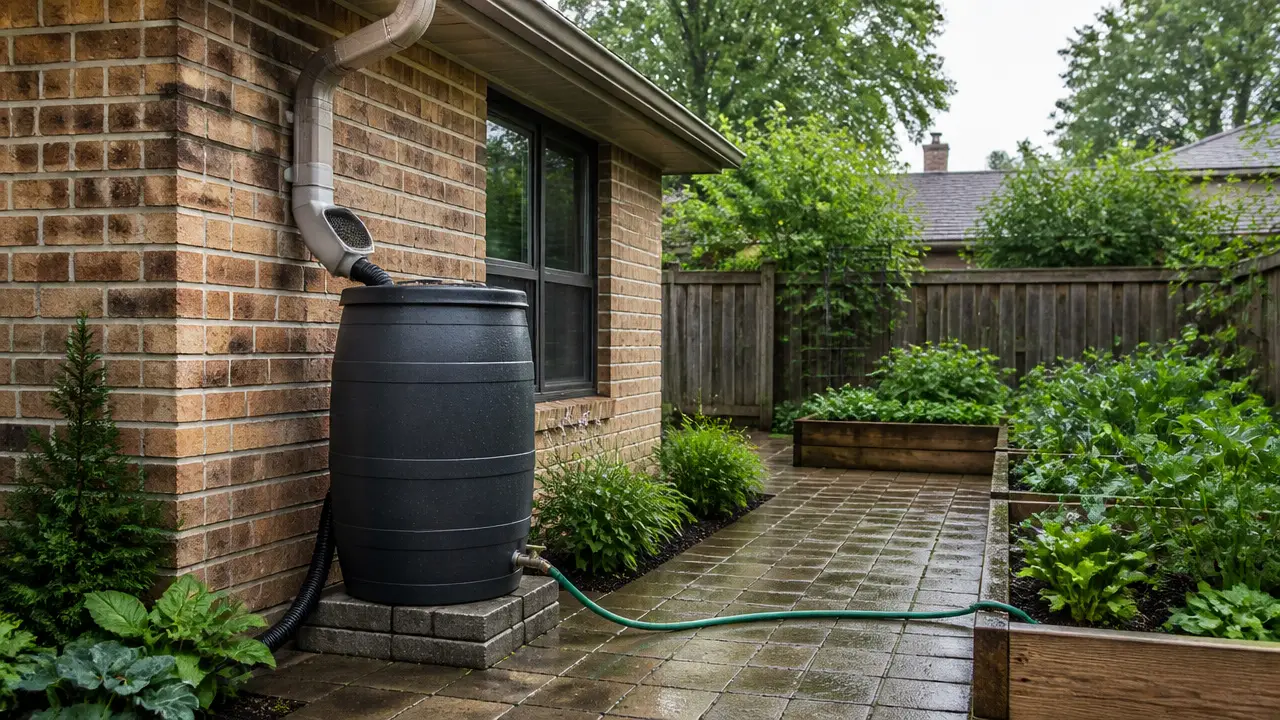
A Tight Lid
The barrel should be securely covered.
A good cover keeps leaves, animals, and other debris from entering the water. It also reduces insect access.
CDC guidance recommends tight lids on rain barrels and other water-storage containers. If a container cannot be fully covered, openings should use mesh small enough to keep adult mosquitoes out.
Mosquito-Proof Screening
Screens matter even when you regularly use the water.
Standing water can provide mosquito habitat when mosquitoes can reach it. CDC notes that standing stormwater can become mosquito habitat within a matter of days.
Check screens for:
- Tears
- Gaps around pipes
- Loose edges
- Clogged openings
- Poorly fitting lids
Also check the barrel's overflow pipe. An open overflow can provide another route into the barrel.
An Opaque Barrel
Sunlight encourages algae growth.
A dark or fully opaque barrel blocks much of that light. University of Maryland Extension notes that darker-colored barrels can help slow algae growth.
If you can clearly see sunlight passing through the barrel wall, algae may have an easier time growing inside.
Shade
Keeping a barrel out of strong afternoon sun can also help.
Shade generally keeps the water cooler and reduces the light available for algae. Do not move the barrel somewhere that creates drainage, foundation, or access problems just to gain shade, though.
Cleaner Water Going In
Keeping leaves and roof debris out of the barrel reduces the amount of organic material sitting in the water.
A gutter screen or inlet screen can help with larger debris.
Some larger rainwater systems also use a first-flush diverter. A first-flush diverter sends away part of the initial roof runoff before allowing later runoff into storage. The first runoff after a dry period can carry a higher concentration of material that accumulated on the roof. EPA-listed research has examined this first-flush effect in roof-collected rainwater.
A first-flush device can improve incoming water quality, but it does not make collected rainwater potable.
Signs That a Rain Barrel Needs Attention
Stored rainwater may gradually become less pleasant to use.
Look for:
- Strong or unusual odors
- Visible algae
- Heavy sediment
- Floating organic material
- Mosquito larvae
- Clogged screens or outlets
- Slime or buildup on barrel surfaces
Use usable life of rain-barrel water to compare tank venting and overflow control during extended storage.
If the barrel becomes heavily fouled, drain it and clean the barrel rather than continually adding fresh rainwater on top of the old water.
Do not rely on appearance or smell to decide whether rainwater is safe for drinking or food contact. Harmful contamination may be present even when water looks clear and has no odor. University of Minnesota Extension specifically notes that contamination in rain barrel water cannot reliably be detected by sight or smell.
Can Old Rain Barrel Water Still Be Used on Plants?
Sometimes.
Water that has sat longer than a week may still be useful for ornamental plants, shrubs, trees, or lawns if it has been stored in a maintained barrel and has not been contaminated by chemicals or other unsuitable materials.
Rain barrel water collected from roofs is generally best treated as non-potable water. Penn State Extension recommends using it primarily on inedible plants because roof runoff can contain leaf litter, animal droppings, bacteria, and chemicals from roofing materials.
Be more cautious with edible gardens.
Guidance varies somewhat among extension services, but a conservative approach is to avoid allowing untreated roof-collected water to contact edible parts of vegetables, fruits, herbs, or greens. University of Minnesota Extension recommends rain barrel water for ornamental plants rather than edible plants.
If local guidance permits rainwater irrigation of food crops, follow that guidance and consider the roof material, collection system, irrigation method, and contamination risks.
Does Rainwater Go Bad Faster in Summer?
Usually, storage problems can develop faster during warm weather.
Warm water combined with sunlight and organic debris creates better conditions for algae and biological growth.
That makes frequent water turnover especially useful during hot periods.
A barrel sitting in full summer sun with leaves and pollen inside will generally need more attention than a clean, opaque barrel kept shaded and tightly covered.
This is another reason the 5-to-7-day guideline is more useful than trying to establish a maximum storage life of several weeks or months.
What About Water Stored for Several Weeks?
A barrel that has been untouched for several weeks should be inspected before you use it.
Check the lid, screens, water surface, outlet, and bottom sediment. If you find mosquitoes, heavy algae, strong odors, or substantial organic buildup, draining and cleaning the barrel is usually more sensible than trying to preserve the old water.
Long-term water storage is better handled by a system designed for that purpose.
A larger cistern may include controlled inlets, screened vents, prefiltration, sediment management, protected storage, pumps, and sometimes treatment appropriate to the intended use. A simple garden barrel is not automatically equivalent to a properly designed cistern.
Can Stored Rainwater Be Used for Drinking?
Do not judge drinking-water safety by how many days the water has been stored.
Roof runoff may already contain microbial or chemical contamination when it first enters the barrel. EPA notes that roof water can pick up bacteria from birds and other animals as well as chemicals from roofing materials.
A normal garden rain barrel should therefore be treated as a non-potable system.
Making harvested rainwater suitable for drinking is a whole-system project. It can involve:
- A suitable collection surface
- Clean gutters and protected conveyance
- Prefiltration
- Controlled storage
- Appropriate treatment stages
- Ongoing maintenance
- Current laboratory water testing
- Compliance with applicable state and local requirements
No storage time, single filter, UV device, home test strip, or water-quality meter by itself establishes that roof-collected rainwater is safe to drink.
A Practical Rain Barrel Routine
For a typical barrel connected to a house or shed roof, a simple routine works well:
- Use the water regularly. Aim to turn over the stored water within roughly 5–7 days when practical.
- Keep the lid closed. Do not leave open water accessible to animals, insects, or debris.
- Check the inlet and overflow screens. Repair gaps before mosquitoes can enter.
- Limit sunlight. An opaque barrel in a suitable shaded location helps control algae.
- Remove debris. Keep gutters and barrel screens from filling with leaves and organic material.
- Inspect the water and barrel periodically. Drain and clean the barrel when sediment, algae, odor, or other buildup becomes significant.
- Drain before freezing conditions if required for your setup. Water expands when frozen and can damage barrels, fittings, and hoses.
The goal is not to preserve one batch of rainwater indefinitely. A rain barrel generally works best as a short-term collection and reuse system that repeatedly fills and empties.
Frequently Asked Questions
How long can rainwater sit in a barrel?
For ordinary landscape use, aim to use or empty the water within about 5–7 days. Water may remain usable longer under good storage conditions, but there is no universal expiration date for untreated rainwater.
Does rainwater become unsafe after seven days?
Not automatically. Seven days is a useful maintenance and turnover target rather than a safety cutoff. Water quality depends on the roof, debris, temperature, sunlight, barrel cleanliness, insect protection, and intended use.
Can I water plants with rainwater that has been sitting for two weeks?
It may still be suitable for ornamental plants if it was stored in a clean, covered barrel and there are no signs of major algae, insect, or debris problems. Treat roof-collected barrel water as non-potable and use extra caution around edible plants.
Why does my rain barrel water smell bad?
Organic debris, stagnant conditions, sediment, algae, or biological activity can produce odors. Drain and clean a heavily fouled barrel and check that leaves and other debris are not entering through the gutter or inlet.
Does a covered rain barrel still need to be emptied regularly?
Yes. A good cover greatly reduces debris and mosquito access, but it does not stop sediment accumulation or every water-quality change. Regular use also leaves room for the next rainfall.
Can mosquitoes grow in rain barrels?
They can if adult mosquitoes can reach the stored water. Keep the lid secure and screen all openings, including inlets and overflows. CDC recommends tightly covering water-storage containers such as rain barrels.
Is clear rain barrel water safe to drink?
No. Clear appearance does not establish drinking-water safety. Roof runoff can contain microorganisms or chemicals that cannot be identified by sight or smell. Drinking-water use requires suitable collection, treatment, maintenance, current laboratory testing, and compliance with applicable requirements.