As an affiliate, we may earn a commission from qualifying purchases. We get commissions for purchases made through links on this website from Amazon and other third parties.
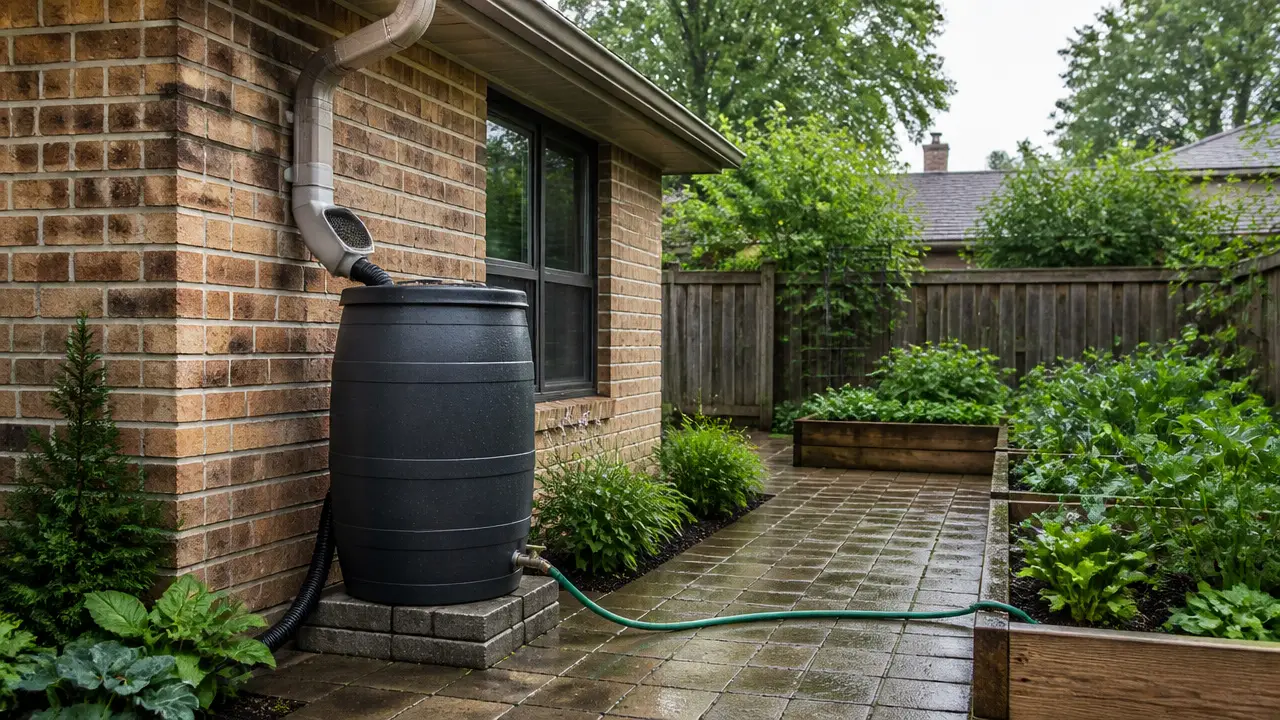
A rain barrel stand should usually be 12 to 24 inches tall. That gives enough room to fit a watering can under the spigot and adds a little gravity pressure for a hose.
A taller stand can improve water flow, but height also increases the risk of tipping. A full rain barrel is very heavy, so the stand must be strong, level, and placed on firm ground.
Why Rain Barrel Stand Height Matters
Raising a rain barrel does two useful things:
- It creates space below the spigot.
- It increases gravity pressure at the outlet.
If you only need to fill buckets or watering cans, you may not need much height. If you want water to travel through a garden hose, extra height can help.
However, a taller stand does not turn a rain barrel into a pressurized water system. Gravity from a typical barrel stand creates only a small amount of pressure.
A Good Height for Most Rain Barrels
For a basic backyard rain barrel, these heights are useful starting points:
| Stand height | Best use |
|---|---|
| 6 to 12 inches | Bucket filling when the spigot is already high on the barrel |
| 12 to 18 inches | Watering cans and short hose runs |
| 18 to 24 inches | More clearance and somewhat better gravity flow |
| More than 24 inches | Specialized setups where the stand and foundation are designed for the added height |
For most homeowners, 12 to 18 inches is a practical balance between useful clearance and stability.
Measure your watering can or bucket before building the stand. The important measurement is the distance between the spigot and the ground, not just the height of the stand.
How Height Affects Water Pressure
Gravity creates pressure because the water surface is above the outlet.
This vertical distance is called head height. Head height means the difference in elevation between the water surface and the point where the water comes out.
About 2.31 feet of water height produces 1 psi of pressure. Another way to express this is about 0.43 psi per vertical foot.
For example, adding 2 feet of elevation adds only about:
2 × 0.43 = 0.86 psi
That is useful for gravity watering, but it is far below normal household water pressure.
The actual head also changes as the barrel empties. A full barrel has more pressure at its spigot than a nearly empty barrel.
Stand Height Is Not the Only Thing That Controls Flow
A higher barrel can improve flow, but several other parts of the system matter.
Hose Length
Long hoses create resistance. A barrel that works well through a short hose may deliver very little water through a long garden hose.
Hose Diameter
A wider hose generally allows better gravity flow than a narrow one.
Small fittings can also restrict the system even when the hose itself is large.
Spigot and Outlet Size
The smallest opening in the water path can limit the flow. A narrow valve, adapter, or connector may become the bottleneck.
Elevation of the Garden
Gravity water flows downhill much better than uphill.
If the end of the hose is almost as high as the water surface in the barrel, very little usable pressure remains.
If the garden is above the barrel, raising the stand by a foot or two may still not be enough.
How High Should a Barrel Be for a Watering Can?
Measure from the bottom of the watering can to the top of its opening or handle, depending on how you normally fill it.
Then compare that measurement with the height of the barrel's spigot.
For example, if your watering can needs 14 inches of clearance and the spigot is only 5 inches above the bottom of the barrel, you need roughly 9 inches of additional elevation. A slightly taller stand will make filling easier.
Leave some extra room so you do not have to tilt the container under the valve.
How High Should a Barrel Be for a Garden Hose?
A stand around 18 to 24 inches high can improve flow through a short hose, especially when the hose runs level or downhill.
Do not expect strong spray pressure.
Gravity-fed barrels usually work better for:
- Slowly filling watering cans
- Soaker-style watering where the equipment can operate at low pressure
- Filling another container downhill
- Supplying a simple gravity irrigation line designed for low pressure
Some sprinklers, timers, irrigation valves, and drip components require more pressure than a rain barrel can provide. Check the operating requirements of anything you plan to connect.
If the system needs steady pressure over a long hose run or across higher ground, a suitable pump may be more practical than making the barrel stand very tall.
Do Not Make the Stand Taller Just to Get Pressure
There are limits to how useful extra stand height becomes.
To gain about 10 psi from gravity alone, you would need roughly 23 feet of vertical water head. Clearly, putting a backyard rain barrel on a stand that tall would not be practical or safe.
Evaluate attaching a garden hose to a rain barrel to compare tank material choices for the intended end use.
If your irrigation equipment needs significant pressure, use equipment designed for that job rather than trying to gain pressure with an unusually high barrel platform.
Remember How Heavy a Full Barrel Is
Water weighs about 8.34 pounds per U.S. gallon.
That means the water alone weighs about:
- 50 gallons: 417 pounds
- 55 gallons: 459 pounds
The barrel and hardware add more weight.
A larger storage tank can weigh far more. For example, 250 gallons of water weighs more than a ton before adding the tank itself.
The stand must support this load continuously, including when the ground is wet.
What Makes a Safe Rain Barrel Stand?
A good stand should have a broad, level top that supports the barrel as intended by its manufacturer.
It should also sit on a firm, level base.
Suitable materials and construction depend on the barrel size and site, but the important requirements are the same:
- The platform must handle the full stored-water load.
- The barrel must sit level.
- The stand must resist sideways movement.
- The ground must not easily settle or wash away.
- The barrel should not overhang an undersized platform.
- Overflow should be directed away from the stand and nearby foundations.
Do not place a heavy barrel on loose stacked materials that can shift independently.
If you are unsure whether a raised structure can safely carry several hundred pounds, keep the stand low or have the structure checked by someone qualified to assess the load.
Pay Attention to the Downspout Connection
Raising the barrel also raises its inlet.
Before choosing the stand height, look at where your downspout or rainwater diverter must connect.
Make sure the barrel inlet can still sit at the proper elevation for the collection system. Some diverters depend on specific height relationships between the downspout fitting and the barrel.
It is easier to plan the stand, barrel, overflow, and downspout together than to build the stand first and discover that the inlet no longer lines up.
Check the Overflow Route
A full rain barrel needs somewhere for extra rainwater to go.
Raising the barrel can change the height and path of the overflow hose.
The overflow should:
- Have a clear path away from the barrel
- Avoid creating erosion around the stand
- Avoid dumping water against a house foundation
- Remain large enough to handle incoming runoff as intended by the system
A strong stand will not help if overflowing water slowly undermines the soil beneath it.
Consider Freezing Conditions
In freezing climates, stand height does not protect a rain barrel from freeze damage.
Water trapped in barrels, valves, hoses, and fittings can expand when it freezes. Follow the barrel manufacturer's cold-weather guidance and prepare the system for freezing conditions as needed.
Also check the stand after winter. Frost movement and saturated soil can leave a previously level platform uneven.
Choosing the Right Height
For most standard rain barrels, start with a 12- to 18-inch stand.
Move toward 18 to 24 inches when you need more clearance or want somewhat better gravity flow through a short hose.
Before going higher, ask what problem you are trying to solve. If you need much more pressure, a taller stand quickly becomes less practical while the structural and tipping risks increase.
The best stand is not the tallest one. It is the lowest height that gives you the clearance and gravity flow you need while keeping the full barrel securely supported.
Frequently Asked Questions
Is 12 inches high enough for a rain barrel stand?
Often, yes. A 12-inch stand usually provides useful clearance and modestly improves gravity flow. Check the position of your barrel's spigot and the height of the container you want to place underneath it.
Is 24 inches too high for a rain barrel?
Not necessarily. A well-built 24-inch stand can be practical, but the foundation and platform must safely support the full barrel and resist tipping or shifting.
Does raising a rain barrel increase water pressure?
Yes. Greater vertical distance between the water surface and the outlet increases gravity pressure. Each foot of water head adds about 0.43 psi, so normal rain barrel stands provide only modest pressure.
How high should a rain barrel be for drip irrigation?
It depends on the irrigation equipment. Some low-pressure gravity systems can work with a modestly raised barrel, while other emitters, filters, timers, and valves require more pressure. Check the minimum operating pressure of every component rather than choosing stand height alone.
Can I put a rain barrel directly on the ground?
Yes, if the base is firm and level and you do not need extra spigot clearance or gravity pressure. You may still need enough room to connect a hose or access the valve.
Can I stack concrete blocks to make a rain barrel stand?
Masonry materials can support substantial loads when used correctly, but an unstable stack can shift or tip. Any stand should provide a level, adequately supported platform designed for the weight of the full barrel. Avoid loose arrangements that can move independently.
Will a taller stand make a garden hose work like a normal faucet?
No. A typical raised rain barrel produces much less pressure than household plumbing. A taller stand can improve gravity flow, but equipment that requires normal water pressure may need an appropriate pump instead.