As an affiliate, we may earn a commission from qualifying purchases. We get commissions for purchases made through links on this website from Amazon and other third parties.
A good rain gauge should be easy to read, large enough to handle the storms you normally get, and designed so the collected water represents the rain that actually fell. For rainwater harvesting, accuracy matters because rainfall measurements can help you estimate how much water your roof may collect.
The best choice depends on whether you want a simple gauge you read by hand or an electronic gauge that records rainfall automatically.
What to Look for in a Rain Gauge
Focus on a few practical features rather than extra functions you may never use.
Clear, Easy-to-Read Measurements
A manual rain gauge should have markings that are easy to see from the normal reading position.
Look for:
- Clearly marked measurement lines
- Units you normally use, such as inches or millimeters
- Enough space between markings to distinguish small rainfall amounts
- A transparent measuring tube that does not distort the water level
Very small gauges can be difficult to read accurately because a tiny change in water level can represent a noticeable amount of rainfall.
Suitable Measurement Resolution
Resolution is the smallest rainfall amount the gauge can show.
A gauge used simply to tell whether it rained does not need extremely fine markings. If you are tracking rainfall for gardening, irrigation, or rainwater harvesting calculations, finer measurements are more useful.
Do not confuse resolution with accuracy. A digital display that shows many decimal places is not necessarily measuring rainfall accurately.
Enough Capacity for Heavy Rain
Check how much rainfall the gauge can hold or record before overflowing or reaching its measurement limit.
This matters in places that receive heavy thunderstorms or tropical rainfall. A gauge that overflows before you check it will give you an incomplete total.
Some manual gauges use a small inner measuring tube for normal rain and a larger outer container that catches overflow during heavier storms. This can provide both readable small measurements and greater total capacity.
A Wide, Consistent Collection Opening
Rain gauges measure rainfall by collecting water through an opening with a known area.
The opening should:
Good placement is central to the accuracy of backyard rain gauges and the usefulness of their readings.
- Have a clean, even rim
- Stay level when installed
- Allow rain to enter without unnecessary obstructions
- Be reasonably easy to clean
Leaves, insects, dirt, and bird droppings can block a small opening and cause readings to be too low.
Avoid improvised containers if you want dependable measurements. A bucket or jar may tell you that rain occurred, but its shape and markings usually are not designed for accurate rainfall measurement.
Manual vs. Electronic Rain Gauges
Both types can work well. They serve different purposes.
| Feature | Manual Gauge | Electronic Gauge |
|---|---|---|
| Power required | No | Usually yes |
| Reading rainfall | You check it yourself | Automatic |
| Rainfall history | Must be written down | Often stored automatically |
| Maintenance | Simple cleaning | Cleaning plus electronics |
| Installation | Usually simple | May require careful leveling and setup |
| Best for | Simple rainfall tracking | Frequent or automated monitoring |
Manual Rain Gauges
A manual gauge is often the simplest choice for a homeowner.
You collect the reading after a storm, record it if needed, and empty the gauge. There are no batteries, wireless connections, or electronic sensors to maintain.
For rainwater harvesting, a manual gauge can be enough if you mainly want to compare rainfall with changes in your tank level.
Electronic Rain Gauges
Electronic gauges can record rainfall without someone checking the container after every storm.
Many use a mechanism called a tipping bucket. Rain fills a small cup inside the sensor. When the cup reaches a set amount, it tips and another cup moves into position. The device counts the tips to estimate total rainfall.
Automatic recording can be useful when you want:
- Daily rainfall totals
- Rainfall history
- Storm-by-storm records
- Remote readings
- Weather-station data
Electronic gauges still need maintenance. Dirt, insects, leaves, and poor leveling can interfere with the mechanism.
Make Sure the Gauge Can Be Mounted Level
A rain gauge must sit correctly for its collection opening to work as intended.
Look for a gauge with a secure mounting system. It should be possible to keep the collection opening level and prevent the gauge from leaning after wind or repeated weather exposure.
A loose gauge can gradually tilt without being obvious. That can change how much rain enters it.
Electronic tipping-bucket gauges are especially sensitive to poor leveling because their internal mechanism is designed to operate in a specific position.
Consider How Easy It Is to Clean
A rain gauge stays outdoors, so debris is unavoidable.
Choose one that you can open without complicated disassembly. You may need to remove:
- Leaves
- Pollen
- Dust
- Insects
- Algae or organic growth
- Bird debris
A removable funnel or collection tube can make routine cleaning easier.
Avoid damaging or enlarging small sensor openings when cleaning an electronic gauge.
Think About Sun and Weather Exposure
Explore the performance of electronic rain gauges to evaluate component compatibility before materials are finalized.
Plastic rain gauges spend long periods in sunlight. Over time, some plastics can become cloudy, brittle, or difficult to read.
For a manual gauge, look for sturdy outdoor construction and markings that are unlikely to disappear quickly.
Also think about freezing weather. Water left inside a gauge can freeze and expand. Follow the gauge manufacturer's instructions for winter use or storage rather than assuming the container can safely remain full during a freeze.
Check Whether the Gauge Can Be Calibrated
Calibration means checking whether the gauge's reported amount matches a known amount.
For normal backyard use, complicated calibration equipment is rarely necessary. However, an electronic gauge that allows adjustment can be useful if you are keeping long-term records.
Calibration does not correct a badly located gauge. A perfectly calibrated sensor beside a roof edge or under a tree can still give poor rainfall readings.
Rain Gauge Placement Matters as Much as the Gauge
Even a good rain gauge can produce misleading measurements if installed in the wrong place.
Rain should be able to fall into the opening without nearby objects blocking it or directing extra water toward it.
Avoid placing a gauge:
- Under trees
- Under roof overhangs
- Beside gutters or downspouts
- Where roof runoff can splash into it
- Beside sprinklers
- Where fences or buildings strongly disturb rainfall
- On a surface where splash can enter the gauge
Choose an open location when possible and follow the placement instructions supplied with the gauge.
Do not mount the gauge on a roof just to get it away from obstacles. Roof access adds fall risk, and a safe ground-level location is usually easier to inspect and maintain.
What Matters for Rainwater Harvesting?
If you are buying a rain gauge mainly for a rainwater collection system, focus on dependable rainfall totals rather than advanced weather features.
Rainfall can help you estimate potential roof collection using:
Potential water volume = rainfall depth × collection area
The units must match before doing the calculation. Real systems collect less than the simple theoretical amount because some water is lost through wetting, splash, overflow, leaks, first-flush diversion, and other parts of the system.
A first flush device diverts some of the first roof runoff from a storm. This runoff often carries more dust, leaves, pollen, and other debris washed from the roof.
Your rain gauge measures rain falling at the gauge. It does not measure how much water actually reaches your tank.
For that reason, rainfall records are most useful when combined with knowledge of your:
- Roof collection area
- Tank capacity
- Overflow arrangement
- First-flush setup
- Downspout connections
- Actual tank-level changes
Features You May Not Need
Some rain gauges are sold as part of larger weather systems with temperature, humidity, wind, forecasts, apps, and wireless displays.
Those features can be useful, but they do not automatically make the rainfall measurement better.
If rainfall is your main concern, prioritize:
- Reliable measurement
- Adequate storm capacity
- Proper mounting
- Easy cleaning
- Weather resistance
- Convenient record keeping
Extra sensors can come later if you actually need them.
A Simple Choice for Most Homes
For occasional rainfall measurements, a sturdy manual gauge with clear markings and enough capacity for local storms is usually sufficient.
Choose an electronic gauge when automatic logging is important or when you do not want to empty and record a manual gauge after each rainfall event.
Whichever type you choose, good placement and regular cleaning are just as important as the gauge itself.
Frequently Asked Questions
What is the most accurate type of rain gauge for home use?
A well-made manual gauge can provide very useful home rainfall measurements when it is installed correctly and read carefully. Electronic gauges add automatic recording, but their accuracy still depends on correct leveling, cleanliness, calibration, and placement.
Where should I put a rain gauge?
Place it in an open area where trees, buildings, roofs, sprinklers, and other objects will not block rain or send extra water into the gauge. Follow the manufacturer's spacing and mounting guidance for the specific gauge.
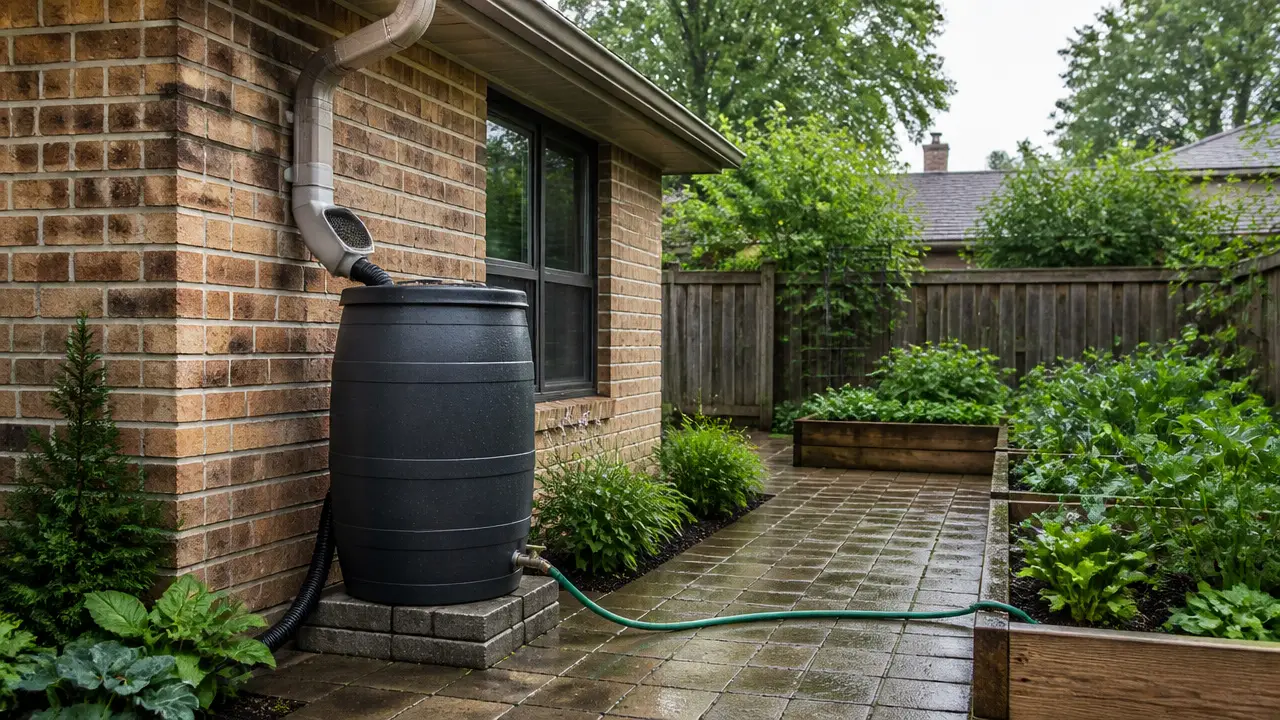
Can I put a rain gauge next to my rain barrel?
You can if the location is open and the barrel, gutter, roof, or downspout does not interfere with rainfall entering the gauge. Keep it away from overflow and splash from the collection system.
Can I use a jar as a rain gauge?
A jar can show that rain has fallen, but it is not a good substitute when you want dependable rainfall measurements. Purpose-built gauges have known collection areas and measurement scales designed for rainfall.
Should I empty a manual rain gauge after every storm?
Normally, yes. Record the reading and empty the gauge according to its instructions. Otherwise, water from separate storms may become mixed together, and evaporation can also affect later readings.
Why does my rain gauge total not match the water entering my tank?
A rain gauge measures rainfall depth, while a tank receives runoff from a roof or other collection surface. First-flush diversion, roof wetting, gutter losses, leaks, overflow, and incomplete collection can all reduce the amount reaching storage.
Do electronic rain gauges need maintenance?
Yes. Their funnels and internal mechanisms can collect dirt, insects, leaves, and other debris. They may also require battery replacement, leveling checks, or calibration according to the manufacturer's instructions.