As an affiliate, we may earn a commission from qualifying purchases. We get commissions for purchases made through links on this website from Amazon and other third parties.
For most rainwater systems, use a water-compatible flow meter sized for your pipe, expected flow range, and intended use. A simple mechanical meter can work for gravity-fed garden systems. A digital turbine or paddle-wheel meter is often better for pumped systems where you want an easy-to-read flow rate. For low-flow irrigation, choose a meter specifically designed to measure small flows accurately.
The most important point is not the display type. The meter must work within the actual flow rate, pressure, pipe size, and water quality of your system.
What Does a Flow Meter Do?
A flow meter measures water moving through a pipe.
Depending on the meter, it may show:
- Current flow in gallons per minute or liters per minute
- Total gallons or liters used
- Both flow rate and total volume
These measurements can help you check irrigation use, monitor pump performance, estimate how much stored rainwater you are using, and spot unusual changes in flow.
A flow meter does not measure how much water is in your tank unless the system is designed to calculate tank volume from water leaving the tank.
Which Type of Flow Meter Should You Use?
The right type depends mainly on how the rainwater moves through your system.
| System | Flow meter that may fit |
|---|---|
| Gravity-fed rain barrel | Low-flow mechanical or digital meter |
| Garden hose from a tank | Inline hose flow meter |
| Pumped irrigation system | Turbine, paddle-wheel, or other inline digital meter |
| Drip irrigation | Meter designed specifically for low flow |
| Large cistern system | Properly sized inline water meter |
| Household rainwater reuse | Meter rated for the system's pressure, flow, and plumbing application |
| Monitoring tank consumption | Totalizing flow meter |
A totalizing meter keeps a running count of how much water has passed through it. This is useful when you care more about total water use than the exact flow at any one moment.
Mechanical Flow Meters
Mechanical meters use moving parts inside the water stream.
Common designs include small turbines, impellers, and positive-displacement mechanisms.
They are often useful when you want:
- Simple operation
- No electrical power
- Total water-use readings
- Basic monitoring of a garden or irrigation system
Mechanical meters can be a practical choice for a rain barrel or cistern outlet.
However, collected rainwater can contain grit, roof particles, organic matter, and sediment. Debris may interfere with small moving parts.
Installing suitable prefiltration before the meter can reduce this problem.
Digital Flow Meters
Digital meters use a sensor to detect water movement and display the measurement electronically.
They may show both:
- Flow rate
- Total volume
Digital meters are useful when you want to watch how your system performs while it is running.
For example, suppose an irrigation pump normally supplies about the same flow each time. A large drop in the reading could point to a clogged filter, blocked line, low tank level, valve problem, or pump issue.
The meter alone cannot tell you which problem is responsible, but it can make the change easier to notice.
Turbine Flow Meters
Turbine meters contain a small rotor that spins as water passes through.
They are common in small water systems because they can provide useful flow measurements without requiring very complicated equipment.
A turbine meter can be a reasonable choice for a pumped rainwater system when:
- Water has been screened or filtered
- Flow stays within the meter's specified range
- Pressure stays within its rating
- The pipe size matches the meter
Heavy sediment can affect the turbine or eventually cause wear.
For raw roof runoff with significant debris, putting the meter before filtration is usually a poor location.
Paddle-Wheel Flow Meters
A paddle-wheel meter measures how quickly a small wheel turns in the flowing water.
These meters can work well in larger piping and permanent irrigation installations.
They usually need adequate water velocity and proper installation to measure correctly. Straight pipe before and after the sensor may also be required.
Follow the manufacturer's installation requirements rather than assuming the sensor can go directly beside an elbow, pump, or valve.
Positive-Displacement Meters
A positive-displacement meter measures small amounts of water repeatedly as they pass through internal chambers.
These meters can be useful when accurate measurement at relatively low flow matters.
They also contain moving parts, so sediment and debris deserve attention.
They may make sense for household water-use monitoring or other applications where total volume matters more than simply confirming that water is flowing.
Ultrasonic Flow Meters
Ultrasonic meters use sound waves to measure water movement.
Some designs attach to the outside of a pipe. Others are installed directly in the line.
A clamp-on ultrasonic meter can be useful when cutting a large or permanent pipe would be difficult. It can also avoid placing moving parts directly in collected rainwater.
However, compatibility depends heavily on:
- Pipe material
- Pipe diameter
- Pipe wall thickness
- Whether the pipe remains completely full
- Installation location
Ultrasonic equipment is usually more than a simple rain-barrel system needs.
Choose a Meter by Flow Range, Not Just Pipe Size
Pipe size alone does not tell you whether a meter will work correctly.
Every flow meter has a range it can measure.
For example, a meter designed for much higher flows may barely register a small drip irrigation system. A tiny meter placed in a high-flow pump line could restrict water movement or exceed its operating limits.
Estimate the lowest and highest flow your system is likely to produce.
Then choose a meter whose useful measuring range covers those conditions.
Low Flow Needs Special Attention
Low-flow irrigation can be difficult to measure with a general-purpose meter.
A drip system may use water much more slowly than a conventional sprinkler system.
If the minimum measurable flow of the meter is higher than your irrigation flow, the display may show zero or provide poor readings even though water is moving.
Check the manufacturer's stated minimum flow before choosing a meter for drip irrigation.
Make Sure the Connections Fit
A flow meter becomes another component that has to fit the plumbing around it.
Check:
- Pipe or hose diameter
- Thread type
- Male or female connections
- Hose-thread versus pipe-thread fittings
- Required adapters
- Flow direction
- Pressure rating
Garden hose fittings and threaded plumbing fittings may look similar but are not necessarily interchangeable.
Avoid forcing mismatched threads together. A fitting that seems to screw on may still leak or damage the threads.
Consider Pressure Loss
Every inline component creates some resistance to water movement.
That includes:
- Filters
- Valves
- Elbows
- Long pipes
- Flow meters
Details about a suitable flow meter for irrigation help verify emitter flow under available pressure and pump capacity.
This matters especially in gravity-fed systems.
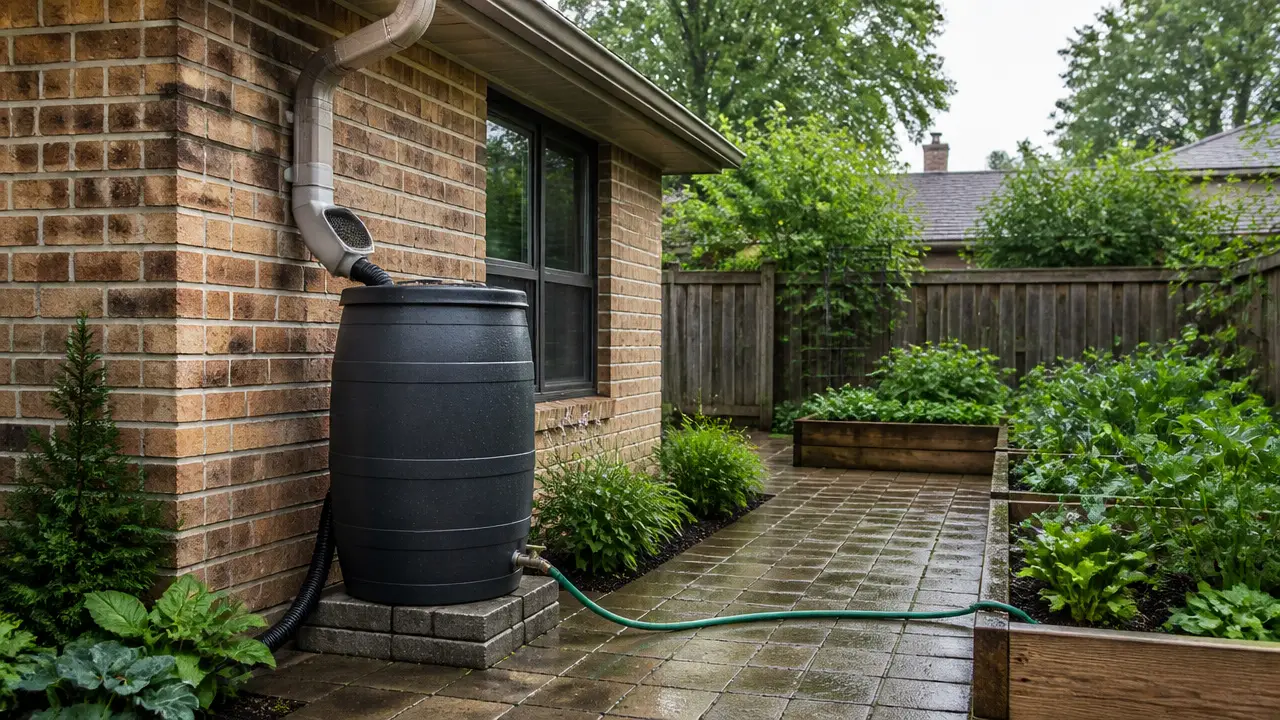
A rain barrel only develops a small amount of pressure from the height of the water above the outlet. Adding a restrictive flow meter can reduce an already modest flow.
For gravity systems, look for a meter intended to operate with low pressure and low flow.
Where Should the Flow Meter Go?
The best location depends on what you want to measure.
If you want to know how much water leaves your storage tank, install the meter on the outlet serving that use.
A typical arrangement might be:
Tank → shutoff valve → filter → pump → flow meter → irrigation
The exact order can vary.
A meter with small internal passages or moving parts usually benefits from having debris removed before water reaches it.
Also check whether the meter requires a particular amount of straight pipe on either side.
Do Not Put a Meter Where the Pipe Is Usually Empty
Some flow meters work best when the measuring section stays completely filled with water.
This can become an issue in gravity systems where pipes drain between uses.
Air pockets can also affect certain meter technologies.
Check the installation requirements before choosing the meter location.
What About a Hose Flow Meter?
For occasional garden watering, an inline hose meter may be enough.
It can be installed between components such as:
Tank or pump → hose → meter → nozzle
or
Tank or pump → meter → irrigation hose
A hose meter is useful for questions such as:
- How many gallons did I use on this garden bed?
- How much water is the tank supplying during watering?
- How quickly am I using stored rainwater?
Make sure the meter can handle the available pressure if a pump is involved.
Should You Measure Flow Before or After the Pump?
Usually, measure the part of the system you actually want to monitor.
For pumped irrigation, the discharge side of the pump is often more useful because it shows the water being delivered to the system.
However, meter placement must follow the operating requirements of both the pump and meter.
Never install a restrictive device on a pump suction line unless the system design specifically allows it. Excessive suction restriction can contribute to poor pump performance and other problems.
Match the Meter to the Water Quality
Rainwater is not always clear water.
Roof runoff may carry:
- Dust
- Leaves
- Pollen
- Insects
- Grit
- Roofing particles
- Organic material
A meter designed for clean water may perform poorly if exposed directly to dirty runoff.
A screened inlet, first-flush system, settling, or suitable filtration can help keep debris out of the plumbing.
A first flush device diverts some of the early roof runoff, which often carries a heavier load of roof debris.
It does not make the remaining rainwater safe to drink.
What If the Rainwater Is Used Inside the House?
For toilets, laundry, or other household reuse, meter selection becomes part of a larger plumbing system.
The meter must be suitable for:
- Expected pressure
- Expected flow
- Plumbing materials
- Water temperature
- Installation orientation
- Applicable plumbing requirements
Rainwater used for household purposes is commonly treated as non-potable, meaning it is not intended for drinking.
Keep rainwater plumbing separated and identified as required by applicable local rules. Cross-connections between non-potable rainwater and drinking-water plumbing can create a serious contamination risk.
A qualified plumber or rainwater-system professional is appropriate when the system connects with household plumbing.
What About Drinking-Water Systems?
A flow meter does not tell you whether rainwater is safe to drink.
It measures water movement, not microbiological or chemical safety.
If collected rainwater is intended for drinking, meter selection is only a small part of the system. Drinking-water use requires suitable collection, debris control, treatment designed for the actual contaminants, ongoing maintenance, current laboratory testing, and compliance with applicable health and plumbing requirements.
Do not use a flow reading as evidence that a drinking-water treatment system is working properly unless the treatment equipment specifically uses that flow measurement as part of its validated operating requirements.
A Simple Way to Choose
For a typical rainwater system, work through these questions:
- What are you measuring? Decide whether you need current flow, total water use, or both.
- How does the water move? Gravity and pumped systems have very different available pressure.
- What is your normal flow range? Make sure the meter can measure both your lowest and highest expected flow.
- What pipe or hose size do you have? Match the meter and fittings without unnecessarily reducing the pipe diameter.
- How clean is the water at the meter? Small mechanical meters generally work better downstream of suitable debris filtration.
- What pressure will the meter see? Pumped systems must stay within the meter's pressure rating.
- Will the line stay full? Some meter technologies need a completely full pipe for reliable readings.
For a basic rain barrel feeding a garden hose, a low-flow inline hose or mechanical meter is often enough. For a pumped cistern or irrigation system, a properly sized turbine, paddle-wheel, or similar digital inline meter is usually more useful.
Frequently Asked Questions
Can I use a regular garden hose flow meter on a rain barrel?
Yes, if its connections fit and its minimum flow is low enough for the barrel's gravity-fed output. Some hose meters are intended for higher-pressure water and may not measure very low gravity flow accurately.
Does a flow meter reduce water pressure?
Any inline meter can create some resistance. The effect may be minor in a pumped system but more noticeable with a gravity-fed rain barrel. Check the meter's pressure-loss information when available.
Should the flow meter go before or after the filter?
Putting a meter with small passages or moving parts downstream of suitable filtration can help protect it from sediment and debris. The best arrangement still depends on what part of the system you want to measure.
Can a flow meter tell me how much rainwater is left in my tank?
Not directly. A totalizing meter can tell you how much water has flowed out, but it does not account for new rainfall, overflow, leaks, evaporation, or water leaving through another outlet. A tank-level sensor is better for measuring remaining water.
What size flow meter should I buy?
Match the meter to the pipe connection and, more importantly, the expected flow range. A meter that physically fits the pipe may still be inaccurate if your actual flow is below its minimum measuring range.
What is the best flow meter for drip irrigation?
Use a meter specifically capable of measuring the low flow produced by the entire drip zone. Check its minimum measurable flow before buying or installing it.
Can dirty rainwater damage a flow meter?
Sediment and debris can clog or interfere with some mechanical meters. Screening and suitable filtration before the meter can reduce this risk.
Do I need electricity for a flow meter?
Not always. Mechanical meters can operate without power. Digital meters may use batteries or external power, depending on their design and features.