As an affiliate, we may earn a commission from qualifying purchases. We get commissions for purchases made through links on this website from Amazon and other third parties.
Gutter screens are usually a good idea for rainwater harvesting because they keep leaves, twigs, and larger debris out of the downspout and storage tank. They can reduce clogs and make the rest of the system easier to maintain.
But gutter screens are not a complete filtration system. Fine dirt, pollen, roof grit, bird droppings, and small organic material can still wash through. They also need regular cleaning.
What Gutter Screens Actually Do
A gutter screen is a mesh, perforated cover, or guard installed over or inside a gutter. Its main job is to stop larger debris while allowing rainwater to enter the gutter.
For a rainwater system, that can help protect:
- Downspouts
- Downspout diverters
- First-flush devices
- Tank inlet screens
- Pumps and irrigation lines farther downstream
Keeping large debris out near the roof is usually easier than removing it after it reaches the tank.
Why Gutter Screens Can Help a Rainwater System
They Reduce Large Debris
Leaves and twigs can block gutters, elbows, and downspouts. They can also collect around rain barrel diverters.
A suitable gutter screen catches much of this material before it enters the drainage system.
This is especially useful around trees that drop:
- Leaves
- Needles
- Seeds
- Blossoms
- Small branches
They Can Reduce Tank Cleaning
Organic debris that reaches a rain barrel or cistern eventually settles, floats, or decomposes.
Reducing that material at the gutter means less material reaches the tank.
You may still get sediment in the bottom of the tank, but gutter screening can slow its buildup.
They Protect Other Screens
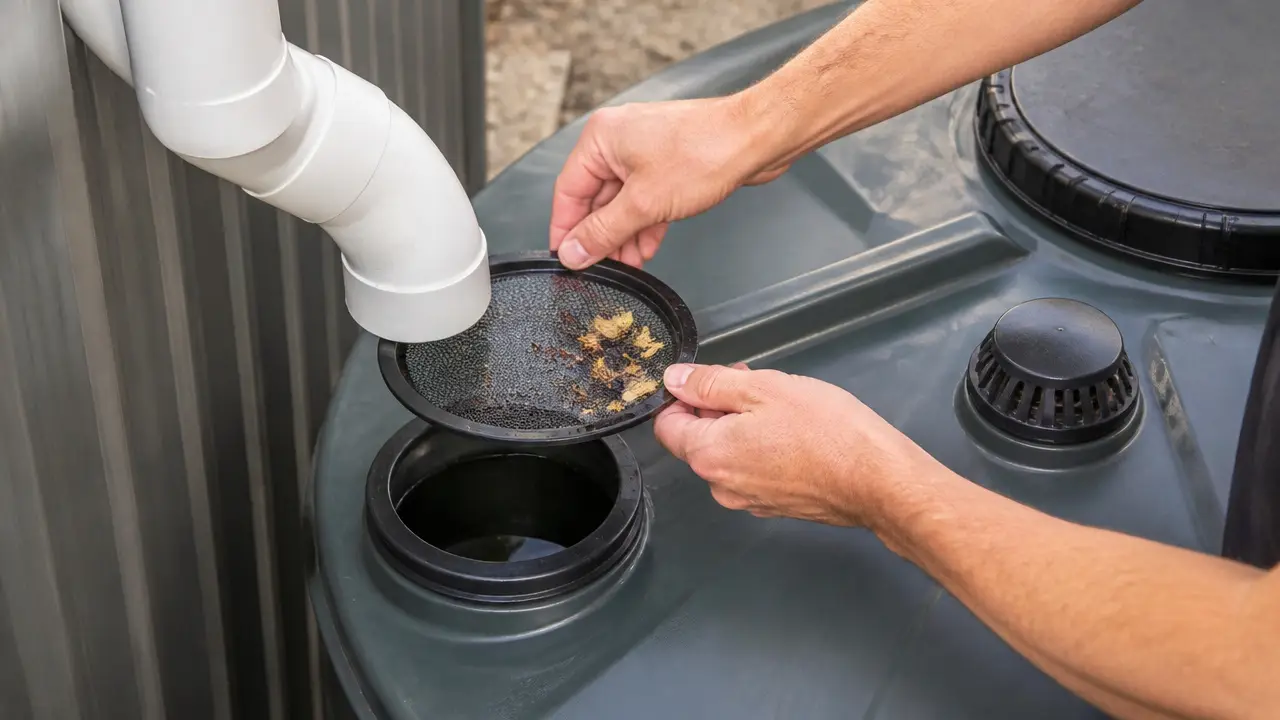
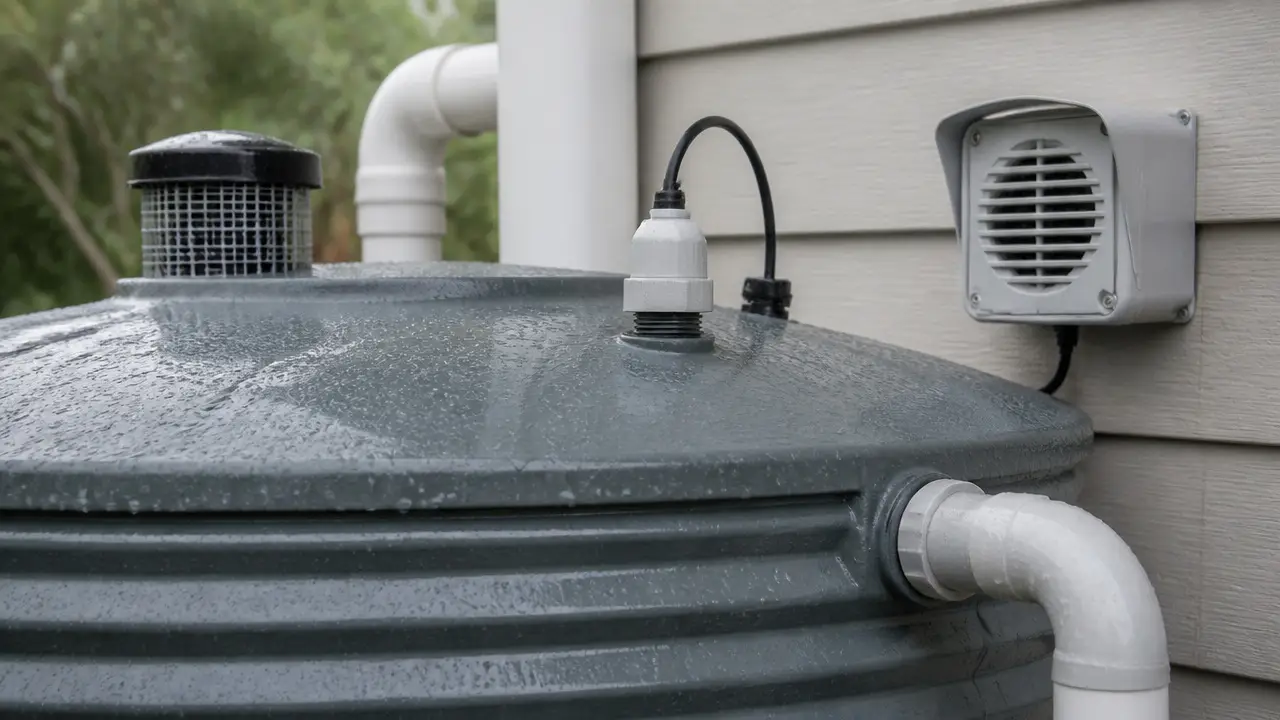
Most rainwater tanks should have an inlet screen or another suitable barrier that prevents insects and larger debris from entering.
Without upstream screening, that tank screen may collect leaves very quickly.
A gutter screen spreads debris removal across more of the collection system instead of forcing one small tank screen to catch everything.
What Gutter Screens Do Not Remove
This is where gutter screens are often misunderstood.
They are mainly debris controls. They do not make roof runoff clean or safe to drink.
Depending on the mesh and design, water may still carry:
- Dust
- Pollen
- Fine roof particles
- Soot
- Small insect material
- Bird and animal contamination
- Dissolved chemicals
- Microorganisms
Very fine screens can stop more particles, but smaller openings also clog more easily.
If collected rainwater will be used for drinking, gutter screens are only one early stage in a much larger system. Potable water means water intended to be safe for drinking. Producing it from roof runoff may require suitable collection materials, debris removal, treatment, current laboratory testing, maintenance, and compliance with applicable local requirements.
Gutter Screens vs. Downspout Screens
Both can be useful, but they work in different places.
A gutter screen tries to stop debris before it enters the gutter or downspout.
A downspout screen or rain head catches debris after the water has already traveled through part of the gutter system.
For many rainwater systems, using more than one debris-control point can make sense.
For example:
Roof → gutter screen → downspout debris screen → first-flush diverter → tank inlet screen → storage tank
You do not necessarily need every component. The right setup depends on your roof, trees, tank, and intended water use.
Are Fine-Mesh Gutter Screens Better?
Not always.
A finer mesh can catch smaller debris, but it can also block more easily.
During heavy rain, a dirty fine screen may prevent water from entering the gutter fast enough. Water can then spill over the gutter edge instead of reaching the tank.
A more open screen may let some smaller debris through but maintain better flow.
The best balance depends on what falls on your roof.
Large Leaves
A relatively open guard may work well because the main problem is stopping large pieces.
Pine Needles
Needles can slip through larger openings, so a finer screen may be useful.
Heavy Pollen or Fine Debris
Very fine screens can become coated quickly. More frequent cleaning may be necessary.
No screen eliminates maintenance.
Gutter Screens Still Need Cleaning
"Gutter guard" does not mean "maintenance-free gutter."
Leaves may sit on top of the screen. Fine material can collect in the mesh. Seeds can lodge in openings. Dirt can build up underneath some guard designs.
Inspect the system often enough to catch problems before they restrict flow.
Pay particular attention to:
- Roof valleys
- Corners
- Downspout entrances
- Areas under trees
- Sections where water already flows heavily
How often you need to clean depends more on your property than on a fixed schedule.
A house surrounded by trees may need much more attention than an open-roof collection system.
Watch for Water Bypassing the Gutter
For rainwater harvesting, water that spills over the gutter is lost collection.
This makes flow capacity important.
During a strong storm, check the system from the ground if you can do so safely. Look for water flowing over the front or behind the gutter.
Account for conveying roof water from gutters to a tank to understand controls that reduce gutter overflow and outlet clogs.
Overflow can be caused by:
- A clogged screen
- An undersized gutter
- A blocked downspout
- Poor gutter slope
- Heavy flow from a roof valley
- A screen that cannot pass water quickly enough
Do not climb onto a wet roof to inspect a rainwater system.
Gutter Screens and First-Flush Diverters Do Different Jobs
A first-flush diverter sends the first portion of roof runoff away from the main storage tank.
That early runoff can carry accumulated dirt and other contamination from the roof.
A gutter screen does not replace a first-flush device.
Likewise, a first-flush diverter is not designed to handle large amounts of leaves and sticks.
The two components solve different problems:
| Component | Main Job |
|---|---|
| Gutter screen | Blocks larger debris |
| Downspout screen | Catches debris moving through the downspout |
| First-flush diverter | Diverts an initial portion of roof runoff |
| Tank inlet screen | Helps keep debris and insects out of storage |
Gutter Screens Can Create Problems if Installed Poorly
A screen can make a rainwater system worse if it restricts flow or hides maintenance problems.
Water Can Overshoot the Gutter
Some smooth or steep screen designs allow fast-moving water to travel across the surface instead of dropping through.
This may be more noticeable on steep roofs or during intense rain.
Debris Can Accumulate on Top
A layer of wet leaves can temporarily block water from entering the gutter.
Small Debris Can Build Up Underneath
Some systems still allow grit and organic material to collect inside the gutter. Removing the guard may then be necessary for cleaning.
Ice Can Be a Problem
In freezing climates, gutter guards do not prevent ice dams or frozen drainage systems.
Water trapped around debris, gutters, downspouts, and screens can freeze. Rainwater harvesting systems in freezing areas need a broader winter plan that considers gutters, piping, valves, tanks, and overflow paths.
Do Gutter Screens Improve Rainwater Quality?
They can improve the condition of collected water by keeping large organic debris out of the system.
That is useful because leaves and other organic material can decay inside a tank.
However, gutter screens should not be treated as water purification.
Water quality depends on the entire collection path, including:
- Roof material
- Roof cleanliness
- Animal activity
- Gutters and downspouts
- Debris screens
- First-flush arrangements
- Tank design
- Light exclusion
- Insect protection
- Cleaning
- Treatment, if required for the intended use
For simple garden irrigation, the treatment requirements may be very different from water intended for household or drinking use.
Are Gutter Screens Worth It for Rain Barrels?
Usually, yes, especially when the roof is near trees.
A rain barrel has limited storage and relatively small fittings. A handful of leaves can clog a small inlet, diverter, valve, or hose much more easily than they would affect a large stormwater drain.
Screens can reduce those problems.
You should still have appropriate screening at the barrel inlet where needed, particularly to keep insects and debris from entering the stored water.
Are They Worth It for Large Cisterns?
They can be even more useful with a large collection system.
Cleaning debris from a gutter is generally easier than removing decomposed material from a large tank.
Large systems may use several stages of debris management rather than relying entirely on a gutter guard.
The goal is not to catch every particle at the roof. It is to keep the overall collection path flowing while reducing the amount of unwanted material that reaches storage.
Should You Install Gutter Screens?
Gutter screens make the most sense when your roof collects frequent leaves, needles, seeds, or other large debris.
They are less important on a roof with little nearby vegetation, although some form of debris control before the storage tank is still useful.
Before choosing a screen, consider:
- What type of debris falls on your roof
- How steep the roof is
- How hard rain falls in your area
- How easy the gutters are to inspect and clean
- Whether the system feeds a rain barrel or larger tank
- How small the downstream fittings are
Avoid choosing a screen only because it has the smallest openings. Good rainwater collection requires enough open area for water to pass during storms.
A Practical Setup
For many home rainwater systems, a simple approach works well:
- Keep the roof and gutters reasonably clean.
- Use gutter screening where large debris is a recurring problem.
- Add an accessible debris screen farther downstream if needed.
- Use a suitable first-flush arrangement when appropriate.
- Screen the tank inlet against debris and insects.
- Inspect and clean each stage regularly.
The important part is accessibility. A filter or screen that is difficult to reach often gets neglected.
Frequently Asked Questions
Do gutter screens stop all debris?
No. They mainly stop leaves and larger material. Fine dirt, pollen, roof grit, and other small particles can still pass through.
Can gutter screens replace a first-flush diverter?
No. A gutter screen blocks physical debris. A first-flush diverter sends an initial portion of dirty roof runoff away from the storage tank.
Do gutter screens reduce rainwater flow?
They can. Clean screens should allow substantial water through, but clogged or very fine screens may restrict flow during heavy rainfall.
Do gutter guards mean I never need to clean the gutters?
No. Debris can collect on top of the guard, inside the mesh, or underneath it. Periodic inspection and cleaning are still necessary.
Are gutter screens useful for a rain barrel?
Yes. They can reduce leaves and other debris entering the downspout system, which helps protect small diverters, inlets, valves, and hoses.
Should I use the finest mesh possible?
Not automatically. Fine mesh catches smaller material but can clog faster. Choose a screen that balances debris removal with enough water flow for your roof and rainfall conditions.
Do gutter screens make rainwater safe to drink?
No. Gutter screening is only a debris-control step. Drinking-water use requires a whole-system approach that may include appropriate collection, treatment, laboratory testing, maintenance, and applicable local requirements.