As an affiliate, we may earn a commission from qualifying purchases. We get commissions for purchases made through links on this website from Amazon and other third parties.
A clogged downspout is usually caused by leaves, roof grit, twigs, or other debris packed inside the pipe. The safest way to clear it is to remove loose debris first, disconnect accessible sections if needed, and flush the downspout with water from the top or bottom.
If water still will not pass through, the blockage may be tightly packed, lodged in an elbow, or located in an underground drain line. At that point, more disassembly or professional drain cleaning may be needed.
Start by Finding Where the Clog Is
Before taking the downspout apart, watch what happens when water enters the gutter.
A clog near the top often causes water to back up around the downspout opening. A clog farther down may let some water enter the pipe before it overflows.
Common clog locations include:
- The gutter outlet above the downspout
- The first elbow below the gutter
- Joints between downspout sections
- The lower elbow near the ground
- A screen, diverter, or rain barrel connection
- An underground drain connected to the downspout
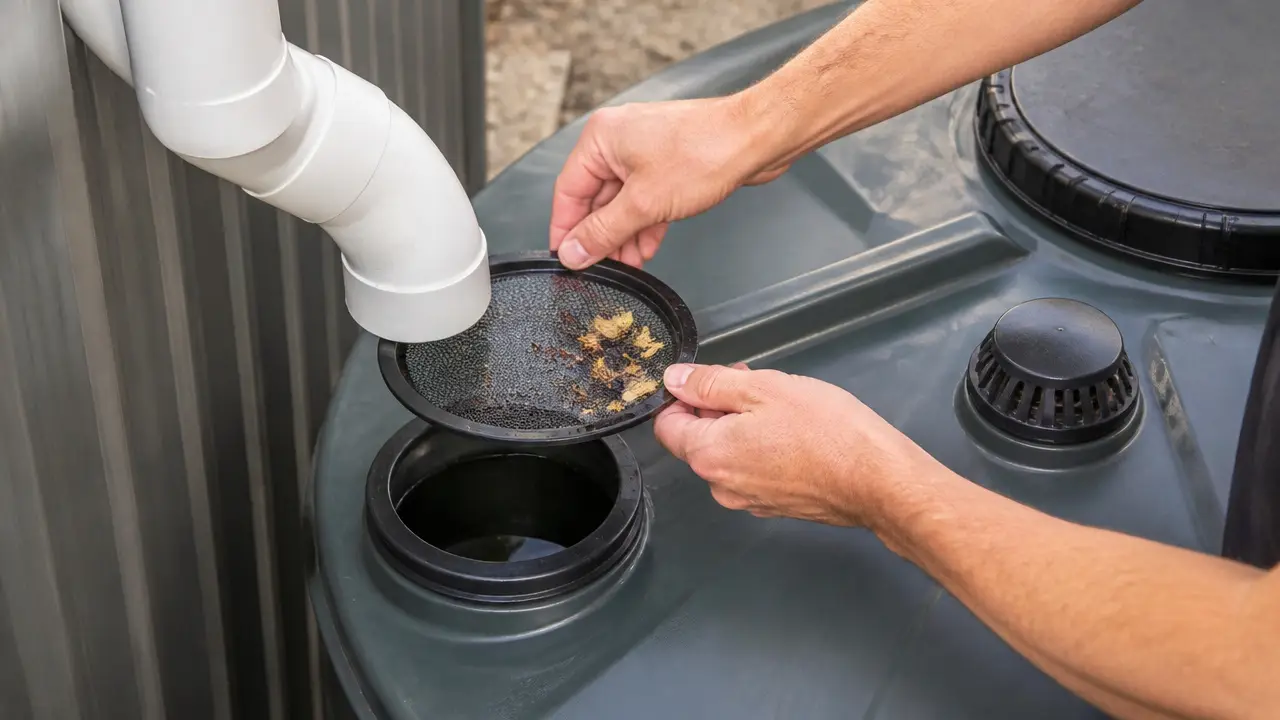
If you use the downspout to collect rainwater, also check any leaf screen, first-flush device, or diverter before assuming the pipe itself is blocked.
A first flush device diverts the first portion of roof runoff away from storage. This helps remove some of the dirt and debris washed from the roof at the beginning of a rain.
What You May Need
For a basic downspout cleaning job, useful tools include:
- Work gloves
- A garden hose
- A bucket
- A small hand scoop
- A plumber's snake or flexible drain rod
- A screwdriver or nut driver for downspout screws
- A stable ladder, if you can safely reach the gutter
Do not work from a roof just to clear a downspout. If the gutter cannot be reached safely from a properly placed ladder, consider having the work done professionally.
Keep ladders well away from overhead electrical lines.
How to Clean a Clogged Downspout
1. Remove Debris From the Gutter Outlet
Start where the gutter feeds into the downspout.
Put on gloves and remove leaves, twigs, roofing grit, and other debris around the outlet. Sometimes the clog is sitting directly over the opening and can be removed by hand.
Check whether a strainer or leaf guard is blocking the outlet as well.
Once the opening is clear, pour or spray a small amount of water into it. If the water drains freely, the problem may already be solved.
2. Check the Bottom of the Downspout
Look at the discharge end near the ground.
Remove any leaves, mulch, mud, gravel, or plant growth blocking the opening.
If the downspout feeds a rain barrel, storage tank, flexible extension, or underground pipe, disconnect that connection when practical. This helps you determine whether the clog is inside the downspout or farther downstream.
3. Flush the Downspout With a Hose
Run a garden hose into the upper opening and use a moderate flow of water.
If the blockage is loose, the water may push it through the bottom.
Do not immediately use the strongest possible water pressure. A completely blocked pipe can force water back out of joints or send dirty water toward you.
If water backs up instead of draining, stop and try clearing the clog mechanically.
4. Try Flushing From the Bottom
Sometimes it is easier to loosen packed material by working in the opposite direction.
Insert the hose into the bottom opening and carefully run water upward.
This can loosen leaves packed inside an elbow or narrow section.
Expect dirty water and debris to come out near the top, so keep people away from the gutter outlet.
5. Use a Flexible Snake for a Stubborn Clog
A plumber's snake or flexible drain rod can help break apart compacted leaves and debris.
Feed it slowly into the downspout from the nearest accessible opening.
Do not force the tool hard around bends. Thin aluminum downspouts can dent or separate at the seams.
Work the tool gently back and forth until the blockage begins to break apart. Then flush the pipe again with water.
6. Remove a Downspout Section if Necessary
If the clog remains, disconnect the section closest to where you think the blockage is located.
Downspouts are often held together with screws or crimped joints.
Removing one section can make it much easier to reach debris trapped inside an elbow.
Clear the section on the ground, rinse it thoroughly, and reinstall it securely.
Make sure each connection is oriented so water flows through the joints rather than against an exposed edge.
Pay Special Attention to Downspout Elbows
Elbows clog more often than straight sections because leaves and twigs can catch where the pipe changes direction.
If water flows into a downspout but stops quickly, the upper elbow is a likely place to check.
If the blockage is near ground level, remove the lower elbow or extension before taking apart the entire downspout.
This is usually faster and reduces unnecessary work.
What if the Downspout Connects to an Underground Drain?
A downspout may be clear even though water still backs up.
The problem can be inside the buried drain pipe.
Factor in practical steps for identifying if a downspout is clogged to compare stormwater capture details for the local roof conditions.
A simple test is to disconnect the downspout from the underground connection and run water through the downspout. If it drains normally while disconnected, the underground line is likely the problem.
Buried drain clogs can be caused by:
- Sediment
- Leaves
- Roots
- Collapsed pipe
- Soil entering through a damaged joint
A drain snake may clear a simple blockage, but buried pipes can be damaged if aggressive tools are used without knowing the pipe material or layout.
If the underground line repeatedly backs up or will not clear, a drain-cleaning professional can inspect it and determine whether the pipe is clogged or damaged.
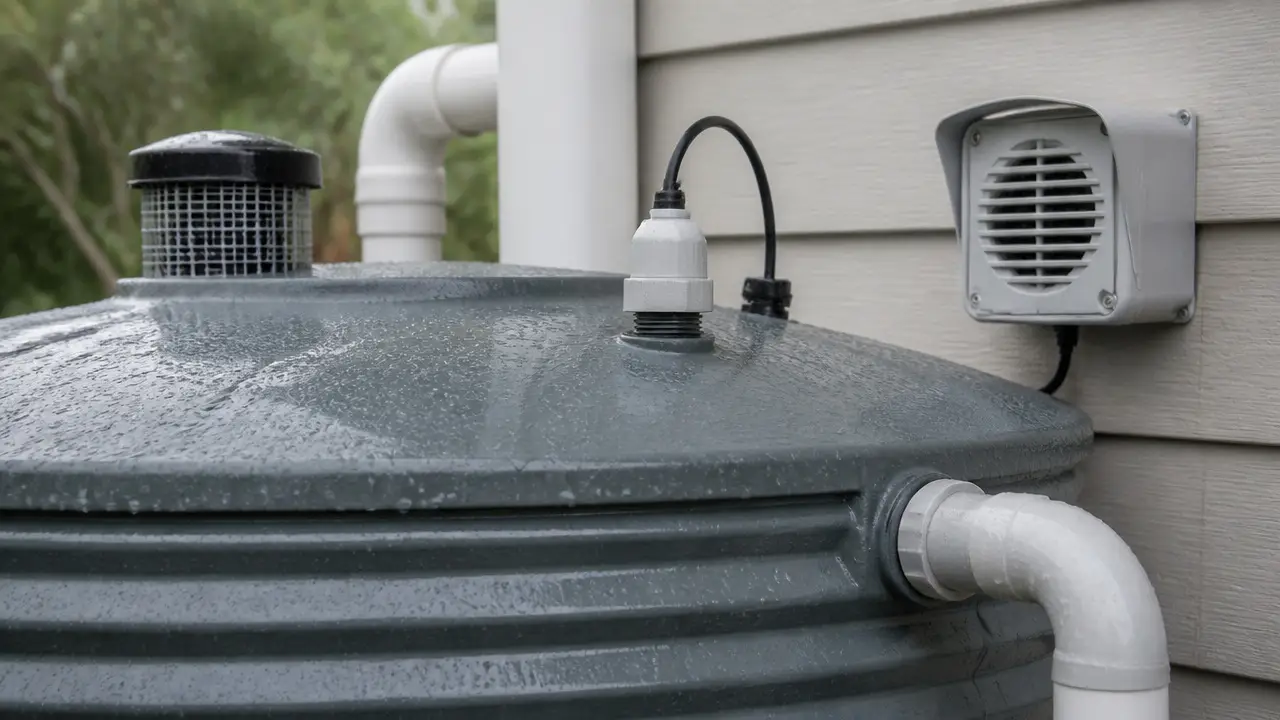
Cleaning a Downspout Connected to a Rain Barrel
Rainwater collection systems add a few possible clog points.
Check the system in this order:
- Gutter outlet
- Leaf screen
- Downspout
- Diverter
- First-flush device, if installed
- Tank inlet screen
- Overflow line
A clogged screen may look like a downspout problem because water backs up before it reaches the storage container.
Clean screens rather than removing them permanently. They help keep leaves, insects, and larger debris out of the tank.
Collected roof runoff should not be assumed to be safe for drinking. Drinking-water use requires suitable collection materials, treatment, maintenance, and appropriate water-quality testing for the intended use.
Avoid Using Harsh Drain Chemicals
Chemical drain cleaners are generally a poor choice for downspouts.
They are designed mainly for household plumbing clogs, not leaves and roof debris. They may also create unnecessary chemical exposure around gardens, rain barrels, tanks, or stormwater drainage.
Mechanical cleaning and water flushing are usually better approaches.
If the downspout feeds a rainwater storage system, avoid introducing cleaning chemicals unless you fully understand how they affect the storage container, plumbing, and intended water use.
How to Prevent Future Downspout Clogs
Keeping debris out of the downspout is easier than clearing a packed blockage later.
Clean Gutters Regularly
Remove leaves and roof debris before they accumulate around the outlet.
How often this is needed depends on nearby trees, roof type, storms, and season.
Keep Screens Clean
Leaf screens, gutter guards, and rainwater inlet screens only work well when water can pass through them.
Inspect them more often during heavy leaf fall.
Check After Major Storms
High winds can move twigs, leaves, seed pods, and roofing debris into gutters.
A quick inspection after severe weather can catch a partial blockage before the next storm.
Make Sure the Downspout Has a Clear Discharge Path
Keep the bottom opening free from soil, mulch, weeds, and debris.
If you use a flexible extension, check that it has not been crushed or filled with sediment.
Maintain Rainwater Prefilters
If your downspout feeds a tank or barrel, clean any prefilter according to the system design.
A prefilter removes larger debris before water enters storage. It reduces sediment buildup but does not make roof runoff potable by itself.
When to Stop and Call a Professional
Basic downspout cleaning is often a simple DIY job, but some situations are better handled professionally.
Get help if:
- The clog is inside a high or difficult-to-reach gutter
- The downspout runs through a wall or enclosed structure
- An underground drain remains blocked
- You suspect a crushed or separated buried pipe
- Water is entering the house or foundation area
- The gutter or downspout is pulling away from the building
- Safe ladder placement is not possible
- Electrical lines are near the work area
Repeated clogs may also mean the system needs a larger outlet, better debris screening, improved gutter maintenance, or changes to the drainage layout.
Frequently Asked Questions
Can you unclog a downspout without removing it?
Often, yes. Remove debris from the gutter outlet and bottom opening first, then try flushing the downspout with a garden hose. A flexible drain snake can help with a more stubborn blockage.
Should I flush a downspout from the top or bottom?
Start from the top if it is safely accessible. If water backs up, flushing from the bottom can sometimes loosen debris trapped in an elbow.
Why does my downspout keep clogging?
Frequent clogs are often caused by heavy leaf buildup, nearby trees, roof debris, dirty screens, narrow elbows, or an underground drain that is backing up.
Can I use a pressure washer to clear a downspout?
It is usually better to start with a garden hose. High-pressure water can separate joints, damage thin downspout material, or spray debris unpredictably.
How do I know if the clog is underground?
Disconnect the downspout from the buried drain. If the downspout flows normally when disconnected but the underground pipe does not accept water, the blockage is probably in the buried line.
Can a clogged downspout cause gutter overflow?
Yes. If water cannot move down the pipe fast enough, it can back up into the gutter and spill over the edge. Heavy rain can make the problem more noticeable.
How often should downspouts be cleaned?
There is no single schedule that fits every property. Inspect gutters and downspouts often enough to prevent visible debris buildup, especially during seasons when nearby trees are dropping leaves, flowers, seeds, or needles.