As an affiliate, we may earn a commission from qualifying purchases. We get commissions for purchases made through links on this website from Amazon and other third parties.
Rainwater is not 100% clean. It may look clear and fresh, but it can pick up dust, smoke, germs, metals, animal droppings, and other contaminants before it reaches your storage tank.
The important question is not whether rainwater is perfectly clean. It is whether the collected water is clean enough for what you plan to do with it. Water used on ornamental plants does not need the same treatment as water used for drinking or cooking.
The CDC advises that collected rainwater is not necessarily safe to drink unless harmful germs and chemicals are properly addressed. Even clear-looking rainwater can contain contaminants you cannot see, smell, or taste.
Is Rain Clean Before It Hits the Roof?
Rain starts relatively low in dissolved minerals, but that does not mean it is pure or sterile.
As raindrops move through the atmosphere, they can pick up:
- Dust and soil particles
- Smoke and soot
- Pollen
- Airborne chemicals
- Other fine particles in the air
Local conditions matter. Rain falling in an area affected by heavy traffic, industrial emissions, wildfire smoke, or other pollution may be different from rain falling somewhere with cleaner air.
WHO guidance also treats drinking-water safety as a whole-system issue, from the water source through collection, treatment, storage, and final use.
For most rainwater harvesting systems, however, much of the additional contamination happens after the rain reaches the collection surface.
What Happens When Rain Hits Your Roof?
A roof is exposed all day, including when it is not raining.
Between storms, it can collect:
- Dust
- Leaves
- Pollen
- Insects
- Bird and animal droppings
- Bits of roofing material
- Air pollution that settles on the surface
When the next storm arrives, the first water running across the roof washes much of this material toward the gutter.
That runoff may then travel across roofing, flashing, gutters, fasteners, pipes, screens, and fittings before reaching your tank. Some materials can also add chemicals or metals to the water.
The CDC notes that substances such as lead and copper can enter collected rainwater from roofing materials, gutters, pipes, storage materials, and other surfaces.
An older roof or unknown roofing material deserves extra attention if the water could eventually be used inside the home.
The First Part of a Storm Is Often the Dirtiest
The first runoff after a dry period often contains more contamination because it is washing accumulated debris from the roof.
This is where a first-flush diverter can help.
A first-flush diverter is a device that sends the first portion of roof runoff away from the storage tank. Cleaner runoff later in the storm is then allowed into the tank.
The CDC recommends considering first-flush diversion as one way to improve collected rainwater quality. WHO guidance also identifies the first flow of roof runoff as an important contamination point.
The separate question of whether rainwater is safe to drink depends on collection hygiene, treatment, and testing.
A first-flush diverter is useful, but it does not make rainwater automatically safe to drink. Contaminants can still enter later in the storm or develop in storage.
Can Rainwater Become Dirty Inside the Tank?
Yes. Good collection is only part of the system.
Stored rainwater can change over time.
Sediment can collect on the bottom
Small particles that pass through screens and filters eventually settle. Over months or years, a layer of sediment may build up.
That is one reason tanks need inspection and cleaning when conditions call for it.
Animals and insects can get inside
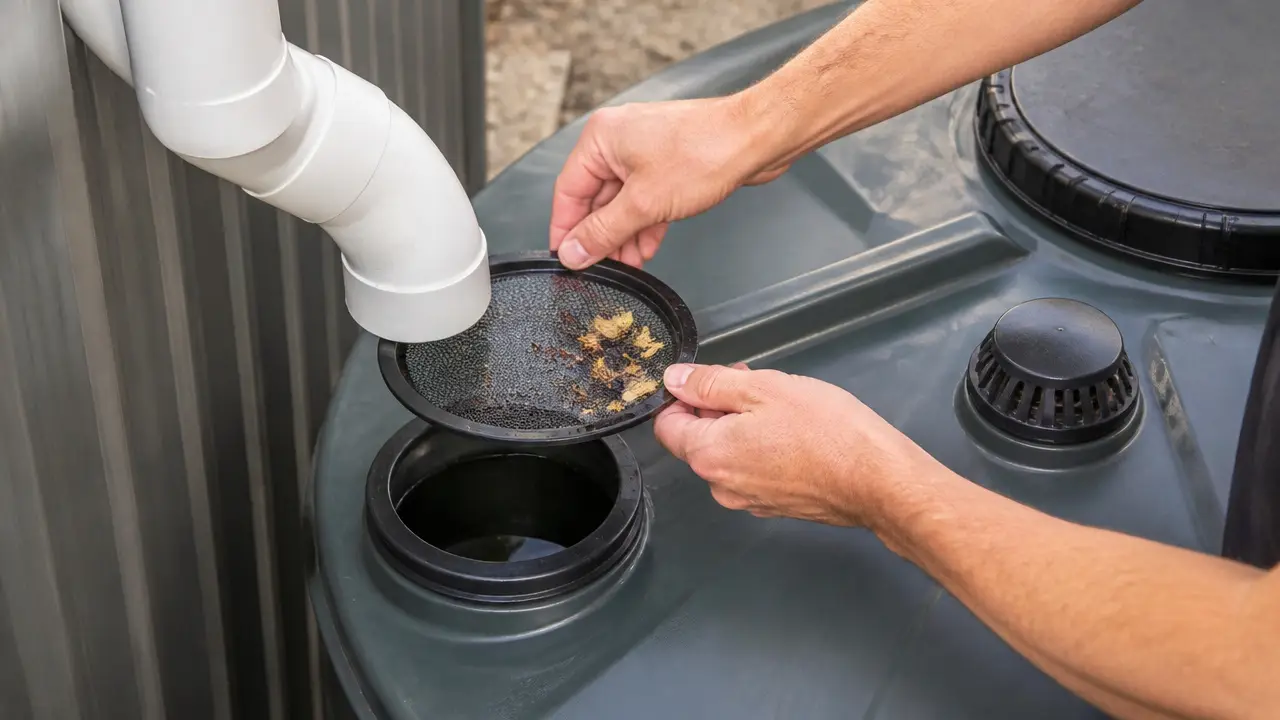
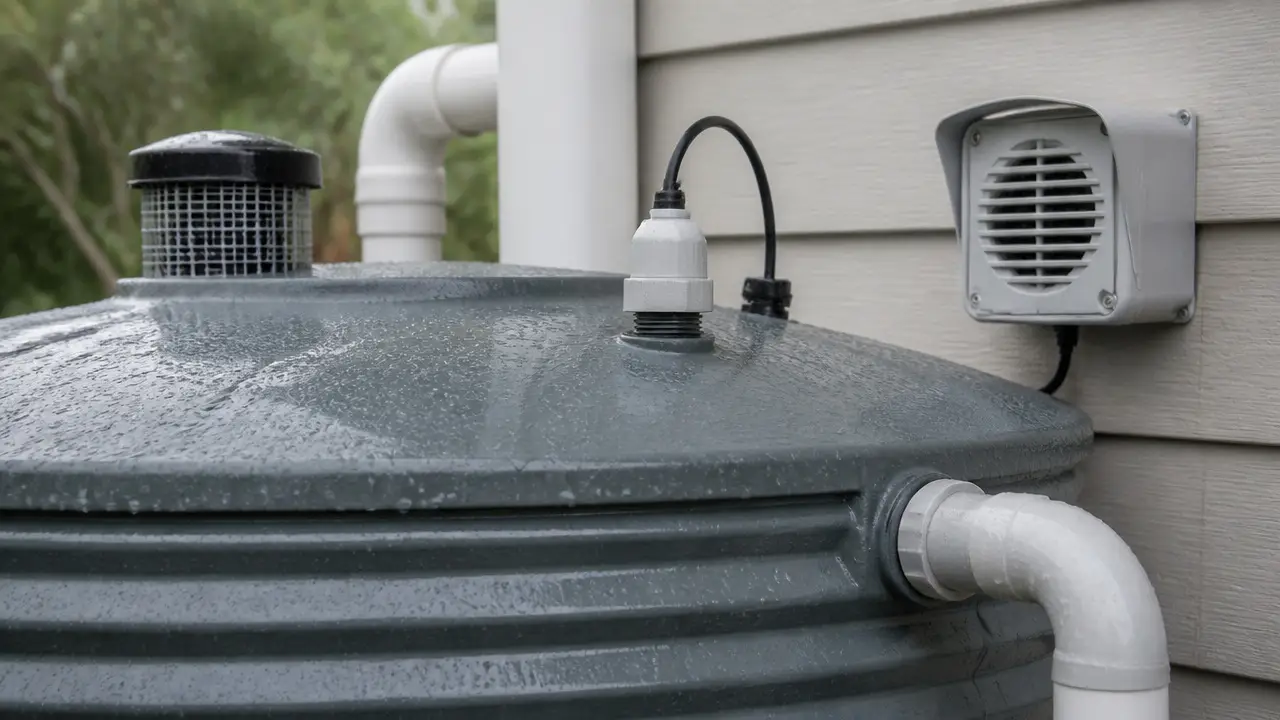
Poorly screened openings can allow insects and small animals into a tank. Openings should be protected and the tank should be designed to limit contamination.
Mosquito control is especially important. Tank inlets, overflows, vents, and other openings should be properly screened where needed.
Sunlight can encourage algae
A translucent container that allows sunlight through can support algae growth.
Rainwater storage tanks are normally designed to limit light entering the stored water.
Contamination can enter during maintenance
Dirty hoses, buckets, tools, pumps, or fittings can introduce contamination into otherwise well-maintained storage.
Good tank design should allow water to be removed without repeatedly opening the tank or putting containers into the stored water.
Does Clear Rainwater Mean It Is Safe?
No.
Appearance is a poor way to judge water safety.
Water can look crystal clear while containing microorganisms or dissolved chemicals. Many contaminants do not cause an obvious color, smell, or taste.
The CDC specifically warns that harmful germs and chemicals may not change the appearance, taste, or smell of water.
Look closely at contaminants that make rainwater unsafe to drink to interpret what the measured values reveal and what remains uncertain.
Cloudy, smelly, or discolored water certainly deserves investigation. But clear water should not be assumed safe simply because it looks good.
How Clean Does Rainwater Need to Be?
That depends on its intended use.
| Intended use | Main concern |
|---|---|
| Watering ornamental plants | Debris, system clogging, and appropriate water quality |
| Outdoor cleaning | Sediment, odor, staining, and exposure |
| Irrigation | Sediment, emitters, crop contact, and water quality |
| Toilet flushing | Filtration, plumbing separation, treatment requirements, and local rules |
| Laundry or household reuse | Water quality, treatment, plumbing, and local requirements |
| Drinking and cooking | Microbial and chemical safety, treatment, testing, maintenance, and local requirements |
Water that works well in a garden hose may be unsuitable for a kitchen faucet.
This is why describing rainwater simply as "clean" or "dirty" is not very useful. The entire system needs to match the intended use.
Does Filtering Make Rainwater Clean?
Filtration can improve rainwater, but one filter does not make every type of contamination disappear.
Different treatment stages have different jobs.
A coarse screen may remove leaves but not bacteria or dissolved chemicals.
A sediment filter may remove fine particles but may not remove viruses or dissolved metals.
A carbon filter can reduce certain chemicals, tastes, and odors depending on its design, but it is not a complete drinking-water treatment system.
UV disinfection can inactivate certain microorganisms when properly designed and maintained, but UV does not remove dissolved chemicals or sediment.
That is why treatment for drinking water should be planned as a complete process rather than choosing one filter and assuming the water is potable.
Potable simply means suitable for drinking.
What Makes a Better Rainwater Collection System?
For ordinary non-potable use, water quality can often be improved by controlling contamination before it reaches storage.
A well-planned system may include:
- A suitable collection surface
- Clean gutters and downspouts
- Leaf and debris screens
- First-flush diversion
- A covered, light-resistant storage tank
- Screened tank openings
- An overflow that does not allow pests back into the tank
- Appropriate filtration for the intended use
- Regular inspection and maintenance
Keeping the roof, gutters, screens, and tank in good condition can reduce contamination, but these measures still do not prove that the water is safe to drink.
What If You Want to Drink Collected Rainwater?
Treat drinking-water use as a separate level of system design.
Do not assume that roof runoff is potable simply because you have a clean roof, first-flush diverter, sediment filter, or UV unit.
A drinking-water rainwater system may require suitable collection and storage materials, prefiltration, treatment chosen for the actual contaminants, regular maintenance, and laboratory testing.
The CDC recommends regularly testing rainwater for harmful germs and chemicals when it is used for drinking, cooking, or bathing. It also recommends getting local health guidance about what should be tested and how the water should be treated.
WHO's current drinking-water guidance similarly emphasizes managing risks through the full water supply system rather than relying on one treatment device or one test result.
Local plumbing and health rules may also affect whether collected rainwater can be used indoors or for drinking.
The Practical Answer
Rainwater can be a useful water source, but it is not 100% clean.
Even before reaching a roof, rain can contain material picked up from the atmosphere. Roof collection adds more possible contamination from dirt, animals, roofing materials, gutters, and pipes. Storage adds another set of risks.
For garden and other non-potable uses, good collection design, screening, first-flush diversion, and tank maintenance can greatly improve water quality.
For drinking, cooking, or other uses where people may swallow the water, take a more cautious approach. Use a properly designed treatment system, maintain it, test the water through an appropriate laboratory, and follow current local health and plumbing requirements.
Frequently Asked Questions
Is fresh rainwater safe to drink directly from the sky?
It should not automatically be considered safe. Rain can pick up particles and chemicals from the atmosphere, and the safety of untreated rainwater cannot be confirmed just by looking at it.
Is rainwater cleaner than tap water?
Not necessarily. Public drinking water is normally treated and monitored according to applicable drinking-water requirements. Collected rainwater may contain germs and chemicals and usually does not receive the same routine monitoring.
Does a first-flush diverter make rainwater safe to drink?
No. A first-flush diverter removes some of the dirt and contamination washed from a roof at the beginning of a storm. It improves collection quality but is not a complete drinking-water treatment system.
Can bacteria be present in clear rainwater?
Yes. Water can contain harmful microorganisms while remaining completely clear. Appearance, taste, and smell cannot reliably confirm microbial safety.
Can roof materials contaminate rainwater?
Yes. Roofing, flashing, gutters, pipes, coatings, fasteners, and storage materials can affect water quality. Metals and other substances may enter the water depending on the materials and their condition.
Is rain barrel water clean enough for the garden?
Rain barrel water is commonly used for non-potable irrigation, but its suitability still depends on how it was collected and what is being watered. Avoid assuming the water is free of germs or chemicals, and consider crop contact and local guidance when watering edible plants.
Does boiling make collected rainwater completely safe?
No. Boiling can address many disease-causing microorganisms when done correctly, but it does not remove many chemical contaminants or metals. Water suspected of chemical contamination needs appropriate testing and treatment rather than relying on boiling alone.