As an affiliate, we may earn a commission from qualifying purchases. We get commissions for purchases made through links on this website from Amazon and other third parties.
Downspout extensions do not have to be buried. In many homes, an above-ground extension is the simplest and safest way to move roof runoff away from the foundation.
Burying a downspout extension can make the yard look cleaner and can keep pipes out of walkways or mowing paths. But an underground line needs the right slope, outlet, pipe size, and access for cleaning. A poorly planned buried pipe can clog, freeze, back up, or send water toward the house instead of away from it.
When an Above-Ground Downspout Extension Works Best
An above-ground extension is often the better choice when you only need to move water a short distance.
Common options include:
- Solid downspout extensions
- Flexible drain tubing
- Hinged extensions that lift for mowing
- Splash blocks
- Open channels that carry water toward a lower area
The main goal is to discharge water where it can drain safely without flowing back toward the foundation.
Above-ground extensions have one major advantage: you can see what is happening. Leaves, damage, standing water, and disconnected fittings are easy to spot.
They are also easier to clean and change if your drainage plan does not work as expected.
When Burying a Downspout Extension Makes Sense
A buried downspout line can be useful when surface drainage would create problems.
You might consider burying it when:
- A surface extension crosses a sidewalk or lawn
- You regularly hit the extension with a mower
- Water must travel farther across the property
- The yard layout makes surface drainage difficult
- You want to route water to a suitable daylight outlet
- The line is part of a properly designed drainage or rainwater collection system
"Daylight" means the pipe ends at an open location where water can flow out freely by gravity.
A buried system works best when there is enough natural slope between the downspout and the outlet.
Do Not Bury a Downspout Pipe Without an Outlet
A buried pipe needs somewhere for the water to go.
Simply connecting a downspout to a pipe and burying the pipe does not solve a drainage problem. If the end is blocked, too high, or poorly drained, water may stay inside the line.
That can lead to:
- Sediment buildup
- Mosquito habitat in accessible standing water
- Root intrusion
- Freeze damage in cold climates
- Water backing up at the downspout
- Overflow near the foundation
A buried line may discharge to a suitable open slope, drainage structure, or other approved destination. Local rules may limit where roof runoff can be discharged, especially near sidewalks, neighboring properties, storm systems, or sanitary sewers.
Solid Pipe Is Usually Better Than Perforated Pipe
If the purpose is to move roof water away from the house, solid pipe is generally the better choice.
Solid pipe keeps the collected runoff inside the pipe until it reaches the intended outlet.
Perforated pipe has holes that allow water to enter or leave along its length. It is commonly used for certain subsurface drainage jobs, but it can be a poor choice immediately beside a foundation if the goal is to carry roof runoff away.
Using perforated pipe near the house can release some of the roof water back into the surrounding soil.
The Pipe Needs a Continuous Downhill Slope
Gravity drainage depends on slope.
The underground pipe should run steadily downhill toward its outlet. Avoid low spots where water can collect.
Even a pipe that looks mostly downhill can hold water if one section sags.
Standing water makes sediment buildup more likely and can increase freeze problems in cold climates.
The exact slope needed depends on the pipe size, layout, flow, and local drainage requirements. For a difficult route or a line that passes close to a foundation, a drainage contractor can help establish proper elevations.
Avoid Sharp Bends
Downspout water often carries small leaves, roof grit, seed pods, and other debris.
Every sharp bend gives that material another place to collect.
Use smooth changes in direction where possible. Long-radius fittings are generally easier for water and debris to pass through than tight turns.
The technical overview “What Is the Best Way to Extend Downspouts?” clarifies how roof runoff can be moved without overflow or foundation damage.
This matters even more if the buried pipe cannot be opened easily for cleaning.
Include a Way to Clean the Line
Underground downspout piping should not be treated as maintenance-free.
A cleanout or other accessible opening can make it much easier to remove debris without digging up the yard.
You should also keep gutters and downspout entrances clean. Reducing debris before it reaches the buried pipe is much easier than clearing a blockage underground.
Check the outlet periodically as well. Grass, soil, leaves, animals, or landscaping work can block an outlet that was clear when the system was installed.
What About Corrugated Drain Pipe?
Flexible corrugated pipe is easy to route, but its ridges can trap debris and sediment.
Rigid smooth-wall pipe generally allows water and small debris to move more freely and is easier to clean.
Corrugated pipe may still work for some drainage layouts, but consider how much debris comes from your roof and how easily the pipe can be accessed if it clogs.
Do not assume that a buried flexible pipe will stay open simply because water flowed through it when it was new.
Plan for Heavy Rain, Not Just Light Showers
A downspout may carry a large amount of water during a strong storm.
The buried line must be able to accept that flow without causing water to back up toward the gutter or foundation.
Several factors matter:
- Roof area draining to that downspout
- Rainfall intensity
- Downspout size
- Underground pipe diameter
- Number of bends
- Pipe slope
- Outlet capacity
If the pipe cannot carry the incoming water, the system needs a safe place for excess water to spill above ground.
Use key facts about some creative ideas for extensions for gutter downspouts to compare safe handling of roof discharge at the property.
An overflow near the foundation defeats much of the purpose of extending the downspout.
Be Careful With Pop-Up Emitters
A pop-up emitter is a fitting that opens when water pressure builds inside the drainage pipe.
These fittings can provide a neat lawn-level outlet, but they are not suitable for every site.
They may hold some water in the pipe after a storm, depending on the installation. That can matter in freezing climates or where sediment buildup is common.
They can also become blocked by grass, soil, or debris.
If you use one, keep it visible enough to inspect and maintain.
Buried Downspouts in Freezing Climates
Cold weather makes underground drainage more complicated.
A buried pipe that drains completely after each storm is less likely to have freeze problems than one that stays full of water.
Low spots, raised outlets, clogged emitters, and poor slope can leave water trapped inside the line.
Once that water freezes, later snowmelt or rain may have nowhere to go.
Do not assume that burying the pipe below the frost line is the only issue. A gravity drainage system still needs to empty properly.
The related explainer “What Are Some Alternatives to Downspout Extensions?” connects the roof detail to safer drainage and collection.
Can a Buried Downspout Feed a Rainwater Tank?
Yes, but underground routing changes how the system must be planned.
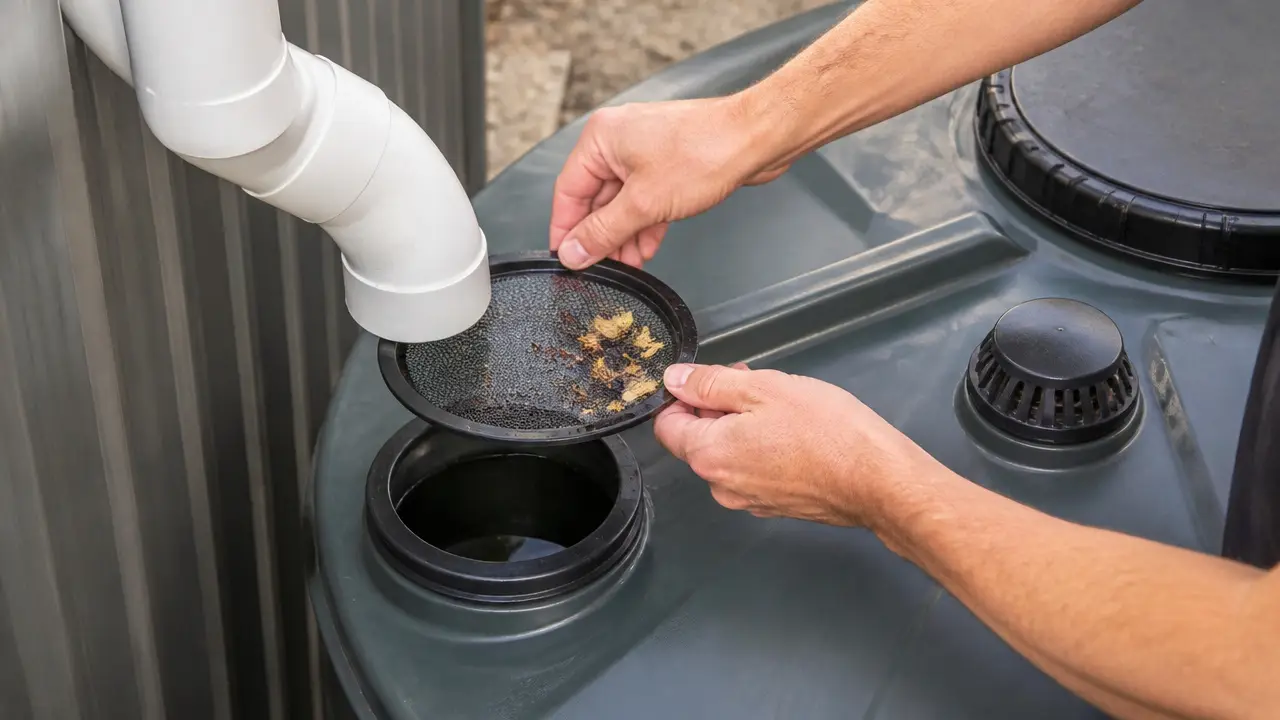
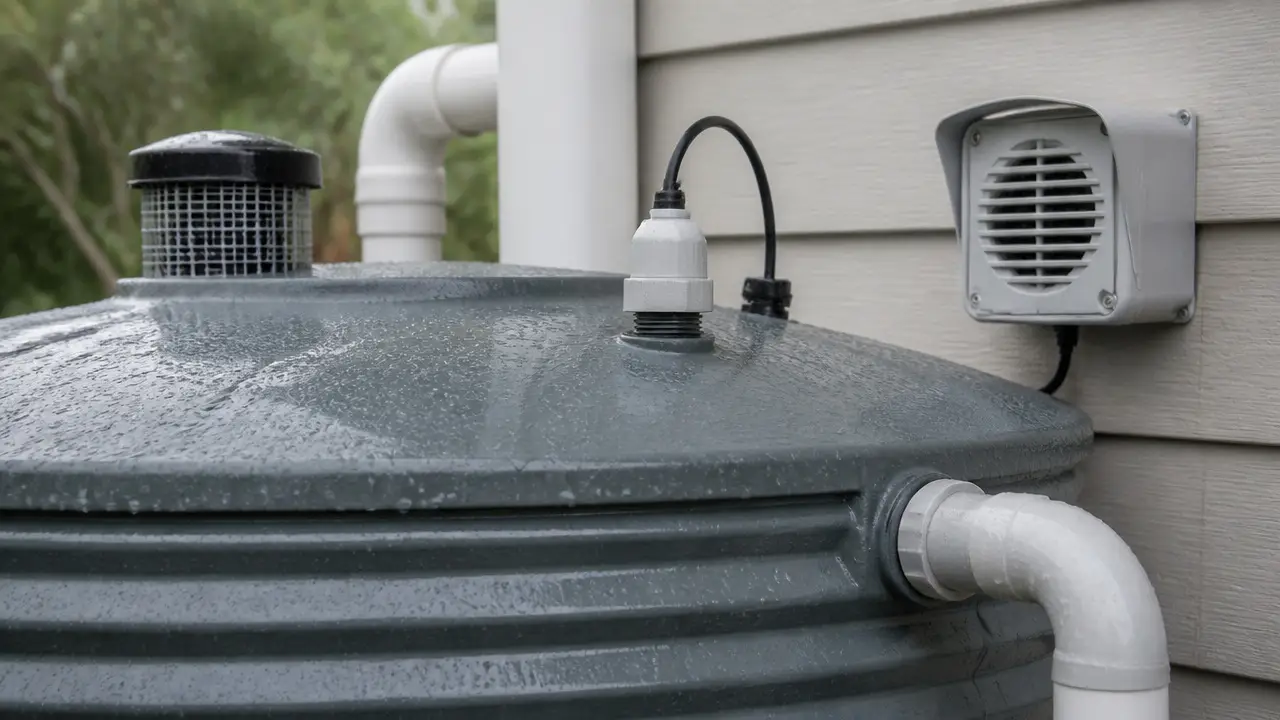
Rainwater tanks work best when the flow path from the roof to the tank is easy to inspect and clean. Buried sections can collect sediment and may hold stagnant water between storms.
If an underground pipe rises before reaching the tank, it may operate as a wet conveyance system. A wet system keeps water inside portions of the pipe instead of draining dry after each rain.
That type of setup requires careful design and cleaning access.
If the collected water will be used for drinking, roof runoff should not be treated as safe simply because it passes through a buried pipe or storage tank. Potable use requires suitable collection materials, prefiltration, appropriate treatment, maintenance, current laboratory testing, and compliance with local requirements.
"Potable" means suitable for drinking. "Non-potable" water is intended for uses such as certain irrigation, cleaning, or toilet flushing where allowed.
Keep Underground Utilities in Mind
Do not begin trenching without checking for buried utilities.
Electrical cables, gas lines, water pipes, communication lines, irrigation piping, and other services may cross the route.
Use the local utility-location service before digging. Some privately installed lines may not be included in public utility marking, so those may need separate locating.
Excavation also becomes more hazardous as trenches get deeper. Larger or deeper drainage work may be better handled by a qualified contractor.
Do You Need to Bury the Extension Deeply?
Not necessarily.
Depth depends on the pipe layout, required slope, surface loads, climate, outlet elevation, local requirements, and the type of pipe being used.
A shallow pipe may be vulnerable to lawn equipment or vehicle loads. A pipe buried too deeply without enough outlet elevation may lose the gravity slope it needs.
The goal is not simply to bury the pipe as deep as possible. The goal is to create a protected line that still drains reliably.
Above Ground or Buried: Which Is Better?
For many homes, start with the simplest system that safely moves water away from the foundation.
An above-ground extension is usually easier to:
- Inspect
- Clean
- Repair
- Reposition
- Remove for winter
- Test during storms
A buried system can be worthwhile when appearance, traffic, mowing, distance, or yard layout makes surface drainage impractical.
Choose buried drainage only when you can provide a dependable downhill path, a suitable outlet, and access for maintenance.
Frequently Asked Questions
How far should a downspout extension run from the house?
It should carry water far enough that runoff does not flow back toward the foundation. The needed distance depends on soil, grading, rainfall, foundation design, and where the water can safely drain. Good surface grading is just as important as the length of the extension.
Can I bury a flexible downspout extension?
Some flexible drainage pipes can be buried, but check that the pipe is designed for underground use. Flexible corrugated pipe may also collect more debris than smooth-wall pipe, so cleaning access is important.
Should buried downspout pipe have holes?
Usually not when the main goal is to carry roof runoff away from the foundation. Solid pipe keeps the water contained until it reaches the discharge point.
Can I connect a downspout to a French drain?
It depends on the drainage design. A French drain is generally intended to collect groundwater or surface water through perforated pipe and gravel. Sending concentrated roof runoff into the same system can overload it or change how it performs. Separate solid-pipe conveyance is often easier to control.
Why is water backing up from my buried downspout?
Common causes include a clogged pipe, blocked outlet, crushed pipe, insufficient slope, a sag that holds water, root intrusion, or an undersized drainage route. Stop digging or dismantling the system if the problem involves deep excavation or utilities.
Can buried downspout pipes freeze?
Yes. Freezing is more likely when water remains trapped in low sections, blocked outlets, or fittings. A properly sloped system that drains after each storm reduces the amount of water available to freeze.
Is an above-ground downspout extension less effective?
Not necessarily. A properly placed surface extension can move water away from a house very effectively. Its main disadvantages are appearance, trip hazards, mowing interference, and possible movement or damage.