As an affiliate, we may earn a commission from qualifying purchases. We get commissions for purchases made through links on this website from Amazon and other third parties.
Carbon filters are useful, but they are not all-purpose water treatment. A standard activated-carbon filter is best at reducing chlorine, bad tastes and odors, and some organic chemicals. It should not be assumed to remove germs, nitrate, hardness minerals, dissolved salts, fluoride, or every metal and chemical in the water.
This matters even more with collected rainwater. Roof runoff can contain germs, dirt, metals, and other chemicals. A carbon filter can be one treatment stage, but it does not make untreated rainwater safe to drink by itself.
What Activated Carbon Actually Does
Activated carbon is carbon that has been processed to create many tiny pores. Water passes over or through this material.
Many contaminants stick to the carbon surface. This process is called adsorption. The contaminant sticks to the carbon rather than simply being strained out like a piece of dirt caught by a screen.
Activated carbon is commonly useful for:
- Chlorine taste and odor
- Many unpleasant smells
- Some volatile organic compounds, or VOCs
- Some pesticides and other organic chemicals
- Some PFAS, when the filter is designed and certified for them
Performance depends on the type and amount of carbon, water chemistry, flow rate, contact time, contaminant, and how much useful capacity remains in the filter.
Because of these limits, the words "carbon filter" alone do not tell you what a filter can remove.
Carbon Filters Do Not Reliably Remove Germs
A normal activated-carbon filter should not be used as the main treatment for:
- Bacteria
- Viruses
- Parasites
Carbon can trap some material, but the carbon itself does not reliably disinfect water. CDC notes that common pitcher and refrigerator filters often use carbon mainly to improve taste and smell rather than to remove germs.
Some carbon-block filters also have very small pores and may carry a specific certification for cyst reduction. In that case, physical filtration is doing part of the work. That does not mean activated carbon in general removes microorganisms.
This distinction is especially important with rainwater. Bird droppings, animal waste, insects, and dirty roof surfaces can introduce microorganisms into a tank. CDC advises treating collected rainwater according to the germs and chemicals actually present rather than assuming one filter handles everything.
Carbon Does Not Remove Nitrate
Ordinary activated carbon is not an effective treatment for nitrate in drinking water.
EPA specifically states that activated-carbon pitcher filters do not remove nitrate.
Nitrate and nitrite are dissolved inorganic contaminants. They do not readily stick to standard activated carbon in the way many organic chemicals do.
If testing finds nitrate in water intended for drinking, choose a treatment method specifically designed and verified for nitrate reduction rather than adding more carbon.
Carbon Does Not Remove Most Dissolved Salts
Activated carbon is not a desalination system.
It generally does not remove the bulk of dissolved salts and minerals that make up total dissolved solids, usually shortened to TDS.
TDS is a broad measure of dissolved material in water. It can include substances such as:
- Sodium
- Chloride
- Calcium
- Magnesium
- Sulfate
- Other dissolved ions
A carbon cartridge may greatly improve the taste of water while causing little change in its overall dissolved-mineral content.
Reverse osmosis is a different technology. CDC notes that reverse osmosis can reduce several dissolved chemicals and salts that ordinary filtration may leave behind.
Carbon Does Not Soften Hard Water
A standard carbon filter is not a water softener.
Hard water contains relatively high amounts of minerals, mainly calcium and magnesium. These minerals can cause:
- Scale on fixtures
- Deposits inside pipes
- Scale on heating elements
- Soap that does not lather easily
Activated carbon does not normally remove enough calcium or magnesium to solve a hardness problem.
A water softener uses a different treatment process. CDC identifies softening as a treatment intended mainly to remove calcium and magnesium.
If you need both chlorine reduction and water softening, the system normally needs separate treatment stages chosen for those two different jobs.
Do Not Assume Carbon Removes Fluoride
A typical activated-carbon filter should not be assumed to remove fluoride.
Specialized filters may use other adsorptive materials or treatment methods designed for fluoride reduction. Reverse osmosis may also reduce fluoride, depending on the system.
The important point is to check for a specific fluoride-reduction claim. Do not judge the filter only by the fact that it contains carbon.
Carbon Does Not Automatically Remove Arsenic
Standard activated carbon should not be relied on as a general arsenic treatment.
Arsenic is an inorganic contaminant, and treatment performance depends heavily on the treatment media, the chemical form of the arsenic, and water chemistry.
EPA describes specialized adsorptive media made with materials such as iron, aluminum, titanium, or zirconium for certain inorganic contaminants, including arsenic and fluoride. These materials are different from simply putting ordinary activated carbon in a cartridge.
If arsenic is a concern, test the water and select a treatment system with a verified arsenic-reduction claim for the water conditions involved.
What About Lead and Other Metals?
This is an area where broad statements about carbon filters can be misleading.
Some certified household filters can reduce lead and certain other health-related contaminants. NSF/ANSI 53 covers specific health-effect contaminant-reduction claims, and individual filters may be certified for substances such as lead.
That does not mean every carbon filter removes lead.
Use a suitable activated carbon filter for home use to verify which safety test should follow the initial result.
Performance may come from:
- A particular carbon formulation
- Additional adsorptive media
- Ion-exchange material
- Very fine physical filtration
- A combination of treatment methods
For metals from roofing, flashing, gutters, pipes, or tank fittings, choose the filter based on the contaminant you need to reduce, not simply because its label says "activated carbon."
Carbon Does Not Remove All PFAS
Activated carbon can be useful for some PFAS, but it is not safe to say that every carbon filter removes every PFAS chemical.
EPA notes that granular activated carbon can reduce PFAS, but effectiveness changes with factors such as:
- The specific PFAS present
- Carbon type
- Amount of carbon
- Flow rate
- Water chemistry
- Other organic material in the water
- Time since the filter was installed
Some shorter-chain PFAS are more difficult for activated carbon to capture than longer-chain compounds. EPA recommends choosing filters specifically certified for PFAS reduction when PFAS treatment is needed.
Carbon Is Not a Sediment Filter Unless the Filter Is Designed for It
Granular activated carbon is mainly an adsorptive treatment medium, not a substitute for good sediment control.
A carbon block may also physically trap particles because water must pass through its small pores. The filter's micron rating describes the approximate size of particles its filtration structure is designed to catch.
Even so, sending dirty rainwater straight through a fine carbon cartridge can cause it to clog quickly.
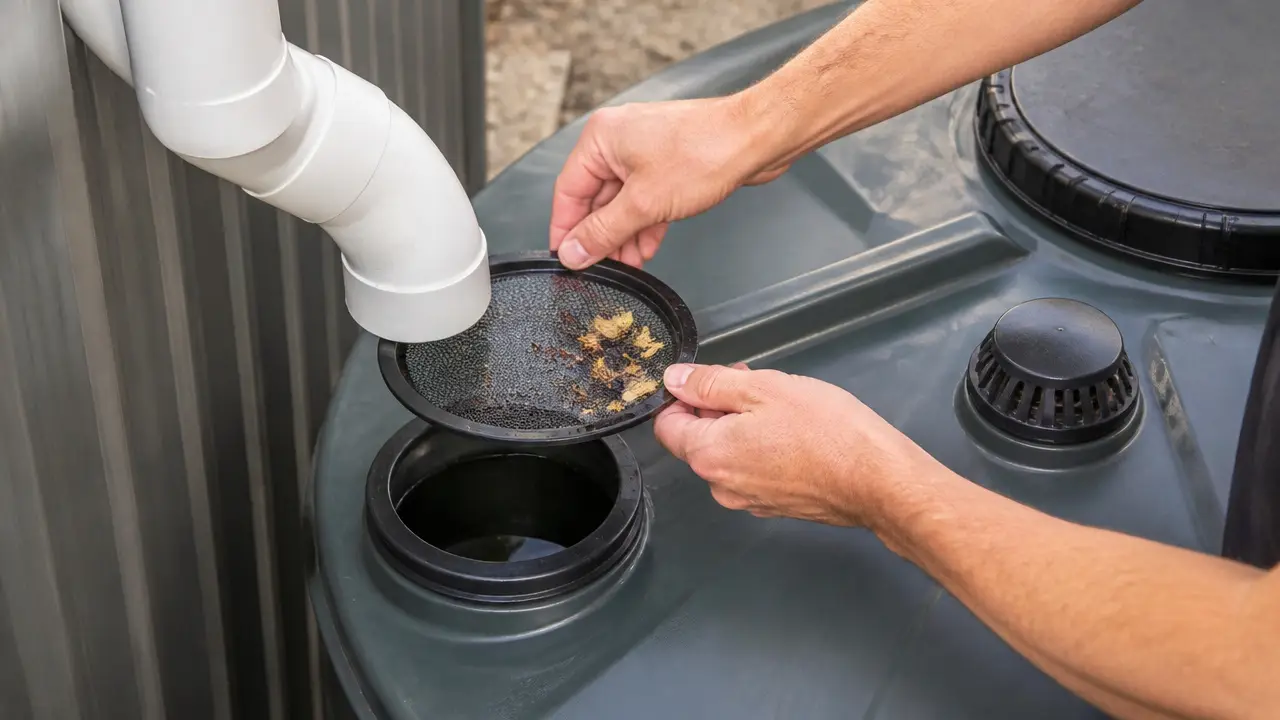
For a rainwater system, it usually makes more sense to control larger debris before the carbon stage with measures such as:
- Gutter screens
- Inlet screening
- A first-flush diverter where appropriate
- Settling or prefiltration
- A sediment filter when finer particles need to be removed
A first-flush diverter sends some of the first roof runoff from a storm away from the storage tank. This early runoff often carries a heavier load of roof dirt and contaminants. CDC recommends considering first-flush diversion as one way to improve collected rainwater quality.
Carbon Filters Cannot Tell You Whether Water Is Safe
Clear, odor-free water is not necessarily safe water.
A carbon filter can make water taste and smell much better while leaving contaminants that have no noticeable taste, smell, or color. CDC warns that appearance, taste, and smell are not reliable ways to determine whether harmful germs or chemicals are present.
This is why a carbon filter should not be treated as a safety test.
For drinking water, testing should identify the contaminants of concern. Treatment can then be selected for those contaminants.
Certification Matters More Than the Word "Carbon"
When choosing a household carbon filter, look at its specific contaminant-reduction claims.
Common NSF standards include:
| Standard | What it may cover |
|---|---|
| NSF/ANSI 42 | Aesthetic issues such as chlorine, taste, and odor |
| NSF/ANSI 53 | Specific contaminants that can affect health |
| NSF/ANSI 401 | Certain emerging or incidental contaminants |
| NSF/ANSI 58 | Reverse-osmosis systems |
A certification does not mean a filter removes everything covered somewhere within that standard. Check the exact reduction claims for the individual filter.
Where Carbon Fits in a Rainwater System
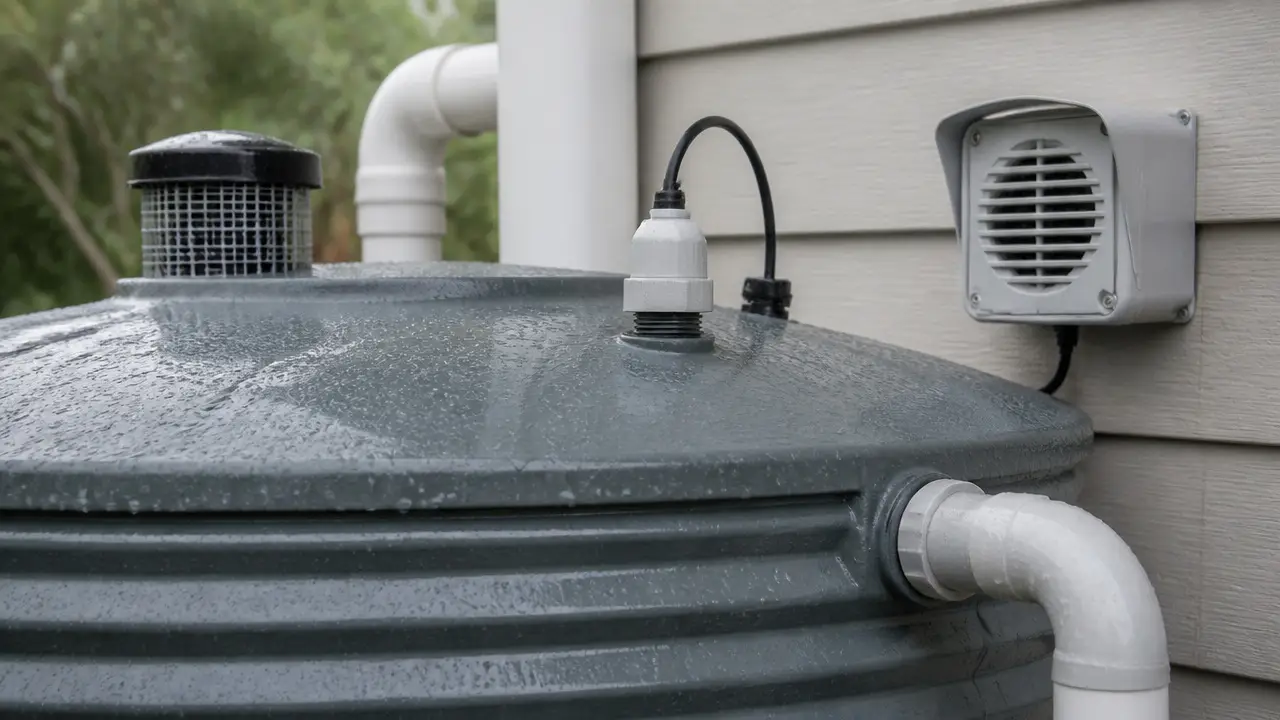
For many rainwater systems, activated carbon works best as a polishing stage rather than the only treatment stage.
For non-potable uses such as garden irrigation, carbon treatment may not even be necessary unless there is a specific water-quality reason to use it.
Water intended for drinking is a different matter. Roof-collected rainwater can contain microorganisms and chemicals even when it looks clean. CDC recommends regular testing when rainwater is used for drinking, cooking, or bathing and choosing treatment methods that address the contaminants found.
A drinking-water system may therefore need several different jobs handled separately, such as:
- Keeping leaves and large debris out.
- Reducing sediment and suspended material.
- Treating specific dissolved chemicals.
- Using carbon where adsorption is useful.
- Providing suitable treatment for microorganisms.
- Maintaining and replacing each treatment stage on schedule.
- Testing the finished water as appropriate for the intended use.
No single carbon cartridge should be assumed to perform all of these jobs.
Frequently Asked Questions
Does a carbon filter remove bacteria?
Standard activated carbon should not be relied on to remove bacteria. Some filters combine carbon with fine physical filtration or another treatment process, but you must check the filter's specific claims. Water with a microbiological risk needs treatment designed for that risk.
Does activated carbon remove nitrate?
No. Ordinary activated-carbon filters are not effective nitrate treatment. EPA specifically notes that common activated-carbon pitcher filters do not remove nitrate.
Does a carbon filter remove hard water minerals?
Not to a useful degree. Calcium and magnesium, the main minerals responsible for hardness, normally require a water-softening or other suitable mineral-removal process.
Does activated carbon remove fluoride?
Do not assume it does. Ordinary activated carbon is not a dependable general-purpose fluoride treatment. Look for a system with a specific verified fluoride-reduction claim if fluoride reduction is required.
Can a carbon filter remove lead?
Some filters can reduce lead, but not every carbon filter does. Check for a specific certified lead-reduction claim rather than relying on the type of carbon alone.
Does carbon lower TDS?
Standard carbon filtration usually does not remove most of the dissolved salts and minerals measured as total dissolved solids. A large TDS reduction generally requires another treatment process, such as reverse osmosis when appropriate.
Can I drink rainwater after running it through a carbon filter?
A carbon filter alone should not be considered enough to make collected rainwater potable, meaning suitable for drinking. Rainwater may contain both germs and chemicals. Drinking-water use requires suitable collection, treatment matched to the contaminants present, proper maintenance, current water testing, and compliance with applicable local requirements.