As an affiliate, we may earn a commission from qualifying purchases. We get commissions for purchases made through links on this website from Amazon and other third parties.
If a rainwater storage tank does not have a working vent, air cannot move in and out freely as the water level changes. That can cause slow filling, poor water flow, tank pressure or vacuum, damaged fittings, and problems with overflow or pumps.
A vent may look like a small part of the system, but it helps the tank operate without building unwanted pressure.
What a Rainwater Tank Vent Does
A storage tank holds both water and air.
When rainwater enters the tank, the rising water pushes air out. When water leaves the tank, air must enter to replace the lost volume.
The vent gives that air a controlled path.
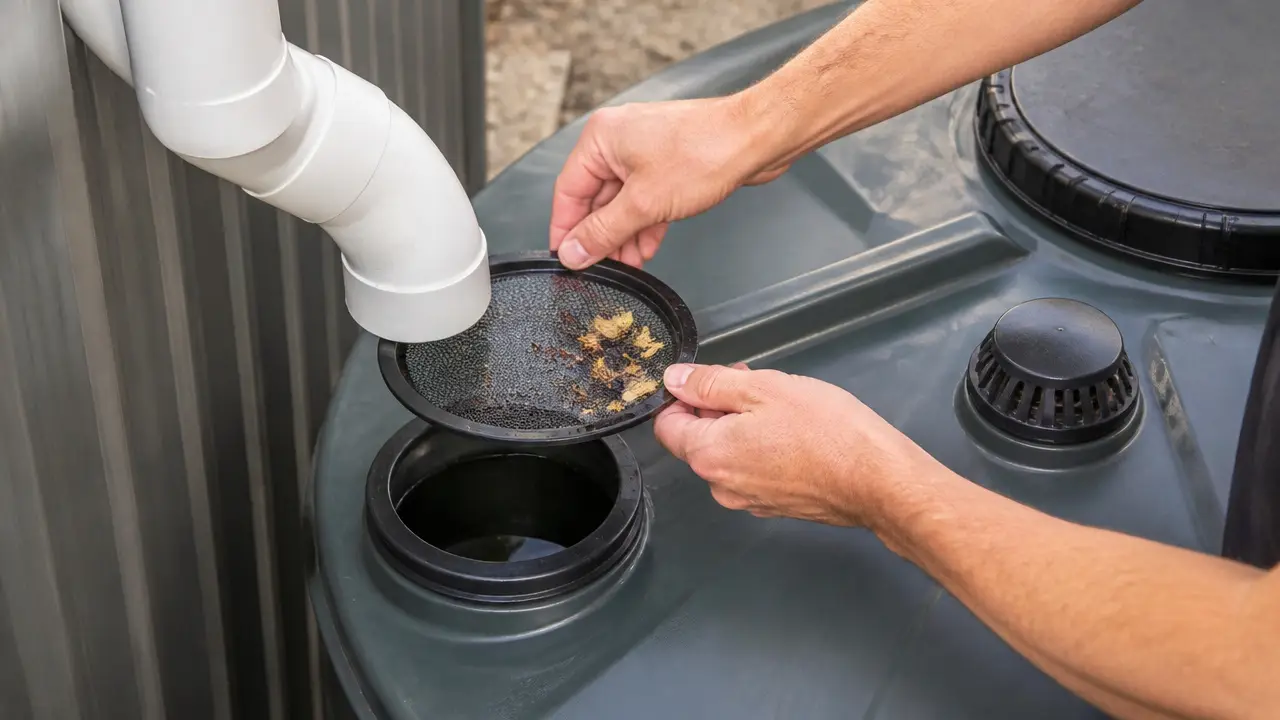
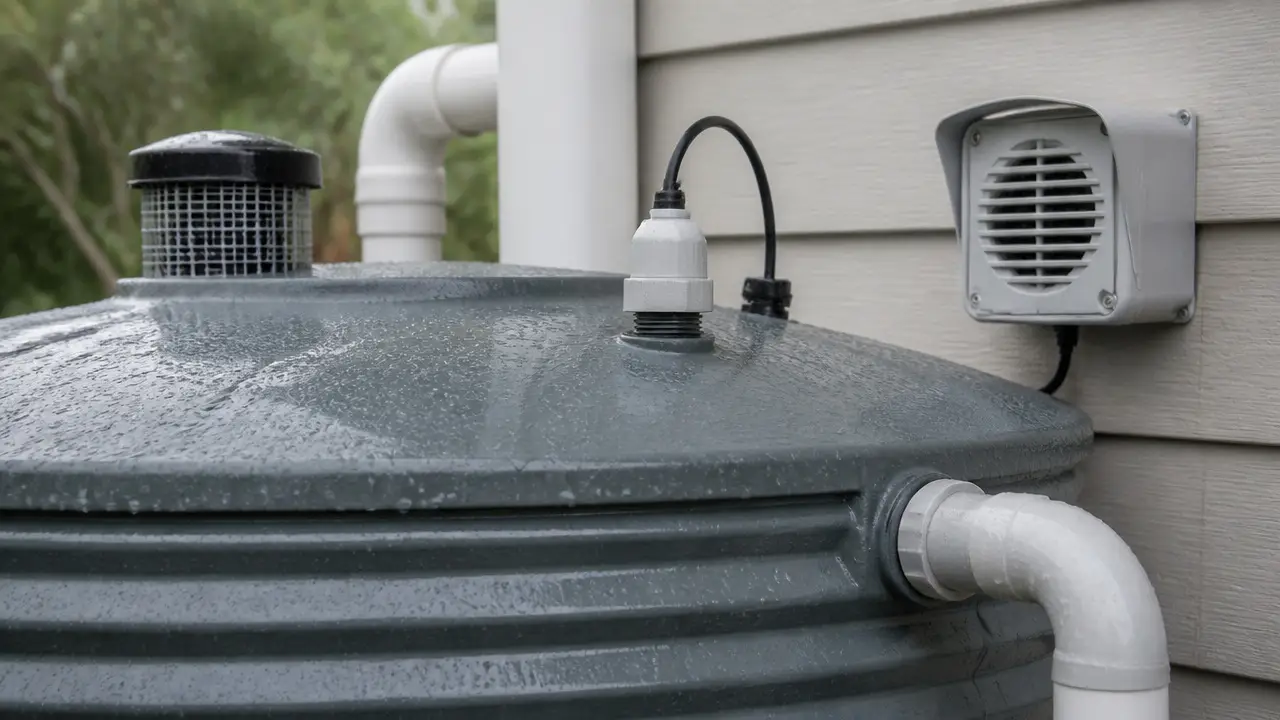
A good tank vent also helps keep out insects and debris. It is often covered with suitable screening while still allowing plenty of airflow.
What Happens Without a Vent Pipe
The exact problem depends on whether the tank is sealed and how quickly water moves in or out.
The Tank Can Develop a Vacuum
When water is pumped or drained from a sealed tank, the water level drops.
If outside air cannot enter fast enough, pressure inside the tank falls. This creates a partial vacuum.
A strong vacuum can:
- reduce the flow leaving the tank
- make a pump work harder
- pull flexible tank walls inward
- stress lids, seals, and fittings
- contribute to leaks or structural damage
Thin-walled plastic tanks can be especially vulnerable if they were not designed to handle vacuum pressure.
Do not assume a tank is strong enough to operate sealed just because it feels rigid when empty.
Pressure Can Build While the Tank Fills
The opposite can happen during rainfall.
As water enters, it takes up space that was previously filled with air. That air needs somewhere to go.
Without enough venting, pressure can build inside the tank.
Possible results include:
- water backing up in inlet pipes
- slow filling
- leaking seals
- stressed fittings
- lids lifting or deforming
- water escaping through unintended openings
A large inlet can move a surprising amount of water during heavy rain, so the vent must be able to handle the resulting air movement.
The Overflow May Not Work Properly
A rainwater tank also needs a reliable overflow.
The overflow carries excess water away once the tank reaches its maximum operating level.
In some systems, the overflow also allows air movement. However, you should not assume an overflow automatically provides enough ventilation.
An overflow can become partly blocked by:
- leaves
- insect screens
- sediment
- nesting material
- ice
- poorly positioned pipework
The tank should be arranged so air can still move freely without allowing mosquitoes, rodents, or debris easy access.
Pump Performance Can Suffer
A pump removes water from the tank quickly.
If the vent cannot admit air at roughly the same rate, negative pressure can develop inside the tank.
You might notice:
- declining pump flow
- unusual tank noises
- tank walls pulling inward
- unstable pump operation
- water flow improving when the lid is opened
Opening the lid may temporarily relieve the vacuum, but it is not a proper fix. An open tank can allow insects, dirt, animals, and other contamination to enter.
The correct solution is a suitable permanent vent.
A Missing Vent Can Damage the Tank
Many common rainwater tanks are designed to operate close to normal atmospheric pressure.
They are not pressure vessels.
That means the tank walls may be strong enough to hold thousands of pounds of water while still being poorly suited to pressure pushing outward or vacuum pulling inward.
Possible damage includes:
- distorted tank walls
- cracked fittings
- damaged seals
- loose lids
- leaks around bulkhead fittings
- permanent tank deformation
A bulkhead fitting is a fitting that passes through the tank wall and creates a sealed connection for a pipe, valve, or hose.
If a tank has already collapsed inward or swollen because of pressure problems, inspect the tank and its fittings carefully before putting it back into service.
How Large Does the Vent Need to Be?
There is no single vent size that is correct for every rainwater system.
The required airflow depends on factors such as:
- tank design
- inlet flow
- outlet flow
- pump capacity
- overflow arrangement
- pipe layout
- vent screening
- manufacturer requirements
A small vent opening may be adequate for a slowly draining rain barrel but too restrictive for a large cistern being filled or emptied rapidly.
Screens also reduce the usable open area. A vent that looks large enough may become restrictive when covered with very fine mesh or when the screen becomes dirty.
Factor in common problems with water pressure tanks to verify required flow and lift at the point of use.
Follow the tank manufacturer's venting instructions when available.
Can You Use the Tank Lid as a Vent?
Sometimes a tank lid is intentionally designed to breathe. Other tanks use a separate vent fitting.
Do not simply leave a lid loose unless the tank manufacturer intends the system to operate that way.
A loose or open lid can let in:
- mosquitoes
- insects
- leaves
- dust
- animals
- roof debris
- sunlight that encourages algae growth
A proper vent provides airflow while helping protect the stored water.
Vent Screens Matter
Rainwater tank openings should generally be protected from pests without blocking airflow.
Check vent screens periodically for:
- dust
- spider webs
- insect nests
- leaves
- corrosion
- algae
- ice
A completely clogged screen can turn a properly vented tank into an effectively sealed tank.
Cleaning the screen is usually simple, but avoid reaching into large tanks or entering cisterns. Tanks and cisterns can be confined spaces and may contain dangerous atmospheres.
What About Small Rain Barrels?
Small rain barrels need air movement too.
Many barrels get enough ventilation through their screened inlet or overflow arrangement. Problems can appear when someone modifies the barrel by tightly sealing every opening.
If a sealed barrel drains poorly or its sides pull inward, lack of ventilation is one possible cause.
Check that:
- The inlet is not blocked.
- The overflow is clear.
- Air can enter as water drains.
- Openings are protected against insects.
- The barrel has not been modified in a way that creates a sealed container.
What About IBC Totes?
IBC totes also need adequate air movement when used for rainwater storage.
An original IBC container may have a vented cap or other pressure-relief design, but modifications can change how that system works.
For example, adding sealed plumbing while replacing the original lid can accidentally eliminate ventilation.
Never operate an IBC tote as a pressurized storage vessel unless it was specifically designed and approved for that purpose. Typical rainwater IBC setups are intended for atmospheric storage.
Freezing Weather Can Block a Vent
A vent that works in warm weather may become blocked during winter.
Ice can form from:
- splashing water
- condensation
- freezing rain
- snow accumulation
A blocked vent can create the same pressure problems as having no vent at all.
If your system operates through freezing weather, include the vent, overflow, valves, pipes, and pump in the winterization plan.
Signs Your Tank Is Not Venting Properly
Watch for unusual changes when water enters or leaves the tank.
Common warning signs include:
- tank walls moving inward or outward
- gurgling or popping sounds
- unusually slow drainage
- reduced pump flow
- water backing up at the inlet
- leaks around fittings
- a lid that is difficult to remove
- sudden air movement when a cap is loosened
These symptoms can also have other causes, so inspect the entire inlet, outlet, overflow, and vent path.
If the tank is visibly distorted or appears to be under significant pressure or vacuum, stop filling or pumping from it until the cause is identified.
Frequently Asked Questions
Does every rainwater tank need a vent?
Every tank needs some way for air to move as water enters and leaves. That may be a dedicated vent, a vented lid, or another opening designed by the tank manufacturer.
Can the overflow pipe act as the tank vent?
Sometimes it can provide part or all of the required airflow, but this depends on the tank and plumbing design. The overflow must remain open enough for both water and air movement.
Why does my rainwater tank suck inward when the pump runs?
The tank may not be getting replacement air fast enough. A blocked, undersized, or missing vent is one possible cause.
Can I just drill a hole in the tank lid?
A hole may allow airflow, but an unprotected opening can also let insects and debris into the tank. Use a vent arrangement suitable for the tank and protect openings appropriately.
Should a rainwater tank be completely airtight?
Most normal rainwater storage tanks should not be airtight. Water moving in and out requires air exchange unless the tank was specifically engineered for another type of operation.
Can a blocked vent damage a plastic water tank?
Yes. Vacuum or internal pressure can deform some plastic tanks and place extra stress on fittings, seals, and lids.
How often should I check the vent?
Include it in normal tank inspections. Check it more often if your system collects a lot of debris, has insect screens that clog easily, or operates in freezing conditions.