As an affiliate, we may earn a commission from qualifying purchases. We get commissions for purchases made through links on this website from Amazon and other third parties.
What Is the Most Effective Way to Clean Gutters?
The most effective way to clean gutters is to remove the large debris by hand or with a gutter scoop, then flush the gutter and downspout with water.
This two-step method works better than simply spraying the gutter with a hose. Leaves, pine needles, roof grit, and mud can form thick clumps that water alone may push into the downspout.
For a rainwater harvesting system, gutter cleaning matters even more. Dirty gutters can send leaves, animal droppings, sediment, and decaying organic material toward your rain barrel, IBC tote, or cistern.
A good cleaning routine is:
- Remove leaves and other loose debris.
- Scoop out packed dirt and sludge.
- Flush the gutter toward the downspout.
- Check that each downspout drains freely.
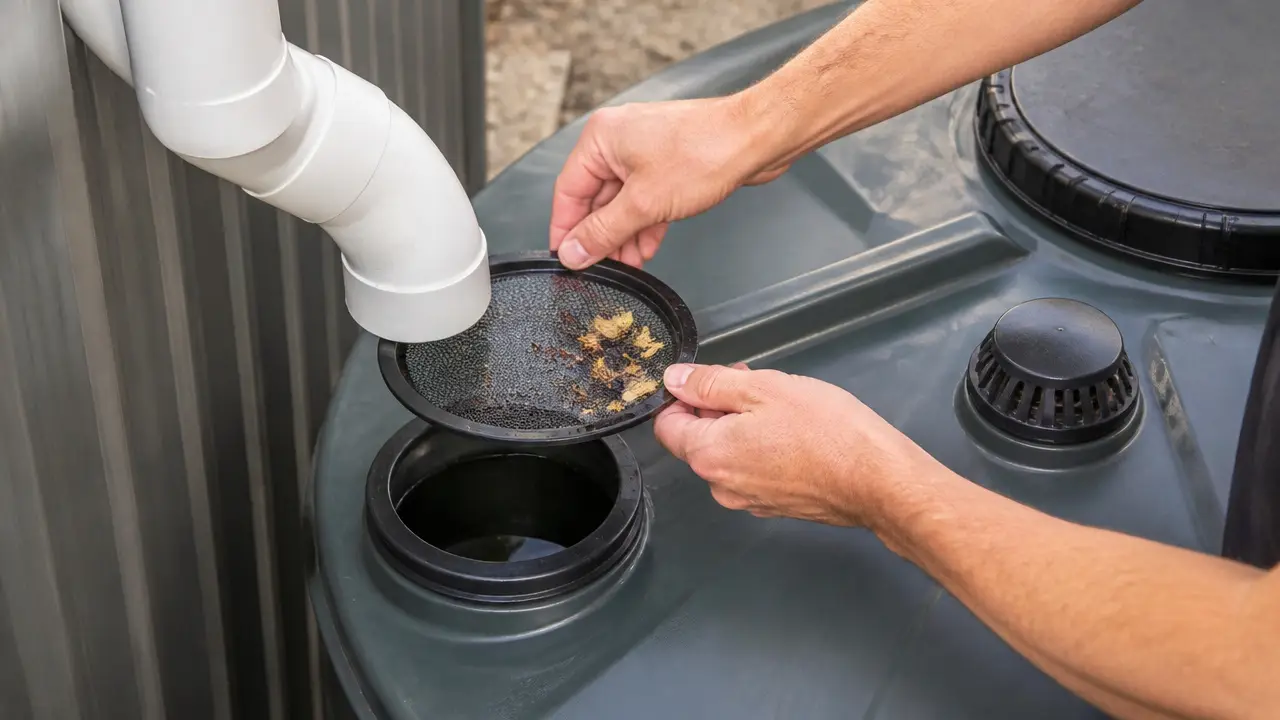
- Clean any gutter screens, leaf guards, or rainwater prefilters.
You do not need to make the gutters spotless. The goal is to restore free water flow and remove material that can contaminate or block the rainwater system.
Start by Removing the Bulk Debris
Dry or slightly damp gutter debris is usually easiest to remove.
Wear sturdy gloves and scoop leaves, twigs, seeds, and roof grit into a bucket or container. A small plastic gutter scoop can help with packed material.
Work toward the downspout, but do not push large piles of debris into it. Remove those piles first.
This is especially important when the gutter feeds a rainwater tank. A clogged downspout can reduce collection, cause gutter overflow, or send a sudden load of debris into the collection system when the blockage breaks loose.
Flush the Gutter After Scooping
Once most of the debris is gone, use a garden hose to flush the gutter.
Start at the end farthest from the downspout and move the water toward the outlet.
Watch how the water behaves.
A properly working gutter should drain without large pools of standing water. A small amount of water may remain because of seams or minor surface irregularities, but deep puddles can point to poor slope, sagging gutter sections, or a blocked outlet.
Flushing also helps move fine sediment that a scoop cannot easily remove.
Roofing materials can shed small particles over time. These particles may collect in gutters and eventually enter rainwater tanks if the system does not have adequate prefiltration.
Make Sure the Downspouts Are Clear
A clean gutter will not work well if the downspout is blocked.
Run water into the downspout and check that it comes out freely at the bottom or reaches the rainwater system without backing up.
If water rises in the gutter instead, there may be a blockage.
Common downspout blockages include:
- Leaves
- Pine needles
- Twigs
- Roof grit
- Seeds and seed pods
- Bird nesting material
- Packed organic sludge
A hose may clear a light blockage. More stubborn clogs may need a flexible drain-cleaning tool or partial disassembly of the downspout.
Avoid forcing rigid tools through sharp bends because they can damage lightweight downspout material.
If the downspout is connected directly to a rainwater tank, disconnect or divert it when practical before flushing heavy dirt from the gutter. Otherwise, the cleaning water may carry a large amount of debris into the tank.
Clean Rainwater Collection Parts at the Same Time
If the gutter feeds a rainwater harvesting system, gutter cleaning is a good time to inspect the rest of the collection path.
Check the:
- Gutter outlet
- Downspout
- Leaf screen
- Rain head
- First-flush diverter
- Tank inlet screen
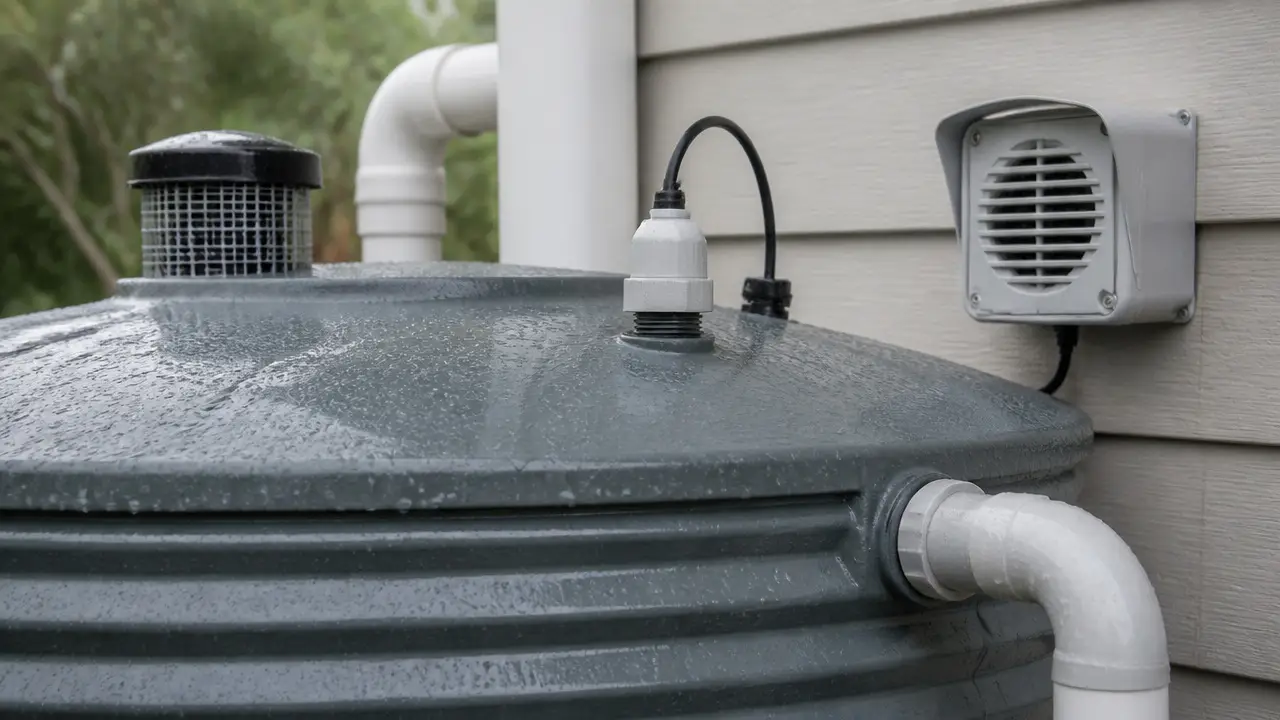
- Overflow screen
A first-flush diverter is a device that diverts the first portion of roof runoff away from the storage tank. That first runoff often carries a higher load of dust, pollen, droppings, and other material washed from the roof.
A first-flush device does not replace gutter cleaning. If the gutters contain a large amount of decaying debris, the system still has to handle that contamination every time it rains.
Is Pressure Washing the Best Way to Clean Gutters?
Usually not.
A pressure washer can remove dirt, but it can also make a simple job much messier. High-pressure water may spray sludge onto siding, windows, roofing, and nearby surfaces.
It can also force water into places where you do not want it.
For normal gutter maintenance, hand removal followed by a garden-hose flush gives you much more control.
Pressure washing may make sense for some heavily stained or neglected gutters, but it is not normally necessary just to restore water flow.
Are Gutter-Cleaning Vacuums Effective?
Gutter vacuums can work well, especially when the debris is fairly loose and dry.
They can also allow some gutters to be cleaned from ground level using long extension tubes.
Their main limitation is heavy, wet sludge. Packed material can be difficult to vacuum and may still require mechanical removal.
For regular maintenance, a vacuum can be useful. For badly neglected gutters, scooping and flushing usually gives a better chance to inspect what is actually happening inside the gutter.
What About Leaf Blowers?
Leaf blowers can quickly remove dry leaves from open gutters.
They are less effective when the gutter contains:
- Wet leaves
- Mud
- Roof sediment
- Decomposed organic material
Blowers can also spread debris over the roof, yard, siding, and collection area.
If you use a blower, a water flush afterward is still useful because it shows whether the gutter and downspout actually drain.
Clean Gutter Guards Too
Gutter guards reduce some debris, but they do not make gutters maintenance-free.
Leaves and seeds can collect on top of the guard. Fine material can also pass through many screen designs and settle in the bottom of the gutter.
Check whether water can enter the gutter freely.
For rainwater harvesting, this matters because a blocked or dirty guard may cause water to flow over the gutter instead of reaching the storage tank.
Understanding visible clues that gutters require service helps coordinate the site’s ability to carry runoff away safely.
Screens should also be checked for algae, plant growth, and fine organic buildup.
How Often Should Gutters Be Cleaned?
There is no single schedule that works for every property.
Many homes need inspection at least once or twice a year. Properties surrounded by trees may need cleaning much more often.
Check gutters after periods with heavy:
- Leaf fall
- Pine needle drop
- Seed drop
- Storm debris
- Roof maintenance
Rainwater harvesting systems may benefit from more frequent checks because gutter condition directly affects the water entering the system.
Do not wait for the gutter to overflow before inspecting it.
Clean Gutters Before the Rainy Season
One of the most useful times to clean gutters is before a period when you expect to collect significant rain.
That helps maximize the amount of roof runoff that reaches your tank.
It also reduces the amount of old organic material sitting in the collection path when the first major rain arrives.
If your tank has been disconnected during a dry season, clean the gutters and collection screens before reconnecting it.
Watch for Gutter Problems While Cleaning
Cleaning is also a chance to inspect the gutter system.
Look for:
- Loose brackets
- Sagging sections
- Leaking joints
- Rust or corrosion
- Cracks
- Damaged screens
- Separated downspouts
- Standing water
- Overflow stains
Standing water can indicate that the gutter does not slope correctly toward the outlet.
A gutter that repeatedly fills with debris in one location may also have a low spot or poorly placed outlet.
Fixing the underlying drainage problem can be more effective than cleaning the same section over and over.
Gutter Cleaning Safety
Gutter cleaning often involves more risk from access than from the cleaning itself.
Whenever possible, use ground-based cleaning tools for sections you can reach effectively.
If ladder access is needed, use a stable ladder on firm, level ground and follow the ladder manufacturer's instructions. Do not lean far sideways to reach another section. Move the ladder instead.
Avoid working during:
- Rain
- Strong wind
- Icy conditions
- Poor visibility
Do not walk on a roof simply because it seems easier than moving a ladder. Roof pitch, wet surfaces, algae, loose roofing material, and hidden weak areas can make roof access dangerous.
Steep, high, difficult-to-reach, or damaged gutter systems are good reasons to use a qualified gutter-cleaning or roofing professional.
Special Considerations for Rainwater Harvesting
If your gutters supply stored rainwater, think about cleaning as part of the whole collection system.
Removing leaves improves flow, but it does not make roof runoff automatically safe for every use.
Roof runoff can contain microorganisms, animal waste, roofing particles, dust, and other contaminants even when the gutters look clean.
For garden watering and other non-potable uses, keep collection screens and storage systems maintained for the intended application.
Potable means suitable for drinking. If rainwater will be used as drinking water, gutter cleaning is only one part of a much larger water-quality system. Suitable collection surfaces, prefiltration, treatment, current laboratory testing, maintenance, and applicable local requirements all need to be considered.
No gutter screen, first-flush device, filter, UV unit, or home water test by itself can establish that roof-collected rainwater is safe to drink.
The Best Gutter-Cleaning Method in Most Cases
For most homes, the simplest effective approach is still the best:
Scoop out the debris first, then flush the gutter and downspouts with a garden hose.
This method lets you remove heavy material instead of washing it deeper into the drainage system. It also gives you a chance to find clogs, sagging gutters, damaged screens, and other problems before the next heavy rain.
For a rainwater harvesting system, finish by cleaning the inlet screens and other prefilters so the entire path from roof to tank is ready for runoff.
Frequently Asked Questions
Is it better to clean gutters wet or dry?
Dry or slightly damp debris is usually easier and less messy to remove. Completely dry leaves can often be scooped or vacuumed quickly. Heavy wet sludge may require scooping followed by flushing.
Can I clean gutters with only a garden hose?
A hose can work when the gutter contains only a small amount of loose material. If there are piles of leaves or packed sludge, remove them first so they are not washed into the downspout.
Can I use a pressure washer to clean gutters?
You can, but it is usually unnecessary. A garden hose provides enough water for normal flushing and gives you better control around roofing, siding, and rainwater collection equipment.
Do gutter guards eliminate the need for cleaning?
No. Gutter guards can reduce large debris, but leaves can collect on top and fine material can still build up underneath. Guards and gutters still need inspection and cleaning.
Should I clean gutters before filling a rainwater tank?
Yes. Cleaning the gutters, downspouts, screens, and prefilters before a wet season can reduce debris entering the system and help more runoff reach the tank.
How can I tell if my downspout is clogged?
Run water toward the downspout. If the gutter fills or drains very slowly, the downspout or outlet may be blocked. Water should move through the downspout freely without backing up.
Does cleaning gutters make collected rainwater safe to drink?
No. Clean gutters can reduce debris, but roof runoff can still contain microorganisms and other contaminants. Drinking-water use requires a suitable whole-system approach that includes treatment, testing, maintenance, and applicable local requirements.