As an affiliate, we may earn a commission from qualifying purchases. We get commissions for purchases made through links on this website from Amazon and other third parties.
Rainwater harvesting can be understood as having two main aspects: collecting and storing the rainwater, and then delivering and using that stored water.
The first side gets rain from the roof or another catchment into a tank. The second side moves that water from the tank to where it is needed.
1. Rainwater Collection and Storage
The collection side begins where rain lands.
For a typical home system, this may include:
- A roof or other suitable catchment surface
- Gutters and downspouts
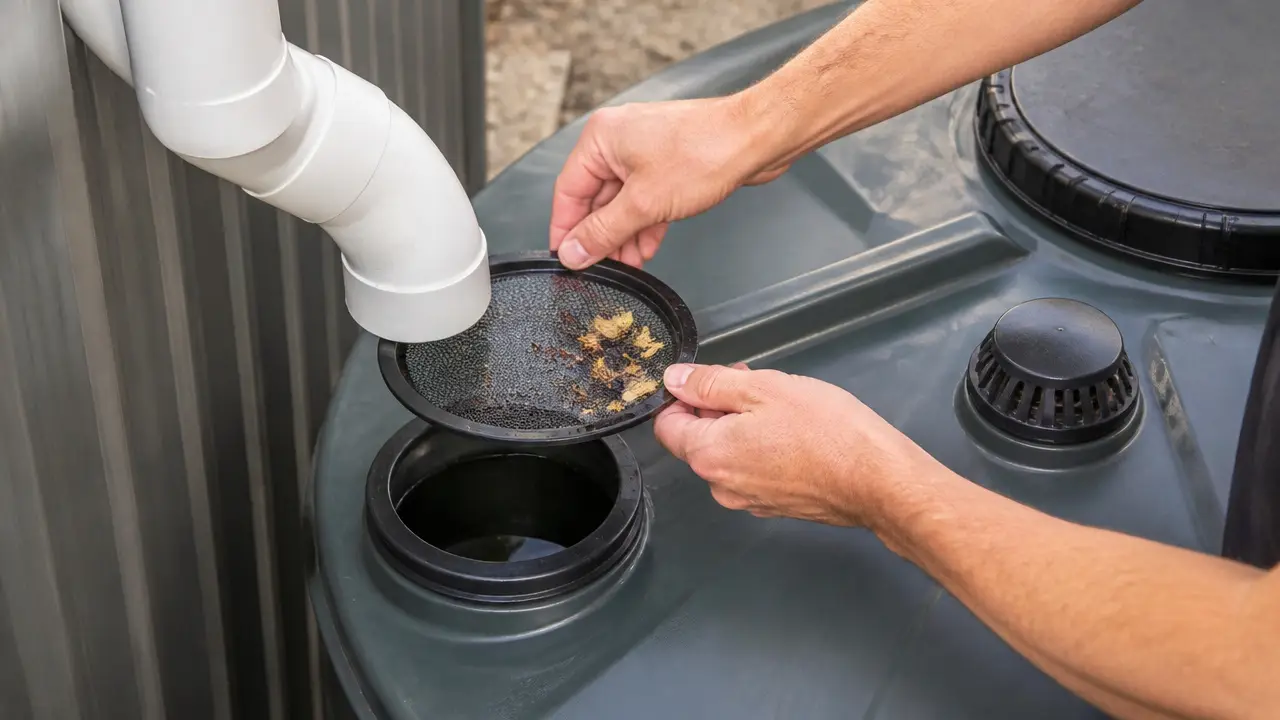
- Leaf screens or debris guards
- A first-flush device
- Inlet screening or prefiltration
- A rain barrel, IBC tote, or larger cistern
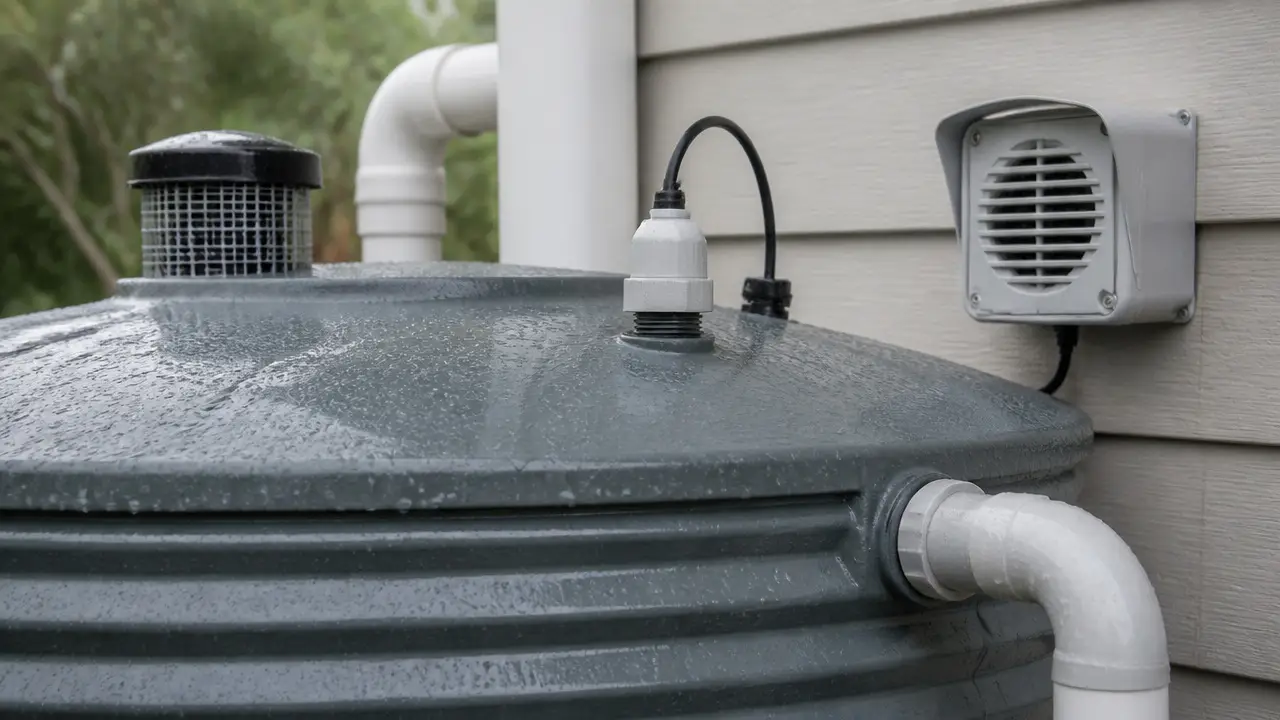
- An overflow outlet
- A screened tank vent
A first-flush device diverts some of the first runoff from a rainfall event. That early runoff can carry dust, leaves, bird droppings, and other debris from the roof.
The goal of this side of the system is not simply to catch as much water as possible. It is to move rainwater into storage while keeping out as much debris and contamination as practical.
The catchment determines how much water is available
The amount of water you can collect mainly depends on:
- Catchment area
- Amount of rainfall
- Real-world collection losses
A larger roof can collect more water from the same storm than a smaller roof. However, some water is always lost to splash, evaporation, first-flush diversion, overflowing gutters, and other factors.
Tank size also matters. A roof may produce more runoff than a small rain barrel can hold.
Storage needs more than a tank
A storage tank should have suitable connections for:
- Water entering the tank
- Water leaving the tank
- Overflow
- Venting
- Draining or cleaning
Openings should also be managed so insects, animals, leaves, and sunlight do not easily enter.
The tank and its foundation must be able to handle the weight of stored water. Water is heavy, so large tanks need a firm and suitable base.
2. Rainwater Delivery and Use
The second aspect begins after the water is stored.
This part of the system gets water from the tank to its intended point of use.
It can include:
- Tank outlets
- Valves
- Pipes or hoses
- Pumps
- Pressure tanks or controls
- Filters
- Irrigation equipment
- Treatment equipment when required
A simple rain barrel may use gravity to feed a watering can or short garden hose. A larger system may need a pump to run sprinklers, drip irrigation, toilets, washing equipment, or other fixtures.
Intended use determines the setup
Not every rainwater system needs the same equipment.
For example, water used for hand-watering a garden may need only basic screening and a usable outlet.
A drip irrigation system may need finer filtration because small emitters can clog.
Indoor uses can require additional plumbing controls, backflow protection, treatment, and compliance with local requirements.
Drinking-water use is much more demanding. Roof runoff should not be assumed to be potable, meaning safe for drinking. Using harvested rainwater as drinking water requires a properly designed collection and treatment system, suitable maintenance, current laboratory testing, and compliance with applicable health and plumbing requirements.
How the Two Sides Work Together
A rainwater harvesting system works well only when its collection side and use side match.
For example, installing a very large tank does little good if the roof cannot supply enough water to fill it.
Likewise, storing plenty of water does not guarantee that an irrigation system will work. The outlet, pipe size, pump, filter, pressure, and flow rate must also suit the irrigation equipment.
Review collecting rainwater for lawn irrigation to document allowed capture volume under the applicable rules.
Flow rate is the amount of water moving through the system over a certain time.
Pressure is the force pushing that water through the pipes.
A system can have enough stored water but still provide poor performance if its delivery system cannot produce the required flow or pressure.
A Simple Example
Consider a homeowner collecting roof runoff for a garden.
The collection and storage side might be:
Roof → gutter → downspout → debris screen → rain barrel
The delivery and use side might be:
Rain barrel → outlet valve → hose → garden
A larger setup could look like:
Roof → gutters → prefilter → cistern → pump → filter → irrigation lines
The exact equipment changes, but the two basic jobs remain the same: capture the water and make it usable where it is needed.
What to Plan Before Building Either Side
Start with the intended use of the water rather than choosing a tank or pump first.
Work through these questions:
- What will the rainwater be used for?
- How much water is likely to be needed?
- How much roof area is available for collection?
- How much rain normally falls during the periods when water is needed?
- How much storage space is available?
- Will gravity provide enough flow?
- Is a pump required?
- What pipe and fitting sizes must connect?
- Is filtration needed to protect downstream equipment?
- How will excess water safely overflow?
- How will the system be drained and cleaned?
- Could any part of the system freeze?
Thinking about both sides together helps prevent common problems such as an oversized tank, undersized pipes, clogged irrigation equipment, insufficient pump pressure, or an overflow that sends water toward a foundation.
Frequently Asked Questions
What are the two main parts of rainwater harvesting?
The two broad parts are collection and storage and delivery and use. The first captures runoff and holds it in a tank. The second moves the stored water to its intended use.
Is the storage tank part of the collection system?
Yes. Storage is normally grouped with the collection side because the captured rainwater must be held until it is needed.
Is a pump always needed in a rainwater harvesting system?
No. Some systems can use gravity, especially for filling watering cans or supplying low-pressure garden lines. A pump may be needed when greater pressure or flow is required.
Does every rainwater system need a first-flush device?
Not necessarily. Whether one is useful depends on the catchment, water use, local conditions, system design, and maintenance plan. Its purpose is to divert some of the initial runoff that may contain more roof debris.
Does collected rainwater need filtration?
It depends on how the water will be used and what equipment it passes through. Screens and filters can reduce debris or protect pumps and irrigation equipment, but filtration alone does not establish that rainwater is safe to drink.
Can rainwater collected from a roof be used as drinking water?
It should not automatically be treated as drinking water. Potable use requires a whole-system approach that considers the catchment, contamination risks, treatment stages, maintenance, laboratory testing, and applicable local requirements.
Which side of the system should be planned first?
Start with the intended water use, then plan both sides together. Knowing the required amount, flow, pressure, and water quality makes it easier to choose suitable collection, storage, piping, pumping, and treatment equipment.