As an affiliate, we may earn a commission from qualifying purchases. We get commissions for purchases made through links on this website from Amazon and other third parties.
Yes. A man in Oregon did serve jail time in a case involving collected rainwater. But the common claim that he was jailed simply for using a rain barrel is misleading.
Gary Harrington of Eagle Point, Oregon, was convicted in 2012 on nine misdemeanor counts related to storing water without the required water rights. He had three reservoirs formed by dams on his property. Oregon's Water Resources Department later summarized the case as involving reservoirs built without water rights, repeated disputes over their operation, jail time, probation, a fine, and court orders to drain the reservoirs and breach the dams.
That is very different from putting a barrel under a roof downspout.
What Happened in the Oregon Rainwater Case?
The case involved Gary Harrington, a landowner near Eagle Point in southern Oregon.
His property contained three reservoirs. According to Oregon's Water Resources Department, the reservoirs were built without water rights. The dispute went through civil and criminal proceedings over many years. Harrington was ordered at different times to drain the reservoirs, but water was later stored again. Criminal proceedings brought in 2010 ended in 2012 with convictions on nine misdemeanor counts.
Harrington received jail time, probation, and a fine. Contemporary reporting stated that his sentence included 30 days in jail and that he began serving it in August 2012.
The important detail is how the water was being collected.
These were not small tanks supplied by gutters. They were reservoirs created with dams that held back runoff that otherwise flowed toward the local watershed. Oregon Public Broadcasting reported that the dams were capturing water that flowed toward a nearby creek.
Was He Really Jailed Just for Collecting Rain?
Not in the way the story is often presented online.
Rain and snowmelt did supply the reservoirs, so saying that the case involved rainwater is not completely wrong. But saying that someone went to jail merely for catching rain falling on his property leaves out the central issue.
The legal dispute concerned:
- Three reservoirs
- Dams holding back water
- Storage without the required water rights
- Water that would otherwise move through the watershed
- Years of regulatory and court proceedings
- Continued storage after earlier orders and proceedings
Oregon's own later summary says the reservoirs were built without water rights and that Harrington resumed storing water after previously complying with an order to drain them.
That makes the case very different from normal residential roof collection.
Is Collecting Rainwater Legal in Oregon Today?
For ordinary roof-type collection, Oregon law provides an important exemption.
As of August 28, 2026, Oregon Revised Statutes 537.141 states that collecting and using precipitation from an artificial impervious surface does not require a water-right application, permit, or certificate.
An artificial impervious surface is a man-made surface that water does not readily soak through. A house roof is the most common example for a residential rainwater system.
So a setup such as this is fundamentally different from Harrington's reservoirs:
Roof → gutters → downspout → rain barrel or cistern
A system that intercepts flowing surface water can fall under different rules:
Land or drainage channel → dam → pond or reservoir
Oregon law generally requires authorization before someone stores or diverts surface water unless a specific exemption applies.
Why Does Oregon Regulate Water on Private Property?
Owning the land does not necessarily mean you have an unrestricted right to divert or store every source of water that crosses it.
Oregon law states that water within the state from its sources of supply belongs to the public. It then sets out a water-right system governing many diversions and storage projects.
This matters because surface water does not stay within property lines. Water held behind one dam may otherwise have contributed to a creek, river, wetland, reservoir, or another user's legally established water supply.
A rain barrel attached to a roof has a very different effect from building a dam across a drainage channel. That distinction is easy to lose when the story is shortened to "man jailed for collecting rainwater."
A Rain Barrel Is Not the Same as a Reservoir
The size of the container is not the only issue. The source and method of collection matter.
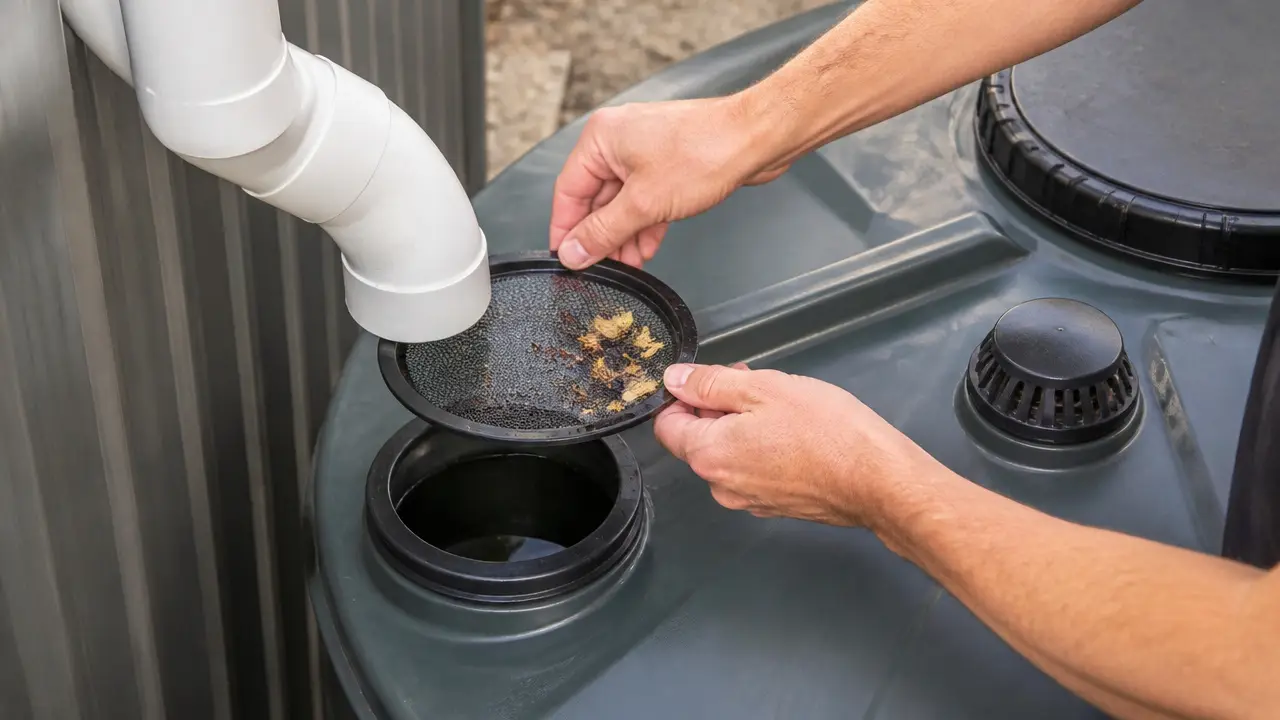
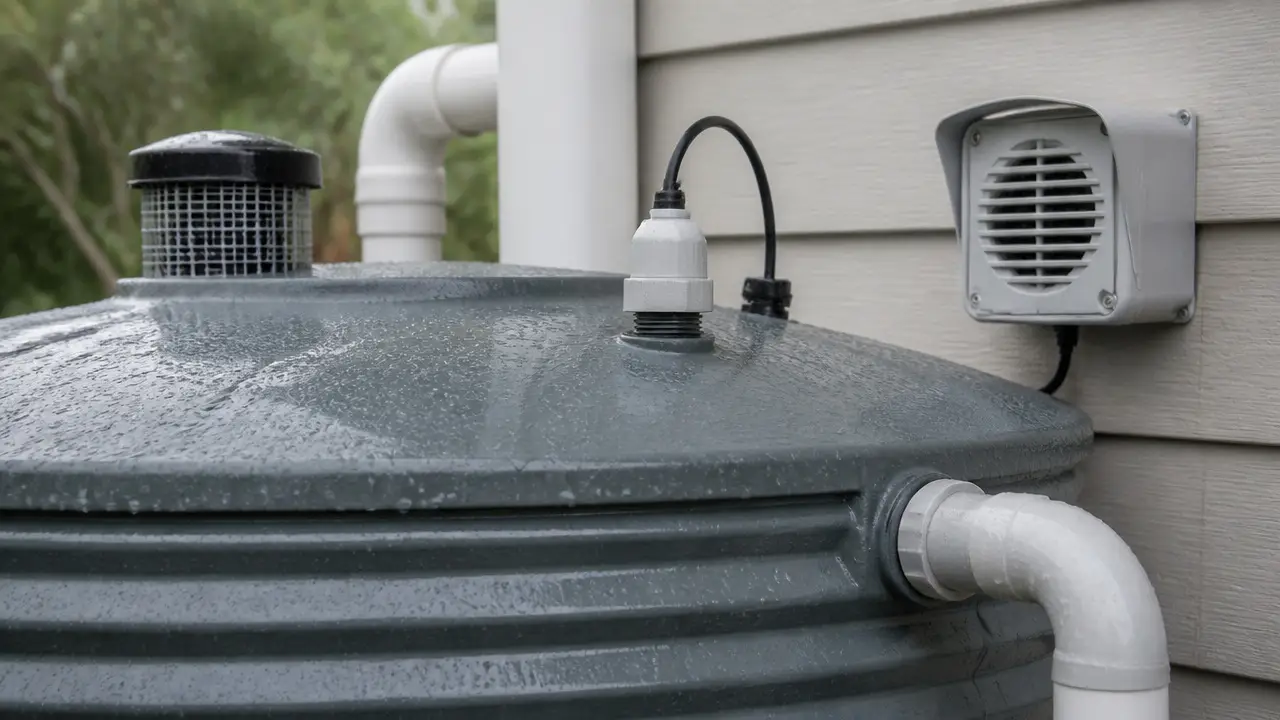
For a typical homeowner, rainwater harvesting starts after precipitation lands on a roof. Gutters carry that runoff into a barrel, IBC tote, or cistern.
Factor in legal restrictions on storing rainwater in some states to document approved rainwater uses under the applicable rules.
A reservoir may instead collect water moving across land or through a drainage path. Building a dam or changing the natural flow of surface water can bring water-right, land-use, dam-safety, drainage, or environmental rules into the project.
Do not assume that calling a pond a "rainwater pond" makes it legally equivalent to a roof-fed rain tank.
If you plan to excavate a pond, dam a drainage area, intercept a stream, or hold large amounts of surface runoff, check with your state water agency and local authorities before construction.
Could Someone Get in Trouble for an Ordinary Rain Barrel?
Rules depend on where you live, but the Oregon case does not show that homeowners are commonly jailed for putting barrels under their gutters.
The practical legal questions for a normal residential system are usually much simpler:
- Where is the water coming from? Roof runoff is different from diverting a stream or natural drainage channel.
- How much are you storing? A small rain barrel and a large engineered storage system may fall under different building or safety requirements.
- What will you use the water for? Garden irrigation is different from supplying indoor plumbing or drinking water.
- Will the system connect to household plumbing? Plumbing codes may require backflow protection, separate piping, labeling, permits, or inspections.
- Does the installation affect neighbors or drainage? Overflow should not create erosion, flooding, or drainage problems on adjoining property.
For current requirements, check your state water-resources agency and your city or county building or plumbing department. Laws and local rules can change.
Legal Collection Does Not Mean the Water Is Safe to Drink
The legal question and the water-quality question are separate.
Roof runoff can pick up dirt, bird droppings, microorganisms, roofing material residue, smoke particles, and other contaminants. A legal rain barrel is not automatically a source of potable water.
Potable means suitable for drinking.
Water used for gardens, outdoor cleaning, or similar purposes is generally considered non-potable, meaning it is not intended for drinking.
If rainwater will be used as drinking water, treat it as a whole-system decision. Collection surfaces, debris removal, first-flush management, storage, treatment, maintenance, current laboratory testing, and local drinking-water or plumbing requirements can all matter. One filter, UV unit, or home test does not by itself prove that stored rainwater is safe to drink.
What the Oregon Case Actually Teaches
The useful lesson is not that governments prohibit people from catching rain.
It is that roof collection and surface-water diversion are not always treated the same way.
A homeowner collecting roof runoff into a barrel or cistern may fall within a clear rainwater-harvesting exemption. Someone constructing dams or reservoirs that intercept water moving through a watershed may need water rights and other approvals.
Before building anything beyond a straightforward roof-fed system, identify exactly where the water comes from and what you are changing. That can prevent a simple rainwater project from becoming a water-right or drainage problem.
Frequently Asked Questions
Did Gary Harrington actually go to jail for collecting rainwater?
Yes. Gary Harrington of Oregon received jail time after being convicted in 2012 on nine misdemeanor counts involving unauthorized water storage. The case involved three reservoirs and dams, not an ordinary rain barrel.
How long was Gary Harrington sentenced to jail?
Contemporary reports state that he was sentenced to 30 days in jail. Reports from August 2012 said he had begun serving that sentence.
Is it illegal to collect rainwater from a roof in Oregon?
Oregon law currently exempts the collection and use of precipitation from an artificial impervious surface from the normal water-right permit requirement. A roof is a typical example of this kind of collection surface.
Can I dam runoff on my property and call it rainwater harvesting?
Do not assume so. Once you dam a drainage channel, intercept surface water, or create a reservoir, water-right and other regulations may apply. Check with the state water agency before building the project.
Do I need a water-right permit for a rain barrel?
Requirements depend on your location. In Oregon, the state water-right law provides an exemption for precipitation collected from artificial impervious surfaces. Other states and local governments can have different requirements.
Can I build a pond to collect rainwater?
Possibly, but a pond can raise issues that a rain barrel does not. The source of the water, dam construction, excavation, drainage changes, overflow, and local land-use rules may all matter. Check with the appropriate state and local authorities before construction.
Is legally collected rainwater safe to drink?
Not automatically. Roof runoff can contain biological and chemical contaminants. Drinking-water use requires suitable collection, treatment, maintenance, current laboratory testing, and compliance with applicable local requirements.