As an affiliate, we may earn a commission from qualifying purchases. We get commissions for purchases made through links on this website from Amazon and other third parties.
A rain barrel overflow hose gives excess water a safe path away from the barrel when it fills. The basic job is simple: install a watertight fitting near the top of the barrel, attach a hose that can carry enough water, and route the hose to a place where runoff will not damage the house, foundation, or yard.
The most important part is not the hose itself. It is making sure the overflow opening is large enough, sealed correctly, and positioned so water can leave the barrel as fast as it enters during heavy rain.
What You Need to Attach an Overflow Hose
A typical setup uses:
- An overflow fitting or bulkhead fitting
- A hose adapter or barb that matches the fitting
- An overflow hose
- A drill and correctly sized hole saw
- Rubber gasket or seal supplied with the fitting
- Hose clamp, if the connection requires one
- Mosquito-resistant screen where insects could enter
- Supports or clips if the hose needs to run along a wall or fence
A bulkhead fitting is a fitting made to pass through the wall of a tank or barrel. It usually has a gasket that creates a watertight seal.
Do not choose the hose first and then try to make everything else fit it. Start with the barrel opening and overflow fitting. The fitting, adapter, and hose must all have compatible sizes and connection types.
Where the Overflow Should Go
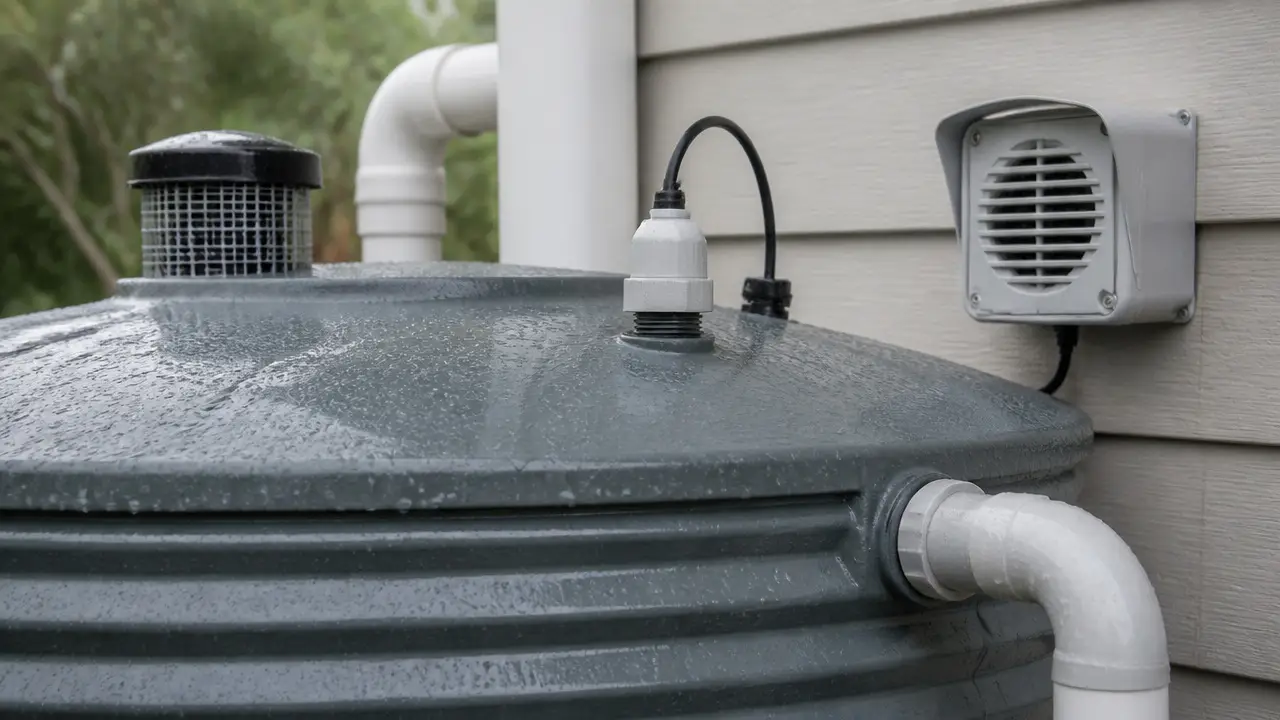
Place the overflow opening near the top of the rain barrel but below the lid or upper edge.
This lets the barrel store most of its capacity while leaving a controlled exit for extra water.
The overflow outlet should normally be:
- Above any lower hose bib or irrigation outlet
- Below openings where uncontrolled water could escape
- Easy to inspect and clean
- Positioned where the hose will not kink sharply
If your barrel already has a molded overflow port, use it when possible instead of drilling another hole.
How to Attach an Overflow Hose to a Rain Barrel
1. Decide Where the Overflow Water Will Drain
Plan the full drainage path before drilling the barrel.
The hose should lead water somewhere that can safely accept runoff. Depending on the property, that might be:
- A landscaped area
- A rain garden
- A suitable drainage area
- Another rain barrel
- An approved stormwater drainage point
Do not simply point the hose beside the foundation.
Overflow can be substantial during a strong storm. Once the barrel is full, almost all additional roof runoff entering the barrel must leave through the overflow.
Avoid sending water toward:
- Basement walls
- Crawl spaces
- Neighboring property
- Walkways where water can create a slipping or icing hazard
- Septic system components
- Areas that already drain poorly
Local drainage rules may also limit where roof runoff can be discharged.
2. Empty the Barrel
Drain the barrel before drilling or installing the fitting.
A nearly empty barrel is easier to work with and puts less pressure on the barrel wall while you install the fitting.
Make sure the barrel is stable before working on it.
3. Mark the Overflow Location
Mark a spot near the top of the barrel.
Leave enough room around the opening for:
- The fitting flange
- The gasket
- The retaining nut
- Your hand or tool, if the nut must be tightened from inside
Check the inside of the barrel before drilling. Molded ribs, curves, seams, or other fittings may prevent the gasket from sitting flat.
A fitting installed across a heavily curved or uneven surface may leak.
4. Drill the Hole
Use the hole size required by your bulkhead or overflow fitting.
Do not assume that a 1-inch fitting needs a 1-inch drilled hole. Pipe sizes and actual fitting diameters are often different.
Measure the fitting or follow its installation specifications.
Drill slowly so the hole stays clean and round. Remove plastic shavings and any rough edges that could keep the gasket from sealing.
Wear eye protection while drilling.
5. Install the Overflow Fitting
Insert the fitting through the barrel wall according to its design.
A typical bulkhead fitting includes:
- A flange
- A rubber gasket
- A threaded body
- A retaining nut
The gasket must sit flat against the barrel.
Tighten the fitting enough to compress the gasket and create a seal, but do not keep tightening until the plastic barrel wall bends or the gasket squeezes out of position.
Overtightening can damage both the fitting and the barrel.
Do not automatically add sealant if the fitting is designed to seal with a gasket. Extra sealant can sometimes interfere with the gasket rather than improve it.
6. Attach the Hose Adapter
The outside of the overflow fitting needs a connection that matches the hose.
Common arrangements include:
- Threaded fitting to hose barb
- Threaded fitting to flexible tubing adapter
- Slip fitting to rigid or flexible drain pipe
- Purpose-built rain barrel overflow connector
If threaded parts are being joined, make sure their thread types match. Parts with similar-looking threads are not always compatible.
Do not force mismatched fittings together.
7. Connect the Overflow Hose
Push the hose fully onto the hose barb or other adapter.
If the connection is designed for a clamp, place the clamp over the hose and tighten it enough to hold the hose securely.
The hose should not:
- Pull sideways on the barrel fitting
- Bend sharply immediately after the outlet
- Sag enough to trap large amounts of water
- Be crushed behind the barrel
- Narrow significantly compared with the overflow fitting
Support a long hose so its weight does not hang from the barrel wall.
8. Route the Hose Downhill
Gravity normally moves overflow water.
For that reason, the hose should run downhill from the barrel whenever possible.
A short low spot may hold some water, but major dips can reduce flow and collect:
- Sediment
- Leaves
- Mosquito habitat
- Ice in freezing climates
Avoid routing the hose uphill unless the system has been specifically designed to handle that arrangement.
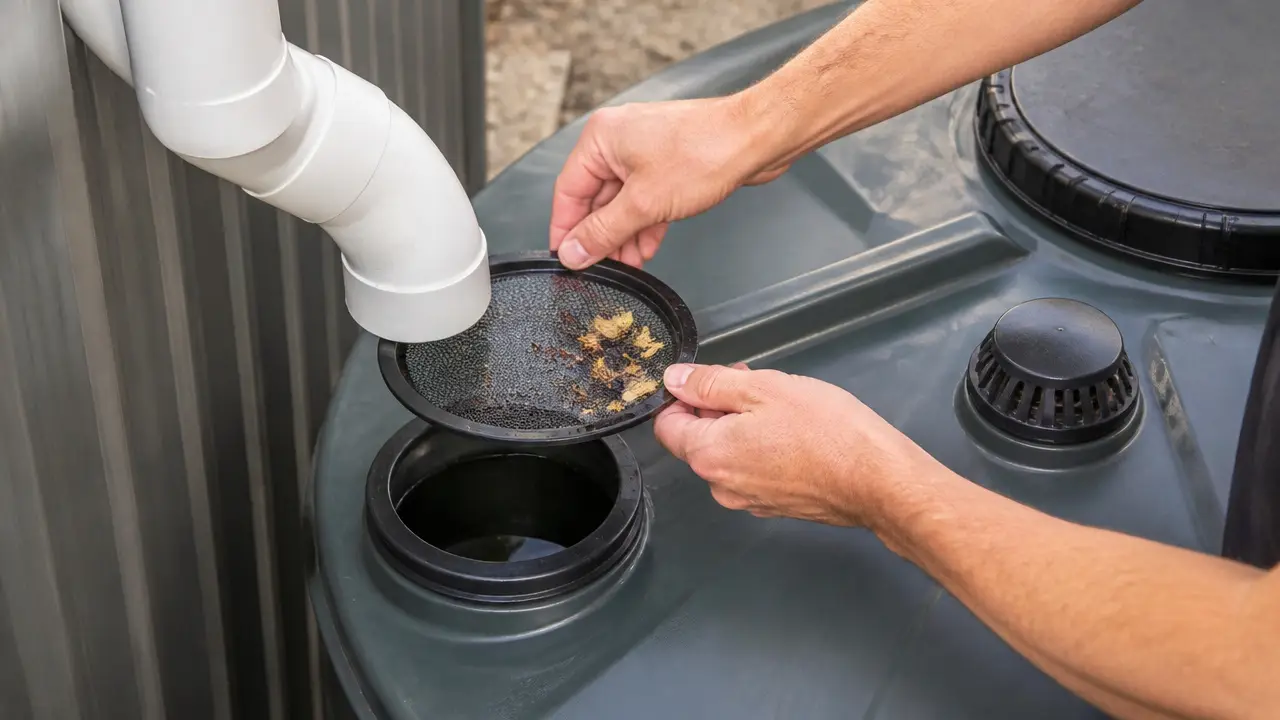
9. Protect Openings From Mosquitoes
An overflow opening can become an insect entry point.
Use fine, durable screening where needed to prevent mosquitoes from reaching stored water.
The screen also needs inspection. Leaves, roof grit, pollen, algae, and other debris can clog it.
A clogged overflow is especially serious because water may then escape through the lid or another unintended opening.
How Large Should the Overflow Hose Be?
The overflow must be able to handle the water reaching the barrel after it is full.
A very small hose can become a bottleneck.
For example, attaching a narrow garden hose to a barrel collecting runoff from a large roof does not mean that hose can safely handle the flow from a heavy storm. Water may enter the barrel faster than the hose can release it.
Roof runoff depends mainly on:
- Roof area draining to the barrel
- Rainfall intensity
- Gutter and downspout arrangement
- Restrictions in the barrel inlet
- Restrictions in the overflow
For this reason, many rain barrel systems use a relatively large overflow connection rather than ordinary narrow garden tubing.
The overflow should generally not be reduced to a much smaller diameter immediately after the barrel outlet unless the system was designed for that flow.
Why Overflow Capacity Matters
A rain barrel is only storing water until it fills.
Imagine a barrel receiving water from a downspout during a long storm. The barrel eventually reaches capacity. From that point onward, incoming water needs another route.
If the overflow cannot keep up, water can:
- Push out around the lid
- Spill beside the barrel
- Saturate soil near the foundation
- Back up into an inlet or diverter
- Flow where you did not intend it to go
A larger overflow path usually handles storm flow better than a small one, provided the rest of the drainage path can accept the water.
Connecting the Overflow to a Second Rain Barrel
Alongside routing overflow from a full rain barrel, understand tank materials suited to the water’s intended use.
An overflow hose can sometimes send water from one barrel to another.
The simplest arrangement places the connection near the top of the first barrel and directs overflow into the second.
However, there are two different system layouts that are often confused.
Overflow-to-Second-Barrel Setup
The first barrel fills before significant water moves into the second barrel.
This is simple but may not keep the barrels at equal water levels.
Linked-Barrel Setup
Barrels are connected so water can move between them and their levels can equalize.
This usually requires a different connection arrangement, often lower on the barrels.
Do not assume that a small overflow hose will automatically turn two barrels into one large storage system.
Each barrel still needs a safe way to handle excess water when the entire system is full.
Should the Overflow Hose Be Above or Below the Inlet?
The exact layout depends on the barrel and downspout system.
The overflow point needs to establish a safe maximum water level without interfering with the inlet.
If you use a downspout diverter, its height relative to the barrel connection can also affect how the system behaves when the barrel fills.
Follow the intended layout of the diverter rather than adding an overflow at an arbitrary height.
With an open downspout feeding directly into the barrel, the overflow must be able to release water without allowing the barrel to overfill.
Test the Overflow Before the Next Storm
Do not wait for heavy rain to find out whether the connection leaks.
Add water to the barrel until it reaches the overflow level.
Check:
- The bulkhead fitting
- The gasket
- The hose adapter
- Hose clamps
- The hose route
- The discharge point
Water should enter the overflow smoothly without leaking around the barrel fitting.
Also watch what happens at the far end of the hose. Make sure the discharge does not immediately wash away soil or run back toward the barrel or house.
A garden hose can help with a basic leak and drainage test, but it may not reproduce the flow created by a large roof during intense rain. Continue checking the system during actual storms.
Common Overflow Hose Problems
Water Leaks Around the Fitting
Possible causes include:
- A loose retaining nut
- A twisted gasket
- A rough hole
- A fitting mounted across a curved or molded area
- Damage around the opening
- An incorrectly sized hole
Drain the barrel below the fitting before adjusting it.
Do not simply keep tightening a plastic fitting. Excess force can deform the barrel or damage the threads.
The Barrel Overflows From the Lid
This often means water is entering faster than the overflow can carry it away.
Check for:
- A hose that is too small
- Kinks
- A clogged screen
- Sediment inside the fitting
- A crushed hose
- An uphill hose route
- A discharge point that is underwater
A larger or less restrictive overflow may be needed.
The Overflow Hose Keeps Coming Off
Make sure the hose and adapter are actually compatible.
A hose that barely stretches over a fitting is not necessarily a secure connection.
Use the correct hose barb and a suitable clamp when the fitting design requires one.
Water Stays in the Hose
Check for low spots.
A hose that rises and falls repeatedly can trap water. Re-route or support it so the line has a more consistent downhill path.
Standing water is especially undesirable where mosquitoes or freezing temperatures are concerns.
The Overflow Area Is Eroding
Fast-moving water can wash away soil.
The solution may involve spreading the discharge over a larger area, using erosion-resistant landscaping, or changing the drainage location.
Do not solve erosion by routing the water toward the building foundation.
Overflow Hose Considerations in Freezing Climates
Water trapped inside an overflow hose can freeze.
Ice may block the line or expand inside fittings.
Before freezing weather, inspect the system for sections that hold water. Depending on how the rain barrel is used during winter, you may need to drain and winterize the barrel, hose, valves, and exposed fittings.
A hose that worked correctly in summer should not be assumed to remain open when temperatures stay below freezing.
Follow the winter setup appropriate for your barrel material, plumbing, and climate.
Keep the Overflow Easy to Inspect
An overflow system is not maintenance-free.
Inspect it periodically and after major storms.
Look for:
- Leaves
- Roof grit
- Algae
- Insect screens covered with debris
- Loose hose clamps
- Cracked tubing
- Kinks
- Animal damage
- Ice damage
- Soil erosion at the outlet
Also inspect the barrel inlet. Reducing leaves and debris before they enter the barrel helps keep both the stored water and overflow path cleaner.
A Simple Rain Barrel Overflow Layout
A basic arrangement looks like this:
Roof → gutter → downspout → rain barrel → overflow fitting → overflow hose → safe drainage area
Every part affects the next one.
A large gutter and downspout feeding a barrel through a generous inlet can deliver much more water than a tiny overflow tube can carry away. The overflow should therefore be treated as part of the drainage system, not just as an accessory attached to the barrel.
Frequently Asked Questions
Can I use a garden hose as a rain barrel overflow hose?
Sometimes, but a standard garden hose may be too restrictive for a barrel receiving a large amount of roof runoff. The overflow needs enough capacity to handle incoming water after the barrel fills. A larger-diameter overflow line is often more suitable.
How high should I install a rain barrel overflow?
Install it near the top of the barrel at the maximum water level you want to maintain. Leave enough space for the fitting and gasket to sit on a sound, reasonably flat part of the barrel wall.
Does a rain barrel overflow hose need to slope downhill?
A gravity overflow works best when the hose maintains a downhill path. Large dips, uphill sections, and kinks can slow drainage and trap water.
Can I connect the overflow hose to another rain barrel?
Yes, an overflow can feed another barrel if the fittings and layout are suitable. The final barrel still needs its own safe overflow route for times when all barrels are full.
Why is my rain barrel overflowing even though it has an overflow hose?
The hose may be too small, kinked, clogged, crushed, routed uphill, or restricted by debris. Incoming roof runoff may also exceed the capacity of the overflow system.
Do I need a screen on the overflow opening?
Screening is useful where mosquitoes or other insects could enter through the overflow. Keep the screen clean because a clogged screen can restrict drainage.
Where should rain barrel overflow water go?
Send it to a location that can accept runoff without causing erosion, flooding, foundation problems, or problems on neighboring property. Suitable locations depend on the site and local drainage requirements.