As an affiliate, we may earn a commission from qualifying purchases. We get commissions for purchases made through links on this website from Amazon and other third parties.
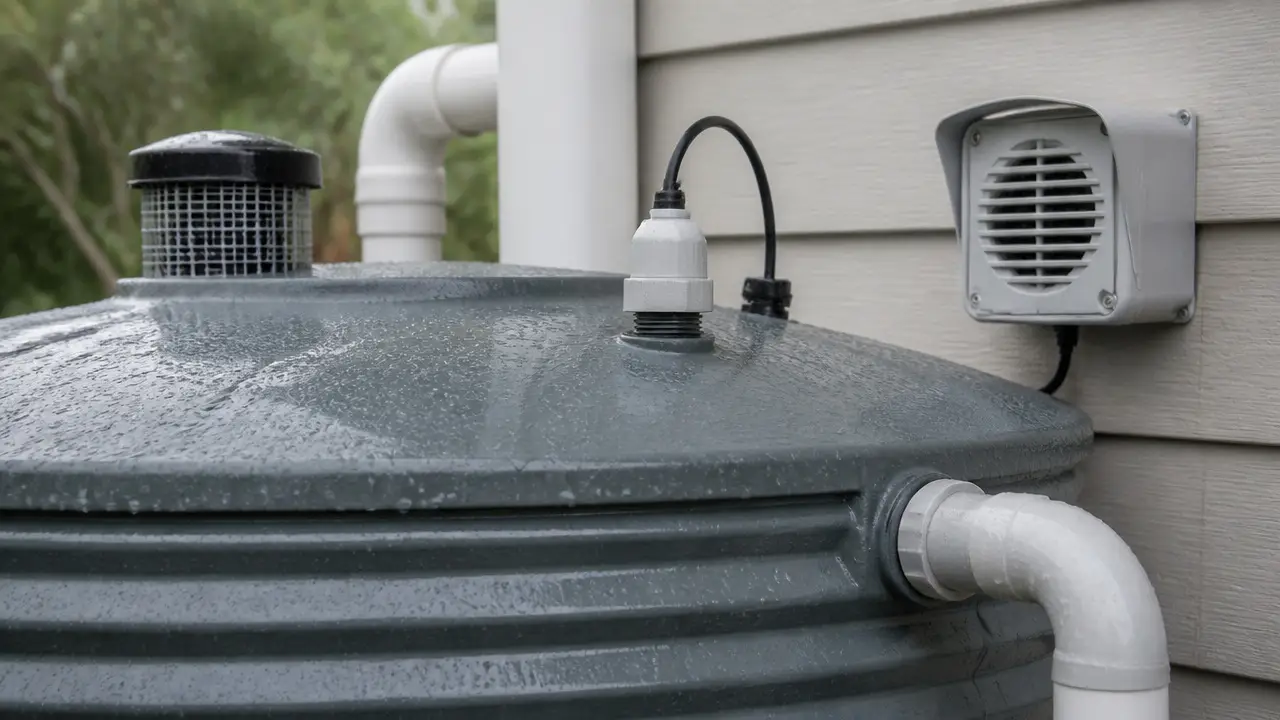
A rain barrel overflow pipe gives extra water a safe path out when the barrel becomes full. Without one, water can spill over the lid, soak the foundation, wash out soil, or leak through openings that were not designed to carry water.
The basic job is simple: install a watertight fitting near the top of the barrel, connect a pipe or hose, and route that line to a place where excess water can drain safely.
What a Rain Barrel Overflow Pipe Does
A rain barrel can fill faster than many people expect during a hard storm. Once the water reaches the top, every additional gallon needs somewhere to go.
An overflow pipe carries that extra water away from the barrel.
A good overflow setup should:
- Start near the top of the barrel.
- Handle water without backing up easily.
- Have a watertight connection through the barrel wall.
- Slope downhill where possible.
- Discharge away from foundations and other problem areas.
- Keep insects and debris from entering the barrel.
The overflow does not increase the barrel's storage capacity. It simply controls where the water goes after the barrel is full.
What You Need
The exact parts depend on your barrel and the type of overflow connection you plan to use.
Typical parts include:
- Overflow fitting or bulkhead fitting
- Overflow hose or rigid pipe
- Elbow or adapter if needed
- Screen for the outlet
- Appropriate gasket or seal supplied with the fitting
- Hole saw matched to the fitting
- Drill
- Marker
- Tape measure
- Deburring tool, utility knife, or fine sandpaper
A bulkhead fitting is a fitting designed to pass through the wall of a tank or barrel. It normally uses a gasket and threaded parts to make a watertight connection.
Do not choose the hole saw based only on the stated pipe size. A fitting made for a certain pipe size often requires a larger hole through the barrel. Use the hole diameter specified for your particular fitting.
Choose the Overflow Location
Install the overflow near the top of the rain barrel but below any area that must stay dry, such as the lid joint.
The overflow opening determines the normal maximum water level.
Leave enough solid barrel wall around the fitting for the gasket to sit flat. Avoid placing it:
- Across a molded rib
- On a sharp curve
- Against a seam
- Too close to the lid
- Where internal parts block the fitting
A flat section of barrel wall usually gives the gasket the best chance of sealing correctly.
Also think about where the pipe will go before drilling. Make sure there is enough room for the fitting, elbow, and hose without hitting a wall, downspout, fence, or another barrel.
Choose an Overflow Pipe Size
The overflow must be able to release incoming water quickly enough during heavy rain.
Avoid creating a small restriction after a much larger inlet. A narrow hose can become the weak point in the system and cause the barrel to overflow somewhere else during a strong storm.
If you have a commercial barrel, diverter, or overflow kit, use the size and arrangement specified by its manufacturer.
For a DIY system, consider:
- Downspout flow
- Roof area feeding the barrel
- Local rainfall intensity
- Inlet size
- Length of the overflow line
- Number of elbows
- Whether the line drains freely by gravity
Long pipes, small hoses, sharp bends, and nearly level runs can all reduce how quickly water drains.
When overflow capacity is uncertain, using a larger free-flowing path is generally better than reducing the outlet to a small garden hose.
How to Install a Rain Barrel Overflow Pipe
1. Empty the Rain Barrel
Do not drill into a full barrel.
Empty it enough that you can safely move or work around it. If possible, disconnect the barrel from the downspout while working.
Cleaning the inside at the same time can also make it easier to remove plastic shavings after drilling.
2. Mark the Overflow Hole
Choose the desired maximum water level and mark the center of the fitting.
Before drilling, hold the fitting against the barrel and check the space around it.
Make sure:
- The gasket will sit on a reasonably flat surface.
- The fitting will not interfere with the lid.
- You can reach the inside if the fitting requires an internal nut.
- The pipe can leave the barrel without an awkward bend.
Measure twice before making the hole. Moving a hole after drilling usually means repairing or replacing the barrel.
3. Drill the Hole
Use the hole size required by the overflow or bulkhead fitting.
Keep the drill steady and avoid forcing the hole saw through the plastic. Excess force can crack or tear some barrel materials.
After cutting the hole, remove loose plastic and smooth any rough edges. The sealing surface should be clean and even.
Do not remove more material than necessary. An oversized or badly shaped hole can make the fitting difficult to seal.
4. Install the Overflow Fitting
Follow the fitting manufacturer's gasket arrangement.
For many bulkhead-style fittings, a gasket seals against one side of the barrel wall while a threaded nut holds the assembly in place. The correct gasket position can vary by fitting, so do not assume every bulkhead installs the same way.
Keep the sealing surfaces clean.
Tighten the fitting enough to compress the gasket evenly, but do not automatically apply maximum force. Overtightening can distort a plastic barrel, damage the gasket, strip threads, or crack the wall.
Do not add sealant unless the fitting instructions call for it. A properly installed gasket often provides the actual seal.
5. Connect the Overflow Pipe
Attach the hose or pipe to the overflow fitting using the correct adapter.
The connection should not place heavy sideways force on the barrel fitting. Long sections of rigid pipe may need separate support.
Keep the overflow path simple. Each unnecessary elbow or restriction makes it harder for water to leave the barrel.
If you use flexible hose, avoid:
- Kinks
- Crushed sections
- Deep low spots
- Sharp upward bends
Water should have a clear route toward the discharge point.
6. Slope the Pipe Toward the Outlet
A gravity overflow works best when the pipe runs downhill.
Avoid installing a long section that rises above the barrel's overflow opening. Water will need to rise inside the barrel before it can push through that high point.
Low spots can also hold standing water.
Standing water matters more in freezing climates. Water trapped inside an overflow line can freeze, expand, and block or damage the line.
Where practical, arrange the overflow so it can drain after a storm.
7. Route the Water to a Safe Location
Do not simply point the overflow at the base of your house.
Send the water somewhere that can safely accept it, such as an appropriate landscaped area or other approved drainage location.
Examine routing overflow from a full rain barrel to assess working capacity for the expected drawdown and replenishment cycle.
Avoid discharging where water could:
- Collect against the foundation
- Flow into a basement or crawlspace
- Wash soil away from the barrel base
- Create a slippery walkway
- Erode a slope
- Flood a neighboring property
- Damage a septic area
- Flow into a place prohibited by local drainage rules
The right discharge location depends on the property and local requirements.
If your property already has drainage or foundation-water problems, a landscaper, drainage contractor, or other qualified professional can help determine where the overflow should go.
Add a Screen to Keep Pests Out
An open overflow pipe can become another entrance into the rain barrel.
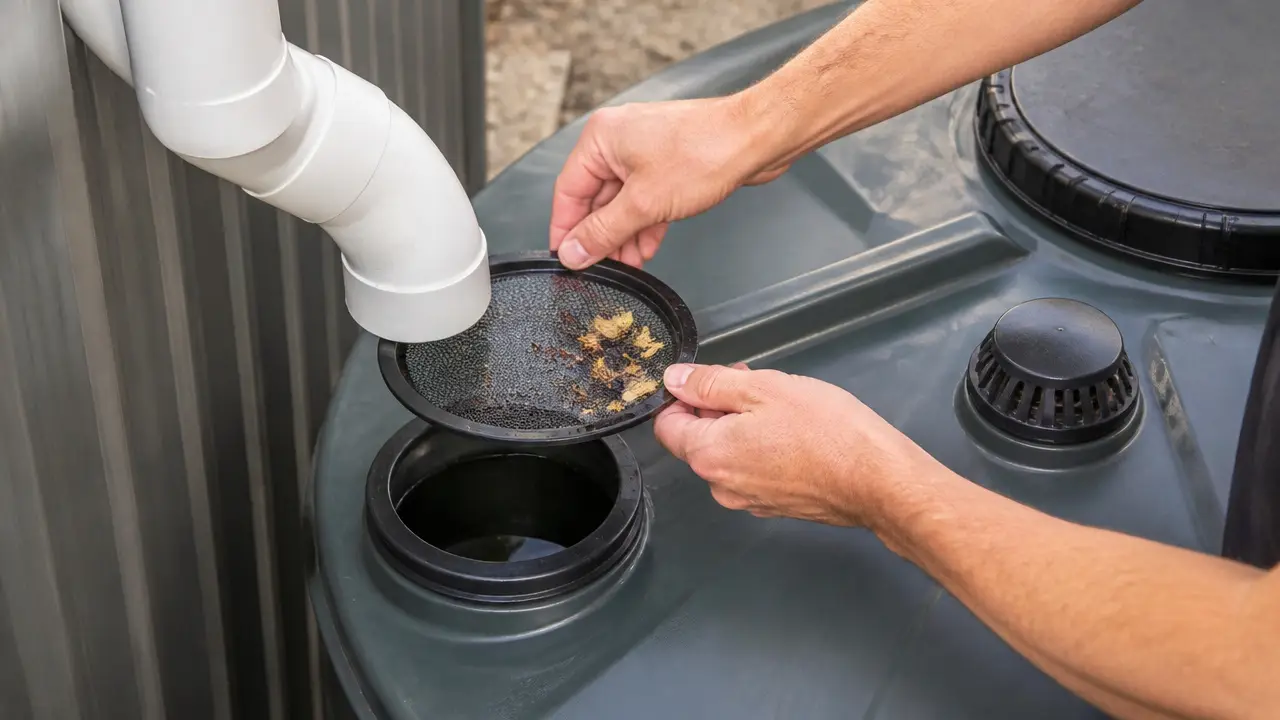
Use a suitable insect-resistant screen where needed while making sure the screen does not seriously restrict flow.
Inspect it regularly. Leaves, roof debris, insects, and sediment can block fine screening.
A blocked overflow can be almost as troublesome as having no overflow at all.
How to Connect Two Rain Barrels With an Overflow
An overflow can also send water from one barrel into another.
The first barrel fills to the level of the connecting fitting. Water then passes into the second barrel.
This can work well, but the final barrel still needs a way to handle excess water once all barrels are full.
For a series of barrels:
- Use suitable tank fittings at the connection points.
- Keep connecting lines free of major restrictions.
- Support pipes so their weight does not pull on the barrel walls.
- Install a final overflow outlet.
- Route that final outlet to a safe drainage area.
Do not assume that adding more barrels eliminates the need for overflow management. A long storm can eventually fill the entire system.
Test the Overflow Before the Next Storm
Do not wait for heavy rain to find out whether the system works.
Add water to the barrel until it reaches the overflow opening.
Watch for:
- Leaks around the bulkhead fitting
- Water backing up inside the barrel
- Kinked hoses
- Loose connections
- Poor drainage at the outlet
- Water collecting near the barrel base
Then add water somewhat faster to see whether the overflow can move a stronger flow without immediately backing up.
A garden-hose test cannot reproduce every intense rainstorm or roof runoff condition, but it can reveal obvious installation problems.
If the barrel receives water faster than the overflow can release it, look for restrictions rather than assuming the barrel itself is leaking.
Common Overflow Installation Mistakes
Using Too Small an Overflow Line
A small line can restrict flow during heavy rain. Water may then escape around the lid or inlet.
Match the overflow arrangement to the amount of water entering the system rather than choosing a hose only because it is convenient.
Installing the Hole Too High
If the fitting is almost at the lid, water may reach lid seams or other openings before the overflow starts working well.
Leave enough clearance for the overflow to control the normal maximum water level.
Installing the Fitting on a Ribbed Surface
Gaskets seal best against suitable smooth surfaces. Molded ribs and sharp curves can leave gaps.
Running the Pipe Uphill
A gravity overflow should have a clear drainage path. High spots make the barrel water level rise before water can pass through them.
Sending Water Beside the Foundation
Moving water two feet from the barrel does little good if that location still directs runoff toward the house.
Think about where the water goes after it leaves the end of the pipe.
Forgetting About Freeze Conditions
Water trapped in hoses and fittings can freeze.
Before freezing weather, inspect the system and follow the appropriate winter setup for your barrel, fittings, and local climate. Some systems are disconnected and drained for winter rather than left operating.
Ignoring the Overflow Screen
Screens can collect debris. Check them during routine barrel cleaning and after storms that carry a lot of leaves, seeds, or roof debris.
Maintain the Overflow With the Rest of the Rain Barrel
An overflow pipe does not need much attention, but it should not be forgotten.
Periodically check:
- The fitting for leaks
- The gasket area for movement
- The pipe for cracks
- Flexible hose for kinks
- Screens for blockage
- The outlet for erosion
- The drainage route for standing water
- Pipe supports for movement
Check the overflow before the wet season and after unusually strong storms.
Also inspect it whenever you clean the barrel. Sediment, organic material, and insects can collect in places that are difficult to see from outside.
Frequently Asked Questions
How high should a rain barrel overflow be?
Place the overflow near the top of the barrel at the level where you want excess water to begin draining. Keep it below lid seams or other openings that could leak before the overflow takes control.
Can I use a garden hose as a rain barrel overflow?
A garden hose may be too restrictive for some rain barrel systems, especially where a large roof area or strong rainfall sends water into the barrel quickly. The overflow needs enough capacity for the expected inflow. Avoid reducing a larger inlet to a small hose without considering how much flow it can handle.
Does a rain barrel need an overflow pipe?
A barrel that continues receiving roof runoff after it is full needs a controlled way to handle the extra water. An overflow pipe or another properly designed overflow path keeps that water from simply spilling wherever it can escape.
Can I connect the overflow back to the downspout?
Some rainwater-diverter systems are designed to return excess water to the downspout. Whether that works depends on the specific diverter and drainage arrangement. Follow the manufacturer's layout rather than connecting an overflow into a downspout at random.
Why is my rain barrel leaking around the overflow fitting?
Common causes include an uneven mounting surface, damaged gasket, loose fitting, overtightened fitting, debris under the gasket, or a hole that is the wrong size. Empty the water below the fitting before inspecting or adjusting it.
Where should rain barrel overflow water go?
Send it to a location that can accept water without causing foundation problems, erosion, flooding, or unsafe walking conditions. Suitable locations vary by property. Follow local drainage requirements where they apply.
Should a rain barrel overflow pipe have a screen?
A screen can help keep mosquitoes, insects, and debris from entering through an open overflow. It must also stay clear enough for water to pass freely, so include it in routine inspections.
What happens if the overflow pipe becomes blocked?
Water will continue entering the barrel but may no longer leave through the intended outlet. The barrel can then overflow around the lid, inlet, or another opening. Check the overflow for debris, kinks, ice, and other restrictions as part of regular maintenance.