
As an affiliate, we may earn a commission from qualifying purchases. We get commissions for purchases made through links on this website from Amazon and other third parties.
Best Overall
Best for Dry-Run Protection
Best for Tank Level Control
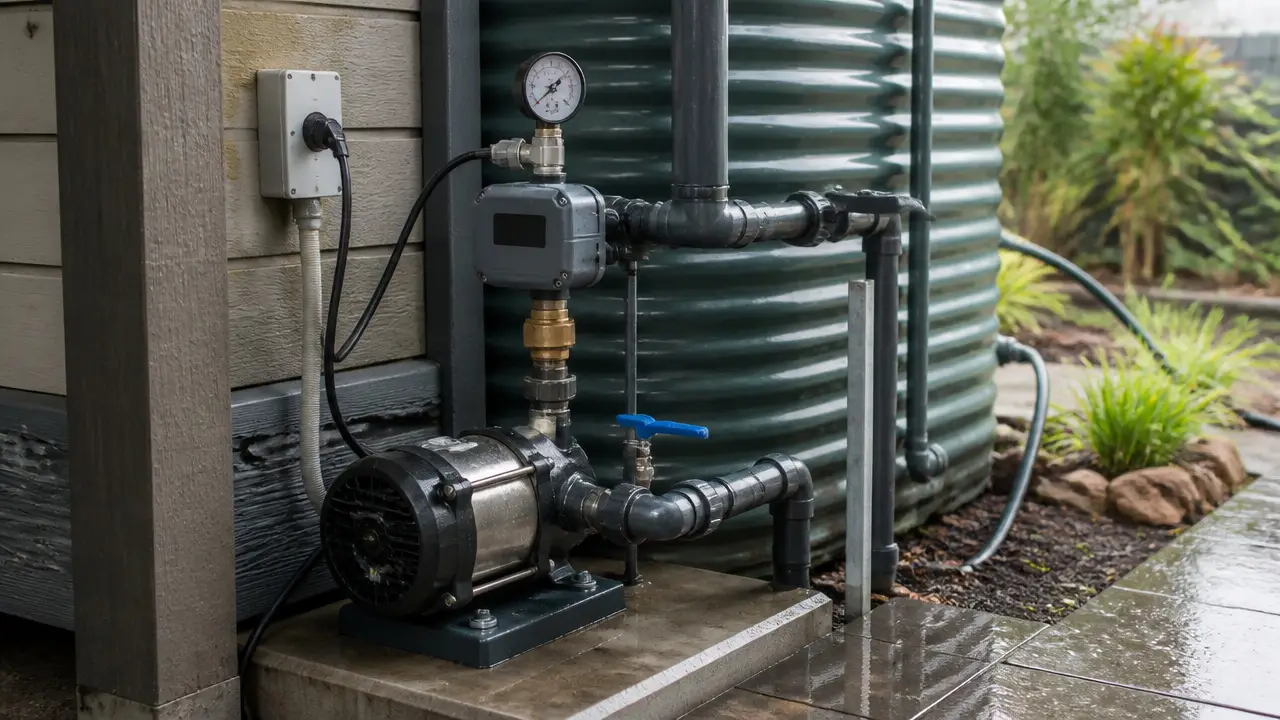
An automatic pump controller can make a rainwater pump behave more like a normal pressurized water supply. Open a tap or irrigation valve and the controller starts the pump. Close the outlet and the controller stops it. The useful part is not the automation by itself; it is getting start pressure, stop logic, pipe connections, pump load, and dry-run behavior matched to the system.
The four controllers here do not all solve the same problem. The WiseWater and two-mode digital controller are pressure-based units. The Ejoyous controller adds water-shortage shutoff as a key part of its design. The Stropum unit uses a float sensor instead, so it belongs in systems where liquid level should start or stop a pump rather than outlet pressure.
Electrical compatibility deserves the same care as plumbing fit. Several prepared product fields contain conflicting voltage signals, so this guide does not turn those disputed values into recommendations. Match the exact controller model to the pump's supply, current, motor load, and local electrical requirements before installation. If that work is outside your experience, use a qualified electrician or pump professional.
Automatic Pump Controllers at a Glance
| Product | Best For | Key Strength | Main Tradeoff |
|---|---|---|---|
| WiseWater Smart Pump Controller | Adjustable pressure control | Two control modes, digital display, and included NPT adapters | Thread fit and freeze exposure need attention |
| Two-Mode Digital Pump Controller | Metric-plumbed systems | Adjustable start and stop pressure logic | BSPP-style connections can require extra adapters in U.S. systems |
| Ejoyous Automatic Pump Controller | Pump protection | Automatic start/stop plus water-shortage shutoff | Electrical and dimension fields conflict, so exact installation specs need model-specific matching |
| Stropum Float Switch Controller | Tank-level automation | Long float lead and relay-based level control | It controls liquid level rather than maintaining line pressure |
Best Overall: WiseWater Smart Pump Controller
1 / 4
WiseWater Smart Pump Controller
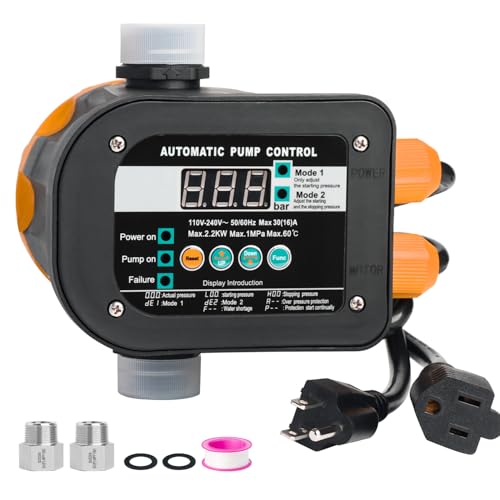
Working Pressure
116 PSI
Start Range
7.25-97.18 PSI
Adapters
1 in G to 1 in NPT
The WiseWater controller has the clearest pressure-control range in this group. One mode lets you set the starting pressure while the controller handles the stopping behavior. The second mode gives you adjustment over both start and stop pressure. That is useful when a rainwater system needs more control than a simple fixed mechanical switch can provide.
Its prepared pressure limits include a 116 PSI working-pressure figure, a start range from 7.25 to 97.18 PSI, and a stop range from 11.6 to 101.53 PSI. Those numbers are broad, but the practical setting still needs to stay inside the safe operating range of the pump, piping, pressure tank, fixtures, filters, and irrigation equipment. A higher setting is not automatically better.
The package includes adapters from 1-inch G threads to 1-inch NPT, which matters in U.S. plumbing. Even with those adapters, thread engagement can be shallow on some fittings, so assemble the plumbing without forcing plastic threads. Keep the controller protected from freezing water; trapped water can expand inside the housing and damage the unit.
Why It Works
- Two control modes give more flexibility than a single fixed start point.
- The digital display makes pressure settings easier to read during setup.
- Included G-to-NPT adapters reduce the amount of separate plumbing hardware needed.
- The documented pressure ranges suit a wide variety of pump-control setups when the rest of the system is rated appropriately.
What To Keep In Mind
- The prepared voltage fields conflict, so electrical supply must be matched to the exact unit rather than assumed from a headline value.
- Plastic threads should engage smoothly without excessive force.
- The power lead may be short for some pump locations.
- Drain or protect the controller when freezing conditions can reach the plumbing.
Best for Metric-Plumbed Systems: Two-Mode Digital Pump Controller
2 / 4
Two-Mode Digital Pump Controller

Control
Two pressure modes
Display
Digital
Connections
Metric/BSPP-style
This controller uses the same useful two-mode idea: one setting focuses on start pressure, while the other allows start and stop pressure adjustment. It can suit a pump system where you want tighter control over the pressure swing instead of waiting for a broad mechanical-switch differential.
Its most important buying detail is the plumbing standard. The inlet and outlet use metric BSPP-style connections rather than ordinary U.S. pipe threads. That means a system built around NPT hose fittings may need a deliberate adapter chain before the controller can be installed without leaks or damaged threads.
The prepared electrical fields disagree on supply voltage, so this guide does not use a voltage value as a selection point. That conflict matters because a pump controller sits directly in the motor-control path. Use the exact model markings and installation instructions for electrical matching, and have a qualified professional handle circuit changes or motor-load questions.
Why It Works
- Adjustable start and stop behavior can reduce large pressure swings.
- A digital display makes the operating pressure easy to see.
- It is a reasonable fit when the surrounding plumbing already uses compatible metric threads.
What To Keep In Mind
- Metric BSPP connections may require several adapters in a U.S. NPT system.
- Do not force NPT fittings into metric ports.
- Conflicting voltage information makes exact model-level electrical matching essential.
- Pump restart behavior should be observed under real demand before the system is relied on unattended.
Best for Dry-Run Protection: Ejoyous Automatic Pump Controller
3 / 4
Ejoyous Automatic Water Pump Controller
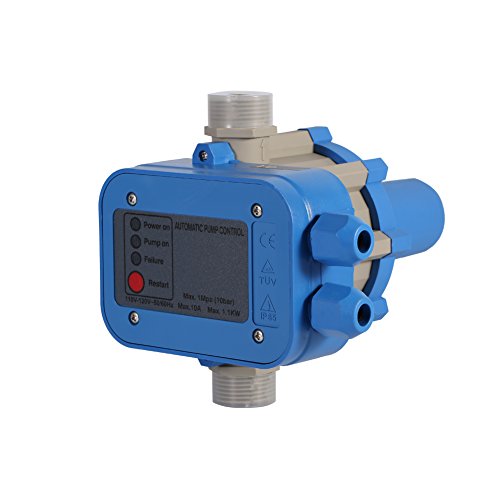
Control
Automatic start/stop
Protection
Water-shortage shutoff
Indicator
LED status lights
The Ejoyous controller is the strongest fit when protecting the pump from loss of water matters as much as maintaining pressure. It is designed to start and stop the pump from line-pressure and flow changes, then stop the pump when the controller detects a water-shortage condition.
That protection can be useful in rainwater systems because storage levels change with weather. A pump drawing from a tank that runs empty can overheat or damage itself if it continues operating without adequate water. A controller with water-shortage shutoff adds another layer of protection, although the pump's own dry-run requirements and suction layout still matter.
The product is intended for several pump types, including self-priming, jet, garden, and centrifugal pumps. LED indicators show operating status. The prepared dimension and voltage fields contain conflicts, so this guide does not use those exact numbers. Match the actual controller to the pump motor and plumbing rather than assuming every version in the product family shares one electrical specification.
Why It Works
- Automatic start and stop behavior supports normal tap or irrigation demand.
- Water-shortage shutoff can protect a pump when the source tank runs low.
- LED status lights provide a simple operating indication.
- It can fit several common surface-pump types when electrical and hydraulic requirements match.
What To Keep In Mind
- Dry-run protection is not a substitute for proper suction plumbing or a reliable tank-level plan.
- Exact voltage, dimensions, and motor-load compatibility need to be taken from the exact unit because the prepared fields conflict.
- Keep electrical connections protected from weather and moisture.
- A qualified professional is the safer choice when motor wiring or circuit sizing is involved.
Best for Tank Level Control: Stropum Float Switch Pump Controller
4 / 4
Stropum Float Switch Pump Controller

Control Type
Float level sensor
Float Lead
9.8 ft
Terminals
Screw terminals
The Stropum controller belongs here only when the automation goal is water level rather than pressure. A float sensor rises and falls with the liquid level, and the controller uses that signal to start or stop a connected pump. That can suit tank filling, transfer, sump-style drainage, or other jobs where the pump should react to a high or low water level.
The 9.8-foot float lead gives useful placement freedom in a large tank or sump. The relay/controller can be mounted away from the water while the float stays in the vessel. That separation is helpful in a rainwater system where the sensor needs to move freely without putting the electrical control box at the tank opening.
This is not a replacement for a pressure controller feeding household fixtures or a pressure-regulated irrigation line. It does not maintain a chosen outlet pressure. The prepared voltage fields also conflict, so electrical supply and pump load must be matched from the exact unit before installation.
Why It Works
- A float sensor directly responds to tank level rather than line pressure.
- The long sensor lead works in deeper tanks and flexible mounting layouts.
- Screw-terminal connections support a permanent control installation when wired correctly.
- It can automate transfer or refill pumps that do not have their own level control.
What To Keep In Mind
- Choose it for level control, not constant-pressure service.
- The float needs clear room to move without snagging on pipes, cables, or tank walls.
- Conflicting voltage data means the exact unit and pump circuit must be matched before wiring.
- Electrical work near water should be enclosed appropriately and handled by a qualified person when needed.
How to Choose an Automatic Pump Controller
Decide Whether You Need Pressure Control or Level Control
Pressure controllers react to water demand in the discharge line. They are useful when opening a faucet, hose bib, or irrigation zone should start the pump automatically.
Level controllers react to water height in a tank or sump. They are useful when one tank needs to be filled, emptied, or protected from overflow. Mixing those jobs leads to the wrong controller even when both products can technically turn a pump on and off.
Match the Controller to the Pump Motor
A controller has to handle the pump's electrical supply and motor load. Motor starting current can be much higher than normal running current, so a controller that appears adequate from watts alone may still be a poor match.
Use the pump and controller nameplate information together. When a contactor, relay, different circuit, or other motor-control work is needed, a pump technician or electrician can design that portion safely.
Match Every Pipe Thread
Automatic controllers often come from markets that use BSP or G threads, while U.S. pumps and fittings commonly use NPT. The diameters can look close even though the thread form is different.
Use the correct transition adapter rather than forcing the threads. A controller that leaks at the inlet can lose prime, introduce air, damage plastic ports, or make pressure readings unreliable.
Set Pressure for the Whole System
Pump pressure has to remain inside the limits of every connected component. Filters, housings, hoses, irrigation regulators, pressure tanks, fixtures, and valves all matter.
Set the controller to deliver the pressure the end use needs, not the highest number the controller can display. A garden drip system may need far less pressure than a household pressure line.
Plan for Freezing and Weather
Controllers often hold a small amount of water internally. If that water freezes, it can crack a housing or damage a sensor. Outdoor rainwater systems in freezing climates need a drainage, removal, or protected-location plan.
Electrical enclosures also need suitable weather protection. A product surviving one rainstorm does not mean every plug, cord connection, or terminal can stay exposed outdoors indefinitely.
Common Automatic Controller Problems
The Pump Does Not Restart at the Expected Pressure
First separate a settings issue from a plumbing issue. A controller cannot read pressure correctly when air is entering through a poor suction connection or when the pump cannot build enough pressure for the chosen stop point.
Use a separate pressure gauge during setup and make sure the pump itself can reach the required operating range.
Threads Leak or Will Not Tighten
Stop before forcing the fitting. Metric BSPP, BSPT, and NPT threads are not automatically interchangeable. Use the correct adapter and sealing method for that thread type.
The Pump Cycles Too Often
Rapid cycling can come from pressure settings, small leaks, a missing or undersized pressure tank, low flow demand, or another system problem. A digital controller does not remove every hydraulic cause of cycling.
The Controller Freezes
A controller with trapped water can crack when exposed to freezing temperatures. Seasonal systems should be drained or protected according to the controller and pump instructions.
Frequently Asked Questions
What does an automatic pump controller do?
It starts and stops a pump in response to a control condition such as line pressure, flow, or tank level. The exact behavior depends on the controller type.
Do I still need a pressure tank with an automatic pump controller?
Some controller-and-pump systems operate without a traditional large pressure tank, while others benefit from one to reduce cycling and smooth demand. Follow the pump and controller design rather than assuming one rule fits every system.
Can an automatic pump controller protect against dry running?
Some models include water-shortage or dry-run shutoff. That feature is product-specific and should be combined with proper suction plumbing and tank-level management.
Can I use a pump controller on a rain barrel?
Yes, when the pump, controller, suction arrangement, electrical supply, and desired outlet pressure all match. A small barrel also needs enough stored water to keep the pump from repeatedly running dry.
Are BSP and NPT pump-controller threads interchangeable?
No. They use different thread forms. Use the correct adapter so the connection seals without damaging the controller port.
Should an automatic pump controller be left outside in winter?
Only when the exact product and installation are designed for those conditions. Water trapped inside a controller can freeze and cause damage, so many seasonal systems need draining or protected placement.
If your main need is portable water movement instead of automatic pressure control, battery-powered water transfer pumps offer a different approach. For short transfer jobs using a tool you may already own, drill pumps for water transfer are simpler. When electricity is not available, hand pumps for water barrels provide manual water movement.