As an affiliate, we may earn a commission from qualifying purchases. We get commissions for purchases made through links on this website from Amazon and other third parties.
Ceramic water filters can be useful for removing fine particles and certain microbes, but they have important limits. The main disadvantages are slow flow, clogging, frequent cleaning, breakage risk, and incomplete removal of viruses and dissolved chemicals.
For a rainwater system, a ceramic filter is usually best treated as one treatment stage, not as a complete water-safety system.
What Is a Ceramic Water Filter?
A ceramic water filter pushes water through a hard, porous ceramic material. The ceramic contains very small pores, or openings. Particles and some microorganisms are too large to pass through these pores.
Common designs include:
- Ceramic filter candles inside a housing
- Gravity-fed ceramic pot filters
- Ceramic cartridges used with other filter media
- Ceramic elements combined with activated carbon
The exact performance depends on the pore size, construction, condition of the ceramic, water quality, and any additional treatment media.
That last point matters. Two ceramic filters can look similar but remove very different contaminants.
Main Disadvantages of Ceramic Water Filters
| Disadvantage | Why it matters |
|---|---|
| Slow water flow | Fine pores restrict how quickly water can pass |
| Clogging | Sediment and organic matter can block the surface |
| Regular cleaning | The ceramic surface must often be cleaned to restore flow |
| Fragile filter element | Cracks can allow untreated water through |
| Limited virus removal | Many ceramic filters have pores too large to reliably stop viruses |
| Limited chemical removal | Basic ceramic media does not solve most dissolved chemical problems |
| No residual protection | Filtered water can become contaminated again during storage |
| Performance varies | Pore size, construction, certification, and condition all affect results |
Ceramic Filters Can Have a Slow Flow Rate
Small pores are useful for trapping contaminants, but they also restrict flow.
Some gravity-fed porous ceramic filters produce water quite slowly. WHO materials describe common porous ceramic household filters with flow rates around 1 to 3 liters per hour, with even slower flow possible when the source water is cloudy.
That may be acceptable for a small drinking-water container. It can be frustrating if you need enough water for:
- Several people
- Frequent cooking
- A cabin sink
- Household reuse
- Large-volume rainwater treatment
Pressure-fed ceramic cartridges can operate differently, so do not assume every ceramic filter has the same flow rate. Check the rated flow for the specific element and the pressure needed to achieve it.
Sediment Can Clog the Ceramic Surface
Rainwater may carry roof grit, pollen, leaf fragments, dust, insect material, and other suspended particles.
A ceramic filter can catch much of this material, but that also means the filter may clog quickly if it is installed too early in the treatment path.
As the surface loads with debris:
- Flow becomes slower.
- The filter takes longer to produce water.
- Cleaning becomes more frequent.
- Eventually, the element may need replacement.
This is why a ceramic filter should normally not be the first thing dirty roof runoff encounters.
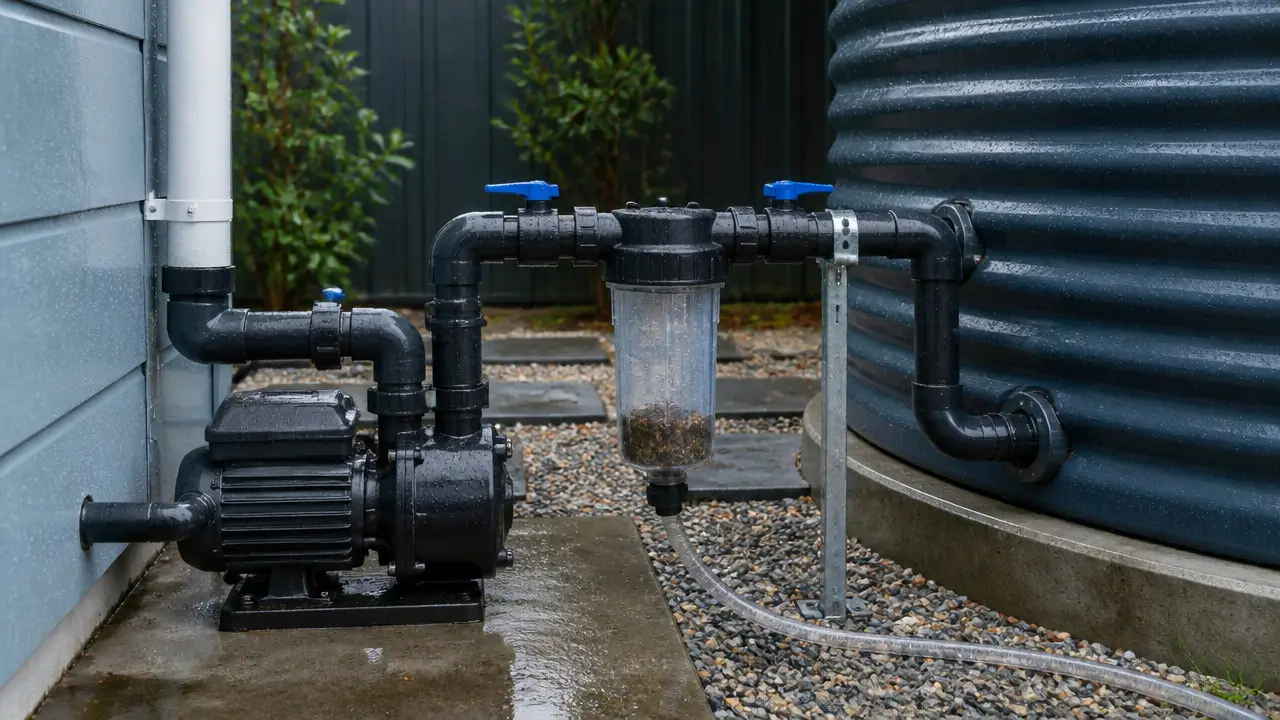
For rainwater, upstream controls such as gutter screens, a suitable first flush device, settling, or sediment prefiltration may reduce the load on the ceramic element. A first flush device diverts an initial portion of roof runoff that may contain a heavier concentration of debris and contaminants.
Ceramic Filters Need Regular Cleaning
Ceramic elements are often reusable to some extent because material collected on the outside can be removed according to the manufacturer's instructions.
That does not make them maintenance-free.
WHO identifies regular cleaning of both ceramic filters and their receiving containers as a limitation of porous ceramic filtration.
Maintenance becomes especially important when filtering stored rainwater because sediment and organic material can build up over time.
Cleaning must also be done carefully. Aggressive scrubbing or using the wrong tools can damage some filter elements. Follow the manufacturer's cleaning method rather than assuming the ceramic can be scrubbed indefinitely.
Ceramic Filter Elements Can Crack
Ceramic is hard but brittle.
Dropping a filter candle, knocking it against a sink, freezing water inside it, or overtightening its mounting hardware can potentially damage the element.
Even a small crack matters. Water can take the easier path through the crack instead of passing through the intended pores.
WHO guidance notes that damaged or slightly cracked ceramic filters are unsuitable for dependable removal of particles and microbial contaminants.
A ceramic element that has been dropped or visibly damaged should therefore not simply be put back into service and assumed to be working properly.
Freezing deserves special attention in outdoor rainwater systems. Follow the filter manufacturer's temperature and storage requirements rather than relying on the ceramic element to survive freezing conditions.
Many Ceramic Filters Do Not Reliably Remove Viruses
This is one of their most important limitations.
Ceramic filtration can be effective against some larger microorganisms, particularly protozoa and bacteria, depending on the filter's tested pore size and performance. Viruses are much smaller and can pass through many forms of microfiltration.
WHO specifically identifies porous ceramic filtration as having limited effectiveness against viruses.
CDC similarly explains that filters with an absolute pore size of 0.3 micron or smaller can remove bacteria and parasites but do not remove viruses.
This is why the word filter should not automatically be read as purifier.
If rainwater is being considered for drinking, do not assume that passing it through a ceramic candle makes it potable. Potable means suitable for drinking.
Basic Ceramic Media Does Not Remove Most Dissolved Chemicals
Ceramic filtration mainly works by physically stopping particles that are larger than its pores.
Dissolved contaminants are a different problem. Basic microfiltration does not remove chemicals such as lead or arsenic, according to CDC guidance.
Depending on the site, collected rainwater could also pick up substances from:
- Roofing materials
- Metal flashing
- Atmospheric deposition
- Paint or coatings
- Nearby sources of pollution
- Storage tanks and plumbing
A ceramic element combined with activated carbon or another treatment medium may address additional contaminants, but its performance depends on the specific design and verified contaminant claims.
Do not assume that the presence of carbon means every chemical problem has been solved.
Filtered Water Can Be Contaminated Again
Ceramic filtration does not normally leave a disinfectant residual in the water.
A disinfectant residual is a small amount of disinfectant that remains available to help control microorganisms after treatment.
WHO lists the lack of residual protection as a limitation of ceramic filtration because treated water can be contaminated again if it is placed in an unsuitable storage container.
For example, problems can return if filtered water is:
- Collected in a dirty bucket
- Touched by hands or utensils
- Stored in an open container
- Passed through contaminated tubing
- Left in a poorly maintained downstream tank
Evaluating the performance of ceramic water filters actually helps understand the appropriate follow-up check for likely contaminants.
The condition of everything after the filter therefore matters too.
Filter Quality and Performance Can Vary
The word "ceramic" does not tell you enough about a water filter.
Performance can depend on:
- Absolute versus nominal pore size
- Actual pore-size consistency
- Manufacturing quality
- Filter thickness
- Flow rate
- Water pressure
- Condition of the ceramic
- Added media such as carbon
- Antimicrobial additives
- Verified contaminant-reduction claims
WHO has noted quality variation among ceramic filters and emphasizes performance testing of household water-treatment technologies.
For drinking-water applications, look for independent certification or other credible performance verification for the specific contaminants you need to address, rather than choosing a filter simply because it uses ceramic.
CDC also recommends testing the water and selecting treatment based on the harmful germs or chemicals of concern.
Cleaning Eventually Stops Restoring Performance
A ceramic filter may regain flow after proper surface cleaning, but it does not have an unlimited service life.
Eventually the element may:
- Become permanently fouled
- Wear down from repeated cleaning
- Develop damage
- Reach the manufacturer's replacement limit
- No longer provide the intended performance
Do not judge filter condition only by how clear the water looks. Clear water can still contain microorganisms or dissolved contaminants.
Likewise, good flow does not prove that the element is intact.
Ceramic Filters Are Not Ideal for Every Part of a Rainwater System
A ceramic filter makes the most sense where relatively small amounts of already-prefiltered water need fine filtration.
It is usually less practical as the main filter for a large rainwater flow.
For example, sending all the water from a large cistern through a small gravity-fed ceramic element would create a severe flow restriction. A garden irrigation system may not need such fine filtration at all.
The required treatment should match the intended use.
Garden irrigation
A ceramic filter is normally finer than necessary for basic garden watering. Sediment filtration suited to the emitters or irrigation equipment is generally more practical.
Toilet flushing and outdoor cleaning
Fine ceramic filtration may also be unnecessary unless a particular downstream component requires it.
Drinking and cooking
This is where ceramic filtration can be useful, but also where its limitations matter most.
A ceramic filter should not be treated as a complete drinking-water solution for untreated roof runoff.
Can a Ceramic Filter Make Rainwater Safe to Drink?
Not by itself in most cases.
Roof-collected rainwater can contain physical, microbial, and chemical contaminants. EPA describes drinking-water contaminants as including physical material, chemicals, biological contaminants such as bacteria and viruses, and radiological contaminants.
A ceramic microfilter addresses only part of that range.
For drinking-water use, think in terms of a whole treatment system, which may involve:
- Suitable roof and collection materials
- Debris exclusion
- First-flush management where appropriate
- Protected storage
- Sediment prefiltration
- Treatment selected for the contaminants actually present
- Appropriate disinfection when required
- Hygienic treated-water storage and plumbing
- Routine maintenance
- Current laboratory water testing
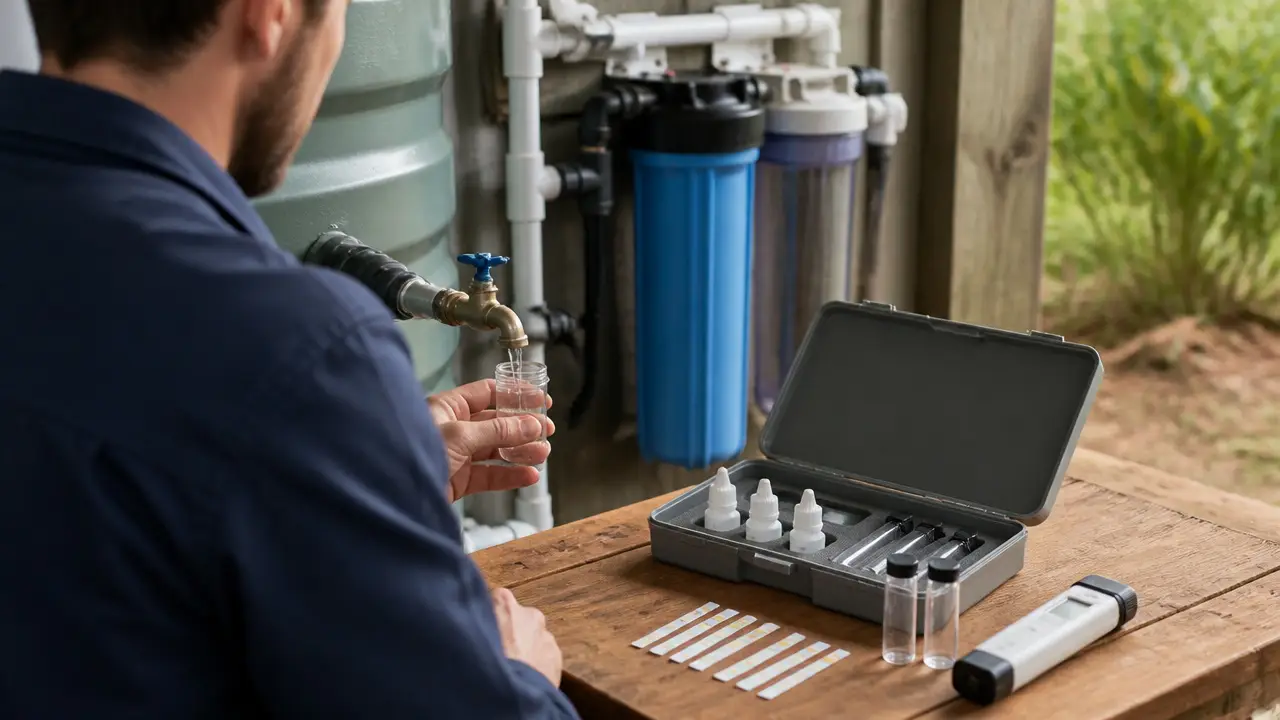
The correct stages depend on the source water and local requirements. Home meters or simple test strips do not provide a complete drinking-water safety assessment.
For untreated rainwater intended for drinking, use current laboratory testing and qualified water-treatment or public-health guidance when designing the system.
When Does a Ceramic Filter Make Sense?
Despite its disadvantages, ceramic filtration can still be a useful option when:
- You only need modest amounts of filtered water.
- The incoming water has already had larger sediment removed.
- The target contaminants match the filter's verified performance.
- You can inspect and clean the element regularly.
- Replacement elements are available.
- The ceramic filter is being used as one suitable stage in a larger treatment system.
Its simple operation and lack of electricity can also make gravity-fed ceramic filtration useful in some cabins and small systems.
The key is to use it for what it actually does rather than expecting it to solve every water-quality problem.
Frequently Asked Questions
Do ceramic water filters remove bacteria?
Some ceramic filters can remove bacteria because their pores are small enough to physically block them. Performance depends on the filter's pore size, condition, construction, and verified testing. Do not assume every ceramic filter provides the same bacterial reduction.
Do ceramic water filters remove viruses?
Many do not reliably remove viruses. Viruses can be smaller than the pores used in common ceramic microfilters. WHO describes porous ceramic filtration as having limited effectiveness against viruses.
Do ceramic filters remove chemicals from water?
Basic ceramic filtration generally does not remove most dissolved chemicals. A filter may include carbon or other media that targets additional contaminants, but you should check verified claims for the complete filter rather than assuming the ceramic itself provides chemical treatment.
Why does my ceramic water filter keep getting slower?
Sediment, organic matter, and other particles can collect on the ceramic surface and restrict water flow. Proper prefiltration can reduce this problem. Clean the element only using the procedure specified by its manufacturer.
Can I keep using a cracked ceramic filter?
A cracked ceramic element should not be relied on for filtration. Water may bypass the fine pores through the crack. Replace a damaged element according to the manufacturer's instructions.
Is a ceramic filter good for rain barrel water?
It can be useful for fine filtration of a small amount of prefiltered rainwater, but it is often unnecessarily restrictive for general garden irrigation. The appropriate filter depends on how the rainwater will be used.
Is ceramic-filtered rainwater safe to drink?
Ceramic filtration alone should not be used to assume roof-collected rainwater is safe to drink. Drinking-water use requires suitable collection and storage, treatment matched to the contaminants present, proper maintenance, current laboratory testing, and compliance with applicable local requirements.