As an affiliate, we may earn a commission from qualifying purchases. We get commissions for purchases made through links on this website from Amazon and other third parties.
For most homeowners, there is no single “best” brand of carbon filter. The better choice is a specific filter model with independent certification for the contaminants you want to reduce, enough flow for the job, and replacement cartridges you can reliably obtain.
If you want one brand to start with for a residential drinking-water system, Pentair/Everpure is a strong option. Current NSF listings include Everpure residential models certified for chlorine, taste and odor reduction under NSF/ANSI 42, as well as models with NSF/ANSI 53 health-effect claims and NSF/ANSI 401 claims. Multipure is another established option with current NSF listings under Standards 42 and 53.
The important part is not the logo on the cartridge. It is what the exact cartridge and system are certified to do.
What Makes a Good Carbon Filter Brand?
A dependable carbon-filter company should make it easy to answer five questions:
- What contaminants is this exact filter designed to reduce?
- Is that performance independently certified?
- What flow rate can the filter handle?
- How long is the cartridge rated to last?
- Can you easily buy the correct replacement cartridge later?
A famous brand with the wrong filter is still the wrong choice.
For example, two cartridges from the same manufacturer may both contain activated carbon. One may only be certified for chlorine taste and odor. Another may also have certified claims for lead, cysts, or certain other contaminants.
That is why you should compare model numbers rather than assuming every carbon filter from a good brand performs the same way.
Look for NSF Certification Before the Brand Name
For drinking-water filters, NSF standards are one of the most useful ways to compare filters.
NSF/ANSI 42
Standard 42 covers aesthetic effects such as:
- Chlorine reduction
- Unpleasant taste
- Odor
- Certain particulate-reduction claims
NSF explains that Standard 42 is mainly concerned with contaminants that affect the way water tastes, smells, or looks.
A Standard 42 carbon filter can be useful when your main goal is improving municipal tap water.
It does not mean the filter removes every contaminant that could affect health.
NSF/ANSI 53
Standard 53 covers specific contaminants that have health effects.
A filter might carry certified claims for things such as lead or cyst reduction, depending on the exact model. Certification is claim-specific, so check the listing rather than simply looking for “NSF 53” in advertising.
NSF/ANSI 401
Standard 401 covers reduction claims for certain emerging or incidental compounds.
It can include claims involving some pharmaceuticals, pesticides, household chemicals, and other compounds. Again, a filter does not automatically reduce every substance covered by the standard. Check its individual certified claims.
Is Pentair/Everpure the Best Carbon Filter Brand?
Pentair/Everpure is one of the better places to start if you want a plumbed-in residential carbon filtration system.
Current NSF listings include Everpure EF-series filters certified under NSF/ANSI 42 for chlorine, taste, odor, and particulate reduction. Some Everpure residential filters also appear under NSF/ANSI 53 and 401 listings for additional specific reduction claims.
That does not make every Pentair or Everpure cartridge better than every competing filter.
In fact, NSF listings also contain Pentair components that meet only material-related portions of a standard rather than certified contaminant-reduction performance.
This is a good example of why the model matters more than the brand.
What About Multipure?
Multipure is another brand worth considering for dedicated drinking-water carbon-block systems.
Current NSF records include Multipure systems under NSF/ANSI 42 and NSF/ANSI 53.
A carbon block packs activated carbon into a solid cartridge. Water passes through the block rather than moving through loose carbon granules.
Carbon blocks can provide good contact between the water and carbon, but a dense block can also restrict flow more than a coarse filter. The actual performance depends on the cartridge design.
For a kitchen drinking-water tap, that lower flow may be acceptable. For a whole-house rainwater system or high-flow pump system, it may not be.
Carbon Block vs. Granular Activated Carbon
The type of carbon can matter almost as much as the brand.
Carbon block
Carbon block is compressed activated carbon.
It is commonly used in:
- Under-sink systems
- Drinking-water filters
- Standard cartridge housings
- Multi-stage filtration systems
A carbon block may also have a micron rating. A micron is one-thousandth of a millimeter. The rating gives you information about the size of particles the cartridge is designed to capture.
Do not assume a small micron rating means the filter makes contaminated water microbiologically safe.
Granular activated carbon
Granular activated carbon, often called GAC, consists of loose carbon granules.
GAC can be useful where you need:
- Higher flow
- Lower pressure loss
- Chlorine reduction
- Taste and odor improvement
- Treatment of certain organic chemicals
Large whole-house carbon tanks often use granular media rather than replaceable carbon blocks.
Neither design is automatically better. The correct choice depends on the water, flow requirement, and treatment goal.
Choosing a Carbon Filter for Rainwater
A rainwater system needs different thinking than a normal municipal-water filter.
Rainwater collected from a roof can pick up:
- Dust
- Pollen
- Bird and animal waste
- Roofing material residues
- Organic debris
- Airborne contaminants
- Microorganisms
An activated carbon cartridge should therefore not be treated as the only treatment stage.
CDC guidance notes that most common carbon filters are not designed to remove germs and recommends testing water from rainwater collection systems for harmful germs and chemicals.
For non-potable rainwater used for irrigation, toilet flushing, or similar uses, carbon filtration may not even be necessary. Good screens, sediment control, storage management, and equipment suited to the intended use may matter more.
For drinking-water use, carbon is normally only one possible part of a much larger treatment system.
Where Carbon Fits in a Rainwater Treatment System
A typical system places carbon after the larger debris has already been removed.
A simplified treatment path might look like:
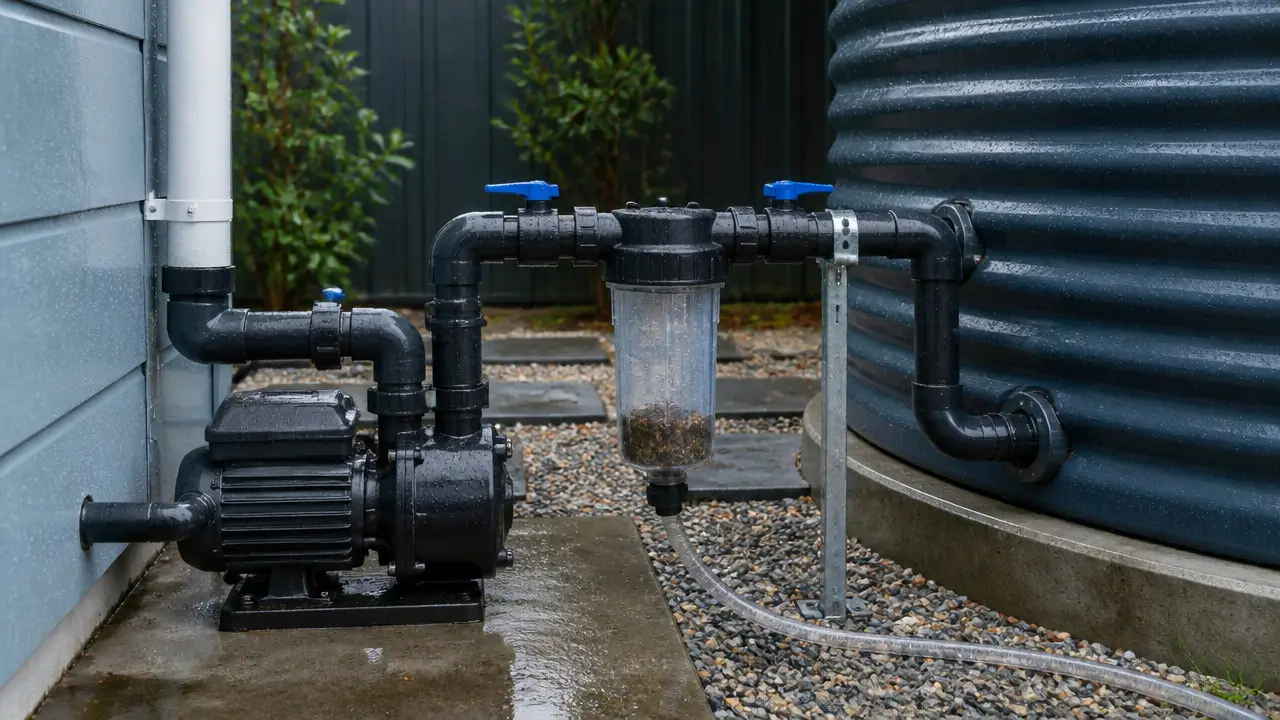
Roof → gutter screens → first-flush or debris control → storage tank → sediment filtration → carbon treatment → additional treatment required for the intended use
A first flush is a device or arrangement that diverts some of the initial roof runoff so part of the accumulated dirt and debris does not immediately enter the storage tank.
Putting a fine carbon cartridge directly after a dirty rainwater tank can cause problems.
Sediment may plug the carbon quickly, causing:
- Lower flow
- Higher pressure loss
- Short cartridge life
- Poor pump performance
Consider activated-carbon equipment for domestic water treatment to interpret filtration requirements for the intended household application.
A sediment prefilter usually helps protect the carbon stage.
Carbon Does Not Make Rainwater Safe to Drink by Itself
This is the most important limitation.
Most household activated-carbon filters are mainly designed to reduce particular chemicals, odors, tastes, or other listed contaminants. They should not be assumed to remove bacteria, viruses, parasites, or every chemical that might occur in roof runoff.
CDC specifically notes that many common household filters that use carbon are not designed to remove germs.
If collected rainwater will be used as potable water, meaning water intended for drinking or cooking, treat it as a whole-system water-quality project.
That normally means considering:
- Collection-surface suitability
- Debris exclusion
- Storage conditions
- Sediment removal
- Appropriate chemical treatment
- Appropriate microbiological treatment or disinfection
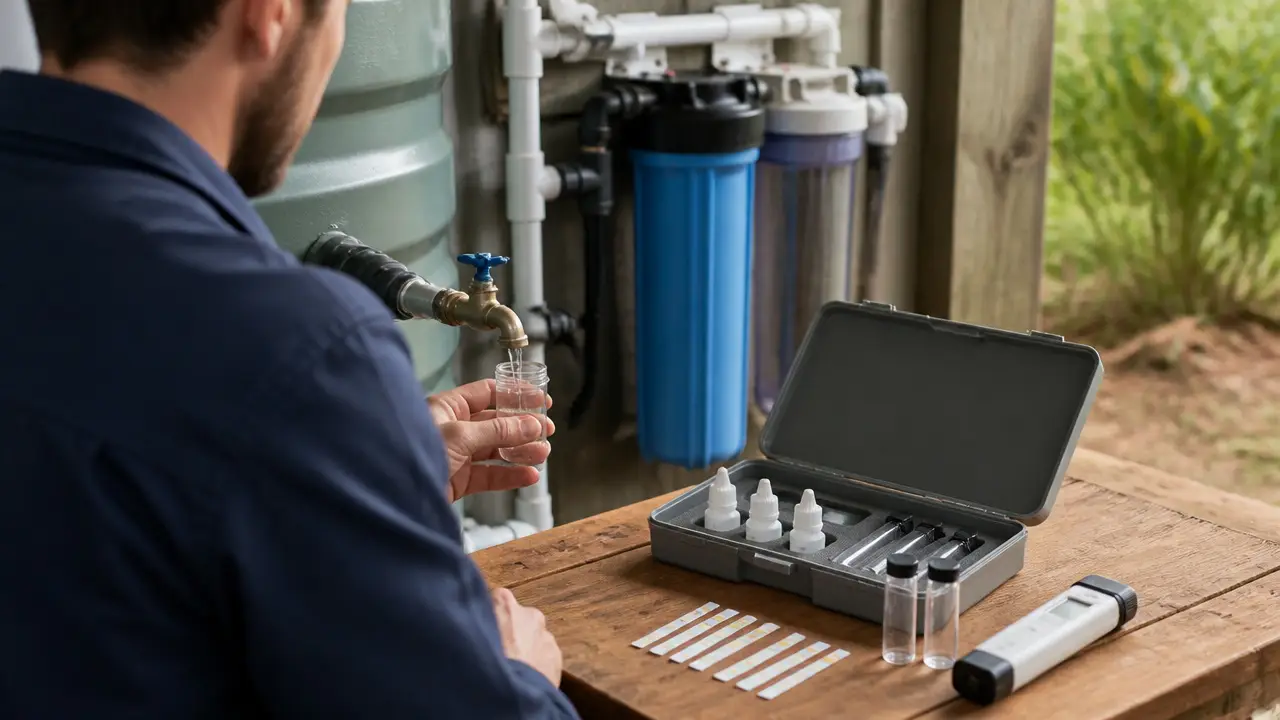
- Current laboratory water testing
- Regular maintenance
- Applicable local health and plumbing requirements
A carbon cartridge, UV unit, purifier, test strip, or home water meter alone cannot establish that roof runoff is safe to drink.
Check Flow Rate Before Choosing a Brand
Flow is especially important when a carbon filter is connected to a pump.
A small under-sink filter may work perfectly at one faucet but severely restrict a pump feeding several fixtures.
Look at the manufacturer's rated flow for the complete filter system.
For example, current NSF listings for some Everpure residential filters show certified flow rates that differ between models.
Do not simply install a larger pump to force more water through an undersized filter. Excess flow can reduce contact time, increase pressure loss, or put equipment outside its intended operating range.
For whole-house or large rainwater systems, determine the required peak flow before selecting the carbon stage.
Check the Connection Size and Housing
Many DIY systems use standard cartridge housings, but cartridges are not universally interchangeable.
Check:
- Cartridge diameter
- Cartridge length
- Housing type
- Inlet and outlet size
- Maximum operating pressure
- Maximum temperature
- Required orientation
- Gasket or O-ring requirements
A common-looking 10-inch cartridge does not guarantee that it will fit every housing correctly.
For a pumped rainwater system, also make sure the housing itself can safely handle the system pressure.
Consider Pressure Drop
Every filter creates resistance to water flow.
A clogged filter creates even more.
This resistance causes pressure drop, which means the pressure after the filter is lower than the pressure before it.
Pressure drop becomes important with:
- Shower systems
- Irrigation
- Multiple household fixtures
- Long pipe runs
- Small pumps
- Fine carbon blocks
A larger filter housing or parallel filtration arrangement may be more suitable when high flow is required.
Replacement Availability Matters
A good carbon filter system is only useful if you can maintain it.
Before committing to a proprietary filter head or housing, check whether replacement cartridges are readily available.
You should also be able to identify the replacement cartridge by a clear model number.
Avoid building an important household or rainwater system around a cartridge that may be difficult to find later.
Do Not Judge Filter Life by Time Alone
Carbon eventually loses its ability to adsorb contaminants.
Adsorption means molecules attach to the huge internal surface area of the activated carbon.
Filter life depends on factors such as:
- Amount of water used
- Contaminant concentration
- Sediment loading
- Carbon quantity
- Water chemistry
- Flow rate
- Cartridge design
Follow the manufacturer's rated service capacity and replacement instructions for the exact filter.
Do not keep using a cartridge simply because the water still tastes acceptable. Taste and smell cannot reliably tell you whether water is safe. CDC specifically warns against using appearance, taste, or smell as indicators of water safety.
Maintenance Is Part of Filter Performance
Even a high-quality carbon filter can become a problem if neglected.
Filters can collect organic material and microorganisms. CDC notes that germs can grow in water filters when they are not properly maintained and replaced.
Keep a simple maintenance record showing:
- Installation date
- Cartridge model
- Rated capacity
- Replacement date
- Any unusual pressure changes
- Water-testing dates where appropriate
If flow suddenly falls, inspect upstream sediment filtration before assuming the pump has failed.
So Which Carbon Filter Brand Should You Buy?
For a conventional residential drinking-water system, Pentair/Everpure is a strong first brand to investigate, with Multipure also worth considering for carbon-block drinking-water systems.
But neither should be purchased on brand name alone.
The best carbon filter is the one whose exact model:
- Fits your housing or plumbing
- Handles your required flow
- Has manageable pressure loss
- Has independently certified claims for the contaminants you care about
- Has readily available replacement cartridges
- Fits into the rest of your water-treatment system
For rainwater, start with the intended use of the water rather than the carbon-filter brand. A garden line, toilet supply, cabin sink, and drinking-water tap can require very different treatment.
Frequently Asked Questions
What is the best brand of activated carbon water filter?
Pentair/Everpure is a strong place to start for residential filtration because several current models have NSF-certified contaminant-reduction claims. Multipure is another established choice. The best option still depends on the exact model, certification, flow requirement, and system compatibility.
Is a carbon block better than granular activated carbon?
Not always. Carbon blocks can provide good carbon contact and particulate filtration but may create more pressure drop. Granular activated carbon can be better suited to higher-flow applications. Choose according to the intended use and certified performance.
Does an activated carbon filter remove bacteria?
Do not assume it does. Most common household activated-carbon filters are not designed to remove germs. Choose treatment specifically designed and certified for the microbiological risks you need to address.
Can I use a carbon filter for rainwater?
Yes, carbon can be one stage of a rainwater system. It may help with certain odors, tastes, and chemicals, depending on the filter. Install suitable debris and sediment control before the carbon stage.
Can a carbon filter make rainwater drinkable?
No carbon filter should be assumed to make roof-collected rainwater safe to drink by itself. Potable rainwater requires a whole-system approach that considers collection, filtration, appropriate treatment or disinfection, laboratory testing, maintenance, and local requirements.
What NSF rating should I look for on a carbon filter?
NSF/ANSI 42 commonly applies to chlorine, taste, odor, and aesthetic claims. NSF/ANSI 53 covers specific health-effect contaminant claims. NSF/ANSI 401 covers certain emerging contaminants. Always check the exact certified reduction claims for the filter model.
How often should I replace a carbon filter?
Follow the manufacturer's service-capacity and replacement instructions for the exact cartridge. Water use and contaminant loading can affect filter life. Reduced flow can also indicate that sediment or the carbon cartridge is becoming clogged.