As an affiliate, we may earn a commission from qualifying purchases. We get commissions for purchases made through links on this website from Amazon and other third parties.
The healthiest water filter to use is one that is independently certified to reduce the specific contaminants in your water and is maintained on schedule. There is no single filter that is healthiest for every home.
For treated city water, a certified activated carbon filter may be enough if your main concerns are chlorine, taste, odor, lead, or certain chemicals. If testing shows several dissolved contaminants, a properly certified reverse osmosis system may make more sense. For well water or collected rainwater, filtration alone may not be enough because germs can also be a concern.
Start With the Water, Not the Filter
Before choosing a filter, find out what is actually in your water.
A filter can be very good at removing one contaminant while doing almost nothing about another. A pitcher that improves chlorine taste, for example, should not be assumed to remove bacteria, viruses, nitrate, arsenic, or every type of PFAS.
The CDC recommends testing your water and choosing treatment for the germs or chemicals you are concerned about. Taste, smell, and appearance are not reliable ways to tell whether water is safe.
Your starting point depends on where the water comes from.
Public tap water
Check your water supplier's annual water-quality report. If you are concerned about plumbing-related contamination, such as lead from older pipes or fixtures, testing water from your own tap can provide more useful information.
You may discover that you only want better taste. In that case, heavy treatment may not be necessary.
Private well water
Private well owners normally have more responsibility for testing and treatment. Water quality can also change after flooding, nearby land-use changes, well repairs, or other events.
Collected rainwater
Roof runoff should not be assumed safe to drink. It can pick up dirt, animal waste, roofing debris, microbes, and chemicals before reaching the tank.
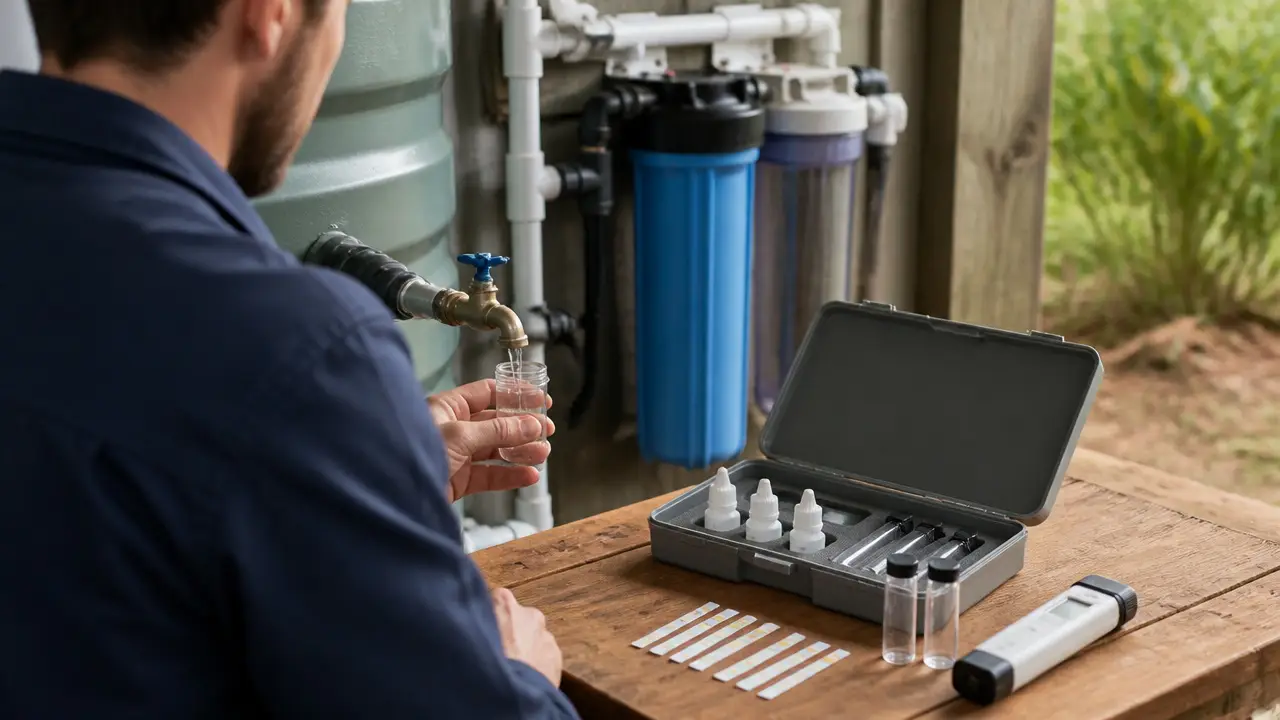
The CDC recommends testing private well and rainwater supplies at least once each year for harmful germs and chemicals, with additional testing when water quality changes.
If rainwater will be used for drinking, think of filtration as one part of a complete treatment system rather than a single final filter.
Which Type of Water Filter Is Healthiest?
The best choice depends on what needs to be removed.
| Water concern | Treatment commonly used | Important limitation |
|---|---|---|
| Chlorine, bad taste, odor | Activated carbon | Usually not enough for germs |
| Lead or certain health-related chemicals | Certified carbon or other filter with the exact reduction claim | Certification must name the contaminant |
| Sediment and particles | Sediment filter | Does not make unsafe water drinkable |
| Parasites | Suitable microfiltration, ultrafiltration, or RO | Check pore size and certification |
| Bacteria | Ultrafiltration, nanofiltration, RO, or disinfection | Many basic carbon filters do not remove bacteria |
| Viruses | Nanofiltration, RO, or appropriate disinfection | Ordinary pitcher filters should not be relied on |
| Nitrate | RO, ion exchange, or distillation | Carbon normally is not the answer |
| Several dissolved salts and chemicals | Reverse osmosis | Requires maintenance and creates reject water |
| Germ risk in otherwise suitable water | UV treatment with proper pretreatment | UV does not remove chemicals |
These treatment abilities vary by system. Always check the exact certified contaminant claims rather than assuming every filter of the same type performs alike.
Activated Carbon Is Often the Simplest Good Choice
Activated carbon is common in faucet filters, refrigerator filters, countertop units, pitchers, and larger systems.
Water passes through porous carbon. Certain chemicals stick to its surface.
Carbon can be useful for reducing things such as:
- chlorine
- unwanted taste and odor
- some organic chemicals
- certain health-related contaminants when the filter carries the proper certification
For normal treated tap water, a certified carbon filter can be a sensible choice when testing or your water report does not show a problem that requires stronger treatment.
But "carbon filter" alone does not tell you much about safety.
Some carbon filters are made mainly to improve taste. Others carry certified health-related reduction claims.
A basic carbon filter also should not be treated as a general-purpose germ filter. The CDC notes that many pitcher and refrigerator filters mainly use carbon and are not designed to remove germs.
Reverse Osmosis Removes a Wider Range of Contaminants
Reverse osmosis, usually shortened to RO, pushes water through a very fine membrane.
RO systems can remove parasites, bacteria, viruses, and several dissolved chemicals. Depending on the certified system, they may reduce contaminants such as lead, copper, chromium, sodium, nitrate, arsenic, and fluoride.
That makes RO useful when testing shows contaminants that a simpler filter cannot handle well.
However, RO is not automatically the healthiest choice for every home.
It has tradeoffs:
- More parts must be maintained.
- Pretreatment filters require replacement.
- Membranes eventually need service or replacement.
- Some incoming water conditions can shorten membrane life.
- RO produces a reject-water stream.
- It can remove minerals as well as unwanted contaminants.
- Poor maintenance can reduce system performance.
If your tap water is already suitable and you only dislike chlorine taste, installing RO may be more treatment than you need.
Choose RO because it solves a known water-quality problem, not simply because it filters more things.
What About Minerals Removed by RO?
Reverse osmosis lowers many dissolved minerals in water.
This sometimes leads to claims that RO water is unhealthy because it contains fewer minerals. For most people eating a normal diet, water is not the only or main source of essential minerals.
The more important question is whether the treatment system is appropriate for your water and removes contaminants that matter.
If you prefer the taste of water with more minerals, some systems include a mineral stage after RO. That stage should use materials intended for drinking-water contact and should also be maintained properly.
Do not choose or reject RO based only on a TDS reading.
TDS means total dissolved solids. It measures the overall amount of dissolved material in water. It does not identify which substances are present or prove that water is safe.
UV Treatment Is Useful for Germs, but It Is Not a Chemical Filter
Ultraviolet treatment uses UV light to inactivate microorganisms.
With suitable pretreatment, UV can be useful where bacteria, viruses, or parasites are a concern. The CDC notes that UV systems work better when water is filtered before it reaches the UV unit.
Clear water matters because particles can interfere with treatment.
UV does not remove chemicals such as:
- lead
- nitrate
- salts
- many pesticides
- PFAS
So a UV unit should not be used as a substitute for chemical filtration when chemical contamination is present.
For drinking-water systems using rainwater or well water, UV may be one treatment stage rather than the entire system.
Sediment Filters Protect the System but Do Not Make Water Safe
Sediment filters catch physical particles such as grit, rust, and suspended dirt.
Their openings are often described by a micron rating.
One micron is one-millionth of a meter.
A smaller micron number generally means smaller particles can be captured, but there is an important difference between nominal and absolute ratings.
An absolute rating gives a stronger limit on the maximum pore size than an average or nominal rating. The CDC notes that an absolute pore size of 1 micron or smaller can remove certain parasites such as Giardia and Cryptosporidium.
Still, a sediment cartridge by itself is not a complete drinking-water treatment system.
Its main job in many systems is to keep dirt from clogging carbon filters, RO membranes, UV equipment, valves, and plumbing.
Look for Certification, Not Just Marketing Claims
One of the easiest ways to compare filters is to look for independent certification.
Common standards include:
NSF/ANSI 42
This standard covers non-health effects such as chlorine, taste, odor, and certain particulates.
A Standard 42 certification does not automatically mean the filter handles serious health contaminants.
NSF/ANSI 53
Standard 53 covers specific contaminants that can affect health.
With carbon treatment limits for rainwater pollutants, you can compare which targeted analysis should confirm the initial indication.
Possible certified claims include substances such as lead and certain other contaminants. A product does not automatically remove every contaminant covered by the standard. You still need to check its individual reduction claims.
NSF/ANSI 58
Standard 58 applies to reverse osmosis treatment systems.
Again, look at the actual contaminant reduction claims for the specific system.
NSF/ANSI 55
Standard 55 applies to ultraviolet treatment systems.
Class A systems are intended to inactivate microorganisms in contaminated water under the conditions covered by the standard. Class B systems have a different purpose and should not be confused with Class A treatment.
NSF/ANSI 401
Standard 401 addresses reduction claims for certain emerging contaminants.
It does not mean that a filter removes every emerging chemical.
The number of the standard is not a quality ranking. Standard 58 is not "better" than Standard 53 simply because the number is higher. Each standard covers a different type of treatment or claim.
Check the Exact Contaminant Claim
A certification logo by itself is not enough.
Suppose two filters both meet NSF/ANSI 53. One might be certified for lead reduction while another carries different contaminant claims.
If lead is your concern, look specifically for certified lead reduction.
If PFAS is your concern, look specifically for a PFAS reduction claim.
The EPA currently advises consumers concerned about PFAS to look for filters certified under NSF/ANSI 53 or NSF/ANSI 58 for PFAS reduction. The agency also notes that PFAS certification standards have been changing as drinking-water requirements evolve, so the exact certified claim matters.
This is why choosing a filter by technology alone can be misleading.
Is a Whole-House Filter Healthier?
Not necessarily.
A point-of-use filter treats water where you use it, usually at one kitchen faucet.
A point-of-entry, or whole-house, system treats water as it enters the building.
For many contaminants that mainly matter when swallowed, treating drinking and cooking water at the kitchen sink can be enough.
Whole-house treatment can make sense when the contaminant also matters through bathing, inhalation, staining, scale, or other household uses.
But whole-house treatment adds more flow requirements and maintenance.
There is another concern with removing disinfectant from all household water. The CDC warns that whole-house systems that remove chlorine or other disinfectants can allow more microbial growth in household plumbing.
Do not install whole-house carbon treatment simply because it sounds more complete.
What Is Healthiest for Rainwater?
For drinking rainwater, there is no single "healthy rainwater filter."
Roof runoff needs to be considered from collection through the final tap.
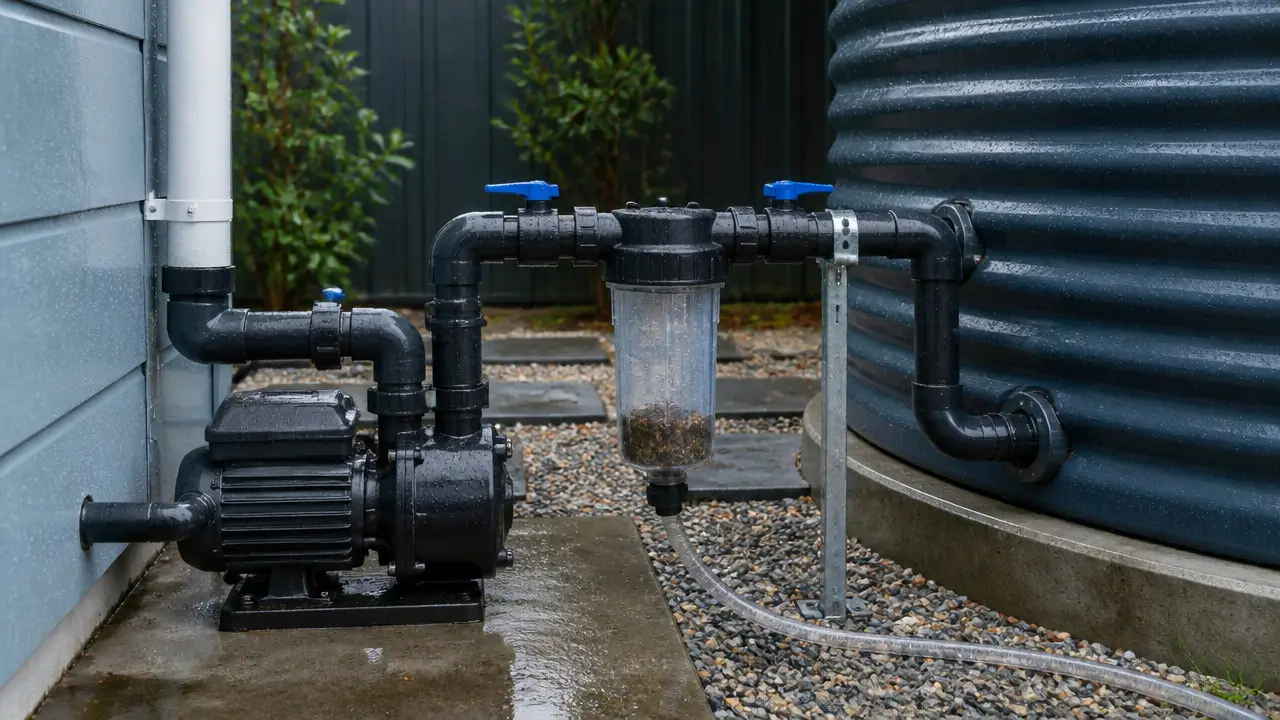
A drinking-water setup may need several stages, depending on the roof, tank, local conditions, test results, and intended use.
A system might include:
- Keeping leaves and large debris out of the collection system.
- Diverting or managing the dirtiest early roof runoff where appropriate.
- Keeping insects, animals, light, and surface water out of storage.
- Removing sediment before fine treatment equipment.
- Using treatment selected for the chemicals and microorganisms that testing shows are relevant.
- Using an appropriate disinfection stage when microbial risk requires it.
- Maintaining tanks, filters, pumps, plumbing, and treatment equipment.
- Testing treated water through a qualified laboratory.
A first flush device redirects some of the early runoff from a rainfall event instead of sending all of it into storage. It can reduce some roof debris, but it does not make the remaining water safe to drink.
A carbon cartridge, ceramic filter, UV lamp, or RO membrane by itself should not be treated as proof that collected rainwater is potable, meaning suitable for drinking.
Potable rainwater requires a whole-system approach that accounts for the catchment surface, storage, treatment, laboratory testing, maintenance, and applicable local requirements.
For garden irrigation and many other non-potable uses, meaning water not intended for drinking, the treatment needs may be much simpler.
Maintenance Matters as Much as the Filter Type
A good filter that is badly maintained can become a poor treatment system.
Follow the manufacturer's replacement and cleaning schedule.
Pay attention to:
- cartridge replacement intervals
- maximum treated-water capacity
- changing flow rate
- pressure limits
- leaks around housings
- RO membrane service
- UV lamp replacement
- UV sleeve cleaning
- tank and storage sanitation
- long periods when water sits unused
Do not keep using a filter indefinitely because the water still tastes normal.
Contaminants captured by a filter may not produce any taste or smell.
The EPA also stresses that proper filter replacement is important for contaminant reduction.
A Practical Way to Choose
For most homes, the healthiest approach is fairly simple.
First, identify the water source and test or review reliable water-quality information.
Then identify the contaminants that actually need treatment.
Choose a system independently certified for those specific reduction claims.
Use the simplest treatment that reliably addresses those problems.
For many homes on treated municipal water, this might be a certified carbon filter at the kitchen sink. For water with several dissolved contaminants, RO may be more appropriate. If untreated water carries microbial risk, filtration may need to be combined with suitable disinfection.
And for collected rainwater intended for drinking, do not depend on one filter. Treat it as a complete collection, treatment, testing, and maintenance system.
Frequently Asked Questions
Is reverse osmosis the healthiest water filter?
Not automatically. Reverse osmosis removes a broad range of contaminants, so it can be a good choice when those contaminants are actually present. If your water only needs chlorine or taste improvement, a simpler certified carbon filter may be enough.
Is activated carbon safe for drinking water?
Activated carbon is widely used for drinking-water treatment. Choose a filter made for drinking water and independently certified for the contaminants you want to reduce. Carbon alone should not be assumed to remove germs or every dissolved chemical.
Which water filter removes the most contaminants?
Reverse osmosis can remove a wider range of germs and dissolved contaminants than many basic household filters. However, the exact performance depends on the system. Always check its certified reduction claims.
Does a low TDS reading mean filtered water is safe?
No. TDS measures the amount of dissolved material in water. It does not identify specific contaminants, bacteria, viruses, pesticides, PFAS, or other hazards. A TDS meter cannot replace water testing.
Do I need a water filter if I have city water?
Not always. If your public water meets applicable requirements and your household plumbing is not adding contaminants, filtration may only be needed for taste or another specific concern. Review your water-quality report and test when you have a reason to suspect a problem.
Can one filter make rainwater safe to drink?
No single filter should be assumed to make collected rainwater safe to drink. Drinking-water use requires suitable collection and storage, treatment for relevant contaminants and germs, regular maintenance, current laboratory testing, and compliance with applicable local requirements.
Is a whole-house filter healthier than an under-sink filter?
Not necessarily. An under-sink filter can be a good choice when the main concern is drinking and cooking water. Whole-house treatment is useful when a contaminant needs to be addressed throughout the home, but it costs more water-flow capacity and maintenance and can have other effects on household plumbing.