As an affiliate, we may earn a commission from qualifying purchases. We get commissions for purchases made through links on this website from Amazon and other third parties.
UV vs. Reverse Osmosis: Which Water Treatment Is Better?
Neither UV nor reverse osmosis is better for every water system. They solve different problems.
UV treatment is usually the better choice when your main concern is bacteria, viruses, and other microorganisms. Reverse osmosis is usually better when you need to reduce dissolved salts, metals, nitrate, or other specific chemical contaminants.
For rainwater, the choice depends on what you plan to do with the water. Garden water may need little or no treatment. Water used for drinking needs a much more careful, whole-system approach.
UV and reverse osmosis can also be used together. In some systems, that makes more sense than choosing only one.
The Main Difference Between UV and Reverse Osmosis
UV is a disinfection step. Water passes through a chamber where ultraviolet light inactivates microorganisms.
Reverse osmosis, often called RO, is a membrane treatment process. Pressure pushes water through a very fine membrane. Many dissolved substances and contaminants are left behind in a separate reject-water stream.
Here is the basic comparison:
| Feature | UV Treatment | Reverse Osmosis |
|---|---|---|
| Main purpose | Disinfect water | Remove many dissolved contaminants |
| Bacteria | Yes, with a properly designed system | Can remove bacteria |
| Viruses | Yes, with a properly designed system | Can remove viruses |
| Parasites | Yes, with suitable pretreatment | Can remove parasites |
| Dissolved salts | No | Yes |
| Lead and some metals | No | Can reduce them |
| Nitrate | No | Some certified systems can reduce it |
| Sediment | No | Should be removed before RO |
| Changes water chemistry | Very little | Yes |
| Produces reject water | No | Yes |
| Needs electricity | Yes | Usually depends mainly on water pressure, though some systems use powered pumps or controls |
| Needs good pretreatment | Yes | Yes |
CDC guidance makes the distinction clear: UV systems with prefiltration can control parasites, bacteria, and viruses but do not remove chemicals. Reverse osmosis can remove microorganisms as well as certain dissolved chemicals.
When UV Is the Better Choice
UV makes the most sense when microbial contamination is your main concern.
A UV unit exposes flowing water to ultraviolet light. The light damages microorganisms so they can no longer reproduce normally.
UV can be useful for properly designed systems treating water from sources such as:
- Rainwater cisterns
- Private wells
- Cabins
- Household nonmunicipal water systems
But UV does not physically remove sediment, metals, salts, pesticides, or most other chemicals.
UV Needs Clear Water
UV works best when the water reaching the lamp is already clear.
Cloudiness, sediment, and other material can interfere with the UV light. A microorganism may be partly shielded by a particle instead of receiving the intended UV exposure.
That is why UV is normally installed after appropriate prefiltration, not directly after a rain barrel or cistern.
CDC specifically notes that UV treatment with prefiltration performs better than UV without it.
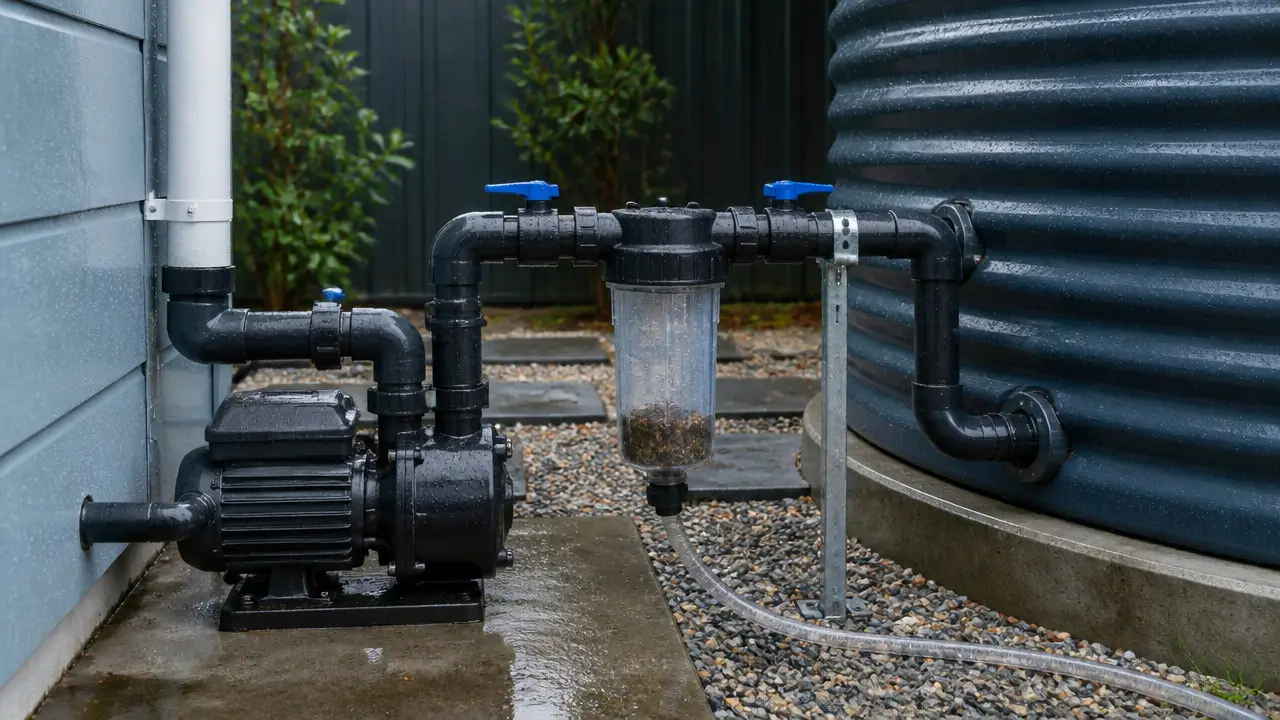
For a rainwater system, treatment might therefore include steps such as debris exclusion, first-flush management, settling or sediment filtration, and other treatment before the UV chamber.
A first flush device diverts some of the earliest roof runoff from a storm. That first water can carry concentrated dirt, pollen, droppings, and other material washed from the roof.
UV Does Not Fix Chemical Contamination
This is the biggest limitation of UV.
UV disinfection does not normally remove:
- Lead
- Copper
- Arsenic
- Nitrate
- Dissolved salts
- Hardness minerals
- Most pesticides or other dissolved chemicals
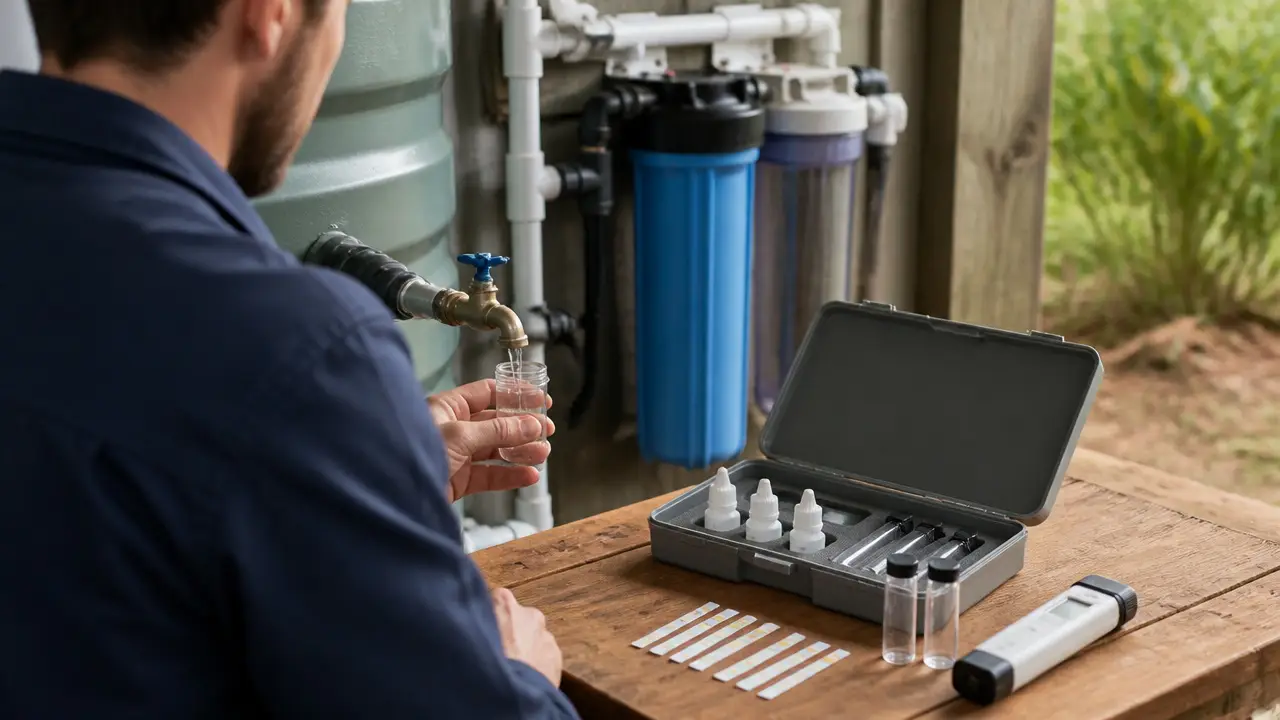
If laboratory testing finds a chemical problem, you need treatment designed and verified for that particular contaminant.
UV Requires Ongoing Maintenance
A UV unit is not something to install and forget.
Depending on the system, maintenance can include:
- Replacing the UV lamp according to its specified service interval
- Cleaning or replacing a quartz sleeve
- Replacing upstream filters
- Checking alarms or UV-intensity indicators
- Making sure the required flow rate is not exceeded
- Confirming power is available
A lamp can still produce visible light even when its useful UV output is no longer adequate, so visual inspection alone is not enough.
NSF/ANSI 55 covers ultraviolet water-treatment systems. NSF distinguishes between Class A systems intended to inactivate microorganisms in contaminated water and Class B systems intended for supplemental treatment of already disinfected water. Check the certification and treatment claims of the specific unit rather than assuming every UV device provides the same performance.
When Reverse Osmosis Is the Better Choice
RO is usually more useful when your water contains unwanted dissolved substances.
RO uses pressure to force water through a semipermeable membrane. This is a membrane that allows water to pass while restricting many other substances.
CDC says reverse osmosis can remove parasites, bacteria, and viruses and can reduce several chemical contaminants. These can include lead, copper, chromium, chloride, and sodium. Some systems may also reduce substances such as arsenic, fluoride, nitrate, radium, sulfate, calcium, and magnesium. Actual performance depends on the specific system.
RO Can Reduce Total Dissolved Solids
One common reason people choose RO is to lower total dissolved solids, or TDS.
TDS is a measure of dissolved substances in water. It can include minerals, salts, and other ions.
A TDS reading does not tell you whether water is microbiologically safe or whether a specific harmful chemical is present. Low TDS should never be treated as proof that rainwater is safe to drink.
NSF/ANSI 58 is the main standard covering point-of-use reverse-osmosis drinking-water systems. TDS reduction is a required performance claim under the standard, while contaminant reductions such as lead, arsenic, nitrate/nitrite, fluoride, and others are separate optional claims that must be verified for the particular system.
RO Needs Pressure
RO membranes depend on water pressure.
This matters with rainwater because a gravity-fed cistern may not provide enough pressure for a typical RO system.
If your rainwater system uses a pump, you need to check:
- Required inlet pressure
- Available flow
- Pump operating range
- Maximum system pressure
- Prefilter requirements
- Drain connection for reject water
Do not assume that a small elevated rain barrel can operate an RO unit properly.
RO Produces Reject Water
Not all water entering an RO system becomes treated drinking water.
Part of the incoming water carries concentrated contaminants away from the membrane. This is called reject water, concentrate, or sometimes wastewater.
The amount varies by system and operating conditions. Check the manufacturer's certified recovery or efficiency information rather than assuming a fixed ratio.
EPA describes RO as producing both treated water, called permeate, and a concentrate stream containing substances that did not pass through the membrane.
RO Also Requires Prefiltration
Dirty rainwater can quickly cause problems for an RO membrane.
Sediment and other material can reduce flow and shorten membrane life. Many residential RO systems therefore use sediment and carbon stages before the membrane.
RO should not be connected directly to untreated roof runoff.
Is UV or RO Better for Rainwater?
For most rainwater systems, start with the intended use, not the treatment device.
For Garden Irrigation
You usually do not need RO.
RO would add complexity, require pressure, produce reject water, and remove dissolved substances without much benefit for ordinary landscape irrigation.
UV is also often unnecessary for simple outdoor irrigation, although the design may need filtration to protect pumps, valves, emitters, and drip lines.
For Toilet Flushing or Other Non-Potable Uses
Reviewing practical considerations for rainwater better than tap water helps understand this detail’s place in the collection and delivery chain.
Non-potable means water that is not intended for drinking.
RO is rarely justified solely for toilet flushing or similar household reuse.
Whether disinfection is required depends on the system design and local requirements. Filtration may be more important for protecting plumbing and equipment.
For Drinking Water
Neither UV nor RO should be treated as a stand-alone guarantee that roof-collected rainwater is safe to drink.
Roof runoff can be affected by:
- Animal droppings
- Bacteria and other microorganisms
- Roof and gutter debris
- Roofing materials
- Airborne pollution
- Storage conditions
- Sediment
- Plumbing materials
- Poor maintenance
A drinking-water system needs to be considered from collection all the way to the tap.
That can include suitable collection surfaces, debris control, first-flush management where appropriate, protected storage, prefiltration, contaminant-specific treatment, disinfection, maintenance, and current laboratory testing.
CDC advises testing water and choosing treatment based on the harmful germs or chemicals actually present rather than assuming one treatment technology handles every risk.
Local plumbing and rainwater-use rules also vary. Check current requirements with your local health, building, or water authority before using harvested rainwater as drinking water.
Can You Use UV and Reverse Osmosis Together?
Yes.
UV and RO perform different jobs, so combining them can make sense when water-quality testing and the intended use justify both.
A conceptual treatment sequence might look like this:
Collection → protected storage → sediment treatment → other required pretreatment → RO → UV → drinking-water outlet
But that is not a universal design.
The correct order can depend on:
- Water chemistry
- Microbial risk
- Turbidity
- Pressure
- Storage arrangement
- Treatment flow rate
- The RO manufacturer's requirements
- The UV manufacturer's requirements
- Local drinking-water requirements
For example, carbon filters may be included for certain tastes, odors, or specific contaminants. Other treatment may be necessary if testing identifies contaminants that the chosen RO system is not certified to reduce.
Professional water-treatment advice becomes worthwhile when rainwater will supply household drinking water.
UV vs. RO Maintenance
Maintenance is one of the biggest practical differences between the two systems.
Typical UV Upkeep
Expect to monitor:
- Lamp condition and replacement schedule
- Quartz sleeve cleanliness
- Prefilter condition
- Flow rate
- UV alarms or sensors
- Electrical supply
If sediment gets through the pretreatment system, the UV chamber may not perform as intended.
Typical RO Upkeep
Expect to monitor:
- Sediment prefilters
- Carbon filters
- RO membrane
- Storage tank, if fitted
- Pressure
- Flow rate
- Reject-water drain
- System sanitation
- Any postfilters
Filters and membranes should be changed according to the manufacturer's instructions and actual water conditions.
Ignoring maintenance can reduce the performance of either system.
Which One Uses More Water?
UV is the clear winner if conserving collected water is a major priority.
A UV system treats water as it passes through the chamber and does not normally create a separate reject-water stream.
RO does.
That does not automatically make RO a poor choice. If your water contains a dissolved contaminant that RO is specifically designed and certified to reduce, the added water use may be justified.
It simply needs to be included when you calculate how much rainwater your household can actually use.
Which One Gives Better Flow?
UV systems can often treat water continuously up to their rated flow.
That rated flow matters because moving water through the chamber too quickly can reduce the UV dose.
RO systems generally produce treated water more slowly. Many point-of-use systems store RO water in a small pressure tank so you do not have to wait for the membrane every time you open the faucet.
For whole-house rainwater use, required flow can be a major factor in system design.
How to Choose Between UV and RO
Start by identifying the problem you actually need to solve.
Choose UV when microorganisms are the primary treatment concern and the incoming water can be properly pretreated.
Choose RO when testing shows dissolved contaminants that the selected RO system is certified to reduce.
Consider both when the water has meaningful microbial and dissolved-contaminant concerns.
For drinking water, do not choose treatment simply because one system has more stages or produces a lower TDS reading. Laboratory testing and specific certified contaminant-reduction claims are much more useful.
As of September 2026, CDC guidance continues to recommend testing the water first and selecting treatment based on the germs or chemicals of concern.
Frequently Asked Questions
Does UV remove lead from water?
No. Standard UV disinfection does not remove lead. If lead is present, use a treatment system specifically certified for lead reduction and address the source of the contamination.
Does reverse osmosis kill bacteria?
RO primarily removes contaminants by membrane separation rather than disinfecting them with light or chemicals. CDC lists RO as capable of removing bacteria, parasites, and viruses. However, an RO unit should not automatically be treated as a complete microbial-safety system for harvested rainwater.
Can UV make rainwater safe to drink?
UV can be an important disinfection step, but UV alone does not establish that harvested rainwater is safe to drink. It does not remove most chemical contaminants, and its performance depends on water quality, pretreatment, flow, lamp output, and maintenance.
Do I need RO after a UV system?
Not necessarily. If testing does not identify dissolved contaminants that require RO treatment, adding RO may provide little benefit. Choose treatment based on the water test and intended use.
Should RO come before or after UV?
In many small drinking-water systems, UV is placed near the end of the treatment train after water has been clarified and filtered. RO may be installed before UV. However, the proper order depends on the complete system and manufacturer requirements.
Is a low TDS reading proof that RO water is safe?
No. TDS measures dissolved substances as a group. It does not provide a complete test for bacteria, viruses, pesticides, metals, or other contaminants. A low TDS value is not proof that water is potable.
Which is better for an off-grid rainwater system?
UV generally wastes less collected water, but it needs electricity. RO can reduce dissolved contaminants but needs adequate pressure and produces reject water. The better choice depends on your water test, available power, pump system, water supply, and intended use.