As an affiliate, we may earn a commission from qualifying purchases. We get commissions for purchases made through links on this website from Amazon and other third parties.
There is no single “No. 1” water filter brand for every home or rainwater system. A better choice is the brand and model that is independently certified for the contaminants you need to reduce, fits your plumbing and flow needs, and has replacement filters you can maintain.
A famous brand name does not prove that every filter from that company performs the same way. Certification normally applies to a specific model and specific contaminant-reduction claims, not to the whole brand. NSF also makes clear that its standard numbers are not rankings. A filter marked NSF/ANSI 53 is not automatically “better” than one marked NSF/ANSI 42. They are designed for different jobs.
Look at the Filter Model Before the Brand
When comparing water filter brands, start with the actual filter model.
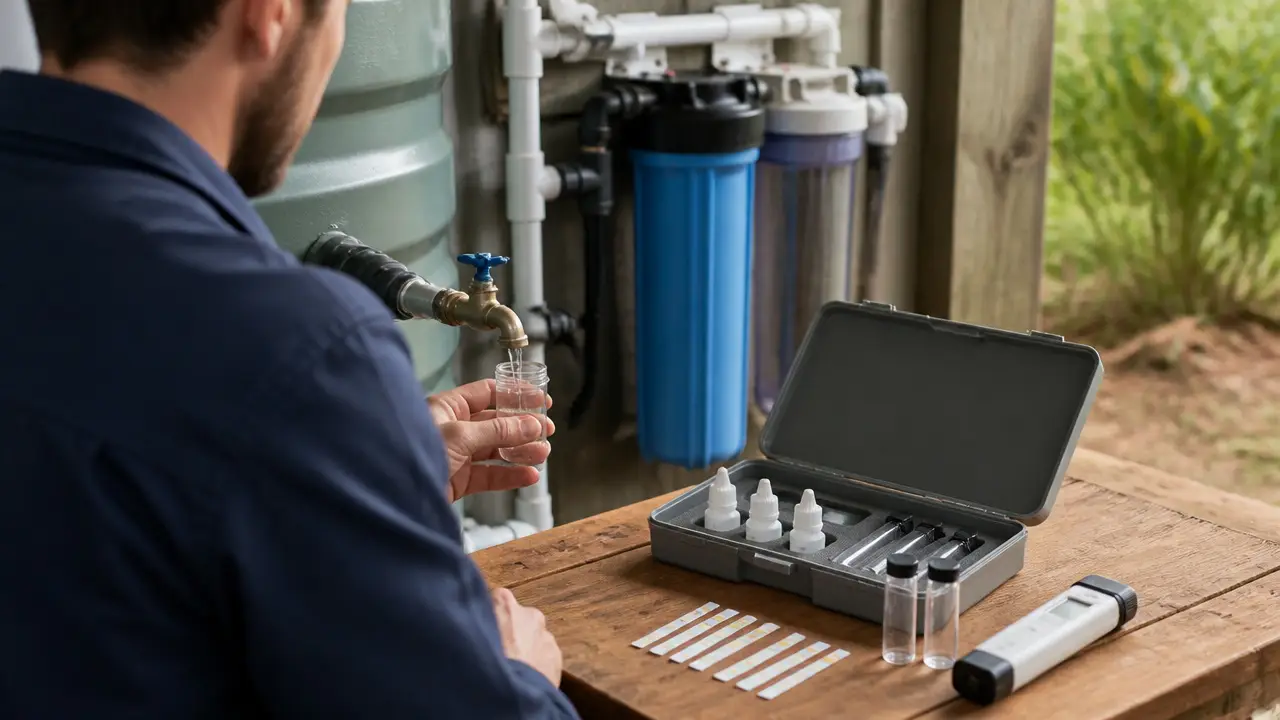
The Centers for Disease Control and Prevention recommends testing your water or identifying the contaminants of concern first. You can then choose a treatment system designed to address those contaminants. Different treatment methods remove different things.
For example, one household may mainly want to reduce chlorine taste from treated city water. Another may be concerned about lead. A rainwater system may need to deal with sediment, microorganisms, and other contamination picked up from the roof and storage system.
Those situations do not call for the same filter.
A useful way to compare brands is to ask:
- What contaminants is this exact model certified to reduce?
- Is the certification current and independently verified?
- What flow rate can the system handle?
- Will it fit your existing pipe or faucet connections?
- How often do cartridges or treatment parts need replacement?
- Can replacement parts be obtained reliably?
- Will the system work with your water pressure?
- Is it meant for treated tap water, well water, or another source?
These questions tell you much more than the logo on the filter.
Which Certifications Should You Look For?
Independent certification is one of the most useful ways to compare water filters.
NSF, the Water Quality Association, and other accredited certification organizations test products against recognized standards. WQA, for example, maintains certified product listings for systems that have met applicable testing and manufacturing requirements.
Some common standards include:
| Standard | What it generally covers |
|---|---|
| NSF/ANSI 42 | Chlorine, taste, odor, and other aesthetic concerns |
| NSF/ANSI 53 | Contaminants that can have health effects |
| NSF/ANSI 55 | Ultraviolet water treatment systems |
| NSF/ANSI 58 | Reverse osmosis systems |
| NSF/ANSI 401 | Certain emerging contaminants |
These numbers describe different types of performance. They are not scores from lowest to highest.
NSF/ANSI 42
NSF/ANSI 42 mainly covers aesthetic issues such as chlorine taste and odor.
This can be useful when your treated municipal water is already considered safe but you want it to taste or smell better.
NSF/ANSI 53
NSF/ANSI 53 covers claims involving contaminants with health effects.
A filter may be certified under this standard for specific substances. Do not assume that NSF/ANSI 53 means it removes every possible harmful contaminant.
Check the exact reduction claims.
NSF/ANSI 58
NSF/ANSI 58 applies to reverse osmosis, or RO, systems.
Reverse osmosis pushes water through a very selective membrane. Depending on the certified claims, an RO system can reduce certain dissolved substances that ordinary sediment or carbon filters cannot.
CDC notes that RO can reduce several types of chemicals and dissolved minerals, but the exact performance depends on the system.
NSF/ANSI 55
NSF/ANSI 55 relates to ultraviolet, or UV, treatment.
UV uses light to inactivate microorganisms. It does not work like a sediment or carbon filter, and it does not remove most dissolved chemicals.
NSF distinguishes between Class A and Class B UV systems, so the specific classification matters.
Certification Does Not Mean a Filter Removes Everything
This is one of the most important details when choosing a brand.
A filter can carry an NSF certification while only being certified for certain claims.
For example, a carbon filter might be certified for chlorine reduction but not lead reduction. Another model from the same company might be certified for both.
NSF advises consumers to check both the standard and the specific contaminant claim.
You can also verify a model in an independent certification database instead of relying only on advertising or packaging. NSF and WQA both maintain searchable listings of certified water-treatment products.
The Best Brand Depends on What You Want the Water For
Your intended use should come before the brand.
For Better Taste and Odor
If you have treated municipal water and mainly dislike chlorine taste or smell, a certified activated-carbon filter may be enough.
Look for an appropriate NSF/ANSI 42 claim.
You probably do not need a complex RO or UV system just to improve taste.
For Lead or Another Specific Contaminant
Choose a filter with a certified reduction claim for that exact contaminant.
Do not rely on a label that only says things such as “advanced filtration” or “multi-stage.”
The contaminant claim matters more.
For Dissolved Minerals and Certain Chemicals
Reverse osmosis may be appropriate when testing shows substances that an RO system is designed and certified to reduce.
RO systems normally need adequate water pressure and regular filter and membrane maintenance.
They also produce a waste stream during treatment, so they are not always the best choice when water supply is limited.
For Microorganisms
Ordinary sediment or carbon filters should not be treated as complete microbiological treatment.
Depending on the water source, a properly designed UV system or another disinfection method may be part of the treatment train.
Prefiltration is often important because cloudy or particle-filled water can interfere with UV treatment. CDC notes that UV systems with prefiltration work better than UV without it.
What About Water Filters for Rainwater?
For collected rainwater, asking for the best filter brand is especially limiting.
Rainwater quality depends on the whole system:
roof → gutters → debris screening → first-flush control → storage → pumping → filtration → treatment → intended use.
A first flush device diverts some of the early roof runoff, which may contain a heavier load of dirt and debris.
Filtration farther downstream cannot make poor collection and storage practices irrelevant.
Rainwater for Garden Irrigation
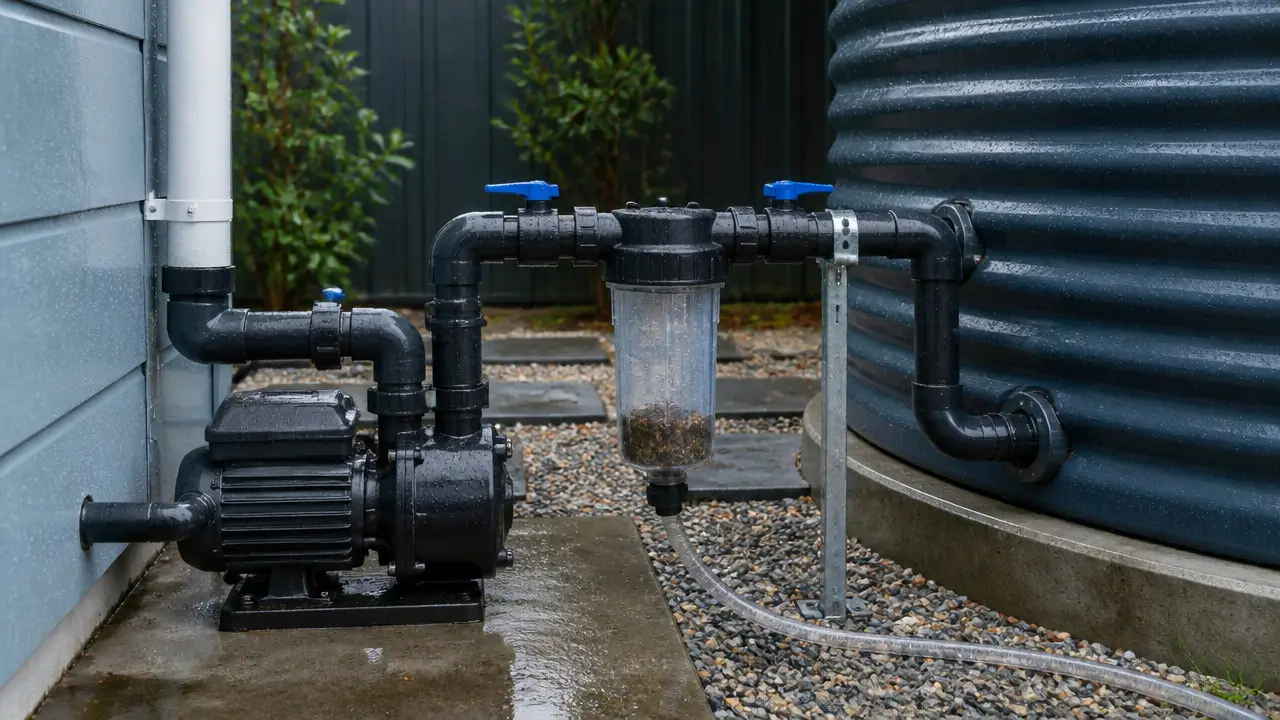
For many non-potable garden systems, the main filtration job is keeping leaves, grit, and other particles out of pumps, hoses, valves, and irrigation emitters.
A sediment filter or screen may be useful.
The correct micron size depends partly on the equipment downstream.
A micron is one-thousandth of a millimeter. A smaller micron rating generally catches smaller particles, but it may also clog faster and restrict flow more.
Rainwater for Household Non-Potable Use
Indoor non-potable uses may require better filtration, plumbing separation, backflow protection, and other controls.
Study selecting among is the most effective water filter to verify water-quality verification suited to the household task.
Local requirements can vary, so check the rules that apply where the system is installed.
Rainwater Intended for Drinking
Do not choose one highly rated filter and assume the collected rainwater is now potable.
Potable means suitable for drinking.
Roof runoff can contain microorganisms, animal waste, dust, roofing-related contaminants, and other pollutants. Safe drinking-water treatment should be treated as a complete system rather than a single cartridge.
That may involve suitable collection materials, debris control, proper storage, several treatment stages, disinfection, maintenance, current laboratory testing, and compliance with applicable local requirements.
Some drinking-water filter standards also assume the incoming water is already microbiologically safe. For example, NSF states that systems covered by NSF/ANSI 244 are intended for public water supplies that are treated or otherwise determined to be microbiologically safe, with protection against intermittent contamination. That makes the source-water assumptions important when considering equipment for untreated rainwater.
For potable rainwater systems, professional water-treatment guidance and qualified laboratory testing are sensible where health risks or system complexity are significant.
Brand Reputation Still Matters
Certification should come first, but the manufacturer still matters.
A good water-filter company should make important information easy to find.
Look for:
- Clear certification records for each model
- A detailed performance data sheet
- Replacement cartridge information
- Installation requirements
- Maximum operating pressure and temperature
- Flow-rate information
- Maintenance instructions
- Replacement parts that are likely to remain available
- Clear explanations of what the system does not treat
A filter that works well only when maintained is not useful if replacement cartridges are difficult to identify or obtain.
NSF notes that filters need regular replacement and maintenance to continue operating correctly.
Do Not Choose by Micron Rating Alone
A smaller micron number does not automatically make one filter brand better.
Micron rating mainly tells you about particle size.
It does not tell you whether the filter removes dissolved lead, chlorine, nitrate, PFAS, microorganisms, or other contaminants.
For example, activated carbon works partly through adsorption. Substances attach to the carbon media rather than simply being strained out based on particle size.
Reverse osmosis uses a membrane.
UV treatment uses light.
These technologies solve different problems.
Do Not Choose by the Number of Filter Stages
A “7-stage” filter is not automatically better than a “3-stage” filter.
What matters is what each stage actually does.
A simple system with three well-chosen stages can make more sense than a system with many stages that do not address your water conditions.
For example:
- A sediment filter protects later treatment from particles.
- Carbon may reduce selected tastes, odors, or chemicals.
- RO or UV may address a different problem when properly selected.
The correct order depends on the water source and intended use.
How to Choose a Water Filter Brand
A simple selection process works better than trying to find the most famous company.
1. Identify your water source
Is it municipal water, well water, or collected rainwater?
The starting water quality changes what treatment is appropriate.
2. Decide how the water will be used
Garden irrigation does not need the same treatment as drinking water.
Avoid adding treatment stages that do not serve a clear purpose.
3. Find out what is actually in the water
Use your water supplier's current water-quality information when applicable.
Private well and rainwater users may need appropriate laboratory testing, especially when the water will be consumed.
4. Match treatment to the problem
Choose sediment filtration, activated carbon, RO, UV, or another treatment method because it addresses an identified need.
5. Check the exact certification
Confirm the model number, standard, and contaminant-reduction claim in the certification organization's database.
6. Check system compatibility
Look at:
- Connection size
- Available pressure
- Required flow rate
- Electrical requirements, if any
- Space for the housing or treatment unit
- Drain requirements for systems such as RO
- Replacement cartridge size
7. Plan for maintenance
Every filter eventually becomes dirty or exhausted.
Follow the manufacturer's replacement and cleaning instructions. Never assume a cartridge will remain effective indefinitely.
So, Which Water Filter Brand Is No. 1?
There is no credible single No. 1 brand that is best for every water source and every contaminant.
Instead, look for a manufacturer that offers an independently certified model for your specific water problem, provides clear performance information, fits your plumbing and flow requirements, and supports proper maintenance.
For rainwater in particular, choose equipment as part of the whole collection and treatment system rather than choosing everything around one filter brand.
The best filter is the one that does the job your water actually requires.
Frequently Asked Questions
What is the best water filter brand for drinking water?
There is no single best brand. Start by identifying the contaminants in your water. Then choose a specific model with independent certification for the contaminants you need to reduce. Drinking-water safety should not be judged by brand name alone.
Is NSF-certified better than a filter that is not certified?
Independent certification gives you stronger evidence that a specific product has been tested against defined requirements. However, you still need to check the exact standard and contaminant-reduction claims. Certification does not mean the product removes every contaminant.
Is NSF/ANSI 53 better than NSF/ANSI 42?
Not necessarily. NSF/ANSI 42 mainly addresses aesthetic concerns such as chlorine taste and odor. NSF/ANSI 53 covers specific contaminants with health effects. The right standard depends on what you need the filter to do.
Is reverse osmosis the best type of water filter?
RO can reduce many dissolved substances, but it is not automatically the best system for every household. It requires suitable pressure, maintenance, and usually several treatment components. A simpler carbon or sediment filter may be more appropriate when those are the only treatment needs.
Can one filter make rainwater safe to drink?
Do not assume so. Potable rainwater is a whole-system water-quality issue involving collection, storage, treatment, disinfection where needed, maintenance, testing, and applicable local requirements. A single filter cannot establish that roof runoff is safe to drink.
Does a lower micron rating mean a better water filter?
No. A lower micron rating generally captures smaller particles, but it may also reduce flow and clog more quickly. Micron size also does not tell you how well a filter removes dissolved chemicals or microorganisms.
How can I verify that a water filter is really certified?
Check the exact manufacturer and model in the certification organization's official product database. NSF and WQA maintain searchable certified-product listings.